




Greatness and a killer shared one reckless Chicago year
For thriller-paced history readers who want the 1893 World's Fair and H. H. Holmes shown as twin products of civic haste, not opposite forces.
IJR · Oct 24, 2026 · 14 min read

In 60 seconds
- Larson braids Burnham's disaster-plagued fair build with Holmes's murder hotel to claim both sprang from Chicago's speed, weak oversight, and hunger for spectacle.
- Winning the 1890 fair to outdo Paris and shed a rough reputation locked the city into a roughly two-year construction gamble on swampy Jackson Park.
- After Root died in January 1891, Burnham absorbed strikes, the 1893 panic, weather, and worker deaths to open a temporary White City of staff plaster, Westinghouse lighting, and a 264-foot Ferris wheel.
- Holmes's Englewood hotel hid gas lines he controlled, soundproof rooms, chutes, and a kiln while rotating work crews so no one grasped the full layout.
- He repeatedly hired or lodged young women, promised marriage, took insurance money, then killed—helped by a doubled population and thin records for single newcomers.
- Geyer's 1895 cross-country hunt for the Pitezel children, not Chicago vigilance, exposed him; he hanged in May 1896 while the fair's City Beautiful influence outlived buildings that burned within years.
The big idea
Larson treats the fair's triumph and Holmes's predation as two outcomes of one climate: a city too crowded with newcomers, too eager for charismatic certainty, and too busy with spectacle to notice who vanished. Burnham used that climate to build something lasting in influence; Holmes used it to kill.
The book in brief
Chicago won the 1890 right to host the World's Columbian Exposition against New York, Washington, and St. Louis. The city needed to answer the Great Fire of 1871, meatpacking stench, the 1886 Haymarket affair, and a reputation as brash beside Eastern rivals. Paris's 1889 fair had the Eiffel Tower; American organizers wanted a matching signature. Landscape architect Frederick Law Olmsted helped secure swampy Jackson Park on the lakefront. Leaders accepted an almost impossible clock—open in 1893—knowing the gamble strained every budget and body.
Daniel Burnham became chief architect and director of works. His partner John Root, who had helped shape the vision, died of pneumonia in January 1891. Burnham recruited East Coast names including Charles McKim and Richard Morris Hunt for a unified classical look, over objections favoring experimental design. The site needed heavy engineering. Labor strikes, a national financial panic mid-project, and cold wet weather stacked up. Workers died in accidents with little public reckoning. The fair still opened in May 1893, unfinished in places—an achievement of will Larson refuses to smooth into inevitability.
The grounds nicknamed the White City got their gleam from staff, a plaster-and-fiber mix cast to resemble marble and never meant to last. The Court of Honor ringed a basin with matching buildings. Westinghouse won the lighting contract with alternating current over Edison's direct current and turned night into an attraction. George Ferris answered the Eiffel Tower with a 264-foot wheel. The Midway Plaisance mixed culture and amusements. Cracker Jack and Shredded Wheat spread; schoolchildren recited Francis Bellamy's new Pledge of Allegiance in the 1892 Columbus buildup. About 27 million visits were recorded while the U.S. population sat under 65 million. Almost none of it was built to survive.
Miles away in Englewood, H. H. Holmes—born Herman Webster Mudgett—raised what locals called the World's Fair Hotel. A pharmacy and shops sat at street level. Above and below sat soundproofed rooms, a chamber with gas lines he could work from outside, chutes to the basement, and a kiln that could destroy remains. He fired construction crews in rotation so no single group mapped the whole. Charm and insurance fraud bought trust. The fair fed him a renewing stream of young women arriving alone for work or lodging.
His pattern was steady: hire or house a woman, cultivate romance or paternal care, promise marriage, secure her money or a policy naming him, then kill. Named victims include stenographer Emeline Cigrand and sisters Minnie and Anna Williams. Associate Benjamin Pitezel aided him and later undid him. Chicago's population had roughly doubled in two decades; renter and employee records stayed informal. Families out of state often assumed a missing daughter had simply moved on.
The fair closed in October 1893. On October 28 mayor Carter Harrison Sr. was shot by disappointed office seeker Patrick Eugene Prendergast, a public shock that forced attention Holmes's private disappearances never did. Holmes's fall began with a Philadelphia insurance scheme around Pitezel in 1894. Detective Frank Geyer spent months in 1895 chasing aliases and hotel registers until he found the three Pitezel children's remains. That discovery opened the Englewood hotel to scrutiny. Holmes was hanged in May 1896 after a confession whose victim counts—from a handful confirmed to claims past a hundred—remain disputed. Most fair buildings burned within a year or two. The City Beautiful movement and Burnham's 1909 Plan of Chicago endured. Holmes faded into true-crime margins until Larson's book revived him.
Context
Erik Larson's 2003 narrative nonfiction braided the fair and the murders into one civic portrait. By the book's own closing claim, it substantially revived broad public awareness of Holmes decades after the case had slipped mainly into true-crime circles while Burnham's planning legacy stayed mainstream.
The key ideas
1
Same city, two exploits
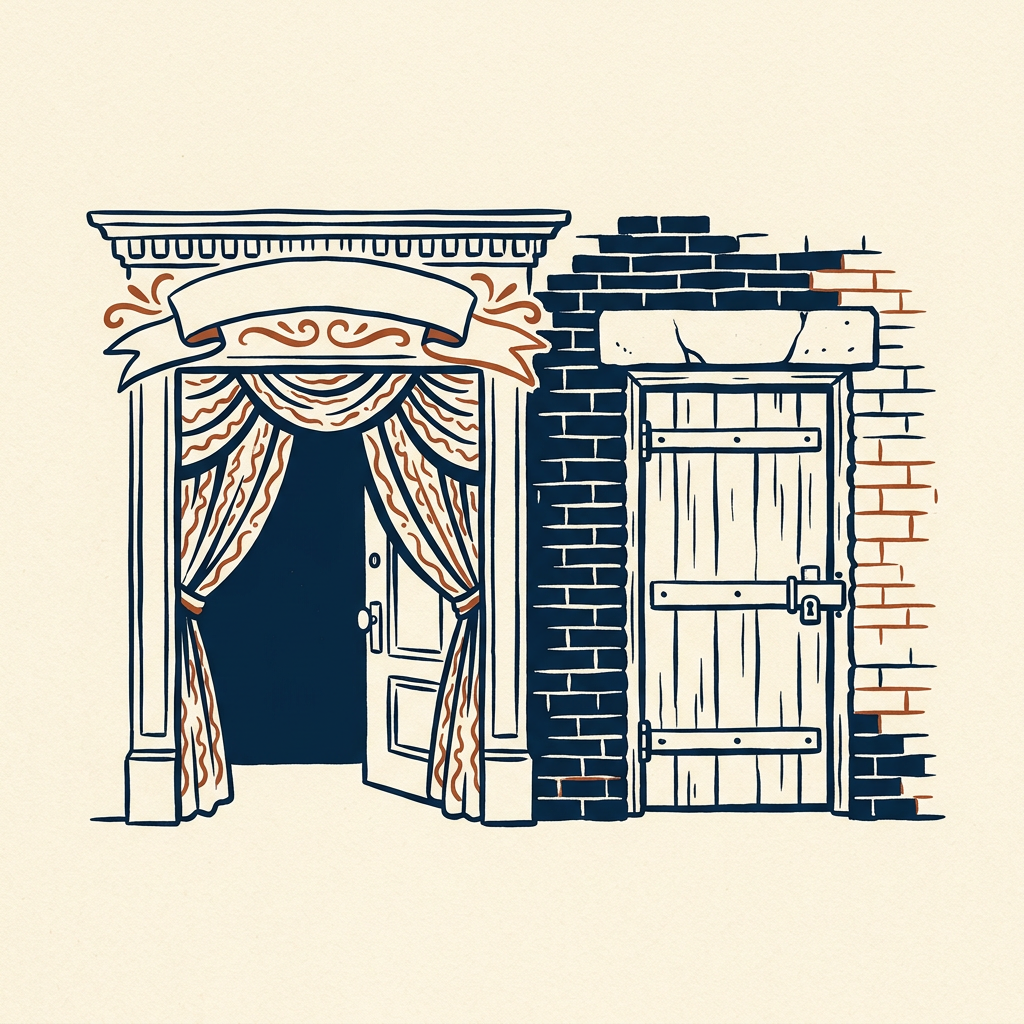
Larson argues progress and predation in 1890s Chicago sprang from identical conditions of rapid growth and weak oversight, not opposite forces.
Burnham's use
Charisma and speed turned into a completed exposition on a brutal clock
Holmes's use
The same speed, trust, and inattention turned into years of uncounted killings
The book never fully merges its threads into one plot. It keeps returning them to the same streets, the same calendar, and the same civic mood. One line follows Burnham building a temporary city meant to prove Chicago to the world. The other follows Holmes building a hotel a few miles away to murder young women the fair drew.
Larson's early claim is causal as much as coincidental. Chicago had grown too fast to police itself, too eager for spectacle to question confident men, and too full of newcomers for missing persons to register. Burnham rode that environment toward something great. Holmes rode it toward killing.
Alternating chapters make the fair's optimism and the hotel's menace accumulate in the same year, sometimes across a single page turn. The structure itself is the argument: the fair's success, in this telling, required the civic recklessness that also let Holmes work for years with little scrutiny.
In practice: Holmes did not need dark alleys; he needed a plausible business cover near heavy foot traffic while the city congratulated itself on the fair.

2
The two-year dare
Chicago's desperation to outdo Paris and cleanse its reputation explains why leaders accepted a near-impossible timeline that bred both wonders and danger.
- 1889Paris Exposition opens with the Eiffel Tower
- 1890Chicago wins the fair over New York, Washington, St. Louis
- 1891–93Roughly two years to build a temporary city on swamp
- May 1893Fair opens, still unfinished in places
In 1890 the city beat New York, Washington, and St. Louis for the World's Columbian Exposition. Its image problem was specific: the 1871 fire, packinghouse stench, Haymarket in 1886, and a standing charge of being unrefined beside older Eastern capitals.
Paris had opened the Eiffel Tower in 1889. Organizers felt they needed a reply at equal scale. That need shaped every later choice. Burnham's group agreed to open in 1893, leaving roughly two years to plan and raise an entire temporary city on swampy Jackson Park land Olmsted had championed for lakefront reshaping.
Larson frames the schedule not as a simple planning miss but as civic ego. Leaders wanted vindication badly enough to gamble architects, laborers, and money to the edge. That gamble set the terms for corners cut, construction deaths, and a city moving too fast to watch its own margins.
In practice: The Jackson Park site was chosen and the 1893 opening fixed even though organizers already knew the clock was reckless.
3
Leadership that absorbs loss
Burnham's run as chief architect and director of works shows determined leadership can swallow repeated disaster—and how close failure stayed the whole time.
- 1Root diesJanuary 1891 pneumonia removes Burnham's partner at the start
- 2Compounding shocksSwamp site, strikes, 1893 panic, cold wet weather, worker deaths
- 3Open anywayMay 1893 launch with unfinished pieces still on the grounds
Burnham had to design and run logistics at once. Root, the partner who had helped conceive the fair's vision, died of pneumonia in January 1891 just as planning hardened. Burnham continued largely alone.
He pulled in prominent East Coast architects for a unified classical style despite voices wanting more experimental work. Then the problems compounded: swamp engineering, labor disputes on a punishing schedule, the 1893 financial panic hitting mid-build, and brutal weather. Workers died in accidents; Larson notes the cost was largely absorbed without much public reckoning.
He still drove the project to a May 1893 opening. Larson treats the finish as real will and organization while leaving the narrow margin visible. The deeper contrast comes later, against Holmes's different, predatory form of persistence.
In practice: Opening day arrived on schedule even though several buildings and exhibits were not done.

4
Marble meant to vanish
The White City's gleaming buildings looked like permanent monuments while being deliberate temporary plaster, revealing how much era grandeur rested on illusion.
What visitors saw
Court of Honor classical 'marble' and night lit like a permanent capital
What it was
Staff plaster and fiber, cheap, fast, scheduled to be gone after the gates closed
The uniform white look came from staff—plaster mixed with fiber, cast to resemble marble, painted white, cheap and fast. It was never meant to outlast the fair. Practical choice, Larson treats it as symbolically loaded: America's visual claim to serious civilization was built from material designed to disappear.
Inside that illusion sat real firsts. Westinghouse's alternating current beat Edison's direct-current bid and lit the grounds at a scale not seen before in one place. Ferris raised a 264-foot wheel expressly to answer the Eiffel Tower. The Midway Plaisance ran as a commercial culture-and-amusement strip, a precursor to later midways.
Products still familiar—Cracker Jack, Shredded Wheat—spread there. The Pledge of Allegiance, newly written by Francis Bellamy, was recited by schoolchildren nationwide in the October 1892 Columbus buildup. Roughly 27 million visits followed. Larson keeps underscoring the point: assembled fast, meant to vanish, a fitting stage for a city equally unwilling to look hard at what else sat within reach.
In practice: Most exposition buildings were destroyed by fire within a year or two of closing, the common fate of structures never built to last.

5
Hotel as purpose-built trap
Holmes deliberately used the fair's anonymity and transient crowd, designing his hotel to intercept unaccompanied young women arriving in the city.
- Street facePharmacy and shops that read as ordinary business
- Hidden roomsSoundproof chambers and a gas line controllable from outside
- Disposal pathChutes to the basement and a kiln for remains
He settled in Englewood a few miles from the grounds and raised the building locals later called the World's Fair Hotel. Street level held a pharmacy and shops. Upper and lower floors held a warren meant for concealment.
Soundproofed chambers, a room with gas lines he could control from outside, chutes to the basement, and a kiln capable of destroying remains formed the hidden kit. Construction crews rotated; he fired them before any one group understood the full layout, so no one could describe the building's true purpose.
Charm and fraud—insurance schemes, shell businesses—secured employees, tenants, and creditors. The fair guaranteed a steady flow of young women alone in Chicago, looking for work or a room, without family nearby to notice a disappearance. Larson’s mechanism is plain: cover story, foot traffic, and a city too large and self-congratulating to track individual boarders.
In practice: No single work crew was left long enough to map how the chutes, gas lines, and kiln connected.

6
Ordinary charm, systemic blind spot
Holmes succeeded through charm and financial scheming layered onto social conditions that left single working women unwatched—a harder claim than calling him a simple monster.
- 1Hire or houseBring a young woman in as employee or tenant
- 2Bind and insurePromise marriage or partnership; reach her money or a policy
- 3Kill and eraseUse the building’s hidden features or associates to dispose
- 4ResetFresh arrivals from the fair’s transient stream restart the loop
↻ and round again
Larson traces a repeating sequence. Hire a young woman or take her as tenant. Cultivate a romantic or paternal bond. Often promise marriage. Take out life insurance naming himself or otherwise reach her money. Kill her. Move remains through the building’s hidden features or outside associates.
Named victims include Emeline Cigrand, a stenographer in his employ, and Minnie and Anna Williams, sisters pulled in by promises of marriage and business partnership. Male helpers such as Benjamin Pitezel extended the reach and later became the hinge of his undoing.
What delayed capture, on Larson’s account, was less genius at evasion than low expectations around tracking single women who moved to a booming city for work. Population had roughly doubled in the two decades before the fair. Record-keeping for renters, employees, and transient boarders stayed informal. Families elsewhere often assumed a quiet daughter had moved on or lost touch. The argument shifts weight onto systemic neglect while still risking understatement of how calculated Holmes’s own methods were.
In practice: Out-of-state families frequently read silence as a new job or a lost address rather than murder.
7
Scale that hides and scale that shocks
Larson sets the fair’s record attendance against Holmes’s slow body count to argue that a culture of celebrated scale can mask atrocity at a comparable hidden scale.
27M
visits recorded at the fair (U.S. population then under 65M)
The fair closed in October 1893 after an estimated 27 million visits, with the U.S. population then under 65 million—one of the most attended events in the country’s history to that point. Closing ceremonies collided with a separate public tragedy: on October 28 mayor Carter Harrison Sr. was assassinated by Patrick Eugene Prendergast, a disappointed office seeker.
Larson uses the mayor’s murder to underline a wider pattern. Public tragedy and civic celebration sat in the same news cycle; neither fully erased the other in memory. In Englewood, victims kept vanishing without a dramatic public trigger. No single event forced the attention the mayor’s death demanded.
Visibility, not severity, decides what counts as crisis. One public killing of a prominent official required immediate reckoning. An unknown number of private disappearances among working-class young women, gradual and unspectacular, produced no matching urgency until much later. Larson presents that asymmetry as characteristic of Gilded Age Chicago, not accidental.
In practice: Harrison’s assassination halted final festivities and seized the press; Holmes’s hotel generated no comparable alarm in the same season.

8
The detective who walked the registers
Holmes’s exposure came less from skilled institutional policing than from Frank Geyer’s months of unglamorous cross-country legwork on a cold trail.
- 1894Philadelphia arrest over the Pitezel insurance scheme
- 1895Geyer traces aliases and finds the three children’s remains
- May 1896Holmes hanged; confession numbers stay disputed
The collapse began with insurance fraud around associate Benjamin Pitezel, not with Chicago victims. In 1894 Holmes was arrested in Philadelphia after a Pitezel family death raised suspicion. Investigators came to believe Holmes had killed Pitezel rather than only faked the death for a payout.
Attention turned to three Pitezel children who had been in Holmes’s custody and vanished. Philadelphia detective Frank Geyer drew the assignment. Through 1895 he traced aliases across multiple cities, checking hotel registers and rental records.
Geyer found the children’s remains. That discovery, more than anything dug up in Chicago, opened the wider Englewood investigation. Holmes was tried, convicted, and hanged in May 1896. His death-row confession claimed far more victims than could be verified; estimates still run from a small confirmed number to disputed claims past a hundred. Larson sets Geyer’s methodical persistence against any myth of authorities closing in through routine vigilance.
In practice: Geyer’s register-by-register search across cities located the Pitezel children and only then unlocked the hotel’s larger story.
9
What endured, what nearly vanished
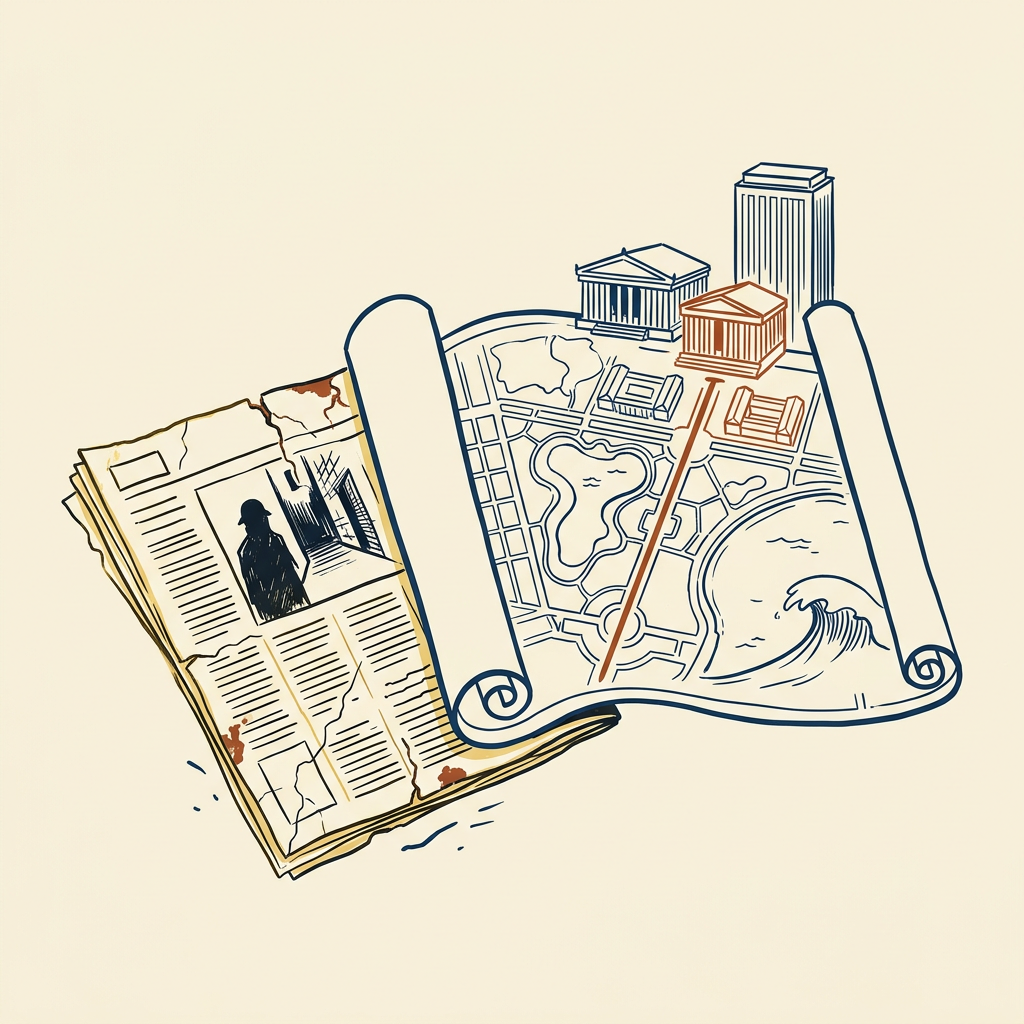
Burnham’s fair reshaped American urban planning and civic self-image far more durably than Holmes’s crimes reshaped justice, even though almost none of the fairgrounds survived.
Fair’s afterlife
City Beautiful movement and Burnham’s 1909 Plan of Chicago reshape urban design for decades
Holmes’s afterlife
Sensational coverage fades; case survives mainly in true-crime corners until a 2003 book revives it
Fire took most exposition buildings within a year or two—the expected end for temporary materials. Influence outlived timber and staff. The fair is widely credited with launching the City Beautiful movement: grand civic buildings, coordinated landscaping, monumental public space. That approach shaped American planning for decades.
Burnham went on to the 1909 Plan of Chicago, a landmark that marked the city’s lakefront and street grid. His reputation as a builder of American cities only grew. Holmes’s path ran the other way. Sensational press, including inflated method and victim claims never fully corrected, flared then faded. Memory retreated into true-crime circles rather than mainstream history until Larson’s book pulled it back.
The closing asymmetry is the narrative’s last turn: one year and one city produced a civic achievement that still shapes how American cities look and a private atrocity that, without a later writer’s effort, might have stayed a footnote.
In practice: The physical White City was largely gone within two years; Burnham’s 1909 Plan and City Beautiful ideas kept organizing real streets and waterfronts.
Key terms
- White City The fair’s central grounds of matching classical buildings finished in white, nicknamed for their uniform glow.
- staff Cheap plaster-and-fiber mix cast and painted to look like marble, fast to apply and never meant to last past the fair.
- World's Fair Hotel Holmes’s Englewood building with shops at street level and hidden rooms, gas lines, chutes, and a kiln above and below.
- City Beautiful Urban-design approach the fair helped launch—grand civic buildings, coordinated landscaping, monumental public spaces.
- Court of Honor The fair’s grand basin ringed by matching classical buildings, the visual heart of the grounds.
- Midway Plaisance The separate commercial strip of cultural exhibits and amusements, a precursor to the modern amusement midway.
- Geyer’s trail Detective Frank Geyer’s 1895 cross-city hunt through hotel registers and aliases that found the Pitezel children and opened the larger case.
What to do
- Audit the unglamorous verification systems—background checks, references, recordkeeping—when your group races a high-visibility deadline.
- Treat unusual charm about other people’s money or safety as a reason for more scrutiny, not less.
- Before accepting a dramatic number from a confession or old tabloid-style account, check whether a later rigorous source has revisited it.
- When praising any achievement built under extreme time pressure, ask what corners were cut and who absorbed the cost.
- Notice who goes uncounted at the margins while everyone celebrates scale and attendance.
Questions to think with
- How tight is the causal link between the fair’s crowds and Holmes’s methods if most confirmed victims were employees, tenants, or associates rather than fairgoers?
- What does a city choose to treat as a crisis when one public assassination shocks the press while private disappearances do not?
- Where does temporary spectacle still substitute for lasting structure in civic projects you know?
- When have you seen charm short-circuit ordinary checks on money or safety?
- How should readers weigh death-row confessions and 1890s sensational coverage against later archival work?
The other side
The braided structure implies a tighter causal link than the evidence carries: most of Holmes’s confirmed victims were employees, tenants, or business associates, and his fraud-and-manipulation pattern predated and outlasted the fair, so proximity is geographic and thematic more than proven mechanism. Larson leans on Holmes’s unreliable death-row confession and sensational 1890s newspapers for dramatic detail; Adam Selzer’s later archival work challenges several claims and numbers and argues the confirmed body count was likely far lower while much of the mythology came from period exaggeration. Reconstructed interior thoughts blur documented fact and speculation, the economic and labor conditions facing the targeted women stay under-examined, and the fair is cast more as triumph than as the money-loser it partly was.
Who it's for
Readers of narrative nonfiction who want history paced like a thriller, plus anyone drawn to the 1893 World's Fair, American architecture, the City Beautiful movement, or the early documented American serial-killer case the fair’s shadow helped obscure.