




How Bezos turned years of losses into Amazon's moat
The Everything Store shows Bezos converting customer obsession and multi-year losses into logistics and cloud advantages rivals could not copy.
IJR · Oct 14, 2026 · 10 min read
In 60 seconds
- Bezos launched with hedge-fund skills, nearly $250,000 in parental capital, and a sales-tax edge in books rather than pure garage luck.
- The Get Big Fast bet reinvested every dollar for years so scale, brand, and data became structural advantages.
- Customer obsession justified public negative reviews, loss-leader pricing, and undercutting that forced rivals like Quidsi to sell.
- Warehouses, robotics, and Prime—not the website—created the real delivery moat after a decade of capital strain.
- Marketplace invited third-party rivals onto the same pages to capture fees, data, and a large share of total items sold.
- A punishing metrics culture plus Bezos's tolerance for being misunderstood sustained long bets such as AWS that later produced most operating profit.
The big idea
Stone argues Amazon's dominance grew from Bezos's rigid customer focus, deliberate sacrifice of short-term profit for scale, and a visionary yet punishing culture. That single founder's temperament became the company's operating system.
The book in brief
Stone opens with the 1994 founding. Bezos left D.E. Shaw, chose books for their vast standardized catalog, and set up near a distributor in low-population Washington to limit sales-tax reach. Parental money and early demand quickly outran the garage myth and forced constant improvisation.
He then locked in Get Big Fast. The 1997 shareholder letter promised perpetual reinvestment. Expansion into toys and electronics, plus acquisitions, continued even as the stock collapsed near the dot-com crash and bankruptcy talk spread. Bezos still refused to chase near-term profit.
Customer obsession was next turned into operating doctrine. An empty chair stood for the buyer. Negative reviews stayed public. Loss-leader pricing, including the Quidsi diaper war, doubled as a competitive weapon while flying the customer flag.
The real moat was physical. Amazon built its own fulfillment network, survived the near-disaster 1999 holidays, later bought Kiva robotics, and launched Prime despite internal fears that shipping costs would exceed fees. Marketplace then invited third-party sellers, including direct rivals, onto Amazon pages to grow selection, fees, and data.
Diversification followed the same pattern. Kindle pushed a low e-book price that sparked publisher fights. AWS rented out internal infrastructure and grew into the high-margin profit engine under the retail brand. Throughout, Bezos enforced an intense, high-turnover culture and kept personal control, accepting human costs and occasional failures such as the Fire Phone because his long time horizon and indifference to short-term criticism let multi-year bets survive.
Context
Brad Stone's 2013 book The Everything Store draws on interviews with hundreds of former employees, family members, and Bezos himself to explain how one founder's temperament became Amazon's corporate operating system and why that mattered for retail, logistics, and cloud computing.
The key ideas

1
Calculated garage start
The scrappy-garage myth hid Wall Street skills, nearly $250,000 in family capital, and a deliberate sales-tax and catalog advantage.
Garage myth
Scrappy startup with no real backing
Stone's account
Hedge-fund pedigree, family capital, tax and catalog edge
Stone shows Bezos did not stumble into books. He left a lucrative D.E. Shaw job after spotting internet retail's potential, then picked books because the catalog was huge, standardized, and free of any single dominant distributor. An online store could therefore offer infinite shelf space no physical bookstore could match.
Seattle was equally calculated: proximity to a major distributor plus Washington's small population limited sales-tax obligations that would have hit customers in bigger states. His parents invested nearly $250,000 of retirement savings after he warned them of a 70 percent chance of failure.
The garage was real only briefly. Orders raced ahead of projections, books shipped to all fifty states and over forty countries within months of the 1995 launch, and the company moved into cheap warehouse space. The lasting pattern was undercapitalized operations forever scrambling to catch demand.
In practice: Early internal sales forecasts were blown past so fast that the team had to improvise shipping to dozens of countries before basic systems caught up.

2
Get Big Fast bet
Prioritizing market share over profit for years was a conscious wager that scale itself would become an unbeatable moat.
- 1997IPO letter locks in reinvestment over profit
- 1999Barron's Amazon.bomb cover
- 2000-2001Stock falls from near $107 to under $6
- 2001-2002First sustained profitability
Bezos made 'Get Big Fast' the internal rule. In a new medium where habits were still forming, the first company to lock in the most customers would compound negotiating power, brand, and data. The 1997 IPO letter, still reprinted every year, told investors cash would be poured back into growth instead of near-term earnings.
Wall Street mostly waited. Barron's branded the company Amazon.bomb and predicted a cash crunch, yet expansion into toys, electronics, and acquisitions such as Junglee and PlanetAll continued. When the dot-com crash hit, the stock fell from a high near $107 to under $6 and bankruptcy speculation spread.
Bezos still refused to abandon the logic. He cut costs and laid people off but kept the long reinvestment frame. Once profitability arrived in 2001-2002, the logistics network built during the lean years proved nearly impossible for rivals to copy quickly.
In practice: During the crash years the company kept buying technical capability and opening categories even while public markets priced it as a likely zero.

3
Customer obsession weapon
Bezos turned customer-centricity into a rigid operating rule that also served as cover for aggressive competitive moves.
Stated value
Help customers decide with unvarnished information
Strategic effect
Loss-leader pricing that forced Quidsi to sell
Bezos insisted Amazon be customer-obsessed, not competitor-obsessed, and built enforcement mechanisms. An empty chair in meetings stood for the buyer; later the most important stakeholder had to be named explicitly in every decision.
Product reviews, including harsh ones, stayed public despite publisher and vendor protests. When a book-industry executive complained that negative reviews hurt sales, Bezos answered that the company made money by helping customers decide, not by protecting any single title.
The same doctrine justified selling items at a loss to earn trust. In the 2010 diaper battle Amazon priced so aggressively against Quidsi that the founders sold rather than absorb endless losses. Stone treats the episode as proof that a genuine-sounding principle can align perfectly with the company's interest in eliminating rivals.
In practice: Amazon kept scathing reader reviews on its own book pages over the objections of publishers who wanted only marketing copy.
4
Warehouses as the moat
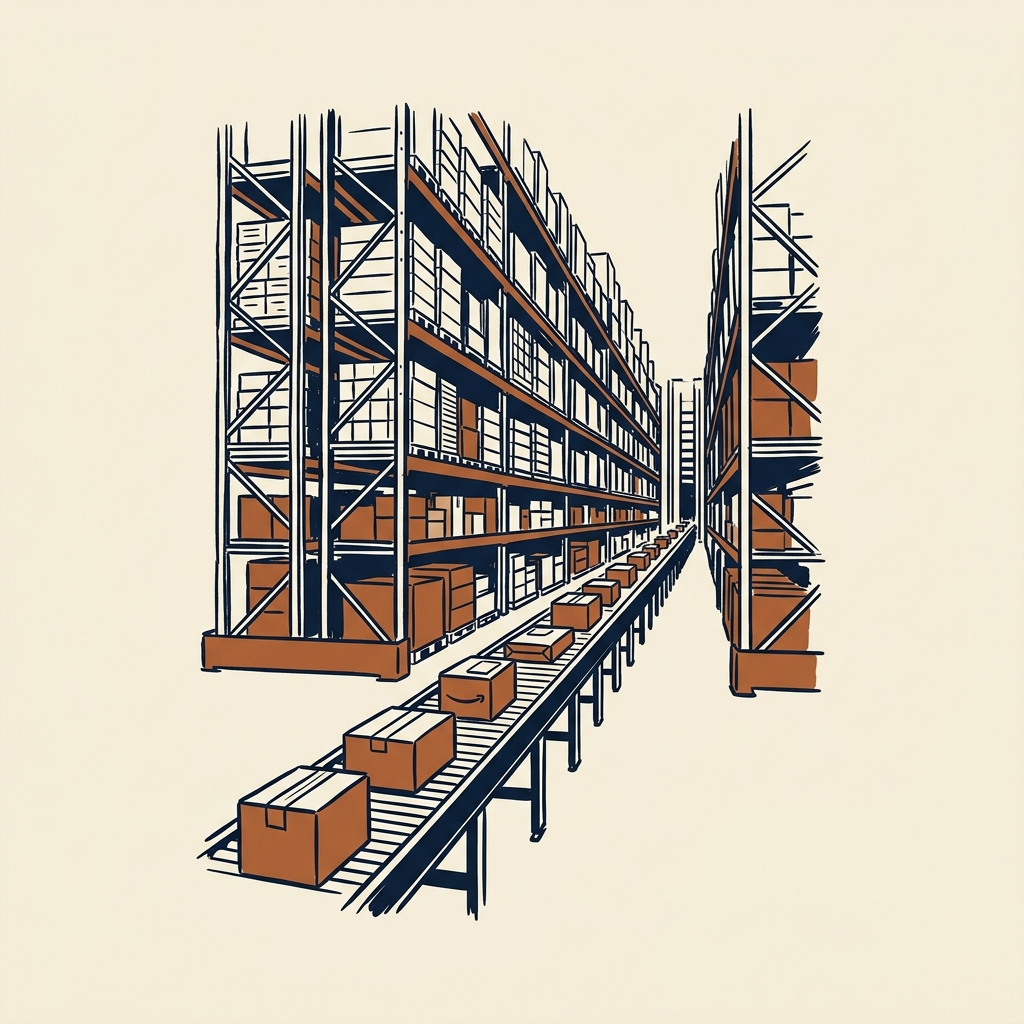
Amazon's true edge was capital-intensive fulfillment infrastructure that software-only rivals refused to match.
Competitors treated e-commerce as a website and marketing problem. Bezos treated reliable fast delivery as the actual product. Amazon therefore built and ran its own distribution centers instead of relying only on third parties, a choice that strained cash for years but gave direct control over speed.
The 1999 holiday season nearly collapsed under demand. Bezos himself worked night shifts packing boxes in Seattle warehouses. The company later automated the network and acquired Kiva Systems in 2012 for $775 million to push robotics further into the warehouses.
Prime, launched in 2005, turned that network into a loyalty engine. Executives feared shipping costs would exceed the annual fee; Bezos pushed it through anyway, betting members would buy more often and across more categories once shipping felt free. Stone's lesson is that the moat lived in concrete and trucking contracts, not code.
In practice: After ambulances were called for heat injuries at a Pennsylvania fulfillment center in 2011, air conditioning was added only under public pressure.
5
Marketplace gambit
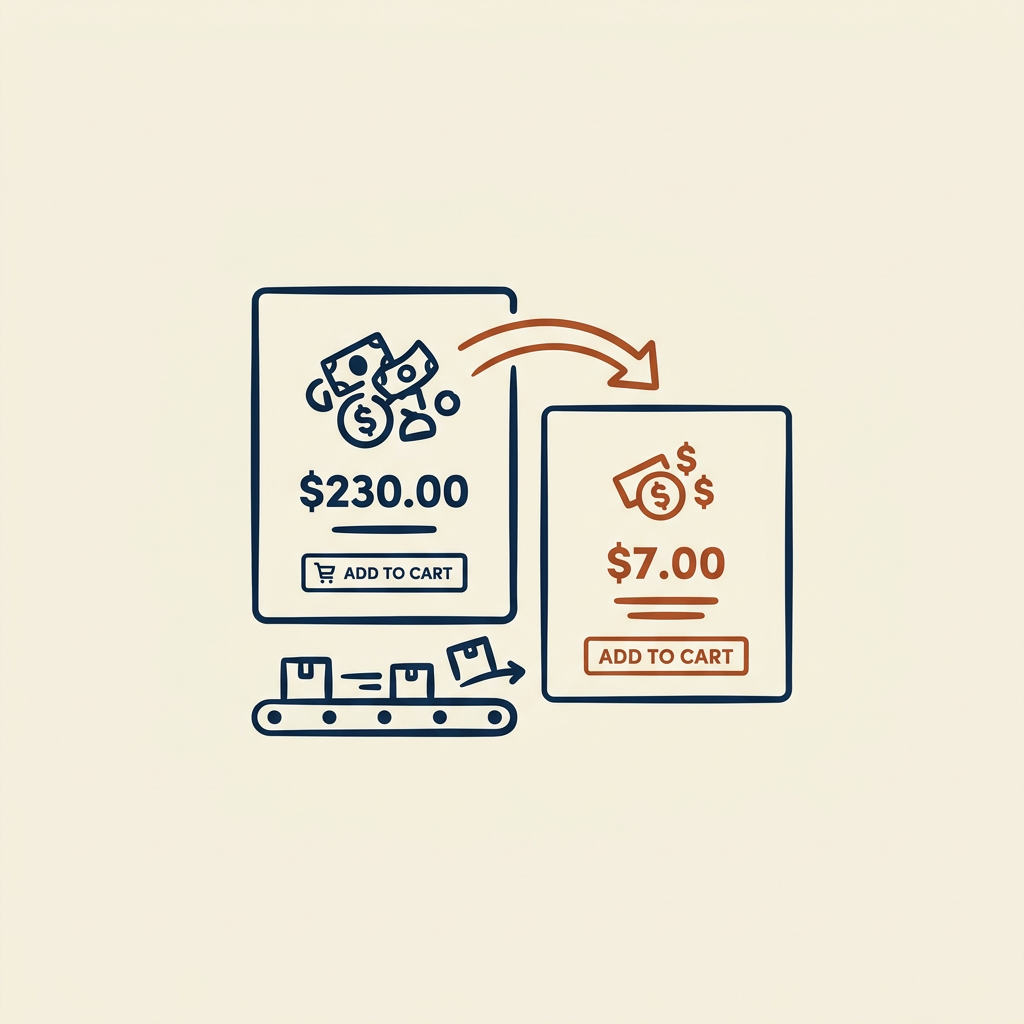
Inviting third-party sellers, including direct rivals, accepted cannibalization to capture fees, data, and total transaction volume.
~40%
share of items sold by third parties within a decade
In 2000 Amazon opened Marketplace so outside sellers could list beside Amazon's own inventory on the same page. Internal critics feared confused customers, lost high-margin sales, and free shelf space for competitors.
Bezos overrode them. Widest selection and lowest price, even when a rival's offer won the buy button, would grow traffic and trust more than any single protected sale. Third-party sales grew to a large share, often cited near 40 percent, of items sold; Amazon collected fees and performance data.
That data later informed which products Amazon should stock or make itself, drawing antitrust scrutiny. Fulfillment by Amazon further pulled rivals' inventory into Amazon's own warehouses. Stone presents the move as Bezos rejecting a zero-sum view of his own platform.
In practice: A used-book dealer could appear on the identical product page as Amazon's new copy, and Amazon still took the fee and the sales signal.

6
Kindle and AWS pattern
Amazon's core skill was entering commoditized infrastructure-heavy markets and out-executing incumbents on cost and reliability.
- 2005Prime launches
- 2006AWS opens to outside customers
- 2007Kindle ships
- 2010Macmillan buy-button standoff
Kindle launched in 2007 despite zero prior hardware experience. Bezos hired engineers, negotiated directly with publishers, and forced a $9.99 bestseller e-book price that many houses saw as a threat to print. The fight peaked in 2010 when Amazon briefly removed buy buttons from all Macmillan titles.
AWS began from a simpler insight: the computing stack built to run retail could be rented to any company that needed scalable power. It launched in 2006 and eventually generated the majority of operating profit even while retail stayed larger in revenue, because cloud margins dwarfed retail's.
Both moves followed the same template. Find a market where Amazon already possessed an unfair operational head start, then invest heavily to dominate rather than test cautiously. The result was a technology-infrastructure company living underneath the retail brand.
In practice: Internal retail servers became the foundation for a public cloud service that other firms paid to use.

7
Culture of intensity
Bezos designed a deliberately uncomfortable workplace so high standards and metrics would outrank consensus or comfort.
Stone describes blunt feedback, public criticism of weak proposals, and extreme performance expectations. Leadership principles stressing frugality, ownership, and bias for action were enforced with an intensity many experienced as punishing.
Corporate turnover ran higher than at peer tech firms. Bezos treated a certain level of attrition as healthy sorting; those unwilling to sustain the pace left. The same pressure reached the warehouses.
Investigative accounts of dangerously hot conditions and heat-related injuries appear in the book not as isolated failures but as consistent with a philosophy that optimized for customer results and efficiency while accepting significant human cost until outside pressure intervened.
In practice: Senior meetings regularly featured sharp, public dismantling of data or plans that failed to meet the expected standard.

8
Founder time horizon
Bezos's personal tolerance for being misunderstood let Amazon survive multi-year unprofitable bets that would have broken a conventional public company.
Stone portrays Bezos as unusually indifferent to short-term attacks from analysts, journalists, or even his own board. That trait kept capital flowing into AWS, international expansion, and Prime long after a typical CEO would have been forced to retreat.
Day 1 thinking, repeated in the shareholder letters, framed the company as a perpetual startup that must resist bureaucracy. Bezos also kept tight personal veto power, sometimes sending teams back to redo years of work.
The same authority produced expensive misses. The Fire Phone absorbed years of his attention before commercial failure in 2014. Stone refuses a pure hero story: the contrarian stamina that built the company also removed internal checks that might have stopped losers earlier.
In practice: Executives spent years refining the Fire Phone under Bezos's direct involvement only to watch it fail in the market.
Key terms
- Get Big Fast Bezos's rule to chase customers and scale first, profits later
- Customer obsession Operating doctrine that puts the buyer above competitors or short-term margin
- Day 1 thinking Treating the company forever as a startup still fighting complacency
- Amazon Marketplace Platform that lets third-party sellers list beside Amazon's own goods
- Fulfillment by Amazon Service that stores and ships third-party inventory through Amazon's network
- Prime Membership that makes two-day shipping feel free to lock in loyalty
- Leadership principles Formal company values enforcing frugality, ownership, and bias for action
- Empty chair Meeting prop that forces the absent customer into every decision
What to do
- Audit one process you currently run for a quarterly number and name the multi-year customer cost you are accepting.
- Add one recurring ritual that puts an absent stakeholder's interest on the table before any decision.
- Rewrite your next major proposal as a full-sentence narrative memo instead of slides so weak logic cannot hide.
- List the infrastructure rivals would need a decade to copy and decide whether you are investing in any of it.
- Invite one controlled form of external competition onto your own platform and measure the data you gain.
Questions to think with
- Where is your organization optimizing for this quarter at the clear expense of a multi-year customer relationship?
- Which of your stated values also happen to eliminate competitors or protect margin?
- What physical or infrastructure asset would take a rival ten years to match, and are you funding it?
- How much employee discomfort does your culture treat as acceptable collateral for performance?
- If your founder or CEO left tomorrow, which long-horizon bets would immediately die?
The other side
The book stops in 2013 and therefore misses Whole Foods, the pandemic surge, warehouse union drives, and the later FTC and state antitrust suits. Bezos and Amazon gave little official cooperation, so sections on culture and warehouse conditions lean on former employees and outside investigations that the company has disputed. The narrative centers Bezos so heavily that other executives shrink and the organization is explained mainly through one man's psychology. Stone stays largely descriptive and never fully judges whether the aggressive tactics toward publishers, sellers, and rivals crossed into anticompetitive conduct.
Who it's for
Business readers who want the actual construction of Amazon's advantage rather than the founding myth, plus managers and entrepreneurs studying high-intensity metrics cultures, long-term reinvestment, and the real costs of customer obsession.