




Measure against your start, not an ideal that keeps moving
Ambitious people who hit goals yet still feel behind get a daily habit that rebuilds confidence instead of anxiety.
IJR · Nov 2, 2026 · 14 min read
In 60 seconds
- Sullivan and Hardy argue happiness and confidence come from the yardstick you choose, not from the outcomes themselves.
- Measuring against an ever-receding ideal, other people, or old expectations keeps you in the Gap, permanently behind.
- Measuring against your fixed starting point puts you in the Gain, where progress stays visible and confidence compounds.
- High achievers fall into Gap thinking most because each win instantly becomes the new baseline and the ideal moves faster than results.
- The core practice is logging specific backward-measured wins daily and periodically retelling setbacks for what they later made possible.
- The same Gain frame changes how managers, parents, and partners evaluate others: name real growth from a fixed earlier point before asking for more.
The big idea
Sullivan and Hardy argue you cannot control every outcome, but you can control which yardstick judges the outcomes you get, and that choice shapes daily experience more than the results. Keep ideals for future direction only; grade the past against where you actually started so progress banks as confidence.
The book in brief
The book opens on a common misery among high achievers: objective wins that still feel like failure. Sullivan and Hardy locate the cause in measurement, not performance. The Gap is the distance from an abstract ideal that can always be pushed farther away. The Gain is the distance from a fixed, real starting point. Same life, opposite emotional results.
They show why ambition intensifies the trap. Hit a target and the ambitious mind immediately sets a bigger one, treating the old goal as the new baseline so the achievement vanishes. Clients with strong years or multi-million-dollar businesses still call themselves behind against faster competitors or an idealized future self. Ideals remain useful for pointing forward; the error is using the same ideal as the ruler for judging what already happened.
Three recurring comparison habits lock the Gap in place: an impossible perfectionist standard with no setbacks, other people’s visible outsides against your private insides, and outdated expectations from old plans, family assumptions, or younger promises. None of these anchors to your actual start or constraints, so they can always be inflated until you fall short.
The corrective is measuring backward as a deliberate daily discipline. At day’s end, name specific wins framed only against the prior state—one new account today versus zero yesterday, not versus a target of ten. Over months this builds a written record the Gap mind would otherwise discard. The same frame extends to hardship through what they call positive hindsight: revisit a failed venture or painful stretch and ask what capability, relationship, or judgment it produced, then update the story so the event is no longer pure loss.
They reread self-actualization as an operating mode, not a peak you finally reach. Measuring backward and reframing setbacks are not prep work; they are the practice itself. Confidence is treated like an account: Gain deposits, Gap withdrawals. Entrepreneurs with every external success marker still burn out or turn risk-averse when years of Gap measurement have quietly emptied the internal balance. The fix is structural review habits so deposits outpace withdrawals.
The last move applies the frame outward. Managers, parents, and partners who grade people against ideals always find them lacking and demoralize them. Those who name what someone could not do months ago and can do now reinforce real growth without lowering future standards. The book lands on success as a measurement habit: separate the ideal’s two jobs, log concrete gains, and extend fair backward measurement to everyone you evaluate.
Context
Dan Sullivan, longtime coach to entrepreneurs through Strategic Coach, wrote this with Benjamin Hardy. It mattered as a direct attack on the specific unhappiness of high achievers who keep hitting goals yet never feel satisfied.
The key ideas

1
Two measuring sticks
How successful you feel depends less on what you achieved than on which reference point you use to judge it.
The Gap
Distance from an ideal that can always be pushed farther away
The Gain
Distance from a fixed, real starting point
Sullivan and Hardy open with a plain split. The Gap is the space between where you stand and an ideal in your head. The Gain is the space between where you stand and where you started. Both measure the same life. They produce opposite feelings.
An ideal is abstract and movable, so someone living in the Gap constantly falls short no matter the math. A starting point is fixed and real, so someone living in the Gain keeps seeing evidence of movement. Measurement is not neutral; choosing the ideal as yardstick is itself a decision, usually unconscious, that locks in the emotional result.
You cannot control every outcome. You can control which stick judges the outcomes you get. That choice, they claim, does more to set your day-to-day experience of your own life than the outcomes themselves.
In practice: Strategic Coach clients who grew revenue 40 percent in a year still described themselves as behind because a competitor grew faster or they had privately hoped for 60 percent.

2
Ambition feeds the Gap
The more ambitious and successful you become, the more likely you live permanently in the Gap because ideals move faster than achievements.
High achievers look like they should feel furthest ahead. Sullivan and Hardy say they are the most exposed. The mechanism is goalpost movement. Hit a target, skip registering the win, set a bigger one at once. The old target, once exciting, becomes the new baseline. The achievement disappears the moment it arrives.
Success then gets graded against a target never designed to be reached, only chased—an idealized future self or competitors who appear further along. The cost is chronic low-grade dissatisfaction sitting beside objective achievement. Motivation erodes because every win is discounted and competence never gets banked. People run on willpower and fear of falling behind instead of a visible track record.
Ambition itself is not the villain. Ideals still point direction. The error is letting the same ideal grade past performance. Separate the jobs: ideals steer what comes next; they never score what already happened.
In practice: Entrepreneurs who built businesses worth tens of millions still described their careers as disappointing against an idealized future self or rivals who looked further ahead.

3
Three rigged comparisons
Most people feel unsuccessful not from underperforming but from judging themselves against standards rigged from the start.
Building on the ambition trap, the authors name three recurring habits that keep people in the Gap. First is the idealized, often impossible standard: the internal perfectionist who imagines a plan with no setbacks, no wasted time, and maximum output, then compares real life unfavorably to that fiction.
Second is measuring against other people. Their struggles, luck, and starting resources stay invisible, so you compare your full inside experience to their outside slice. The fast-growing company you envy may hide debt, exhaustion, or a failing marriage; you only see the part that looks better than yours.
Third is measuring against expectations set by yourself or others in the past—a five-year plan written before a market shift, a family’s timeline for your career, a promise made at twenty-two. These stay obligatory even when circumstances have fully changed. All three share one defect: none anchor to your actual start or constraints, so they can be moved, inflated, or misremembered until you lose. Naming which of the three is running in a moment of frustration is the first step to a fairer measure.
In practice: A five-year plan written before a market shift, or a family’s assumption about what a career should look like by a certain age, becomes a yardstick still enforced long after reality changed.

4
Measure backward daily
Comparing yourself to your former self rather than an ideal is a daily discipline that must be practiced; it does not arrive as a mood.
Diagnosis done, the book turns to the fix: measuring backward. Swap “how far am I from where I want to be” for “how far have I come from where I started.” The rhetorical shift changes which facts stay visible.
Sullivan’s long-running habit is writing specific wins at day’s end, framed strictly against the previous state, however small. Vague reassurance that things are fine does not work the same way. Only a concrete before-and-after fact sticks. Over months the page becomes a record of accumulated progress the Gap-oriented mind would have discarded the moment it stopped feeling novel.
They treat this as a decision-making intervention, not soft self-esteem work. People who cannot see their own progress make more conservative or more desperate moves because they feel stuck or behind. People who see concrete movement make steadier calls because they trust actions compound. Confidence, on this view, is not a trait some own and others lack; it is the residue of consistently noticing gains, built on purpose because the mind’s default is to discount them.
In practice: A client who closed one new account is not scored against a target of ten; the win is that yesterday there were zero and today there is one.

5
Reframe setbacks later
A failure stays a failure only if you refuse to update the story of what it made possible once enough time has passed.
At the moment
Hardship sits as pure loss and keeps generating shame or regret
With positive hindsight
Same event retold for the capability, relationship, or judgment it later produced
The Gain frame is extended to negative events. Sullivan and Hardy describe positive hindsight: successful people look back at hardships, failed ventures, or painful stretches and call them essential to what came later, even though the events felt purely bad at the time.
Meaning is not fixed at the moment of impact. It keeps being written as later events unfold, and the retroactive narration shapes present confidence and behavior. The event itself does not change; the frame does. Most people leave painful memories un-reprocessed, so they sit as pure loss and keep generating shame or regret.
The proposed discipline is periodic and specific: revisit a difficult episode, ask what capability, relationship, or piece of judgment came out of it, then update the internal story. They do not claim every setback is secretly good or that real damage should be papered over. They do claim the reframing is available and rarely done on purpose.
In practice: A failed first business that taught an entrepreneur to manage cash flow becomes, in the retelling, the reason the second business survived a downturn.

6
Actualization is practice
Treating self-actualization as a final state you arrive at guarantees permanent dissatisfaction; it is better read as a Gain-oriented way of operating.
Destination myth
Self-worth postponed until a future income, title, or body of work is reached
Operating mode
At every stage, measure development backward and convert experience into growth
The authors revisit Maslow and argue popular culture turned self-actualization into a peak atop a pyramid—a state reached once other needs are met. They propose instead a mode of operating: Gain-oriented, continuously converting experience into growth regardless of current circumstances.
A self-actualizing person, on this reading, is not someone who has arrived and feels permanently satisfied. It is someone who has built the habit of measuring development backward so each life stage, however hard, is processed as material for growth rather than deficiency against a final form not yet reached.
The common trap is postponing self-worth until a future milestone—income level, title, body of work—assuming contentment begins there. The practical claim follows: measuring backward and reframing setbacks are not preparatory steps toward later actualization. They are the actualization. The practice does not stop being necessary at some higher rung.
In practice: Someone postpones self-worth until a target income, title, or body of work arrives, assuming contentment will finally begin at that milestone.

7
Confidence as an account
Confidence acts like a resource spent by Gap thinking and replenished by Gain thinking, so future risk-taking capacity depends on past measurement habits.
This chapter frames confidence as an account balance, not a fixed trait. Register a specific gain—clear evidence you moved forward—and you make a deposit. Dwell in the Gap, staring at distance from an ideal, and you make a withdrawal even if nothing bad happened.
Sullivan describes a pattern among coaching clients: every external marker of success present, yet rising risk-aversion or burnout. The offered explanation is years of unconscious Gap measurement. Revenue grew; the internal confidence account quietly emptied. The success was real; the felt capacity to sustain or extend it was not.
The corrective is not a pep talk. It is a structural change in daily and weekly review: return to logging specific backward-measured wins so deposits outpace withdrawals. The authors argue it compounds. A person with a documented history of turning intentions into results approaches new uncertain ventures differently from a person who feels perpetually behind, because the first has evidence that actions produce outcomes.
In practice: Entrepreneurs with every external indicator of success still grew risk-averse or burned out after years of Gap measurement depleted their internal confidence account.
8
Measure others’ gains too
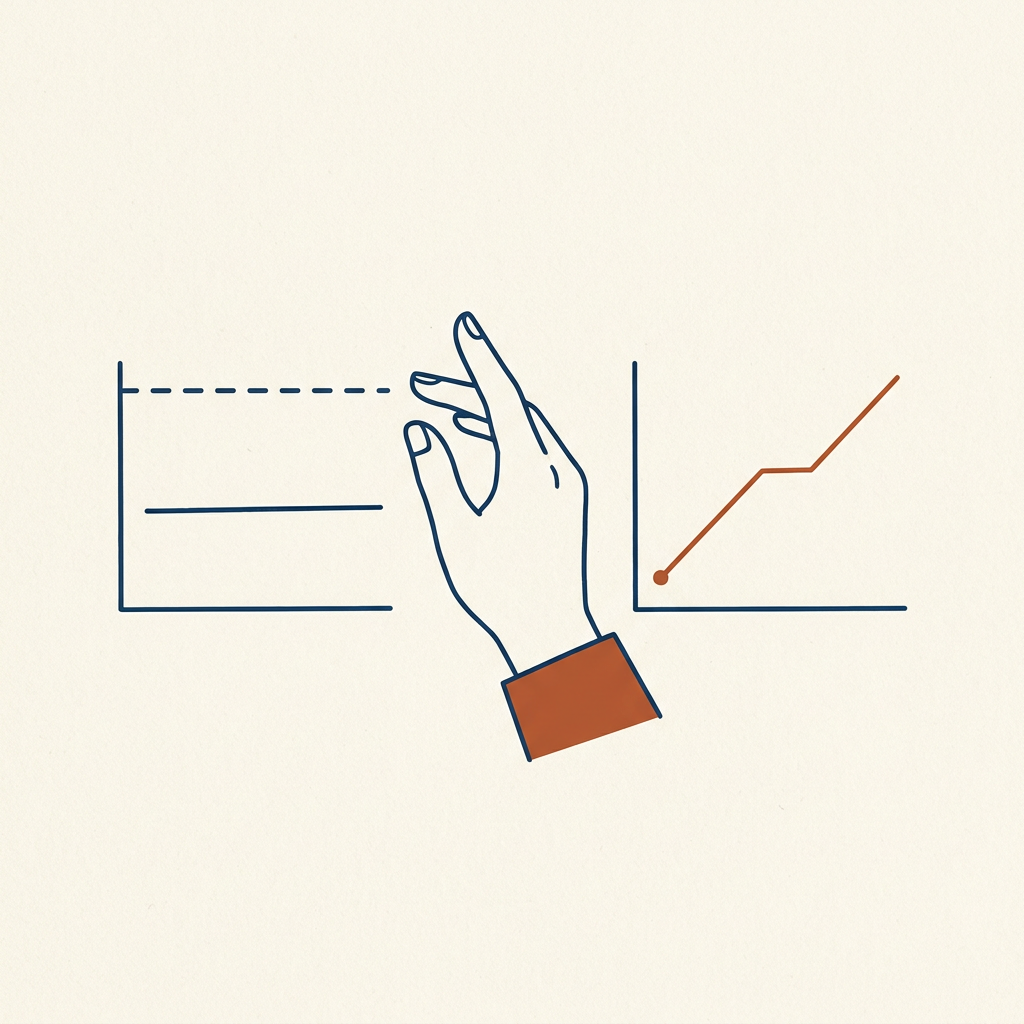
Using Gap-versus-Gain thinking only on yourself misses most of its value; how you measure other people’s progress shapes relationships as much as your own mood.
Gap evaluation
Employee, child, or partner scored against an ideal and found permanently lacking
Gain evaluation
Same person scored against a fixed earlier point, real change named before the next ask
The final substantive chapter turns the frame outward to employees, partners, children, and teams. Most relationship friction, they argue, follows the same pattern as personal unhappiness. A manager who scores an employee against an idealized performance standard always finds the person lacking and communicates it in ways that demoralize rather than develop.
The same manager who scores that employee against where they started—what they could not do six months ago that they can do now—sees and reinforces actual growth. Parenting and partnership get the same logic. A parent locked on the gap between current behavior and an ideal well-behaved child misses slower real gains. A spouse measuring a marriage against media romance or other couples’ outsides feels chronic dissatisfaction that may have little to do with the relationship’s actual health.
Gain-based recognition is claimed as more accurate and more motivating because it anchors to verifiable change, not a moving or borrowed standard. Naming someone’s gain does not lower future expectations. It tells the truth about what already happened before asking for what comes next.
In practice: A manager who notes what an employee could not do six months ago and can do now reinforces growth; the same manager grading only against an ideal always finds the employee wanting.
Key terms
- The Gap The distance between where you are and an ideal in your head that can always move farther away.
- The Gain The distance between where you are and where you actually started, a fixed real reference.
- Measuring backward The daily discipline of judging progress only against your former self, not against a future ideal.
- Positive hindsight Deliberately revisiting a hardship later to name the capability, relationship, or judgment it produced, then updating the story.
- Confidence account Confidence treated as a balance: specific Gain notices make deposits; Gap dwelling makes withdrawals.
- Ideal as direction only Using an ideal to point where to go next while refusing to let it serve as the ruler for grading the past.
- Goalpost movement The ambitious habit of turning each hit target into the new baseline so the win disappears at once.
- Three rigged comparisons Judging against impossible ideals, other people’s outsides, or outdated expectations—none anchored to your real start.
What to do
- Write three specific things true now that were not true a month ago, measured only against your past, before setting this week’s goals.
- At the end of each workday, log specific wins framed strictly against the previous state, however small.
- When you feel behind, name aloud which yardstick you are using—an ideal, another person, or an old expectation—and ask whether it is fair to your actual starting point.
- Before giving feedback to an employee, partner, or child, state the specific gain you have observed since a fixed earlier point, then name what still needs work.
- Pick one past setback and write what capability, relationship, or judgment it later made possible; update the story you tell yourself.
Questions to think with
- Which of the three rigged comparisons—ideal, other people, or old expectations—shows up most when you feel unsuccessful?
- What would shift in your next uncertain decision if you had a written month of specific backward-measured wins in front of you?
- Where are you still using an ideal as a ruler for the past instead of only as direction for what comes next?
- Which hardship from your past could you honestly retell for what it later made possible?
- Who are you currently evaluating against an ideal rather than against their own earlier starting point?
The other side
The book rests almost entirely on Sullivan’s Strategic Coach anecdotes from already-successful, self-selected entrepreneurs, with no controlled studies and only loose Maslow references, so its leap to a universal theory of happiness and confidence outruns the evidence. It also blurs Gaps that are measurement errors with Gaps that signal real constraints—job loss, discrimination, illness, poverty—where comparing to an ideal can be an accurate call to change, not a distortion to reframe; the positive-hindsight move in particular risks sliding into toxic positivity when suffering does not integrate cleanly into a growth story. Read as a tool for ambitious, resourced people prone to self-inflicted dissatisfaction it is useful; as a general theory of happiness the evidence does not stretch that far.
Who it's for
Entrepreneurs and executives who keep hitting goals yet never feel satisfied, plus goal-setters who want a practical daily confidence habit, and coaches, managers, or parents who need a fairer way to evaluate other people’s progress. It serves best as a targeted fix for self-inflicted Gap misery among people with real agency and resources, not as a universal happiness manual.