




Your mind has no warning light when it fails you
Overconfidence is a universal feature of normal cognition, not a character flaw, so feelings of certainty never prove accuracy.
IJR · Oct 30, 2026 · 13 min read
In 60 seconds
- About half the people counting basketball passes miss a gorilla walking through the scene and then refuse to believe it happened.
- Hands-free phone calls are roughly as dangerous while driving as handheld ones because conversation steals limited attention from what is in plain view.
- Flashbulb memories of events like September 11 keep high confidence over years while accuracy drops, because memory is rebuilt at recall rather than replayed.
- A witness's or expert's certainty is a weak predictor of accuracy, yet juries and audiences still treat confident demeanor as competence.
- People rate their grasp of zippers, policies, and financial products high until forced to explain the steps, when self-ratings collapse.
- Awareness barely dents these illusions, so the real defense is external checks—checklists, double-blind lineups, and demanded explanations.
The big idea
Chabris and Simons argue that six everyday illusions—of attention, memory, confidence, knowledge, cause, and potential—make people trust perceptions and judgments far more than the evidence warrants. The mind generates feelings of certainty with no internal alarm when those feelings are wrong, so the only reliable defense is procedural systems rather than unaided intuition.
The book in brief
The book opens with the authors' 1999 gorilla experiment as both demonstration and organizing device. Viewers told to count basketball passes routinely miss a person in a gorilla suit walking through the frame, thumping its chest, and leaving; many then deny it could have happened. That gap between what people are sure they would notice and what they actually register launches the larger claim: intuitions about our own minds feel like direct knowledge, yet they are themselves fallible perceptions.
From there the argument moves outward from the lab into daily life. The same structural limit on attention explains why conversation on a phone, hands-free or not, leaves drivers blind to motorcycles, pedestrians, and signals in plain view, and why people rate themselves above-average multitaskers even though the feeling of doing two things at once is not evidence both are done well.
Next come memory and confidence. Vivid recollections, including flashbulb memories of public shocks, are reconstructed at the moment of recall and often drift while the feeling of certainty stays high or rises. Separately, fluent, unhedged delivery and steady manner are overweight as signs of competence by juries and audiences, even though certainty tracks accuracy poorly and can be inflated after the fact.
The later chapters turn to knowledge, causation, and potential. Familiarity with everyday devices or policy slogans produces an illusion of explanatory depth that collapses only when people must write the actual steps. The mind's hunger for causal stories turns temporal coincidence—autism symptoms appearing near vaccination age—into durable belief against large contradictory data. Thin, narrow findings such as a brief spatial bump after Mozart get inflated into claims of unlocked general ability. Across all six, the same mismatch appears: subjective certainty runs independently of objective reliability.
The close refuses a willpower fix. Simply knowing about the illusions reduces them only slightly because the errors sit below conscious monitoring. The authors instead point to structural habits already used in high-stakes fields—checklists, double-blind procedures, demands for verifiable explanation—and to treating strong personal conviction as a prompt for outside scrutiny rather than a stopping point. The danger is not that minds fail; it is that failure feels identical to success from the inside.
Context
Chabris and Simons drew on their own famous gorilla experiment and decades of cognitive research to translate academic psychology into a public reckoning with overconfidence. Published in 2010, the book mattered because it reshaped how courts, doctors, and ordinary readers think about eyewitness testimony, multitasking, and expertise.
The key ideas

1
The gorilla in plain sight
Focused attention on one task makes people blind to almost everything else, including events that feel impossible to miss, and most will insist afterward that nothing happened.
What people assume
I would notice anything important happening right in front of me
What the experiment shows
About half miss a chest-thumping gorilla while looking straight at the scene
Chabris and Simons begin with their 1999 video: two teams pass basketballs while viewers count one team's passes. Midway, a person in a gorilla suit walks through, thumps its chest, and exits. About half the viewers never see it. Told what they missed, many refuse to believe it and demand to rewatch the tape.
They name this the illusion of attention—the belief that we notice everything important around us. The effect holds across age and education, and even among people warned that something unusual might occur, so long as they do not know what to look for. Subjects are not glancing away; they look directly at the gorilla. The visual system registers it, yet conscious perception, which needs attention, does not.
This is distinct from simple distraction. The authors treat the gorilla as the book's organizing device: everyday confidence about what we see feels like certainty precisely because there is no internal signal when attention fails. The same structure will reappear in memory, knowledge, and causal judgment.
In practice: A radiologist scanning a chest X-ray for nodules can miss a gorilla-sized image of an actual gorilla spliced into the corner of the scan.
2
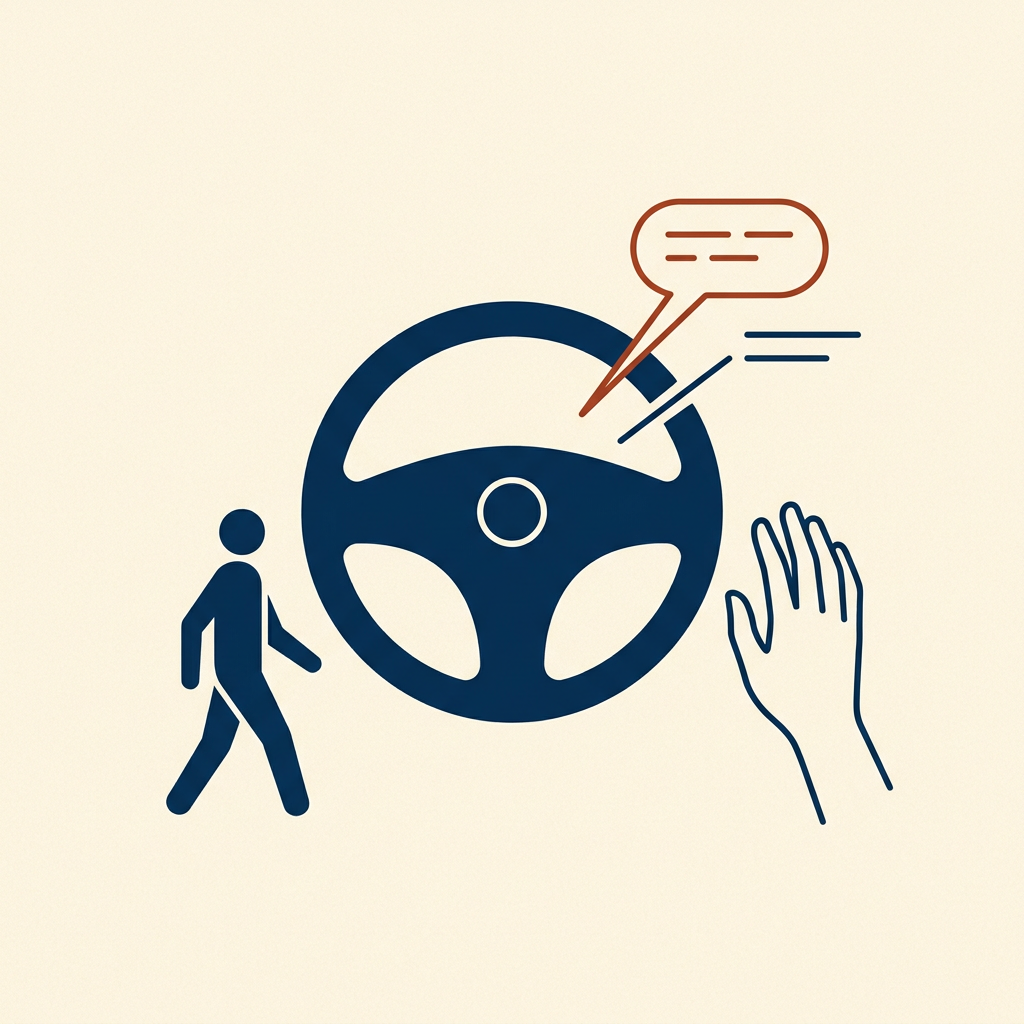
Attention cannot split
Hands-free calling is roughly as dangerous as handheld calling while driving because conversation pulls the same limited attention away from the visual scene.
Common assumption
Hands-free calling is safe because the hands stay free
Authors' claim
Hands-free is roughly as dangerous; the load is cognitive, not manual
Building on the gorilla result, the authors extend inattentional blindness into ordinary tasks. Data they review, including work by David Strayer, show hands-free phone use is roughly as dangerous as handheld use. The risky part is not holding the device; it is the cognitive load of conversation.
Drivers therefore fail to see motorcycles, pedestrians, and traffic signals that sit in plain view. Most people still rate their own multitasking ability as above average—a statistical impossibility—and that self-rating does not track actual performance on divided-attention tasks. The feeling of successfully doing two things at once is not evidence that both are being done well.
Attention, they argue, is a limited unitary resource. Willpower and experience cannot duplicate it. Expertise can automate some actions such as walking, but genuinely demanding tasks like talking and driving cannot both run on autopilot. People who phone while driving are relying on the illusion that their attention system flexibly covers everything at once.
In practice: A Boston police officer ran past a violent assault while chasing a suspect and was not believed when he said he saw nothing until inattentional-blindness research explained sincerely mistaken testimony.

3
Memory rewrites on recall
Vivid, confident memories, including flashbulb memories of major public events, are reconstructed at the moment of recall and are often factually wrong while certainty stays high.
After attention, the authors turn to memory, which people trust even more because remembered events arrive with the feeling of replaying a recording. Studies of flashbulb memories after the September 11 attacks surveyed people within days and again years later. Confidence stayed high or rose; accuracy dropped, with people misremembering where they were, who told them, and what they did.
Memory is not a stored video file. It is rebuilt each time from fragments and is open to later information, suggestion, and the life story a person wants to tell. That is why eyewitness testimony, treated by juries as near-infallible, ranks among the leading causes of wrongful convictions later overturned by DNA evidence, a pattern the authors link to Innocence Project cases.
Source confusion compounds the problem: people accurately remember a fact or face yet misattribute where they encountered it, sometimes conflating what they were told with what they saw. Because encoding itself requires attention, and because recall is constructive, confidence and accuracy are not the same thing and often move in opposite directions. A detailed, unwavering story can simply be a more coherent, less accurate reconstruction that the teller now fully believes.
In practice: People surveyed after September 11 kept or increased confidence in their flashbulb memories over years while accuracy about location, informant, and actions fell.

4
Certainty sold as skill
Confident-seeming behavior is systematically overweighted as a sign of competence even though confidence and accuracy are only weakly related.
What audiences weight
Fluent speech, no hedges, steady manner = competence
What tracks accuracy
Stated certainty is a poor predictor for witnesses, physicians, and analysts
The authors isolate confidence as its own illusion. Research on eyewitness identification shows a witness's certainty when picking someone from a lineup is one of the strongest predictors of whether a jury believes them, yet certainty poorly predicts actual accuracy. Certainty can be inflated afterward by an officer's reaction or by rehearsing the identification.
The same pattern appears among professionals. Studies of physicians and financial analysts find that stated confidence in a diagnosis or prediction does not track real hit rates. Fluency without hedging and steady eye contact raise rated competence regardless of whether the answer is correct. Confidence is partly a personality trait and partly a social performance.
They illustrate institutional stakes with the Titanic and Captain Smith's confidence in the ship's design. Confidence may once have worked as a signal inside small groups with repeated interaction and reputation costs; it fails in courtrooms, trading floors, and hospitals where a stranger's demeanor is judged once without long-term accountability. Confident witnesses and experts are often confidently wrong in ways neither they nor their audience can detect from the outside.
In practice: Captain Smith's confidence in the Titanic's design stands as a case of institutional overconfidence producing catastrophic decisions.
5
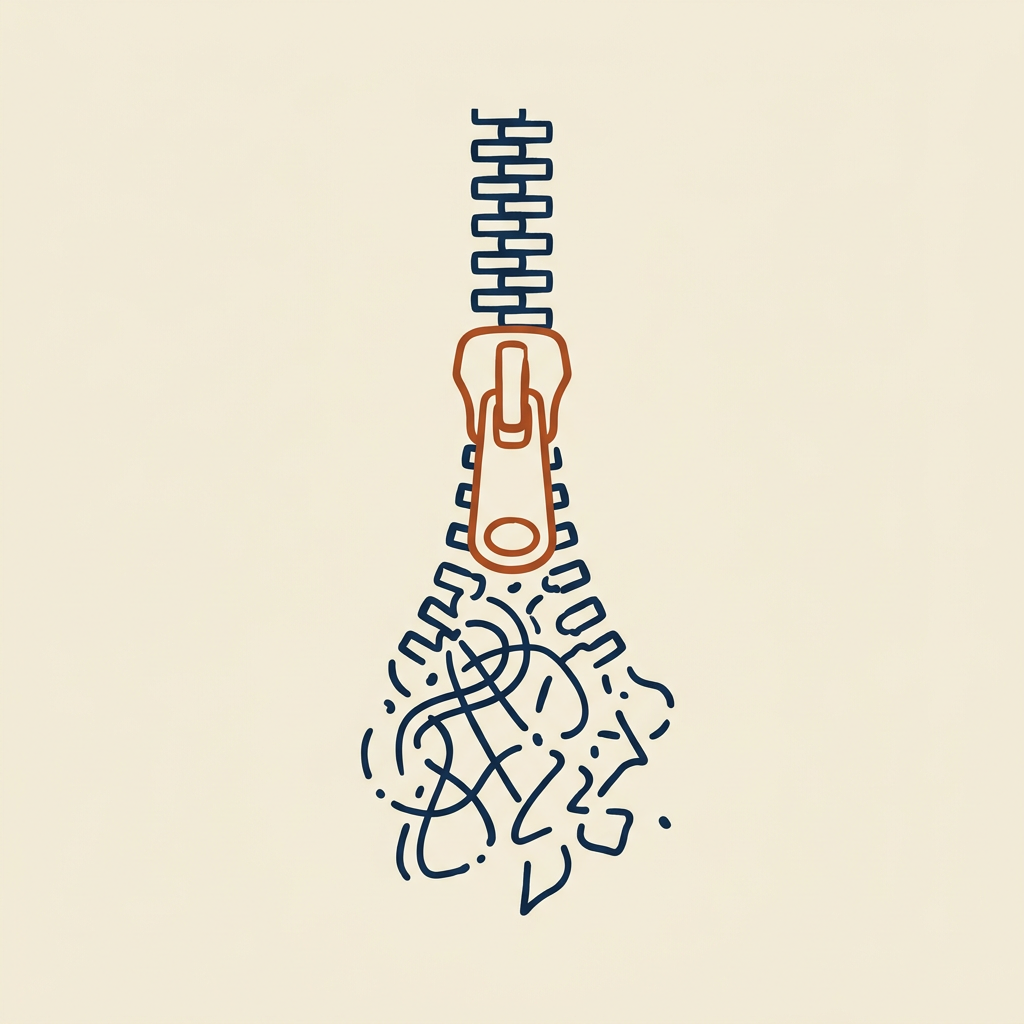
Depth that vanishes on paper
People believe they understand everyday devices and policies in far more detail than they can actually explain; the gap appears only when they try to produce the steps.
- 1Rate understandingGive a high numeric score to how a zipper, toilet, or policy works
- 2Write the stepsProduce an actual step-by-step explanation
- 3Rate againSelf-rated understanding drops sharply once gaps appear
Drawing on work by Frank Keil and Leonid Rozenblit, the authors present the illusion of explanatory depth. Subjects rate their understanding of a zipper, flush toilet, or bicycle derailleur on a numeric scale. Asked to write a step-by-step explanation, their self-rated understanding drops sharply because explaining exposes gaps that mere familiarity had hidden.
The same pattern extends to political and financial reasoning. People hold strong opinions on policies whose mechanics they cannot describe, and confidence in those opinions is unaffected by how little they can explain. The feeling of knowledge is generated without an accurate internal check on whether detailed knowledge is present.
That structure enables charlatans and overconfident experts: an audience stuck at shallow familiarity cannot tell deep expertise from fluent performance. The practical remedy the authors stress is not more private confidence-checking but forcing explicit explanation, since vague familiarity is what sustains the illusion.
In practice: Before the 2008 crisis, investors and even some professionals believed they understood the risk structure of mortgage-backed securities until attempts to trace the underlying obligations exposed the gaps.

6
Coincidence dressed as cause
The mind treats temporal sequence and superficial correlation as causation so readily that a vivid personal story can outlast large contradictory evidence.
- 1998Wakefield study links MMR vaccine to autism
- LaterStudy retracted; large epidemiological studies contradict the claim
- PersistencePersonal coincidence timelines keep the causal story alive
Humans are pattern-and-story generators shaped by an environment where quick causal guesses about predators or food beat careful statistics. The authors' central case is the discredited MMR-vaccine–autism claim that began with Andrew Wakefield's 1998 study, later retracted and contradicted by large epidemiological work.
The false story persisted because autism symptoms often become noticeable around the age children receive the vaccine. Parents observing the coincidence build a causal narrative that fits their own timeline and feels more convincing than population-level statistics they have not personally lived. The illusion draws strength from earlier ones: a vivid personal story feels more certain than an abstract study, and evaluating the studies properly requires statistical literacy most people neither have nor know they lack.
Daily life shows the same leap—from lucky charm to better performance—when regression to the mean or unrelated factors are the real explanation. The authors do not tell readers to distrust all pattern recognition; they argue that vivid individual coincidences should carry far less weight against solid aggregate data than they typically do.
In practice: Parents noticing autism symptoms near vaccination age built a causal story that outran the retracted 1998 study and the large studies that contradicted it.

7
Potential sold in shortcuts
Claims that brief music exposure or brain-training produce large durable gains in general intelligence are almost always overstated relative to the actual evidence.
- 1993Rauscher finds brief small spatial-task improvement in college students after Mozart
- AftermathFinding fails reliable replication yet seeds state newborn CD programs
- Broader claimBrain-training gains on practiced tasks rarely transfer to general ability
The final illusion concerns untapped potential. The so-called Mozart effect grew from a 1993 study by Frances Rauscher that found a brief, small improvement on a narrow spatial-reasoning task among college students after listening to Mozart. The result was never about infants, never about general intelligence, and failed to replicate reliably, yet it became the basis for state-funded programs distributing classical-music CDs to newborns.
Brain-training software shows a parallel pattern: gains on trained tasks rarely transfer to broader cognitive ability. People want to believe small easy interventions unlock large hidden reserves; that wish is more appealing than sustained effortful practice over years.
The authors tie this back to the illusions of knowledge and cause. A single suggestive study, thinly understood and causally over-read, becomes public conviction through media simplification and confirmation bias, each retelling stripping the original caveats. They distinguish real findings—deliberate practice improves specific skills—from the leap to general potential unlocked by minimal effort. All six illusions reinforce one another: thin causal evidence delivered with confident fluency exploits the same self-assessment blind spots the gorilla first revealed.
In practice: A brief spatial bump in college students after Mozart was transformed into programs sending classical CDs to newborns to raise intelligence.

8
Systems that outrun intuition
Because the illusions cannot be eliminated by willpower or awareness alone, the defense is designing habits and procedures that do not depend on trusting unaided intuition.
The closing chapter gathers the six illusions and asks what can be done. The authors are explicit: simply knowing about inattentional blindness or overconfidence does not make a person immune. Awareness reduces the errors only slightly and unevenly because they happen below conscious monitoring.
They point instead to structural fixes already used where mistakes are costly. Pilots and surgeons use checklists because personal vigilance and memory cannot be trusted to catch every step every time. Police departments have moved toward double-blind lineup procedures so an officer's unconscious cues cannot shape a witness's confidence and choice. Investors and regulators are better served by demanding simple verifiable explanations of a product's mechanics than by trusting confident salesmanship.
Strong personal conviction—about a memory, a belief, or a cause-and-effect story—should be treated as a prompt for scrutiny rather than a stopping point. The gorilla's real lesson is that failures feel exactly like successes from the inside; there is no internal alarm bell. Humility about the limits of intuition, backed by documentation, procedure, and independent verification, is the substitute the brain does not supply.
In practice: Pilots and surgeons rely on checklists, and police use double-blind lineups, precisely because unaided vigilance and memory are known to fail silently.
Key terms
- illusion of attention The belief that we notice everything important around us when focused attention actually leaves us blind to much of what is in plain view
- inattentional blindness Looking directly at something yet failing to consciously perceive it because attention is occupied elsewhere
- flashbulb memory A vivid recollection of receiving shocking public news that feels permanent but is reconstructed and often drifts while confidence stays high
- source confusion Accurately remembering a fact or face but misattributing where it was encountered
- illusion of confidence Treating fluent, certain demeanor as strong evidence of competence when certainty and accuracy are only weakly linked
- illusion of explanatory depth Rating your understanding of how something works far higher than you can demonstrate once you must write the actual steps
- illusion of cause Jumping from timing or coincidence to a causal story that feels truer than aggregate contrary evidence
- illusion of potential Believing small easy interventions unlock large general abilities beyond what the evidence supports
What to do
- Write down the specific details of a vivid memory or 'I would have noticed' claim before you check any record, then compare.
- Before accepting a causal story, including your own, ask what the base rate or control comparison is rather than whether the story fits.
- When a decision depends on multitasking, test your actual output instead of judging success by how the session felt.
- For any process where a mistake is costly, replace memory and vigilance with an external checklist.
- Treat a surge of personal certainty about a memory, witness, or explanation as a prompt to seek independent verification.
Questions to think with
- When have you insisted you definitely would have noticed something unusual happening in front of you?
- How much weight do you currently give a confident witness, doctor, or analyst before checking their hit rate?
- Which everyday device or policy opinion of yours would survive a forced step-by-step explanation?
- Where do you rely on multitasking that feels successful, and how would you actually measure the result?
- What checklist or double-check could replace a high-stakes step you still run on memory alone?
The other side
The gorilla work is widely replicated and strong, yet several later chapters lean on single dramatic studies whose broader claims have aged unevenly. Critics note the book sometimes treats memory and attention as near-uniformly unreliable when the literature is more mixed—some personally significant, rehearsed memories prove more stable than the September 11 flashbulb findings imply. Its eyewitness and lineup discussion, while directionally important, predates more rigorous 2010s reform research, and the book says little about social or institutional incentives that push overconfidence. The closing prescriptions—checklists, double-blind procedures, verification habits—are borrowed from other fields rather than newly derived, leaving the ending more essay than evidenced manual; readers should take it as diagnosis, not a full practical program.
Who it's for
Anyone who has ever argued they would certainly have noticed something odd right in front of them, plus managers, jurors, and clinicians who lean on eyewitness accounts, self-reports, or gut confidence. It also serves readers who want the actual research behind viral claims such as the cocktail-party effect or the 10,000-hour rule rather than the pop version.