




Friendship and tiny daily bids matter more than fixing fights
Gottman argues lasting marriages run on updated knowledge, fondness, and everyday responsiveness because most conflicts are permanent differences, not puzzles to solve.
IJR · Oct 13, 2026 · 13 min read
In 60 seconds
- Roughly 69 percent of marital conflicts are perpetual personality or lifestyle clashes that never get resolved.
- Gottman claims he can predict divorce with over 90 percent accuracy from a few minutes of watching how a couple argues.
- Couples who stayed married over six years turned toward everyday bids for connection about 86 percent of the time; those who divorced did so about 33 percent.
- Stale knowledge of a partner's inner life, eroded fondness, and refusal of real influence poison the relationship faster than the fight topics themselves.
- Only a minority of problems are truly solvable; gridlock softens when the hidden dream under a rigid position is named and honored.
- Durable marriages function like a small shared culture of rituals, roles, and purpose, not just logistics and compromise.
The big idea
Gottman argues marital success is not about resolving conflict but about building friendship, respect, and shared meaning strong enough that conflict stays in proportion. Most disagreements are permanent differences, so the measurable daily habits of knowing, admiring, responding, and yielding predict survival better than communication techniques.
The book in brief
The book opens by dismantling conventional couples therapy. Active listening and structured conflict tools fail most pairs because roughly two-thirds of marital fights are perpetual: they grow from fixed personality or lifestyle needs and will never be solved. What separates lasting marriages is not better fighting but an emotional foundation sturdy enough to metabolize disagreement without poisoning everything else. Gottman stakes his claim on lab observation of real couples, including the assertion that a few minutes of argument can forecast divorce from specific negative behaviors.
From there the argument rebuilds marriage from the ground up. Partners need a living mental map of each other's inner world and a reservoir of fondness and admiration that keeps the story of the relationship positive even when hard times are retold. Those stores of knowledge and respect make it possible to notice and answer the tiny daily reaches for attention that accumulate into trust.
Power and conflict come next. Marriages in which one partner, especially husbands in the original heterosexual samples, systematically refuse the other's influence are far more fragile. Only after friendship and mutual influence are in place does Gottman offer a narrow toolkit for the minority of problems that are actually solvable: soft startups, repair attempts, physiological calming, and real compromise.
The later chapters treat the fights that never end. Gridlock is perpetual conflict turned bitter because each side's position stands for an unspoken life dream; naming that dream can turn gridlock into an ordinary, manageable difference. The book closes by arguing that the strongest marriages build shared rituals, roles, and goals—a private culture that gives friction a larger purpose and keeps problems in scale.
Context
John Gottman and Nan Silver drew on decades of laboratory observation in what became known as the Love Lab, measuring physiology and coding behavior while couples talked. The 1999 book mattered because it replaced folk wisdom and generic communicate-better advice with concrete, testable practices grounded in that data, and because it openly challenged the conflict-resolution focus of mainstream marital therapy.
The key ideas
1
Most fights never resolve
About 69 percent of marital conflicts are perpetual differences in personality or needs, so therapy that trains couples only to solve them sets them up to fail.
Conventional therapy bet
Teach communication and conflict-resolution techniques so couples can solve their fights
Gottman's claim
Most conflicts are perpetual; build friendship so unresolved differences stop poisoning the whole bond
Gottman attacks the core of traditional counseling: I-statements, active listening, and structured resolution scripts. His longitudinal work, including measures of heart rate, skin conductance, and facial expression during arguments, found those tools show weak staying power once couples leave the office.
The reason is structural. A fight over holiday visits to in-laws is rarely a communication failure; it is a lasting clash over how much extended-family contact each person wants. Teaching the pair to close the issue guarantees repeated failure and a sense that the marriage itself is broken.
What actually separates happy from unhappy couples is not whether they fight or even how intensely, but whether the rest of the relationship is strong enough to absorb the friction. The project therefore shifts from fight better to build a friendship so sturdy that fighting matters less.
That reframing also underwrites the famous prediction claim: from as little as five minutes of argument, specific negative behaviors—not the topic—let Gottman forecast divorce with over 90 percent accuracy in his samples.
In practice: A couple locked in the same holiday-in-laws argument year after year is not failing to use I-statements; they hold a permanent difference in family-contact needs that negotiation will not erase.
2
Keep the love map current
Couples who maintain detailed, updated knowledge of each other's inner world are far less likely to divorce than those whose mental maps freeze in an earlier chapter of the relationship.
A love map is Gottman's name for the detailed mental picture one partner holds of the other's history, worries, hopes, stresses, and daily reality. It is not a courtship project you finish once.
Life keeps rewriting the partner: new jobs, children, aging parents, fresh fears. When the map stays frozen, support lands wrong and coming conflicts go unseen. Gottman's data linked simple knowledge gaps—inability to name a spouse's current best friend, biggest fear, or a repeatedly mentioned coworker—to higher marital distress.
The practice is concrete and ongoing: ask open-ended questions about the inner life, remember the answers, and treat the partner as someone still becoming rather than already fully known. Every later skill—attunement in conflict, precise appreciation, successful repair—depends on knowing what matters to this person right now.
In practice: A husband still operates on a five-year-old picture of his wife and misses that a new manager has become her main daily stressor, so his attempts at support feel off-key.
3
Protect fondness and admiration
How a couple narrates its own past predicts survival better than how much they currently fight; contempt is the single behavior most tightly tied to divorce.
Negative reconstruction
Early romance minimized; hard times read as proof it was doomed from the start
Living fondness
Hard periods framed as shared challenges; respect for character stays audible even in failure
Fondness and admiration mean partners still hold a basically positive view of each other's character, separate from the mood of any given argument. When Gottman asked couples to tell the history of their relationship, the tone of that story forecast divorce.
Couples heading toward breakup rewrote the past in a negative light: early romance shrank, hard times became proof the match was doomed from the start. He calls this negative reconstruction of history. Stable couples could frame the same hard periods as challenges they survived together and kept respect alive even while admitting failure.
The antidote is deliberate, specific admiration—not generic compliments but named traits the speaker actually respects, backed by reasons and examples. Simply listing those traits and stories measurably shifted how pairs later described each other. That reservoir has to be maintained; marriage vows alone do not keep it full. Contempt, fondness's opposite, sits at the top of the behaviors Gottman links to divorce.
In practice: When asked to recount their early years, a distressed couple shrinks the courtship to something minor and treats every later setback as evidence the relationship was doomed, while a stable couple retells the same rough stretch as a trial they outlasted together.
4
Turn toward the small bids
Couples who stayed married turned toward everyday bids for connection about 86 percent of the time; those who later divorced managed only about 33 percent.
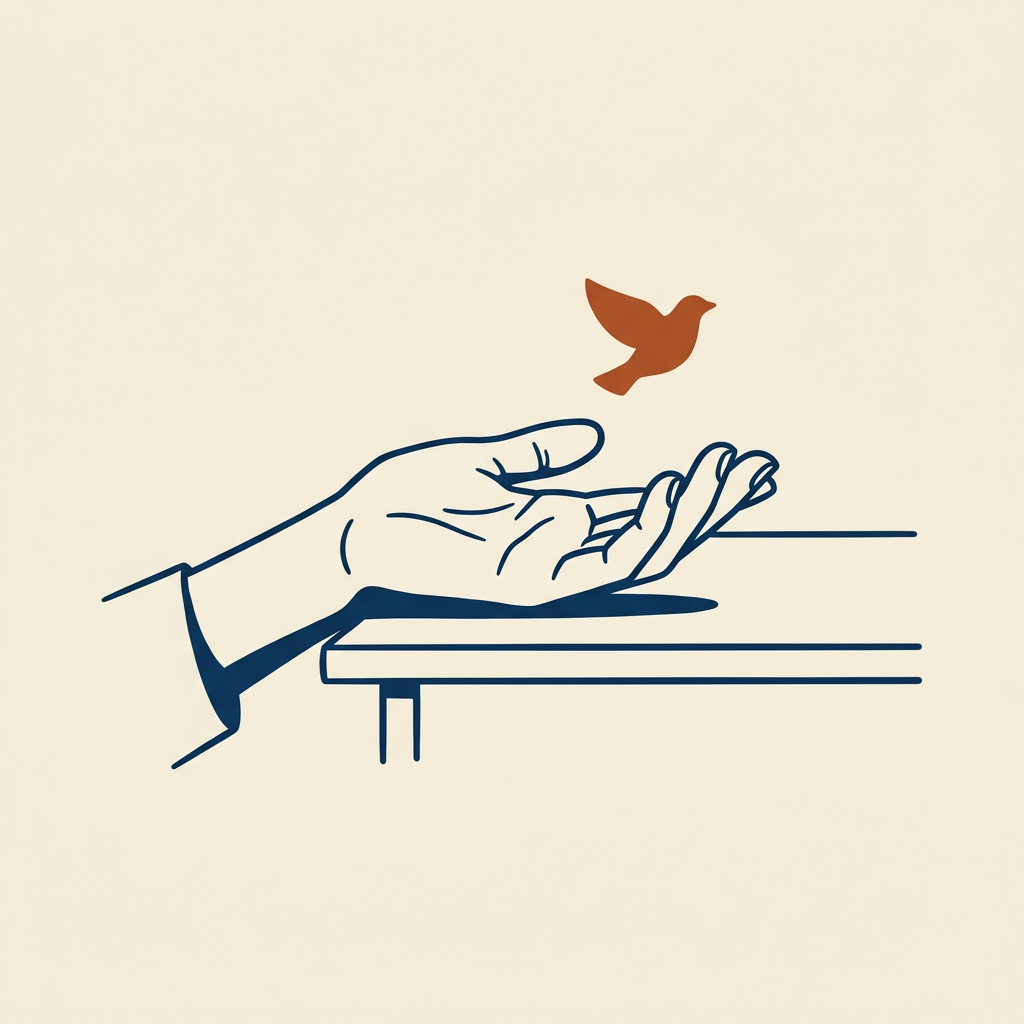
Bids are the tiny reaches—one partner comments on a bird outside, shares a quick anecdote, or asks for a reaction—hoping for engagement. Gottman's team coded thousands of hours of ordinary interaction and followed the pairs for years.
Over a six-year span, the couples who remained married answered those bids with attention or interest roughly 86 percent of the time. Couples who divorced had turned toward them only about 33 percent of the time; most bids were ignored or brushed off. Intimacy here is an accumulation of thousands of ordinary moments, not a few grand gestures.
A strong love map and a store of fondness make bids easier to notice and worth answering. The same habit of engagement later shows up in harder talks: pairs who already turn toward each other enter conflict with goodwill in the bank; pairs who habitually turn away arrive already disconnected.
In practice: A husband mentions he ran into an old friend at the store and gets only a distracted uh-huh with no follow-up—one tiny failed bid that, repeated across years, compounds into distance.
5
Accept real influence
In the heterosexual samples, marriages where husbands resisted wives' influence faced markedly higher divorce risk; the broader principle is mutual power-sharing, not winning.
Resist influence
Partner's view treated as obstacle to route around; decisions stay unilateral
Accept influence
Partner's preference counts as data that visibly shifts the joint decision
Gottman found an asymmetric pattern: men who dismissed wives' opinions or refused to let those views shape decisions were far more likely to see the marriage end. Women in the same samples were already generally open to male partners' influence, so the predictive weight sat on whether husbands reciprocated.
He reframes the finding as power-sharing rather than gender fate. Any partner who treats disagreement as a contest to win, never as a negotiation between equals, erodes stability. The damage shows up in calm decisions about money or parenting long before it explodes in a fight.
Accepting influence is easier when fondness is intact; it is nearly impossible once respect has drained away. The practice is to yield on smaller choices so a partner's stated preference visibly moves the outcome—not domination in reverse, but genuine mutual sway.
In practice: In a discussion about finances or parenting, one partner lays out a view and the other either weighs it as real data or dismisses it on the spot; that split in response tracks later divorce risk.
6
Save skills for solvable problems
Conflict techniques belong only to the minority of situational, solvable problems; the first three minutes of a talk—and whether a harsh startup or flooding appears—often decide the rest.
After establishing that most conflict is perpetual, Gottman narrows the toolkit to problems that can actually end: one-off logistics or concrete decisions rather than identity-level clashes. Misapplying negotiation to a perpetual issue simply misdiagnoses what the relationship needs.
For the solvable set he stresses a soft opening instead of global criticism or contempt, acceptance of repair attempts mid-fight, physiological self-soothing when flooded, and real compromise on the substance. Lab work showed the opening minutes of a conflict discussion predicted the whole conversation and even longer-term trajectory with high accuracy.
Harsh startup—a complaint launched as character attack—triggers defensiveness that derails problem-solving no matter how small the issue. Flooding is the spiked heart-rate state in which a person can no longer process words rationally; Gottman advises a break of at least twenty minutes so the nervous system can settle before continuing.
In practice: A complaint that begins as you always or with contempt launches a defensive cascade; the same issue raised softly can still be worked. When heart rate spikes, a structured pause of at least twenty minutes lets thinking return.
7
Unlock gridlock via hidden dreams
Perpetual problems turn destructive when each rigid position stands for an unspoken life dream; naming the dream can convert bitter gridlock into an ordinary, manageable difference.
Ordinary perpetual problems can be lived with humor and dialogue. Gridlock is the same loop grown bitter, with no sense of progress. Gottman argues each side's stance is often a stand-in for a deeper value or longings—wanting kids near extended family may really be an unresolved need for one's own childhood community.
Until that dream is identified and acknowledged, surface compromise feels empty. The process is exploratory, not immediately solution-focused: ask why the issue matters so much, what feelings arise, what history it touches, and do not argue the dream away.
Success is not turning gridlock into a solvable problem. Success is turning it back into an ordinary perpetual problem that can be discussed with respect even though it never fully ends. That conversation requires the goodwill built by earlier principles; without love maps and fondness, pairs rarely sustain the curiosity gridlock demands.
In practice: A couple locked over spending versus saving discovers one partner's frugality carries the dream of freedom and security his own parents never had—a meaning invisible when the fight stayed at the bank balance.
8
Build a shared culture
Marriages last longer and weather stress better when couples create rituals, roles, and goals that give the relationship a purpose larger than daily logistics.
The final principle lifts the pair beyond connection and conflict management into something like a private culture. Shared meal or holiday rituals, clear roles, and joint goals or values supply meaning that simple cohabitation does not.
Gottman found couples who could articulate a sense of shared purpose—regardless of formal religion—reported higher satisfaction and handled stress more resiliently than pairs who ran the household well but lacked that deeper layer. A protected Friday-night ritual, for instance, works not only as quality time but as a weekly symbol that the relationship comes first.
Shared meaning rests on everything beneath it. Without living love maps or real fondness, rituals feel performed rather than true. When gridlock or conflict returns, a couple that sees itself inside a larger joint project can keep the friction in proportion; a couple that experiences the marriage only as an endless set of transactions cannot.
In practice: One couple guards a specific Friday-night ritual free of work and outside demands, treating it as a weekly reaffirmation that the relationship holds priority.
Key terms
- Love map The detailed, updated mental picture you hold of your partner's inner world, history, stresses, and hopes
- Bid for connection Any small verbal or nonverbal reach for attention, interest, or contact in ordinary moments
- Turning toward Responding to a bid with attention or engagement instead of ignoring or rebuffing it
- Negative reconstruction of history Retelling the couple's past in a darker light so early love shrinks and hard times prove doom
- Harsh startup Opening a complaint with global criticism or contempt, which often dooms the whole talk
- Flooding The physiologically overwhelmed state with spiked heart rate and stress when you can no longer think clearly with your partner
- Perpetual problem A conflict rooted in lasting personality or lifestyle differences that will not be solved, only managed
- Gridlock A perpetual problem that has turned bitter because hidden dreams under each position stay unnamed
- Shared meaning The couple's private culture of rituals, roles, and goals that give the relationship purpose beyond logistics
What to do
- Ask your partner two open-ended questions this week about current stresses or hopes and write down the answers.
- List three specific character traits you admire in your partner, each with a real example, and say them aloud.
- Treat the next small comment or gesture as a bid: pause, look up, and answer it with real interest.
- On one minor decision, let your partner's preference visibly change the outcome.
- When a fight starts harsh or your body spikes, call a break of at least twenty minutes before continuing.
Questions to think with
- Which of your recurring arguments are actually perpetual differences rather than failures to communicate?
- How current is your mental map of your partner's daily inner life—and what has gone stale?
- In the last full day together, how many small bids did you notice, and how did you answer them?
- Where do you still treat your partner's view as something to route around instead of data that should move the decision?
- What ritual or shared goal already gives your relationship meaning, and what dream sits under your most stuck fight?
The other side
Critics note the over-90-percent divorce-prediction claim has been challenged for base-rate problems, sample selection, and using the same data to build and test models; the original Love Lab samples were largely white, middle-class, heterosexual Seattle couples, limiting generalization; the influence finding began as a gendered 1990s pattern; and the book underweights external stressors, trauma, mental health, and attachment needs while offering an upbeat, technique-heavy path that may not fit every pair.
Who it's for
Married or cohabiting people whose arguments keep escalating despite good intentions, therapists who want research-based diagnostics instead of generic communication drills, and anyone dating seriously who wants to know which everyday habits actually track with long-term stability.