




Climate change is already a cascading near-term catastrophe
Anyone still treating warming as a distant polar-bear problem needs this journalist's plain narration of upper-bound science into near-term stakes for cities, food, and politics.
IJR · Oct 23, 2026 · 13 min read

In 60 seconds
- More than half of all fossil-fuel CO2 was emitted after 1989, once Hansen had already warned Congress, so living adults sped the crisis in full knowledge.
- Wet-bulb temperatures above roughly 35C can kill a healthy person in hours; high-emissions paths could push parts of South Asia and the Persian Gulf toward that limit.
- Each degree past crop optima can cut staple yields roughly ten percent, while elevated CO2 also thins protein, zinc, and iron in the food that remains.
- Chronic high-tide flooding, not one dramatic inundation, can make coasts uninsurable then abandoned, with Miami and Jakarta already acutely exposed.
- Unmitigated warming could erase roughly 20 percent or more of global GDP by 2100, with the steepest losses in hot, poorer equatorial countries.
- Tech fixes alone will not cut cumulative carbon fast enough; Wallace-Wells argues political mobilization on emissions remains the only reliable lever.
The big idea
Wallace-Wells argues climate change is not a slow, contained, far-off problem but a cascading crisis already reshaping heat, food, water, ecosystems, economies, and politics at once. He takes upper-bound peer-reviewed projections usually hedged in appendices and narrates them as live possibilities still decided by political choices this decade.
The book in brief
Wallace-Wells opens by dismantling the intuition that warming is gradual and inherited from a distant industrial past. He stresses that more than half of fossil CO2 came after 1989, after science had already flagged the danger, and that 1.5, 2, and 4 degrees are qualitatively different worlds, not degrees of the same discomfort. His deliberate method is to elevate the literature's upper bounds from footnotes into a single shocking narrative aimed at complacent wealthy readers. The middle chapters walk the physical channels in order. Extreme heat becomes a hard physiological limit once wet-bulb conditions stop sweat from working. Agriculture faces yield drops and nutrient thinning across breadbaskets that share similar climate bands. Seas rise through chronic flooding that wrecks insurance and aquifers before any single drowning event. Familiar disasters—fire, storm, flood—intensify and overlap until emergency systems fail. Oceans acidify and lose oxygen while air pollution and smoke close any imagined refuge. Those stresses then translate into money and power. A temperature-output model projects large global GDP losses by 2100, concentrated where countries are already hot and poor. Climate acts as a threat multiplier on existing fractures, illustrated by drought-driven migration that helped set conditions for Syria's war, and by mid-century displacement that can strain borders far from the original stress. He turns inward to explain underreaction: human cognition and modern storytelling are built for vivid, immediate threats, not diffuse statistical ones, so the crisis resists the narrative shape that usually mobilizes will. The closing move surveys carbon capture, geoengineering, and renewables still growing beside fossils, finds each too slow or too risky alone, and lands on direct political cuts to emissions as the only lever that acts on cumulative carbon at the required speed—without offering soft reassurance.
Context
Wallace-Wells writes as a journalist, not a scientist, compiling peer-reviewed projections into one narrative meant to shock readers, especially in wealthy nations, out of treating climate as contained and distant. The book mattered because it forced mainstream discourse to confront worst-case scientific literature directly rather than leave it in hedged appendices.
The key ideas

1
Pace outran intuition
Complacency persists not because the science is uncertain but because more than half of all fossil CO2 has been emitted since 1989, after the danger was already public.
Wallace-Wells starts by reframing the crisis as a choice still being made by living adults, not a Victorian inheritance. He notes that the bulk of cumulative fossil emissions arrived after Hansen's congressional warning that warming was already detectable and dangerous. That fact collapses the comfortable story of innocent early industrialization. He insists the gaps between 1.5, 2, and 4 degrees Celsius are not modest steps on one discomfort scale. Each threshold closes options the last one left open and produces a qualitatively different world. Gradual policy matched to slow intuition therefore mismatches the physical pace. His method follows from that mismatch: take the scientific literature's own upper-bound projections—the ones usually parked in appendices with heavy caveats—and narrate them as plausible futures under continued high emissions. The aim is to unsettle, not reassure, so readers stop assuming moderate responses fit the actual speed of change. Everything that follows depends on accepting those upper bounds as live possibilities still contingent on decisions in the present decade, not fringe science fiction.
In practice: More than half of humanity's fossil-fuel CO2 has been released since 1989, the year after Hansen testified that warming was already dangerous.

2
Heat as hard limit
Once wet-bulb temperature exceeds roughly 35C, a healthy person in shade with water can die of heatstroke within hours, making extreme heat the most immediate unlivability threat.
~35C
wet-bulb point where sweat fails and death can follow in hours
Wallace-Wells centers wet-bulb temperature—the combined heat-and-humidity measure that decides whether sweat can cool the body. Cross roughly 35C and evaporation fails; death can follow in hours even without exertion. That turns heat from preference or adaptation problem into a direct physiological ceiling. He cites projections that parts of South Asia and the Persian Gulf could approach or cross the threshold later this century under high emissions, regions home to hundreds of millions. The 2003 European heat wave, which killed an estimated 35,000 in weeks, serves as a preview of infrastructure and health systems meeting a climate they were not built for. Effects spill past mortality. Heat degrades cognition, cuts outdoor labor productivity, and spikes air-conditioning demand exactly when grids are most strained, creating feedback between climate stress and infrastructure failure. Treating heat as a hard limit is a stronger claim than most climate talk allows. The chapter makes the book's upper-bound method concrete: a biological mechanism that turns appendix scenarios into mass-casualty events rather than abstract statistics.
In practice: The 2003 European heat wave killed an estimated 35,000 people in weeks; MIT work by Elfatih Eltahir projects South Asia and the Persian Gulf could near lethal wet-bulb thresholds under high emissions.
3
Global food capacity shrinks
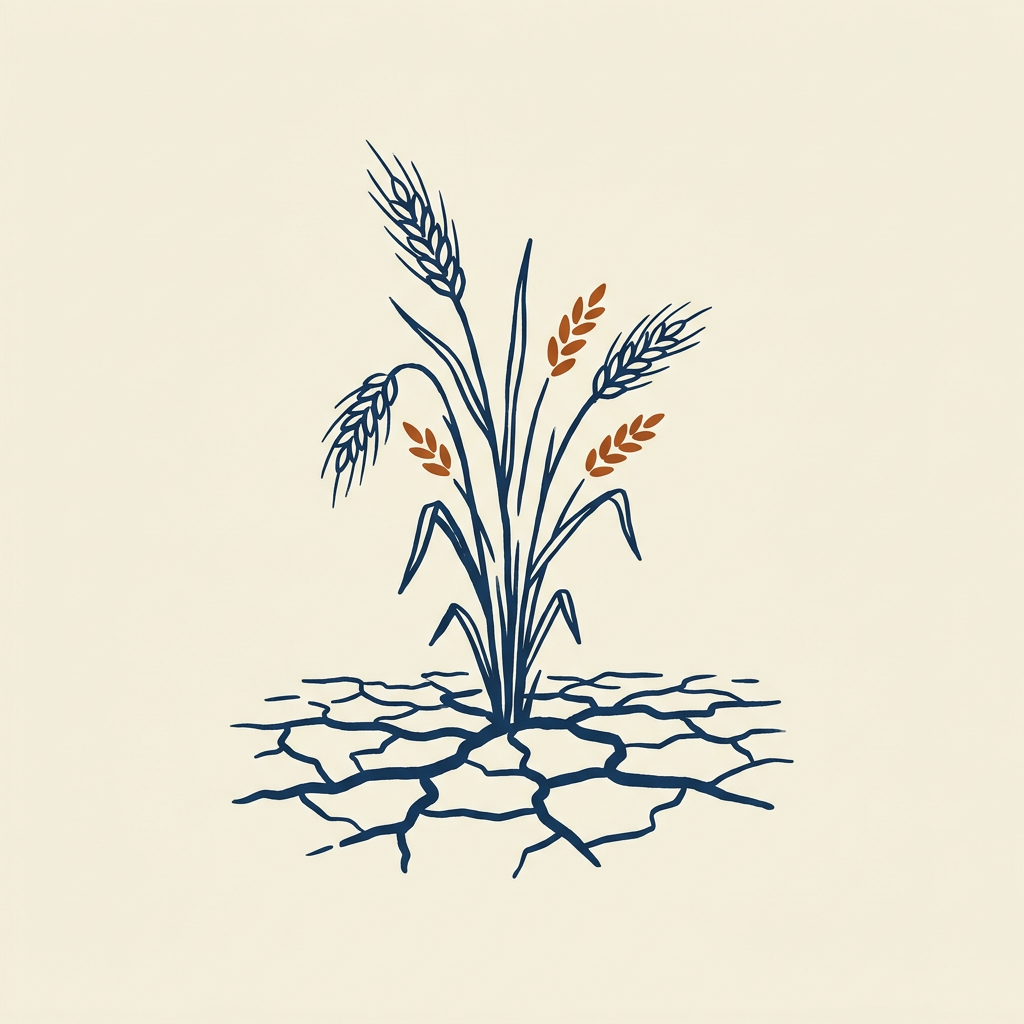
Beyond shifting where crops grow, each degree Celsius past optima can cut staple yields roughly ten percent, while elevated CO2 also lowers protein, zinc, and iron.
~10%
staple-grain yield drop per degree C past optimum
Wallace-Wells applies the same stress logic to agriculture. Wheat, maize, and rice peak in narrow temperature bands; crop-modeling work he summarizes, including research linked to Rosamond Naylor, suggests roughly ten percent yield loss per degree past that optimum. Major breadbaskets—the American Midwest, Indo-Gangetic Plain, northern China—sit in similar bands, so simultaneous heat or drought can shrink global grain at once instead of simply moving production poleward. A less intuitive finding compounds the risk. Elevated atmospheric CO2 can reduce nutrient density even when calories remain, a pattern Samuel Myers and others study as hidden hunger. Scarcity can therefore arrive as calorie-rich, nutrient-poor abundance as well as failed harvests. The global food system, he argues, is tightly coupled and short on redundancy, optimized for Holocene stability rather than volatility. Heat does not only kill people who feel the wave; it starves people who never leave cooler latitudes by degrading the shared agricultural base. This extends the book's cascading claim: one physical stress multiplies into systemic shortage.
In practice: Simultaneous shocks to the Midwest, Indo-Gangetic Plain, and northern China could cut global grain together; elevated CO2 also thins protein, zinc, and iron in staples.
4
Chronic flooding displaces
Sea-level rise will push far more people out through repeated high-tide flooding that makes coasts uninsurable and then abandoned than through any single dramatic inundation.
Single dramatic inundation
One catastrophic flood as the imagined end-state
Chronic high-tide flooding
Repeated nuisance floods that kill insurance, then occupancy, then capital
Melting ice in Greenland and Antarctica plus thermal expansion project multiple feet of rise by 2100 on high-emissions paths, with unstable ice-sheet scenarios higher still. Wallace-Wells stresses the danger is chronic: recurring nuisance floods that first kill insurability, then livability, then occupancy. Miami's porous limestone makes seawalls largely ineffective; Jakarta sinks from groundwater extraction even as seas rise, a double bind that has already pushed Indonesia to plan moving its capital. A large share of humanity lives near coasts, so modest rise threatens infrastructure, freshwater aquifers via salt intrusion, and property worth trillions. Economic channels can move faster than the water. Once insurers and mortgage lenders reprice coastal risk, capital flight can empty vulnerable zones abruptly even while the flooding itself stays gradual. Coastal cities, like breadbaskets, were built on climate assumptions that no longer hold. Disruption therefore arrives through balance sheets and infrastructure well before water becomes the direct killer.
In practice: Miami's porous bedrock defeats simple seawalls; Jakarta's sinking plus rising seas has driven plans to relocate Indonesia's capital.
5
Familiar disasters compound
Warming does not invent new disaster types so much as intensify fire, flood, and storm together until emergency systems built for one crisis at a time cannot keep pace.
- 1Known hazardFire, flood, and storm already in the emergency playbook
- 2Raised baselineDrought, drier fuels, and moisture-heavy air intensify each type
- 3Overlap failureSimultaneous crises exhaust crews, reserves, and shelters at once
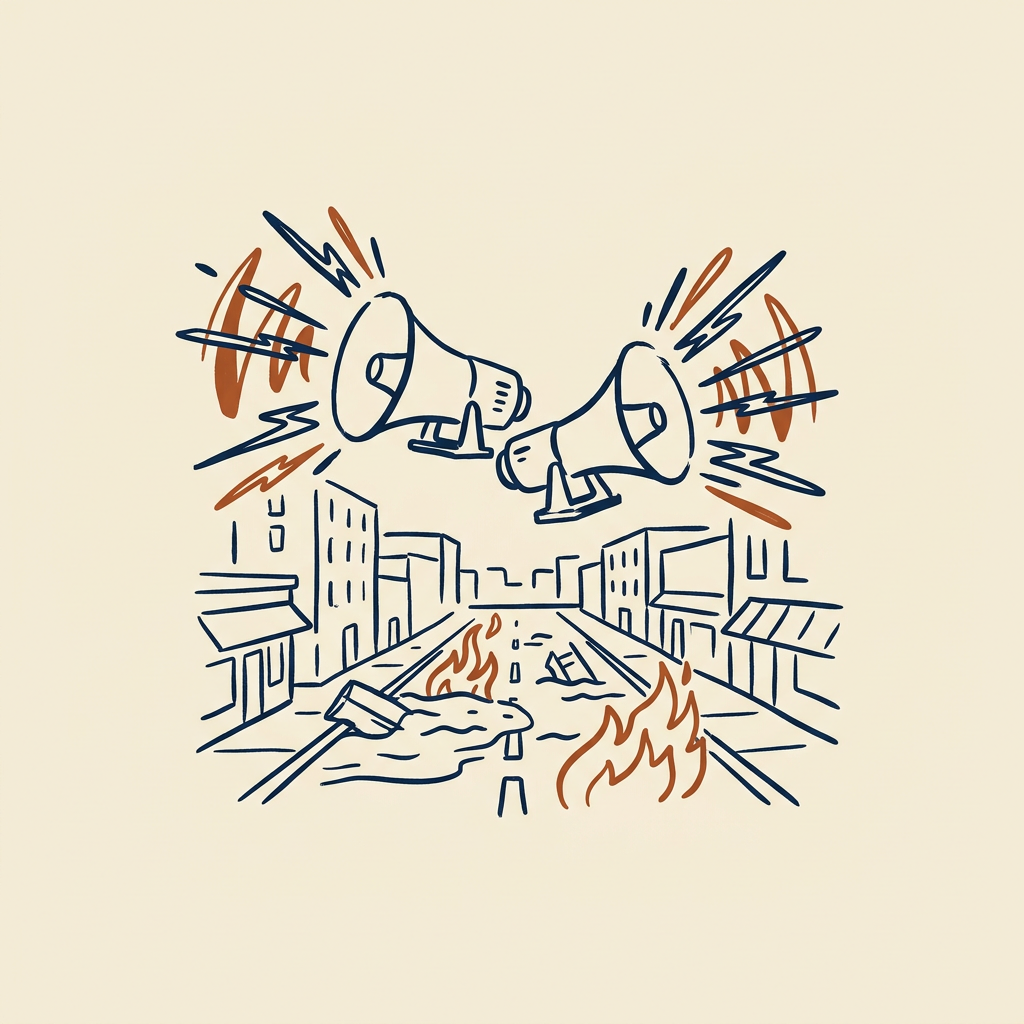
Wallace-Wells turns to wildfire and extreme storms to show amplification of hazards people already recognize, which makes the risk easier to underestimate. California's 2018 Camp Fire destroyed Paradise and killed 85 after prolonged drought, drier fuels, and longer seasons turned a known threat unprecedented. Hurricane Harvey's 2017 hit on Houston dropped record rain partly because warmer air holds more moisture—a settled physical link, not speculation. The core claim is compounding. A warmer atmosphere raises baseline risk across fire, flood, and storm at once, so regions used to sequencing emergencies face overlaps that exhaust firefighting, insurance reserves, and shelters simultaneously. Institutions designed for a narrower range of conditions meet volatility they cannot absorb. Familiarity itself slows recognition. Because fires and hurricanes are old categories, their intensification registers less as a discrete climate signal than a wholly novel hazard would, even as the data grow unambiguous. Psychology and institutions lag the physical trend together. This extends the drowning chapter's theme: systems optimized for stability fail first at the edges, then across the board.
In practice: The 2018 Camp Fire killed 85 in Paradise; Harvey's 2017 rainfall on Houston reflected warmer air's greater moisture capacity.

6
Oceans and air turn hostile
Ocean chemistry and atmosphere are no longer stable backgrounds; acidification, dead zones, and pollution degrade the mediums life depends on and erase any clean refuge.
Wallace-Wells widens from land disaster to the oceans and air that underpin the biosphere. Seawater absorbs roughly a quarter of human carbon emissions, acidifying the chemistry shellfish and coral need for skeletons and shells. Mass bleaching on the Great Barrier Reef in 2016 and 2017 killed roughly half its coral in two consecutive years. Warming plus nutrient runoff also expands low-oxygen dead zones, shrinking habitable volume for fish that feed hundreds of millions. On the atmospheric side he cites WHO estimates that outdoor air pollution already contributes to millions of premature deaths yearly. Wildfire smoke, intensified by the dynamics of the prior chapter, adds a growing particulate source even far from the flames themselves. Oceans and air were once treated as fixed mediums inside which human life occurs. The book insists they are now active variables degrading in tandem with heat, food, and flood. That cumulative frame removes retreat: the resources people would flee toward—fisheries, breathable air, clean water—are degrading alongside the more visible hazards. Habitability failure is therefore planetary, not local.
In practice: Great Barrier Reef bleaching in 2016-2017 killed roughly half its coral; wildfire smoke now adds particulate load far from the fires.
7
GDP takes a lasting hit
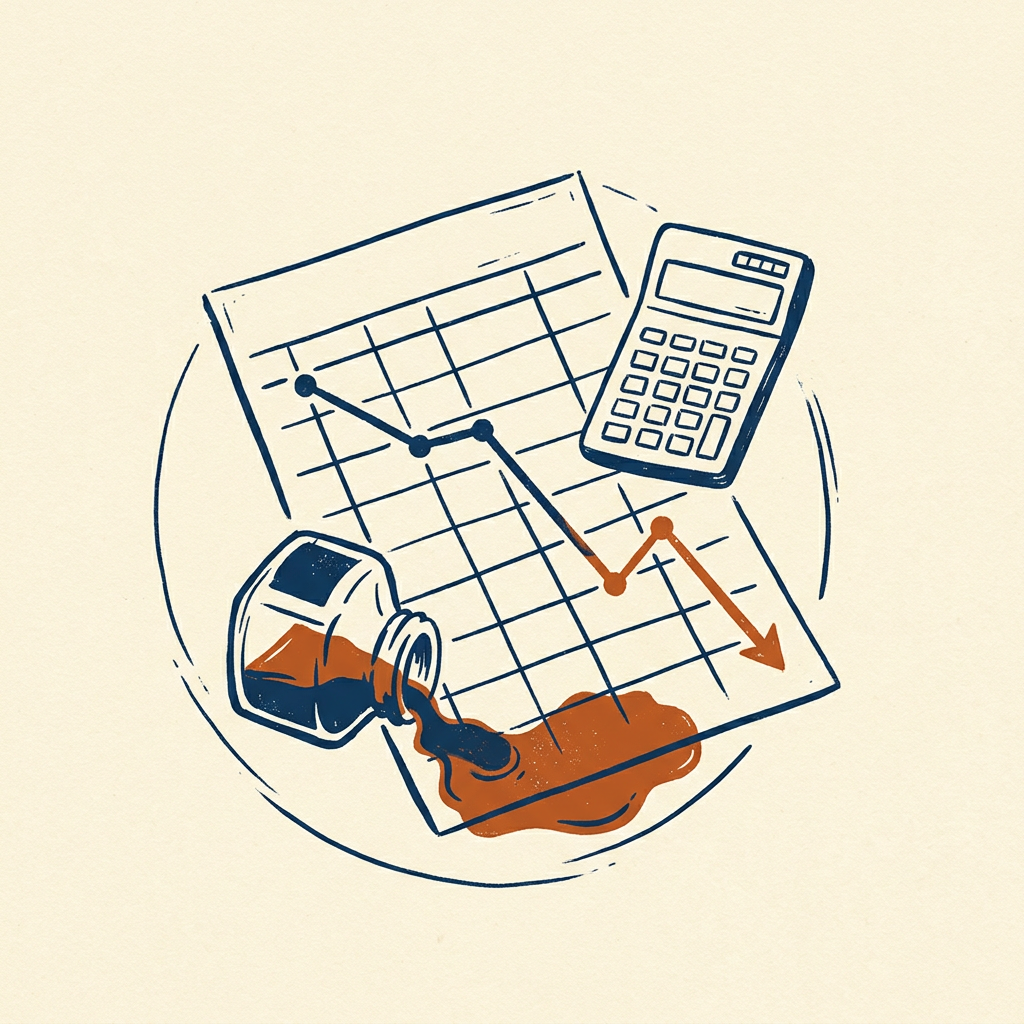
Unmitigated warming can function as a persistent drag that reduces global GDP by roughly 20 percent or more by 2100 relative to a no-climate-change world, with steeper losses in already hot, poor countries.
~20%+
projected global GDP loss by 2100 vs no-warming world
After the physical damage, Wallace-Wells turns to its economic translation. He cites the 2015 Nature study by Marshall Burke, Solomon Hsiang, and Edward Miguel modeling temperature against national output. Their projection: unmitigated warming could cut global GDP by roughly 20 percent or more by 2100 versus a stable-climate baseline, with far steeper losses near the equator. The mechanism is accumulation, not one crash: heat cutting labor productivity, crop failure raising food prices, disaster recovery diverting capital from investment, coastal losses shrinking tax bases. He notes real uncertainty in extrapolating historical temperature-output links far outside observed ranges, yet argues the direction of the effect is robust across independent studies. Equity sharpens the point. Damage functions steepest in hot, poor countries that contributed least to historical emissions, so climate widens global inequality rather than sharing burdens evenly. Monetary language then carries the earlier suffering into terms policymakers and investors already use. Economic stress becomes the bridge to political and social instability in the next movement.
In practice: Burke, Hsiang, and Miguel's 2015 Nature model projected roughly 20%+ global GDP loss by 2100 under unmitigated warming, concentrated in hotter poorer countries.
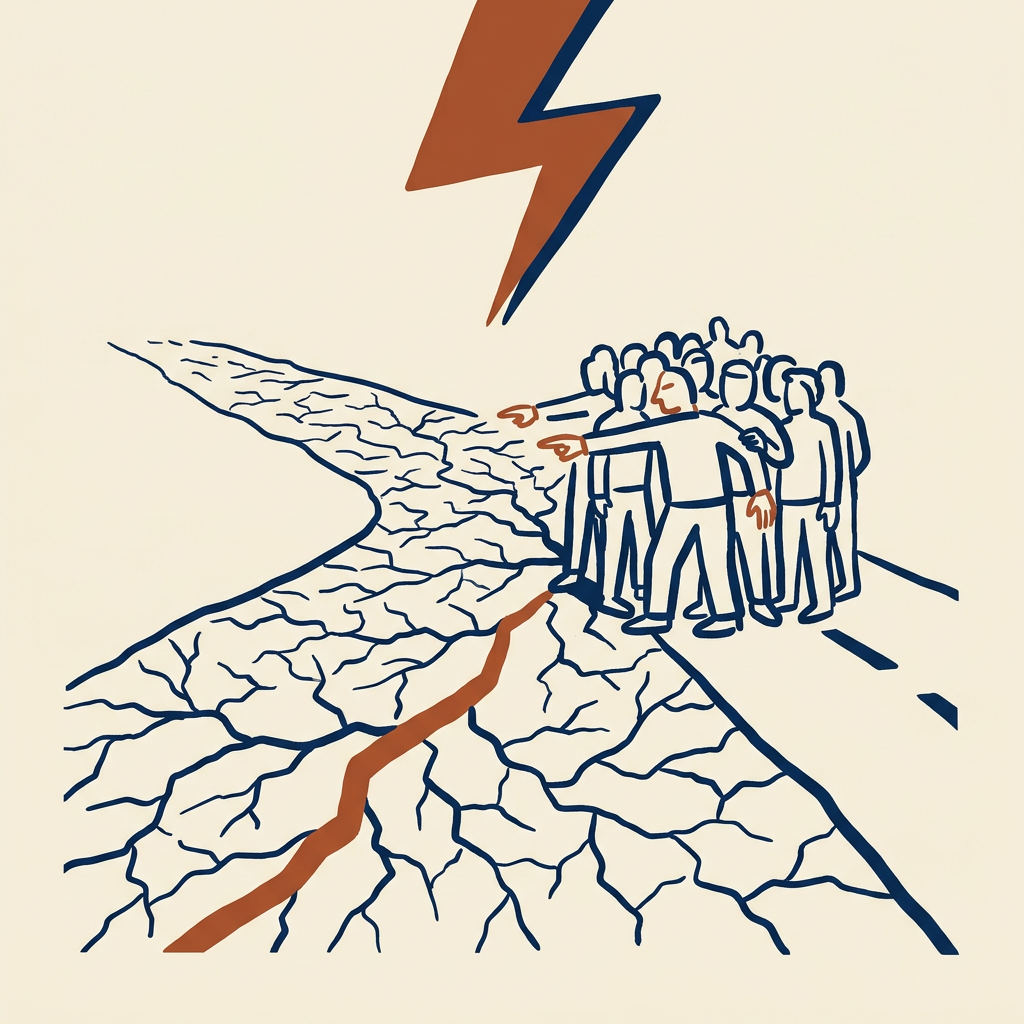
8
Climate multiplies conflict
Climate stress acts as a threat multiplier that intensifies existing political and social fractures into violence rather than causing war by itself.
- 1Climate shockSevere drought made more likely by warming
- 2Livelihood failureAgricultural collapse and rural exodus
- 3Political fractureExisting grievances and weak governance intensify
- 4Violence riskCompetition and displacement raise conflict odds
Wallace-Wells examines organized violence through the Syria case. A 2015 study led by Colin Kelley found the severe 2006-2010 drought—one of the worst in the instrumental record and made more likely by human warming—drove agricultural collapse and rural-to-urban migration that compounded grievances against the Assad government and contributed to conditions for the 2011 civil war. He presents climate as one factor among political and sectarian causes, not a monocausal story. The pattern matches how defense analysts, including inside the U.S. Department of Defense, describe climate as a threat multiplier for instability. GDP loss and resource scarcity become displacement and competition over land, water, and food; conflict research links those pressures to elevated violence risk where governance is weak and ethnic or sectarian fault lines already exist. Migration projections extend the reach. Even conservative estimates suggest tens of millions could be displaced by mid-century, straining border politics in receiving countries far from the original stress. Second-order political consequences then shape whether societies can respond to the physical harms already mapped. The argument moves the book from direct damage into the politics of response itself.
In practice: Kelley's team linked Syria's 2006-2010 drought and migration to conditions feeding the 2011 war; the U.S. Defense Department has called climate a threat multiplier.

9
Minds miss the scale
Human cognition and cultural storytelling are wired for vivid immediate threats, so a slow, diffuse, global crisis resists the narrative shape that usually drives action.
Threats we feel
Vivid, immediate, visible, personal-scale dangers
Climate's shape
Gradual, statistical, diffuse, global, incremental records
Given the evidence already laid out, Wallace-Wells asks why behavior has shifted so little. Behavioral research he draws on shows people respond to visible, personal, immediate dangers far better than to gradual statistical ones. Climate change sits almost uniquely in the hard-to-feel category even when it is intellectually understood. He engages Amitav Ghosh's observation that modern literary fiction has largely failed to treat climate as central plot, relegating it to background setting. That cultural habit, the book argues, reinforces the sense that climate is not a normal subject for serious narrative attention and therefore not urgent. Because the crisis arrives as thousands of incremental record-breaking data points across heat, food, water, and conflict rather than one legible event, it refuses the story shape that mobilizes public and political will. This is not merely a messaging failure fixable with better ads; it is a structural mismatch between the crisis timescale and the timescales of human psychology and politics. That diagnosis sets up the final claim that political mobilization, not narrative or tech polish alone, is the remaining lever.
In practice: Ghosh notes modern literary fiction treats climate as background rather than central plot, reinforcing cultural under-attention.

10
Only politics cuts carbon fast
Carbon capture, geoengineering, and renewables growing beside fossils cannot substitute for direct political cuts to extraction and consumption inside the fixed carbon budget.
Tech paths alone
Capture too small, geoengineering risky and incomplete, renewables still beside fossils
Political emissions cuts
Only lever that hits cumulative carbon directly and fast enough
The last substantive chapter surveys proposed technological paths and finds each insufficient alone inside the necessary timeframe. Carbon capture remains expensive and deployed at a tiny fraction of global need as of the book's writing. Solar geoengineering—injecting aerosols to reflect sunlight—could act fast yet is unproven, leaves ocean acidification untouched, and risks termination shock if ever suddenly stopped. Renewable deployment was growing quickly yet still expanding alongside fossil use rather than fully replacing it, so global emissions had not yet peaked. Physics sets a fixed cumulative carbon budget no matter which edge technologies are added. Wallace-Wells therefore concludes that tech and markets cannot replace political decisions that reduce fossil extraction and consumption directly. Every prior chapter funnels into one variable: cumulative atmospheric carbon. Heat, hunger, flooding, disaster, ecological loss, economic drag, conflict, and cultural paralysis are facets of that single stock. The only lever that acts on it directly and at speed is political choice about emissions now, not adaptation or rescue later. Consistent with the opening refusal to soften scale, the book withholds a reassuring all-in-one solution.
In practice: Capture stayed tiny-scale; geoengineering carries termination-shock risk; renewables were still rising alongside fossils so emissions had not peaked.
Key terms
- wet-bulb temperature Combined heat and humidity measure that shows when sweat can no longer cool the human body
- hidden hunger Drop in protein, zinc, and iron in staple crops caused by elevated atmospheric CO2 even when calories remain
- threat multiplier Climate stress that intensifies existing political and social fractures into instability or violence rather than causing conflict alone
- RCP8.5 High-end emissions pathway originally built as a heavy-coal reference case; critics say the book treats it too much like likely business-as-usual
- termination shock Danger of rapid warming rebound if solar geoengineering is started and then suddenly stopped
- carbon budget Fixed cumulative amount of CO2 that can be emitted before given warming levels become unavoidable
- chronic high-tide flooding Repeated non-catastrophic coastal flooding that gradually destroys insurability and livability
What to do
- Audit your city's projected heat days, flood risk, and wildfire risk this week with public tools such as FEMA flood maps or First Street Foundation data before any housing or insurance decision.
- Contact elected representatives about specific emissions-cutting legislation rather than relying only on personal consumer swaps.
- Stress-test work budgets, supply chains, or capital plans against heat, drought, and supply shocks hitting together instead of one hazard at a time.
- Factor coastal or wildfire exposure into any major relocation or property decision now, not as a 2100 abstraction.
- Redirect spare political energy from isolated lifestyle purity toward institutional pressure on fossil extraction and use.
Questions to think with
- Which physical channel—heat, food, chronic flooding, or compounding disaster—still feels most abstract to you, and why?
- If coal use is already declining, how should readers weigh projections built on high-end pathways like RCP8.5?
- Does a relentlessly grim register risk the fatalism critics describe, or is shock still needed to match the scale?
- What would organized political pressure on fossil interests actually look like where you live this year?
- Which local system near you—food supply, coastal property, insurance, emergency response—was clearly built for a stabler climate than the one arriving?
The other side
The book's most contested choice is narrating upper-bound and RCP8.5-style projections as the felt future; critics including Hausfather and Ritchie argue that pathway grew less plausible as coal declined and renewables cheapened, and that the prose often blurs possible under high emissions into likely, risking later credibility loss. Michael Mann and others add that relentless grimness without clear efficacy can induce paralysis rather than action. The book is also thin on the fossil industry's organized delay campaigns and offers little theory of how to organize against those interests, while its voice stays oriented toward a Western readership even as it names equatorial harms.
Who it's for
Readers who still file climate under 2100 and polar bears, plus policy-minded people who want raw scientific scale turned into narrative stakes, and anyone who has absorbed cautious IPCC summaries and wants to know what the caution has been hiding.