




Tiny habits stick when willpower and big goals fail
Fogg failed at push-ups for years until he shrank them to two after using the bathroom—the redesign for anyone whose resolutions keep collapsing.
IJR · Oct 15, 2026 · 10 min read
In 60 seconds
- Fogg argues behavior occurs only when motivation, ability, and a prompt converge at once (B=MAP).
- He treats existing routines as stronger prompts than alarms, sticky notes, or remembering on purpose.
- Almost any target can be shrunk under thirty seconds so low motivation still suffices.
- Immediate felt success after the tiny act, not sheer repetition, is what he says wires the habit.
- Of three change levers—motivation, ability, prompt—he ranks motivation the least reliable.
- Once several tiny habits stabilize, they chain into routines; design is brainstorm, pick easy, test, revise.
The big idea
Fogg argues lasting change comes from attaching a laughably small action to something you already do, then feeling good about it at once—not from summoning willpower. Habit failure is a design miss in motivation, ability, or prompt, not a character flaw.
The book in brief
Fogg starts from a familiar frustration: people pick hard habits, lean on motivation or memory, and quit when mood or life interferes. He frames that pattern as a design problem and introduces B=MAP—behavior only when motivation, ability, and a prompt meet. Hard targets sit high on difficulty and demand motivation that spikes and crashes; his fix is to slide the behavior down until even a bad day is enough.
He next replaces fragile prompts—alarms, notes, good intentions—with anchors: automatic routines already in the day. The recipe is After I [existing routine], I will [tiny new behavior], matched for frequency and physical fit, one new link per anchor until it sticks.
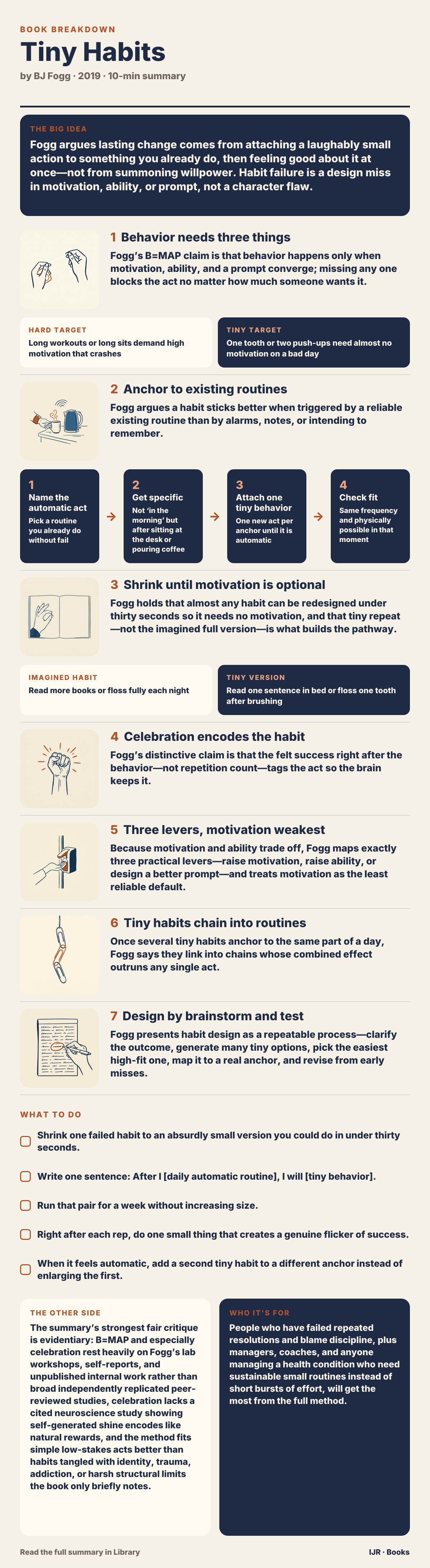
Even a good anchor fails if the action is still too big, so he pushes the tiny mindset: scale until the act takes under thirty seconds and works when you are rushed or discouraged—one sentence in bed, one tooth after brushing, two push-ups after the bathroom. Stay tiny until automatic; growth comes later from the habit’s own momentum, not forced gradual increases that reintroduce the ability barrier.
The least intuitive piece is celebration. Fogg claims positive emotion right after the act tags the behavior as worth repeating; without that feeling, repetition alone may not encode the habit. A fist pump, saying I did it, or a quiet genuine shine closes the loop. He then maps three levers—raise motivation, raise ability, or fix the prompt—and treats motivation as the weakest default, favoring simpler setup and better triggers (as when a hospital improved hand-washing by moving sanitizer, not by posters).
Once several tiny habits hold, they cluster into short chains that reshape a morning or evening without building a whole routine at once. He closes with a deliberate design sequence: clarify an aspiration, brainstorm many specific behaviors, score impact versus ease, pick a tiny one, map it to a real anchor, test for a few days, and treat early misses as redesign data. The arc runs from formula to anchors, shrinkage, emotion, levers, clustering, and a repeatable personal experiment.
Context
BJ Fogg draws on two decades at Stanford’s Behavior Design Lab. The 2019 book mattered because it reframed habit failure as a design problem rather than a character flaw and offered a repeatable method instead of inspiration.
The key ideas
1
Behavior needs three things
Fogg’s B=MAP claim is that behavior happens only when motivation, ability, and a prompt converge; missing any one blocks the act no matter how much someone wants it.
Hard target
Long workouts or long sits demand high motivation that crashes
Tiny target
One tooth or two push-ups need almost no motivation on a bad day
Fogg treats the usual pep talk—stay motivated—as backwards. Motivation spikes and crashes with mood, stress, and circumstance, so habits that need high drive on hard days are fragile by design.
He pairs that with an ability curve: as a behavior gets easier, it needs less motivation. Flossing one tooth sits near zero ability cost; a marathon sits at the opposite end. Most failed plans start high on difficulty and then beg motivation to carry them.
The practical move is to slide the target down the ability axis until low motivation is enough, then attach a prompt that already fires. The rest of the method elaborates that formula rather than asking people to feel more determined.
Audit a stuck habit by asking which of the three is missing before blaming discipline.
In practice: Fogg tried for years to build a push-up habit and only succeeded when he cut it to two push-ups after using the bathroom, so the prompt was automatic and ability was never the bottleneck.
2
Anchor to existing routines
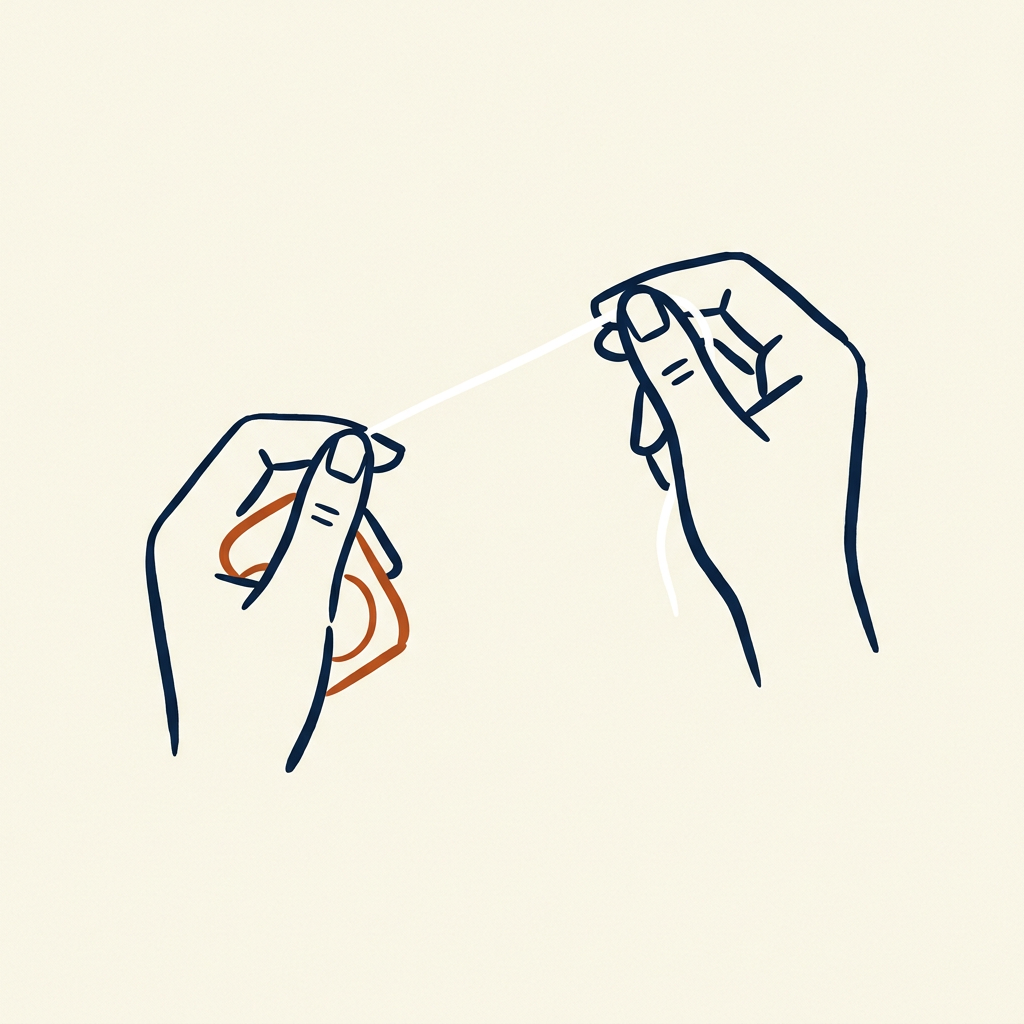
Fogg argues a habit sticks better when triggered by a reliable existing routine than by alarms, notes, or intending to remember.
- 1Name the automatic actPick a routine you already do without fail
- 2Get specificNot ‘in the morning’ but after sitting at the desk or pouring coffee
- 3Attach one tiny behaviorOne new act per anchor until it is automatic
- 4Check fitSame frequency and physically possible in that moment
External reminders get dismissed; internal willpower fades by evening. Fogg replaces both with an anchor—something already automatic—so the prompt does not depend on mood or memory.
The sentence form is After I [existing routine], I will [new tiny behavior]. Specificity matters: after I sit down at my desk beats a vague in the morning. Frequency should match, and the pair must be physically compatible—you cannot stack a standing stretch onto still lying in bed.
He warns against loading many new acts onto one anchor at once. One anchor, one behavior, until automatic, keeps ability and prompt clean inside B=MAP.
Write one After I… line for a single daily act you never skip, then stop adding until that link feels boringly reliable.
In practice: After I pour my morning coffee, I will state one thing I’m grateful for turns the pour into the prompt without a new alarm.
3
Shrink until motivation is optional
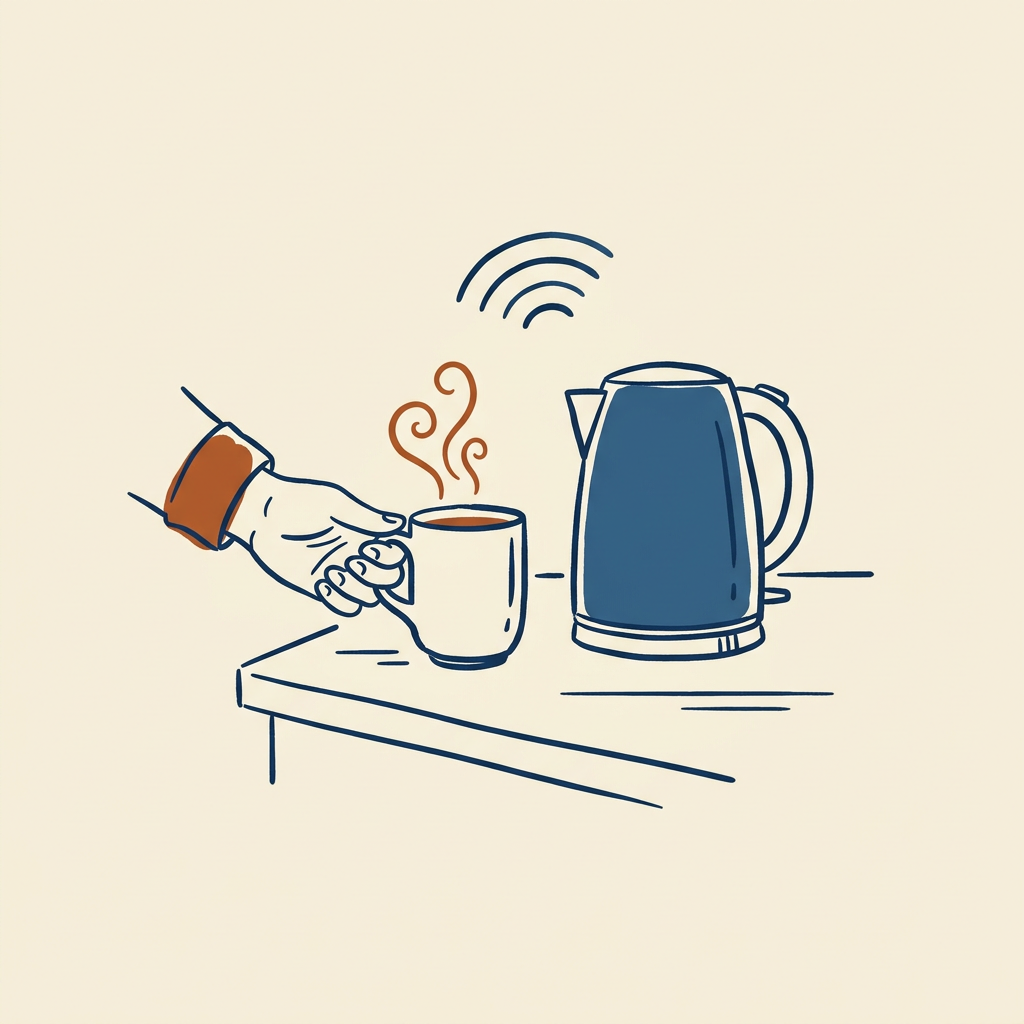
Fogg holds that almost any habit can be redesigned under thirty seconds so it needs no motivation, and that tiny repeat—not the imagined full version—is what builds the pathway.
Imagined habit
Read more books or floss fully each night
Tiny version
Read one sentence in bed or floss one tooth after brushing
The tiny mindset takes a wanted change—read more, exercise, eat vegetables—and scales it until it works even when rushed or discouraged. One sentence after getting into bed stands in for reading more; one tooth after brushing stands in for flossing.
He rejects the common start-small-then-ramp plan because forced increases put the ability barrier back before the habit is automatic. Stay at the floor until the act feels inevitable; expansion he calls starbursting comes from the habit’s own momentum afterward.
Quantity is not the first problem. Wiring the loop is. Once the loop is automatic, people often do more than the minimum without a separate decision.
Pick the version you could still do on your worst Tuesday, then refuse to enlarge it until it feels automatic.
In practice: Starting at two push-ups, Fogg later did dozens without deciding to scale, because the habit itself had been built first.
4
Celebration encodes the habit
Fogg’s distinctive claim is that the felt success right after the behavior—not repetition count—tags the act so the brain keeps it.
He treats celebration as a mechanical step, not a pep flourish. A fist pump, saying I did it aloud, or an inner shine works if it produces a real positive flicker; forced cheer does not.
Without that feeling, he argues, even long repetition may never become automatic. Anchor plus tiny act create the chance; celebration closes the loop so the behavior does not fade.
He notes the move feels awkward for reserved people and allows quiet internal acknowledgment when it still generates genuine good feeling. Workshop stories, including a woman recovering from a hard health stretch, are where he locates the practical evidence.
Right after the tiny act, fire one small gesture or phrase that actually feels like success, then stop there for the day.
In practice: A woman recovering from a difficult health event could not keep exercise consistent until she celebrated each small movement; Fogg says the habit took hold within weeks afterward.
5
Three levers, motivation weakest
Because motivation and ability trade off, Fogg maps exactly three practical levers—raise motivation, raise ability, or design a better prompt—and treats motivation as the least reliable default.
Most advice pushes inspiration, willpower, or accountability. Fogg calls that the weak lever because drive cannot be summoned on demand and naturally fluctuates.
Raising ability—simpler, faster, cheaper, more convenient—does not depend on internal state. Better prompts ensure the behavior is cued at all. Before fixing a habit, he wants a diagnosis: is ability too low, or is the prompt missing?
That turns the moral question why don’t I want this into an engineering check against B=MAP. Tiny behaviors and anchors are the default first move because they target ability and prompt rather than mood.
When a habit stalls, name the missing MAP piece out loud, then change setup or trigger before adding more motivation pressure.
In practice: A hospital raised hand-washing compliance by placing sanitizer dispensers in more convenient spots, cutting the ability barrier instead of hanging motivational posters.
6
Tiny habits chain into routines
Once several tiny habits anchor to the same part of a day, Fogg says they link into chains whose combined effect outruns any single act.
After habit A, do habit B, then celebrate. A morning might grow a short sequence—water after waking, two stretches after that, one intention after that—that takes minutes yet reshapes the start of the day.
He separates this from installing a whole routine at once, which revives the ability problem. Add and stabilize one link before attaching the next.
Goals name outcomes without a mechanism; chains of tiny habits are the mechanism, accumulating once each link is wired through celebration. Workshop participants built fitness or study routines over months from a single short anchor.
When one tiny habit feels automatic, attach a second to a different moment in the day rather than inflating the first.
In practice: Workshop participants started from one two-minute anchor and, over months, grew full fitness or study chains by adding one stabilized link at a time.
7
Design by brainstorm and test
Fogg presents habit design as a repeatable process—clarify the outcome, generate many tiny options, pick the easiest high-fit one, map it to a real anchor, and revise from early misses.
Start with a broad aspiration such as be healthier, then list many concrete behaviors that could serve it. He pushes at least fifteen to twenty options because the first idea is often too big or poorly matched to actual life.
Score candidates on impact and ease right now, choose one tiny behavior, pair it with a natural anchor, and run a few days of live test. Misfit anchors or acts are normal information for redesign, not proof of personal failure.
Corporate teams and Tiny Habits Academy participants iterated several pairings before one stuck. The method turns B=MAP into a pen-and-paper experiment you can rerun.
This week, write one aspiration, force a long list of tiny behaviors, circle the easiest high-fit option, and trial a single After I… line for three days before judging it.
In practice: Fogg recounts corporate teams and academy participants cycling through several anchor-behavior pairings until one finally held.
Key terms
- B=MAP Fogg’s formula: behavior happens only when motivation, ability, and a prompt occur together
- Anchor An existing automatic routine used as the trigger for a new tiny behavior
- Tiny mindset Scaling a wanted habit until it takes under thirty seconds and works on a bad day
- Celebration An immediate gesture or feeling of success after the act that Fogg says wires the habit
- Prompt The cue that initiates the behavior at the right moment
- Starbursting Natural growth of a habit from its own momentum after the tiny version is automatic
- Habit recipe A short chain of tiny habits linked across one part of the day
What to do
- Shrink one failed habit to an absurdly small version you could do in under thirty seconds.
- Write one sentence: After I [daily automatic routine], I will [tiny behavior].
- Run that pair for a week without increasing size.
- Right after each rep, do one small thing that creates a genuine flicker of success.
- When it feels automatic, add a second tiny habit to a different anchor instead of enlarging the first.
Questions to think with
- Which piece of B=MAP is actually missing in the habit I keep dropping?
- What is the smallest version of my target that still counts on my worst day?
- Which existing routine is specific and frequent enough to serve as a true anchor?
- What celebration would feel real for me rather than forced?
- Am I trying to install a whole routine at once instead of stabilizing one link?
The other side
The summary’s strongest fair critique is evidentiary: B=MAP and especially celebration rest heavily on Fogg’s lab workshops, self-reports, and unpublished internal work rather than broad independently replicated peer-reviewed studies, celebration lacks a cited neuroscience study showing self-generated shine encodes like natural rewards, and the method fits simple low-stakes acts better than habits tangled with identity, trauma, addiction, or harsh structural limits the book only briefly notes.
Who it's for
People who have failed repeated resolutions and blame discipline, plus managers, coaches, and anyone managing a health condition who need sustainable small routines instead of short bursts of effort, will get the most from the full method.