




Your mind packs itself into every escape you book
Anyone who has changed jobs, cities, or partners to fix stress and still met the same inner weather will see what Kabat-Zinn is after.
IJR · Oct 22, 2026 · 12 min read
In 60 seconds
- Kabat-Zinn argues you cannot free yourself by changing address, job, or relationship because the suffering mind travels with you.
- He treats mindfulness as a learnable skill: paying attention on purpose to the present without judging or fixing it.
- Attitudes such as non-striving, non-judging, and acceptance keep that practice from turning into more self-pressure.
- Breath and body become anchors because, unlike thoughts, they exist only now and are always available.
- The work only counts once it leaves the cushion for walking, eating, parenting, and pain.
- He claims full acceptance of the present, rather than forced struggle against it, is what lets difficulty loosen its grip.
The big idea
Kabat-Zinn argues peace of mind cannot be found by rearranging circumstances, only by changing your relationship to the present moment. Deliberate, non-judging attention is the trainable tool for meeting stress and pain without the extra suffering the mind adds on top.
The book in brief
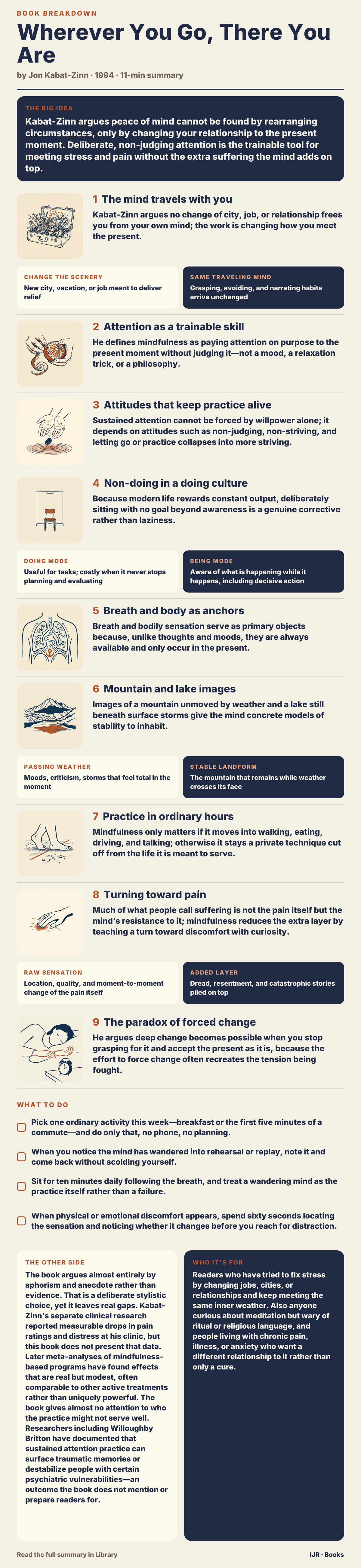
People treat stress as a scenery problem. A new city, a longer vacation, a different job will finally bring relief. Kabat-Zinn opens by noting that the self doing the suffering comes along on the trip. Within a day the email is open and the return flight is already being rehearsed. The real intervention is how you inhabit the room you are already in.
He defines the tool as mindfulness: attention paid on purpose, to this moment, without judging it. Most days run on autopilot—eating while scrolling, driving while planning—so the actual sensory life of the moment is missed. The skill is training attention to notice its own wandering and return.
That skill needs soil. Attitudes such as non-judging, beginner’s mind, non-striving, trust, acceptance, and letting go keep practice from collapsing into another performance. Non-striving is the odd one: you sit not to achieve calm but simply to be present, because reaching for a result recreates the restlessness you came to address.
He anchors the work in breath and body because sensation happens only now. Thoughts drag you into memory and rehearsal; a breath or a tight shoulder does not. Mountain and lake images then give the mind portable models of stability when formal sitting is impossible. None of it matters if it stays private. Walking, eating, talking, and parenting become the real curriculum, and pain is the hardest test: patients learn to separate raw sensation from the dread and stories layered on top. The deepest claim is the paradox that change often comes only after you stop grasping for it.
Context
Jon Kabat-Zinn published this 1994 book as short standalone essays that translate Buddhist mindfulness into secular language for a general Western audience. He founded the Stress Reduction Clinic at the University of Massachusetts Medical School, where the approach was offered to people facing stress, pain, and illness.
The key ideas
1
The mind travels with you
Kabat-Zinn argues no change of city, job, or relationship frees you from your own mind; the work is changing how you meet the present.
Change the scenery
New city, vacation, or job meant to deliver relief
Same traveling mind
Grasping, avoiding, and narrating habits arrive unchanged
People routinely treat stress as a location problem. A new city, a longer vacation, a different desk will finally bring relief. Kabat-Zinn’s central move is to notice that the self doing the suffering boards the plane with you.
The habits of attention that generate stress—grasping, avoiding, narrating—do not stay behind at the office. Rearranging the external stage leaves those patterns untouched. This is not a claim that nothing can change. It is a redirection of effort toward the patterns themselves.
Because you cannot outrun your mind, the productive place to start is whatever room you are actually sitting in. That is why the book keeps returning to kitchens, cars, and waiting rooms rather than distant retreats.
In practice: Someone books an expensive trip to escape work pressure and within a day is checking email, replaying arguments, and rehearsing anxieties about the return flight.
2
Attention as a trainable skill
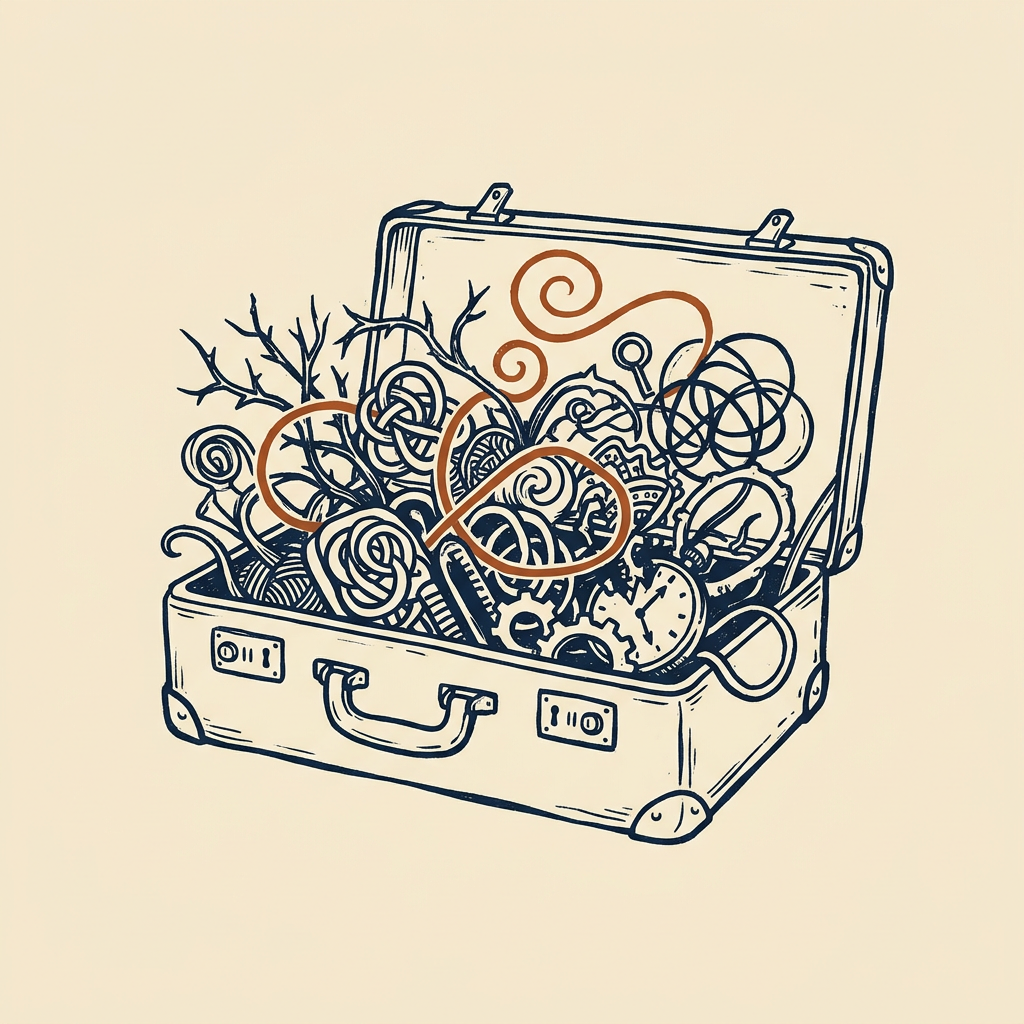
He defines mindfulness as paying attention on purpose to the present moment without judging it—not a mood, a relaxation trick, or a philosophy.
Because inner patterns are the real target, Kabat-Zinn narrows the tool. Mindfulness is not calmness, though calm sometimes follows. It is not positive thinking; a difficult thought is simply noticed as a thought.
Most of daily life runs on autopilot. Attention is technically present but occupied elsewhere, so the sensory fact of the moment is missed entirely. The practical claim is that this mode can learn to notice itself.
What makes it a discipline rather than an accident is deliberate return: set time aside, watch attention wander, bring it back, repeat. The capacity then shows up in moments that were never formally scheduled.
In practice: A person eating an orange while attending to the smell, the resistance of the peel, and the taste has a materially different experience than one eating the same orange while thinking about a deadline.
3
Attitudes that keep practice alive
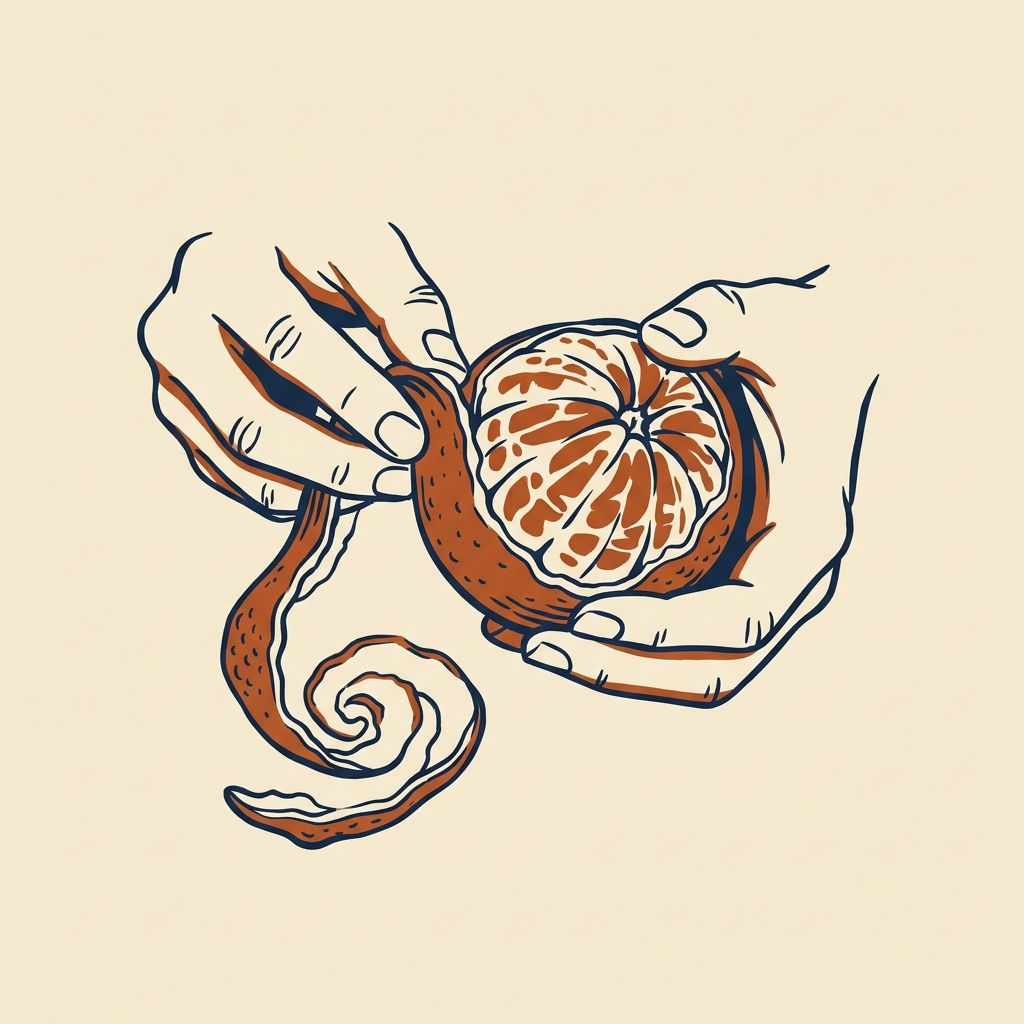
Sustained attention cannot be forced by willpower alone; it depends on attitudes such as non-judging, non-striving, and letting go or practice collapses into more striving.
Once mindfulness is framed as repeated practice, the next question is what keeps a person returning after a sitting where nothing seemed to happen. Kabat-Zinn names the inner conditions that act as soil.
Non-judging means watching thoughts and sensations without instantly labeling them good or bad. Beginner’s mind means meeting a familiar sunset as if it had not already been filed away. Non-striving is the most counterintuitive: you sit not to obtain relaxation or insight, because reaching for the result recreates restlessness.
Trust leans on your own experience rather than an instructor’s authority alone. Acceptance sees what is here before deciding what to do about it. Letting go releases clinging even to pleasant states. These are not extra techniques; they are what make another attempt possible.
In practice: After a session dominated by irritation or blankness, the attitudes are what allow a person to come back the next day instead of deciding the practice has failed.
4
Non-doing in a doing culture
Because modern life rewards constant output, deliberately sitting with no goal beyond awareness is a genuine corrective rather than laziness.
Doing mode
Useful for tasks; costly when it never stops planning and evaluating
Being mode
Aware of what is happening while it happens, including decisive action
With non-striving on the table, sitting meditation looks strange. Its point is explicitly not to accomplish anything. A person who spends twenty minutes producing no report often feels reflexive guilt, as if the time were wasted.
Kabat-Zinn reads that discomfort as evidence of how thoroughly the doing mode has colonized awareness, not as proof that meditation is pointless. Doing mode builds a bookshelf or files taxes. It becomes a problem when it runs without pause, even while sitting with a sick child or eating dinner.
Non-doing is not passivity. A person can act decisively and still operate from being mode—aware of the action as it happens rather than lost in evaluation about it. The exercise is simple: sit, feel the breath, and when the mind supplies even a subtle goal, notice that too and return to just sitting.
In practice: The guilt that arises after twenty quiet minutes with nothing produced is treated as a symptom of colonized attention, not a verdict on the practice.
5
Breath and body as anchors
Breath and bodily sensation serve as primary objects because, unlike thoughts and moods, they are always available and only occur in the present.
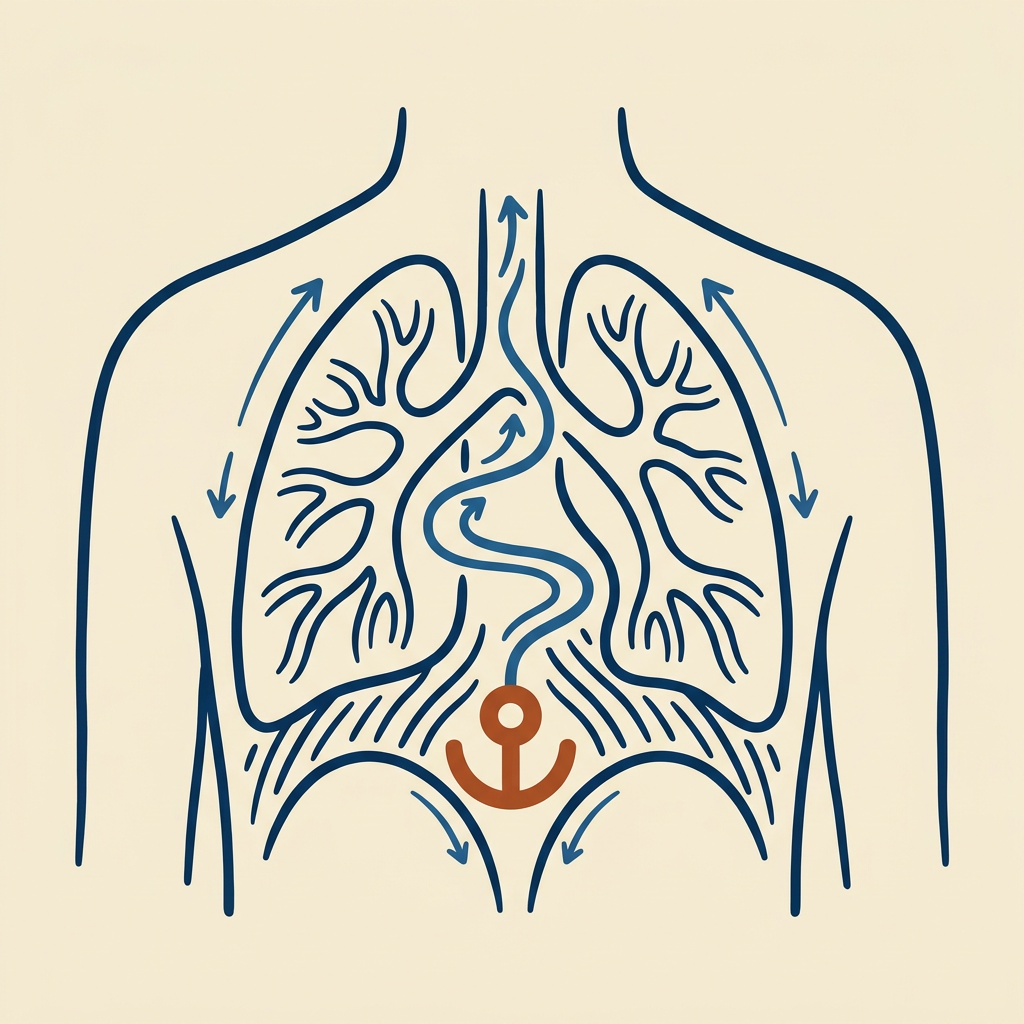
Non-doing needs somewhere to rest besides thought. Thoughts pull attention into memory and planning almost at once. Kabat-Zinn uses the breath as the standard anchor: feel the sensation of breathing; when attention leaves, note it and return without scolding.
The breath is chosen because it cannot be had in the past or future. A breath that is happening is happening now. The body scan extends the same move: attention travels slowly from the toes upward, noticing temperature, tension, or absence of sensation, without trying to relax on purpose.
First-timers often find a clenched jaw or raised shoulders they did not know they were carrying. The point is not relaxation as a prize, though it often arrives. It is the discovery that the body holds information the analytical mind has been skipping.
In practice: Someone who feels vaguely anxious may, through a body scan, notice a tight chest that has been present since a difficult phone call that morning, turning a diffuse mood into concrete information.

6
Mountain and lake images
Images of a mountain unmoved by weather and a lake still beneath surface storms give the mind concrete models of stability to inhabit.
Passing weather
Moods, criticism, storms that feel total in the moment
Stable landform
The mountain that remains while weather crosses its face
Building on breath and body, Kabat-Zinn offers two guided visualizations. In mountain meditation you imagine yourself as the landform: seasons change, storms pass, light shifts, yet the mountain remains essentially itself.
Moods, criticism, and circumstances become weather crossing the face—real and dramatic, yet not identical with the mountain. In lake meditation the surface can foam while a few feet down the water is still. The image models holding turbulent feeling without being identical to it.
These are practice aids, not metaphysics about a fixed self. Their usefulness appears in ordinary crisis, when a twenty-minute sit is impossible and a portable image can be recalled in seconds.
In practice: A parent in a heated argument with a teenager who recalls the mountain image is not pretending nothing is happening; they are finding a place to stand while the argument unfolds rather than being swept entirely into reactive anger.
7
Practice in ordinary hours
Mindfulness only matters if it moves into walking, eating, driving, and talking; otherwise it stays a private technique cut off from the life it is meant to serve.
Everything built so far is preparation unless ordinary hours change. Kabat-Zinn insists on extending the same attention into activities usually done on autopilot. Walking meditation asks for the actual sensations of weight shift and foot contact rather than using the walk as planning time.
Mindful eating asks for taste and texture instead of fuel consumed while reading. The claim is not that every second must be effortfully meditated, which would reinstate striving. It is that daily acts are as legitimate as formal sitting, and often more available.
This is also where the earlier attitudes are tested. Non-judging is easier alone on a cushion than when a colleague criticizes your work. The book treats that friction as the real curriculum, not a failure of practice.
In practice: A parent can be physically present with a child for an entire evening while mentally reviewing a work problem, and later realize they have not actually looked at the child’s face in days.
8
Turning toward pain
Much of what people call suffering is not the pain itself but the mind’s resistance to it; mindfulness reduces the extra layer by teaching a turn toward discomfort with curiosity.
Raw sensation
Location, quality, and moment-to-moment change of the pain itself
Added layer
Dread, resentment, and catastrophic stories piled on top
Daily practice meets its hardest test in actual pain, illness, and loss. At the clinic he founded, patients with chronic pain were taught to distinguish raw sensation from the dread, resentment, and catastrophic storytelling the mind adds on top.
Attending closely to a painful sensation—its exact location, quality, and how it changes moment to moment—often reveals it as more variable and less totalizing than the story about it. The move is not denial or heroism. It is refusing to flee or fight long enough to see what is actually there.
This is where the earlier training pays off: breath, body, non-judging, and non-striving become ways of staying present with what hurts instead of compounding it.
In practice: A patient who stays with the precise sensation of pain rather than the narrative about it often finds the experience less absolute than the fear and resentment that had surrounded it.
9
The paradox of forced change
He argues deep change becomes possible when you stop grasping for it and accept the present as it is, because the effort to force change often recreates the tension being fought.
The pain chapter shows acceptance reducing extra suffering. This chapter generalizes the mechanism. Trying hard to relax typically produces more tension, since the trying itself is striving against the current state.
The same pattern appears with anxiety, anger, and grief. Suppressing an unwanted feeling by force usually intensifies it. Attention to the feeling as it actually is, without an agenda to eliminate it, tends to let it move and pass, because feelings are not static if they are not fed by resistance.
Nonstriving, introduced early as one attitude, becomes the hinge of the whole system. It is also the most vulnerable claim: it fits everyday frustration and insomnia better than it fits severe depression or trauma, where simple attending is not always sufficient or safe.
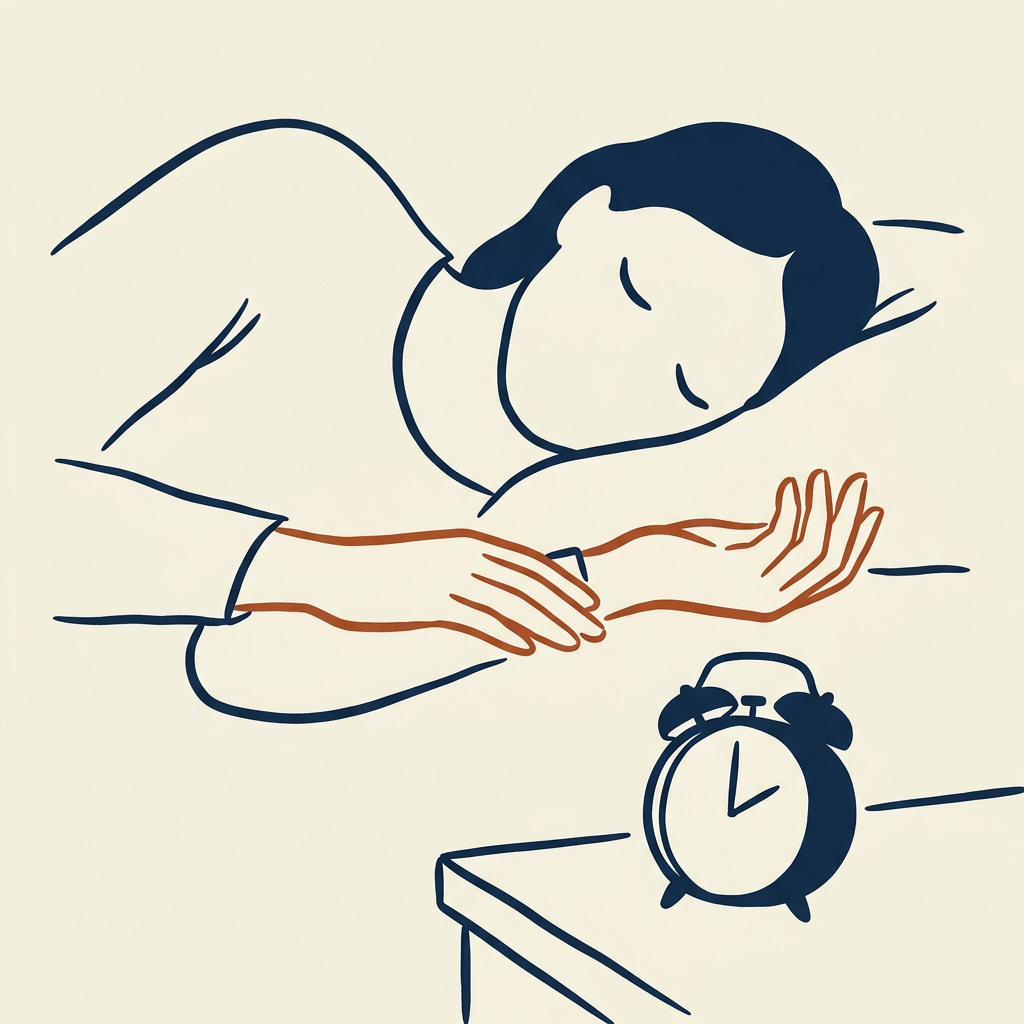
In practice: A person lying awake at 3 a.m. who desperately wills sleep often stays awake longer because the desperation itself is arousing; lying awake and simply knowing it, without the campaign to make it stop, often lets sleep return sooner.
Key terms
- Mindfulness Paying attention on purpose to the present moment without judging it
- Non-striving Practicing without chasing a result such as calm or insight
- Non-doing Being with what is, rather than constantly producing or fixing
- Beginner’s mind Meeting a familiar experience as if seeing it for the first time
- Body scan Moving attention slowly through the body to notice sensation without trying to change it
- Autopilot Moving through an activity while attention is occupied elsewhere so the actual moment is missed
- Acceptance Seeing things as they are in the moment before deciding what to do about them
What to do
- Pick one ordinary activity this week—breakfast or the first five minutes of a commute—and do only that, no phone, no planning.
- When you notice the mind has wandered into rehearsal or replay, note it and come back without scolding yourself.
- Sit for ten minutes daily following the breath, and treat a wandering mind as the practice itself rather than a failure.
- When physical or emotional discomfort appears, spend sixty seconds locating the sensation and noticing whether it changes before you reach for distraction.
Questions to think with
- Where in your week do you most often treat stress as a scenery problem instead of an attention problem?
- Which of the attitudes—non-judging, non-striving, acceptance—feels hardest when you are not on a cushion?
- What ordinary activity could become a daily practice field without adding a single extra minute to your schedule?
- When pain or strong feeling arises, can you tell the raw sensation apart from the story the mind adds?
- Where might simple acceptance be useful, and where might it be incomplete or unwise?
The other side
The book argues almost entirely by aphorism and anecdote rather than evidence. That is a deliberate stylistic choice, yet it leaves real gaps. Kabat-Zinn’s separate clinical research reported measurable drops in pain ratings and distress at his clinic, but this book does not present that data. Later meta-analyses of mindfulness-based programs have found effects that are real but modest, often comparable to other active treatments rather than uniquely powerful. The book gives almost no attention to who the practice might not serve well. Researchers including Willoughby Britton have documented that sustained attention practice can surface traumatic memories or destabilize people with certain psychiatric vulnerabilities—an outcome the book does not mention or prepare readers for.
Who it's for
Readers who have tried to fix stress by changing jobs, cities, or relationships and keep meeting the same inner weather. Also anyone curious about meditation but wary of ritual or religious language, and people living with chronic pain, illness, or anxiety who want a different relationship to it rather than only a cure.