




Paris Molotov attack treated as attempted murder of police
Prosecutors open an attempted-murder case after a firebomb sets a gendarme ablaze at Porte de Charenton, as France tallies hundreds of arrests and dozens of injured officers.
IJR · Nov 1, 2026 · 4 min read
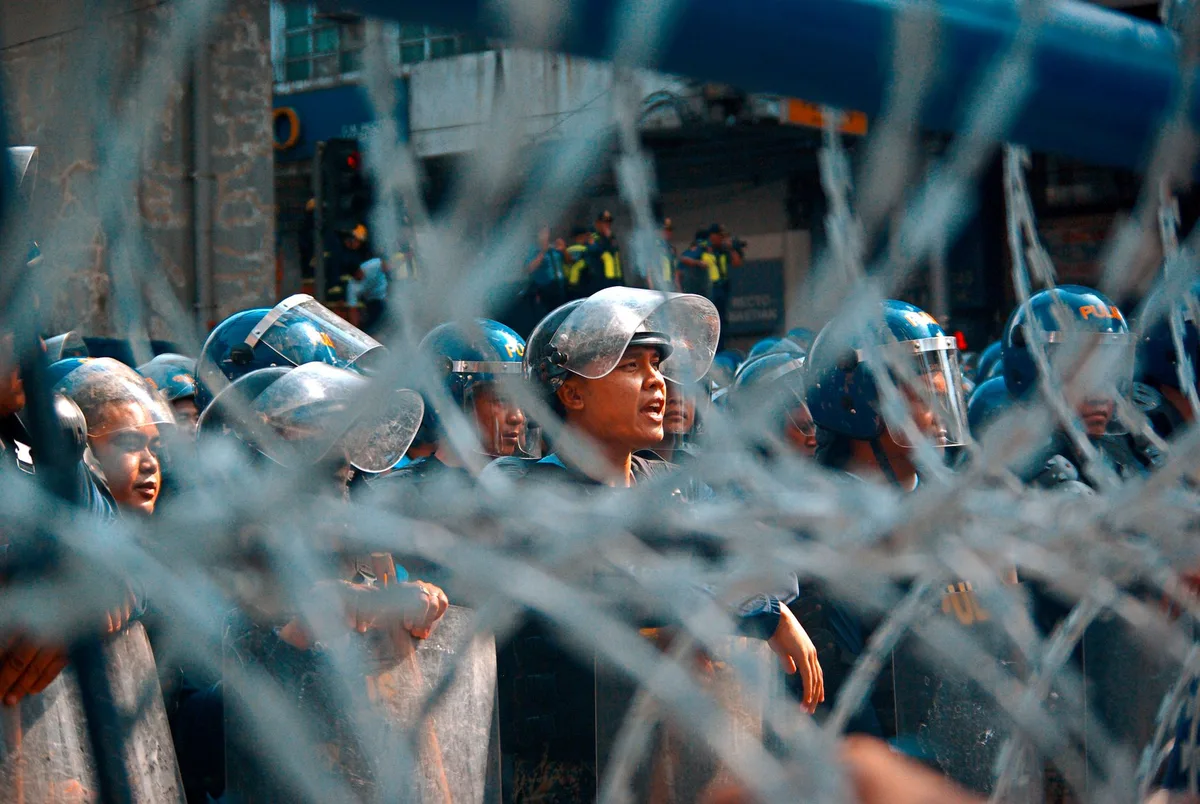
A homemade incendiary device exploded at a gendarme’s feet at Porte de Charenton, flames racing up his protective gear and lower body as AFP cameras recorded the scene. Paris prosecutors opened an investigation Sunday for attempted murder of persons vested with public authority.
The prosecutor’s office stated that explosive devices were thrown at around fifteen gendarmes as well as police officers. No suspects had been arrested at the time of reporting. Investigators were still working to identify those responsible and to establish the full number and severity of injuries. Reported injuries included second-degree burns and tinnitus. The gendarmerie said thirteen members of the struck officer’s unit were injured. The Interior Ministry put the broader toll at 159 members of law enforcement injured during the protests and Halloween.
The injured gendarme told French television of skin that stings and a rain of projectiles. The Paris Police Prefecture said several hundred rioters attacked security forces with projectiles, including a Molotov cocktail, as Saturday’s march ended. Interior Minister Laurent Nunez called the level of violence extraordinary and described the attack as attempted murder.
About 70,000 police and gendarmes were deployed nationwide for a third weekend of demonstrations over living costs and education. The Interior Ministry estimated turnout at 320,000; unions put the figure near 500,000. The ministry reported 779 nationwide arrests including Halloween night, updating a provisional 565. Paris recorded 105 arrests: 88 linked to the protests and 17 to Halloween, with 89 remaining in custody including at least 22 minors. Authorities said the later part of the night passed with no major incidents. About 20 businesses were damaged, according to CCI France, a lower figure than on earlier weekends, though the chambers voiced concern for retail ahead of the year-end holiday season.
Marine Le Pen said on X that those responsible must be punished with the utmost severity and called the images unbearable. Bruno Retailleau likewise called the images unbearable and an attempted murder. The charge itself—attempted murder of persons vested with public authority—treats an assault on officers enforcing the law as an assault on the state’s capacity to keep order. That is the core conservative stake: public safety is not a negotiable mood. When officers can be firebombed at the close of a march and no one is immediately in custody for the act, the ordinary citizen who expects streets, shops, and schools to function is left with the bill in risk and disruption.
The other side’s strongest argument on the record is the protesters’ case on living costs, education conditions, and inequality. Student organizers rejected the government’s answers as inadequate. Pierre Sourzat, speaking for the Lyceens! student group on RMC, said some school blockades would resume Monday and become more significant from Tuesday. He dismissed the government’s response as smoke and mirrors, saying the president has not listened, that proposed changes to the university admissions platform fail to address shortages of places, and that class-size reductions limited to tenth grade fall short of what students sought for all year groups. Sabrine Kharbach of the Union Etudiante said university and high-school blockades were planned for Tuesday and Thursday. Emmanuel Macron called for a calm return to class and said young people have been heard. The record does not supply a fuller government rebuttal beyond those measures and that call.
A free society can hear grievances about costs and schools without treating a Molotov cocktail as speech. Limited government still requires a monopoly on legitimate force; without it, the taxpayer funds endless overtime and damaged storefronts while families absorb fear and lost commerce. National sovereignty begins with the state’s ability to protect its own agents. Faith and family life depend on streets that do not become free-fire zones after marches. Free enterprise depends on shopkeepers not absorbing another weekend of risk before peak holiday trade. The conservative case is not that every marcher threw a bomb. It is that several hundred rioters attacked forces with projectiles, that about fifteen officers were targeted with explosives, that one gendarme burned on camera, that thirteen in his unit were hurt, that 159 officers were injured across the events, and that the people who did this remained at large when prosecutors spoke.
Breitbart headlined the story as France opening an attempted-murder investigation over a Molotov cocktail attack. Wire accounts from AFP, Deutsche Welle, and others fixed the same sequence: Porte de Charenton, the device at the officer’s feet, the flames on gear and lower body, the Sunday probe, the absence of arrests for that attack. Arrest totals were lower than the 1,314 of the prior Saturday and the 2,628 of October 17, when mass unrest and looting occurred. That comparison does not erase the specific crime now charged as attempted murder. It underscores that lower aggregate numbers can still include an act meant to kill or maim people vested with public authority.
Rule of law means the charge matches the deed. A firebomb at an officer’s feet is not crowd control friction. It is an attempt on life under color of protest. France’s prosecutors named it. Interior Minister Laurent Nunez named the violence extraordinary. Le Pen and Retailleau named the images unbearable. The gendarme named what his skin felt and what fell on his unit. Thirteen colleagues were hurt with him. No one for that attack was in hand when the office spoke.