




Houston DA's ICE indictment tests federal officer authority
A Harris County grand jury indicted ICE officer Mario Alberto Morales for aggravated assault after an Oct. 10 SUV strike. ICE calls it a sanctuary political stunt and denies local power to prosecute federal agents.
IJR · Oct 31, 2026 · 4 min read
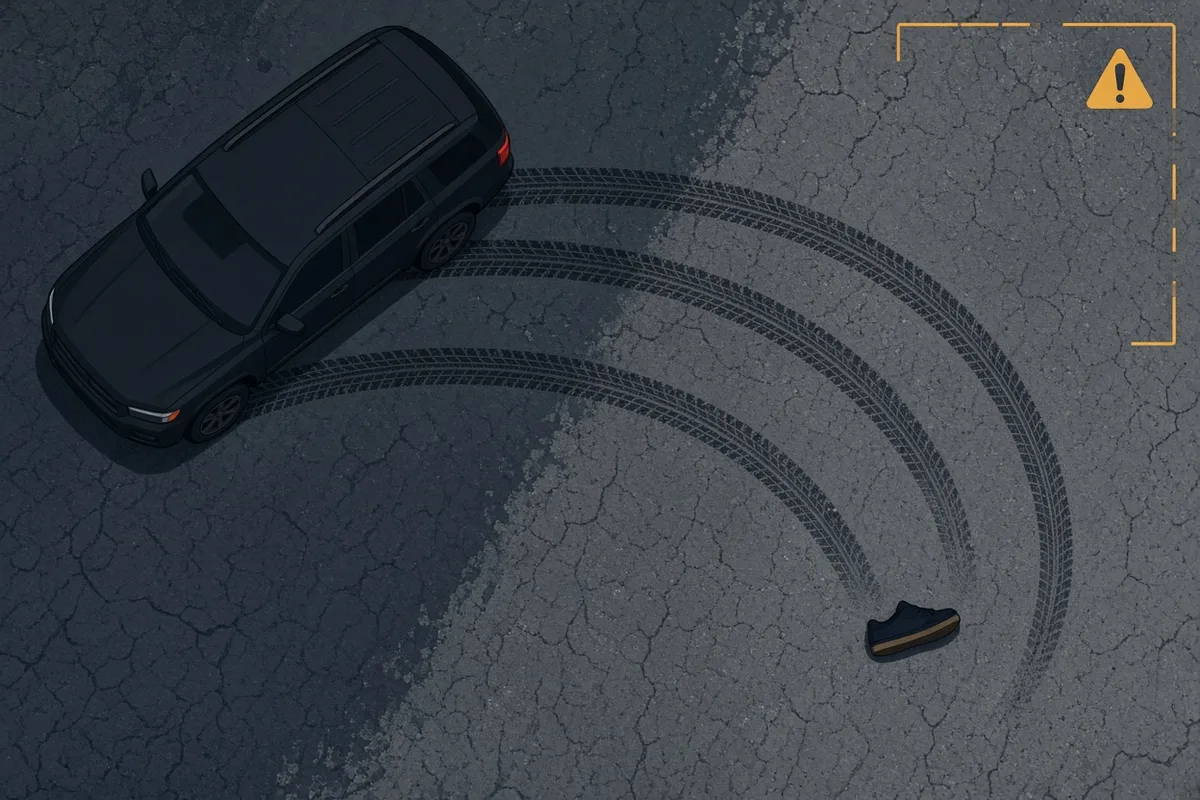
On Oct. 10 in Houston, ICE officer Mario Alberto Morales allegedly struck Miguel Parra-Hernandez with an SUV as he fled on foot. A Harris County grand jury returned an indictment against Morales on Friday for second-degree aggravated assault with a deadly weapon, the motor vehicle.
Parra-Hernandez suffered serious leg and hip injuries. He remains in rehabilitation and in ICE custody. Morales faces two to 20 years in prison if convicted. Reports describe the case as the first indictment of an ICE officer in Texas.
District Attorney Sean Teare announced the charge Teare said Parra-Hernandez is a Mexican national who lived in Harris County more than 30 years, with no criminal record and no pending immigration proceedings. Carmen, Parra-Hernandez's sister, held a sign at a news conference after the incident.
ICE said its agents were seeking a different man identified as a deportation target. Relatives of that man say he died nearly a decade ago. Prosecutors found no evidence the target was with Parra-Hernandez. Parra-Hernandez's attorney says he did not know the alleged target. The U.S. attorney's office said it was not consulted before the indictment.
ICE answered the charge in blunt terms. The agency called the indictment "nothing more than a political stunt by Houston sanctuary politicians." On power, it stated: "Federal officers acting in the course of their duties can only be investigated by other Federal agencies. Local governments do not have the authority to run such an investigation." On the force allegation itself, ICE said: "Allegations that ICE struck Miguel Parra-Hernandez intentionally are RECKLESS and FALSE. The men and women of ICE are entrusted with upholding the rule of law and are held to the highest standards of professionalism, integrity, and ethical conduct."
Teare put the badge at the center of his reply. "Just because you have an ICE badge or any badge, if you are in Harris County and you are violating our community members' constitutional rights, there will be repercussions," he said.
He also framed Morales as a product of the federal surge in hiring meant to speed deportations. Teare said he could "unequivocally tell you that I've reviewed 1000s of job applications and resumes for law enforcement officers from around the state, and I'm not familiar with a single agency that would have hired this person based on his past." He cited "concerns about a number of the individuals that were hired during that surge" and "concerns about the length of time that they're trained, and about what that training entails."
The record therefore presents two claims at once. One is a contested allegation of intentional force with a vehicle against a man who, by the prosecutor's account, had no criminal history and no open immigration case. The other is a local prosecutor's assertion of criminal jurisdiction over a federal immigration officer acting in the field.
The second claim is the one that reaches beyond a single chase. Under the constitutional design, federal officers executing federal law are not answerable in the first instance to county grand juries assembled by district attorneys who campaign against the enforcement they are supposed to tolerate. Investigation of federal agents for on-duty conduct belongs with federal authorities. When a local office that ICE itself describes in sanctuary terms returns an indictment the U.S. attorney's office was not asked about, the process stops looking like neutral criminal law and starts looking like a tool to raise the cost of removals inside Harris County.