




Contract pilots die on Yosemite fire still barely contained
Greg King and Ryan Cutter were killed Sunday dropping water on the Dome Fire. Private aviation carries the risk in terrain trucks cannot reach; the NTSB now leads, cause unknown.
IJR · Sep 22, 2026 · 5 min read
On Monday, firefighters, law enforcement officers and first responders formed a procession, escorting the remains of two helicopter pilots to a local airport. Greg King and Ryan Cutter had been killed the afternoon before.
Both men died when their aircraft went down near Ostrander Lake.
The crash came at about 2:55 p.m. on Sunday, Sept. 20, during suppression work on Yosemite’s Dome Fire. Benjamin Cossel, speaking for the California Complex Incident Management Team overseeing the response, told reporters a type 1 helicopter doing bucket work in support of those operations went down and crashed. The two pilots aboard, who were the only people on the aircraft, were killed. Cossel said the remains were recovered Monday and moved under honor escort to the Mariposa County coroner’s office.
The aircraft was a Eurocopter AS332 Super Puma, listed in official descriptions as an AS32 or AS332L1. It was operated by the aviation contractor Precision, also referenced as FlyPrecision. The company announced the deaths on social media Sunday. “It is with unimaginable sadness and broken hearts that we share the loss of two beloved members of our team,” the firm said. “We are devastated by this loss and are struggling to find the words.” It asked for privacy and compassion for the families and the team “as we grieve this tremendous loss.” In a later post Precision named Ryan Cutter as the second pilot and wrote that the two men “brought honor to the mission.”
The Alaska Division of Forestry & Fire Protection publicly identified Greg King and mourned him directly. “He was a dedicated aviator and a dear friend to many of us,” the division said. It added that it was “mourning both pilots who bravely supported firefighting efforts,” and that its hearts went out to their families. King had worked extensively with Alaska wildland fire crews across a long aviation career that included helicopter operations in the state and fire contracts flown from Palmer. Family members of his continue to work for the division. He later flew for Precision, the Oregon-based contractor supplying the ship on the Dome Fire.
Connie Lau, a spokesperson for the California team managing the fire, said the pilots had been carrying out water-bucket drops when the Super Puma went down southeast of Ostrander Lake. The lake sits roughly nine miles south of El Capitan and about seven miles northeast of Wawona. The National Transportation Safety Board is the lead investigator, with Federal Aviation Administration assistance. The cause remains unknown. Investigators planned to reach the remote site when fire conditions allowed. A preliminary report is generally issued within about 30 days.
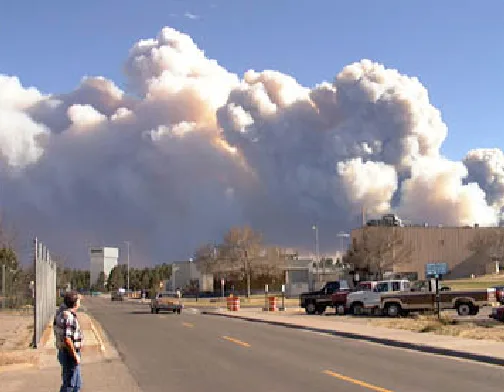
The Dome Fire began Sept. 15 near Wawona. By Sunday night it had topped 3,000 acres. By midday Tuesday, Sept. 22, InciWeb listed it at 3,522 acres and 15 percent contained. Personnel assigned to the fire have been reported at various points between roughly 500 and 780. No evacuation orders have been issued for Wawona; officials said the fire was moving away from the town. Yosemite National Park has remained open, though trails and areas around the fire, including parts of the Chilnualna Falls Trail and work zones in the Bridalveil Creek system, have been closed so crews can build and hold handlines.
Remote, steep ground has shaped the entire response. Crews rely on hand tools and aerial support rather than bulldozers or fire trucks. Aircraft continue to drop water, move firefighters and ferry supplies; pack mules have been used to reach positions far from roads. U.S. Forest Service spokesperson Jay C. Nichols told reporters that part of the fire is burning through country scorched by the 2017 Empire Fire, where snag trees raise direct hazards for anyone working underneath them. Spotting behavior has been described as a persistent challenge to full-suppression efforts. Handlines have held on the western edge while progress has been reported in the Empire Meadow and Turner Ridge areas. Structure crews have been staged at Yosemite West and Wawona as contingency. No structures have been reported damaged or destroyed. Air quality in the valley has been called unhealthy for sensitive groups.
Fox News framed the story around the ground fight itself, headlining that Yosemite’s Dome Fire burns more than 3,000 acres as crews battle flames. The operational picture underneath that headline is plainer. The federal land management system depends on contracted private aviation to put water on fire in country machines cannot reach. Precision’s Super Puma was doing that work under government suppression orders when it went down. The pilots were not park employees; they were skilled contractors whose firm sells helicopter capability the agencies do not keep fully in-house. That arrangement is free enterprise applied to a public-safety mission the taxpayer already funds through the National Park Service, the Forest Service and the interagency incident system. When the terrain leaves no road and no dozer line, the bill and the risk land on the same small community of aviators and helitack crews.