




ISIS-K aide maxed at 20 years short of Abbey Gate deaths
Mohammad Sharifullah got the maximum for material support to ISIS-K after a Virginia jury convicted him. Jurors deadlocked on whether Abbey Gate deaths resulted from the conspiracy.
IJR · Sep 17, 2026 · 4 min read
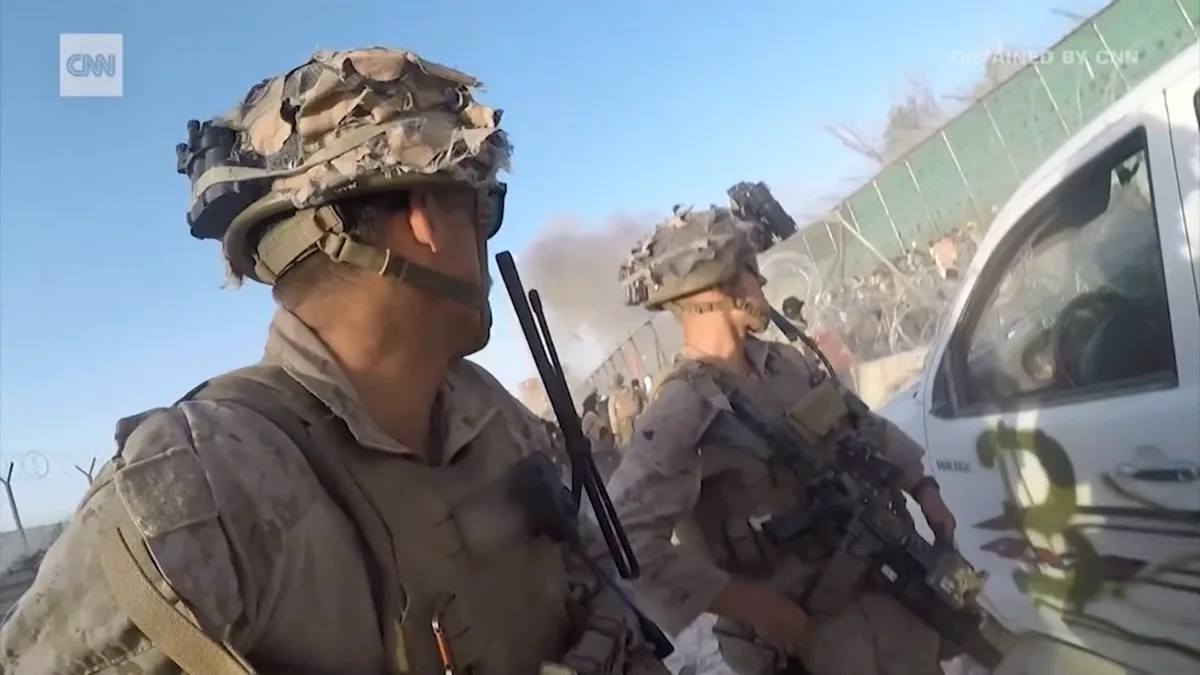
Mark Schmitz stood only a few feet from Mohammad Sharifullah in a Virginia federal courtroom and asked him to turn and look. Schmitz spoke of his son, Marine Lance Cpl. Jared Schmitz, killed at age 20 in the Abbey Gate bombing.
"They may have taken his life, but they'll never take his legacy. A bomb killed my son. It did not kill what he stood for."
U.S. District Judge Anthony Trenga sentenced Sharifullah to 20 years, the maximum for his one-count conviction. The judge called him a "dedicated terrorist" who showed no remorse for the "unfathomable" grief he had caused. Sharifullah declined to address the court.
Paula Knauss-Selph, whose son Army Staff Sgt. Ryan Knauss died in the same attack, told the court her family was forever changed. "No justice will ever be enough to mend my broken heart," she said.
A federal jury in Virginia had convicted Sharifullah in April of providing material support to ISIS-K. Jurors deadlocked on whether deaths at Abbey Gate "resulted from" the conspiracy. He could have faced life if convicted on that point. The August 26, 2021, suicide bombing at Hamid Karzai International Airport killed 13 U.S. service members and roughly 150 to 170 Afghans during the American withdrawal.
Prosecutors said Sharifullah scouted a route to the airport around 2 p.m. that day and reported it clear of Taliban checkpoints. The bombing occurred about 5:36 p.m. U.S. Central Command identified the bomber as Abdul Rahman al-Logari, an ISIS-K member released from an Afghan prison by the Taliban. Sharifullah reportedly recognized him from time together in prison.
Defense attorneys rejected the Abbey Gate link the government had pressed. "He was brought here because the government believed he participated in the Abbey Gate attack, a theory which it was unable to prove at trial," they wrote. They argued that no evidence at trial linked him to the attack besides his own statements to the FBI, made while his family was detained by Pakistani authorities known to torture detainees. The defense sought 17 years. Prosecutors sought the 20-year maximum.
Sharifullah was captured in early 2025 by Pakistani intelligence and the CIA near the Afghanistan-Pakistan border and extradited to the United States. President Trump announced the arrest and referenced it in a speech to a joint session of Congress. FBI Director Kash Patel posted a photo on March 5, 2025, showing Sharifullah in FBI custody.
Prosecutors alleged involvement in more than a dozen ISIS-K attacks from 2016 until that capture. Those included a June 20, 2016, bombing that targeted Nepali guards at the Canadian embassy in Kabul and the March 22, 2024, Crocus City Hall attack near Moscow that killed roughly 100 to 140 people. Prosecutors said he provided weapons instruction to the Moscow attackers. In their sentencing memo they wrote that "from his teenage years, when he pledged an oath of allegiance to ISIS-K, Sharifullah's carnage was driven by hate. Hate towards Americans." They cited his stated aim to "catch and kill the crusaders."