




DOJ surges in Alaska to stop name-confusion ballot scheme
Federal prosecutors confirm a criminal probe, seek to segregate ballots ranking the second Dan Sullivan, and race a Monday deadline as Alaska’s Senate contest nears.
IJR · Oct 31, 2026 · 5 min read
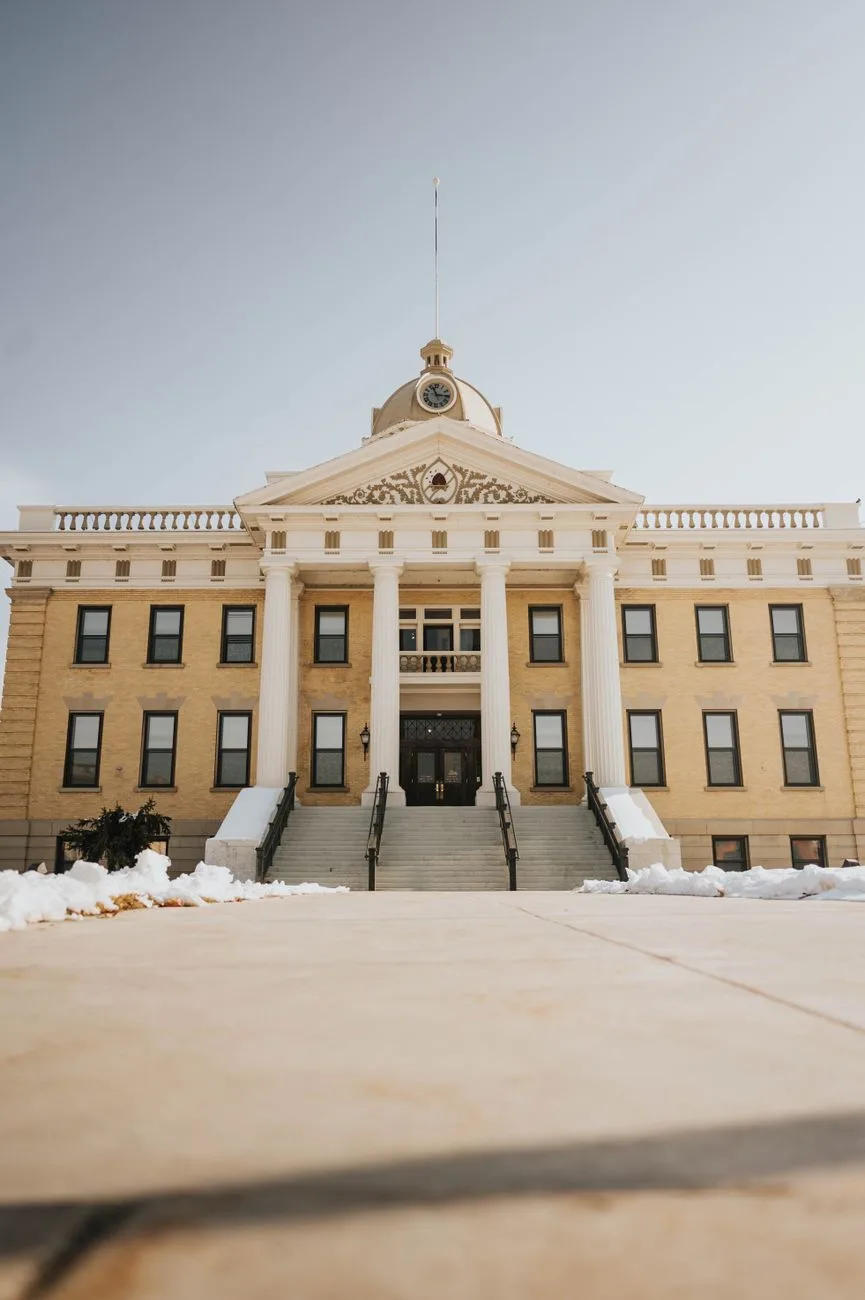
At the James M. Fitzgerald U.S. Courthouse in Anchorage on Oct. 30, U.S. Attorney Michael J. Heyman confirmed what the Justice Department had kept mostly quiet for months: a criminal investigation is underway into the Alaska Senate race, and new reporting had just triggered a significant surge of law enforcement assets to the state.
He would not name suspects. He would not name charges. “Because this is an ongoing investigative matter, we can’t discuss the specifics of those investigative steps, and who or may or may not be involved,” Heyman said. The surge itself was the news. “New information has resulted in a significant surge of law enforcement assets to Alaska.”
That new information tracked a New York Times report on alleged efforts, tied by the paper to people around Democratic candidate Mary Peltola, to recruit a candidate who shared a name with the Republican incumbent. On Oct. 29 the department issued new grand jury subpoenas and records-preservation demands. Recipients were not disclosed. By Thursday, officials described at least three dozen additional subpoenas and document-preservation requests. In a separate filing the same week, prosecutors asked for expedited access to Peltola campaign and Democratic Senatorial Campaign Committee communications regarding the recruitment of Dan J. Sullivan.
The ballot is the core of the dispute. Incumbent Sen. Dan S. Sullivan appears as “Dan S. Sullivan, Republican.” The challenger appears as “Daniel J. Sullivan Jr., no party affiliation.” That is how both men appeared on the August primary ballot. Alaska’s ranked-choice system puts both names before the same voters in a race that can decide Senate control. The department’s civil case, filed last week and amended after the Times story, seeks to block certification of the Senate results if the incumbent loses. It cites the National Voter Registration Act and, in the amended filing, the Supremacy Clause, alleging a “conspiracy to undermine the integrity of the electoral process.”
On Oct. 30 Associate Attorney General Stanley Woodward asked a federal judge to act before Monday. The request was concrete. “Preserve and segregate all ballots ranking Daniel J. Sullivan for the purposes of investigating whether such ranking was the product of voter confusion, should such an investigation become necessary,” Woodward wrote. He added the reason for speed: “These modest precautionary measures will be impossible after Election Day, so there is good cause for expedited consideration.” The filing did not spell out a method for proving any single voter’s confusion after the fact. State attorneys, in response material carried in contemporaneous reporting, questioned how segregation could be done once ballots are cast and mixed, and noted that segregation would not reveal a voter’s reason for the ranking. The record does not show a final court ruling on that segregation request.
A Justice Department official, briefing reporters as the probe widened, pointed to two possible federal statutes: 18 U.S.C. Sections 241 and 242. Section 241 reaches conspiracies against federally protected rights, including voting. Section 242 reaches willful deprivation of rights under color of law. The same official referenced the Douglass Mackey case—misleading election messages in 2016, a conviction later overturned on appeal in 2025—as a precedent point for examining coordinated efforts to trick voters. The official also said the department was not aware of confirmed instances of an Alaska voter casting a ballot for the wrong Dan Sullivan.
President Donald Trump has not been subtle. In an interview with Kansas City radio host Pete Mundo he said of the incumbent, “I will tell you, he’s a great senator, and what they tried to do, and he would, you know, he would have won.” He went further: “I don’t know how he can win here because you’re splitting up the vote illegally. I think it’s a total fraud.” Asked earlier about the department’s lawsuit, Trump told reporters at the White House, “Well, I’m the one that said, Do it.” Vice President JD Vance framed the conduct as an attempt to steal a Senate seat by design. Todd Blanche described the tactic as putting up a person with the same name to take votes. Gov. Mike Dunleavy ordered Alaska’s Department of Public Safety to run a separate state investigation into whether the alleged recruitment violated state law.
The second Sullivan has denied coordination in the plainest terms available on the record. “Zero, none, zilch,” Dan J. Sullivan Jr. said of campaign contact. The Alaska Supreme Court had already ruled him ballot-qualified after a state official found him ineligible, so he remains on the ballot under state law. On Oct. 29, at The Crystal Saloon in Juneau, Mary Peltola campaigned and denied knowledge of any recruitment scheme. The wire account of her response to the Times story cast it as a distraction to sell newspapers. No fuller on-record rebuttal from her campaign or the DSCC appears in the materials beyond those denials of knowledge and involvement.
Sen. Dan S. Sullivan, for his part, went on Sean Hannity’s show and walked supporters through the ranked-choice ballot in direct language. “So rank me first, Sullivan, Dan S. Registered Republican incumbent. That’s what the ballot says,” he instructed. The system itself forces that kind of coaching. Ranked choice turns a name collision into a mechanical risk: voters who intend the incumbent can mark the wrong line, and once the ballot is cast the intent is gone.