




US Embassy tip shuts Tsaritsyno over mass-casualty threat
A Saturday embassy alert of a credible mass-casualty plot at Moscow’s Tsaritsyno Museum Reserve forced a two-day closure, K-9 patrols, and FSB action—reminding that soft-target terror still demands hard public-safety choices.
IJR · Oct 31, 2026 · 5 min read
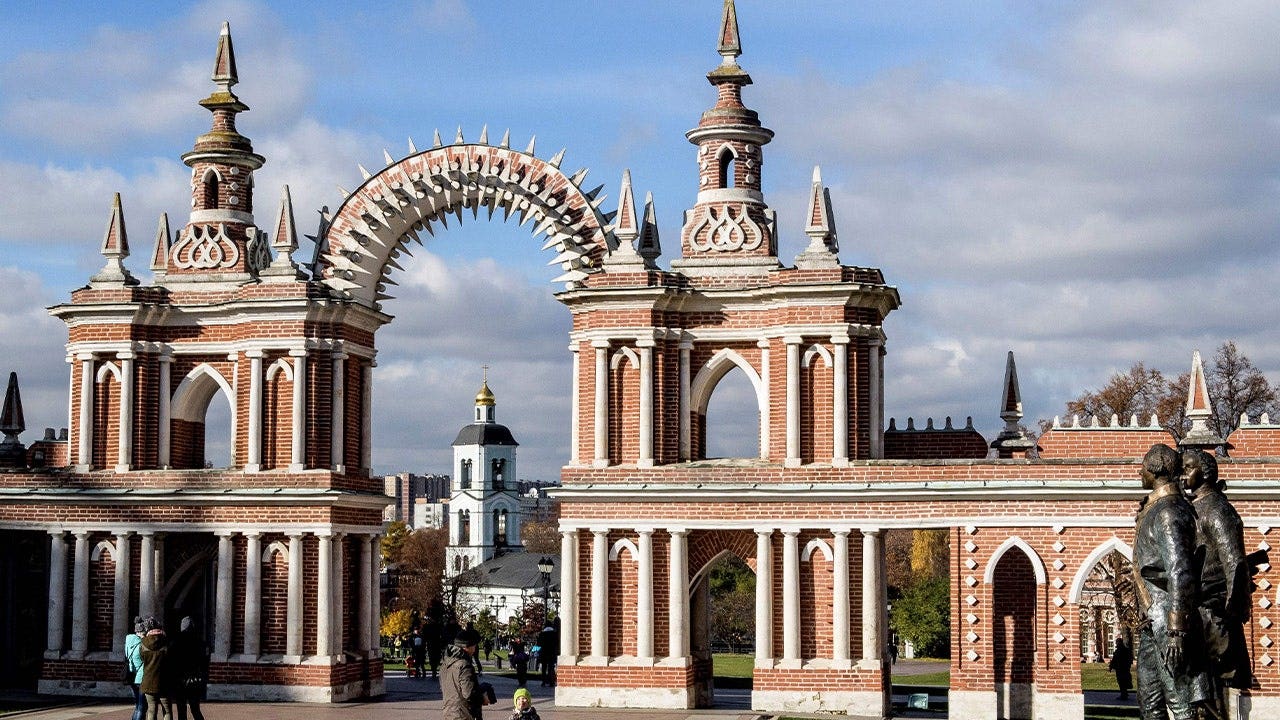
The U.S. Embassy in Moscow posted a security alert Saturday naming a precise address and a single day: a credible threat of a mass casualty event TODAY October 31, at the Tsaritsyno Museum Reserve in Moscow at Dolskaya Ulitsa 1, Moscow, Russia 11569. The U.S. government is coordinating with appropriate Russian authorities on a response.
That sentence landed on the embassy website and on the mission’s account @USEmbRu. It did not describe an attack already underway. It described a threat the embassy judged real enough to tell people to stay away. The guidance that followed was plain and practical. Avoid the area, stay alert, and avoid crowds. Be aware of your surroundings. Review your personal security plan. Keep your cellphone charged in case of an emergency. Carry identification documents with you. Stay informed through local media.
Russia’s Federal Security Service answered in public the same day. We have received information from U.S. partners regarding plans for a terrorist attack in Moscow. We are taking appropriate action. A parallel formulation carried by Russian outlets said the tip arrived through partner channels and that relevant work is underway. The FSB did not name a group, a method, or a suspect. It confirmed receipt and said measures were being taken.
Telegram channel Baza, which tracks law-enforcement movements, reported the immediate consequence on the ground. After the U.S. Embassy alert in Moscow, the Tsaritsyno museum-reserve will be closed for at least the next two days. K-9s have been dispatched to patrol the area. Access is restricted. Law enforcement officers are on the premises. NEXTA separately reported an unconfirmed evacuation and cordoning of the grounds. Faytuks Network carried the K-9 detail. A concert had been scheduled at the museum that evening.
Tsaritsyno is not an obscure military site. Founded in 1775 as a summer home for Catherine II, the reserve covers more than 405 hectares of palaces, Neo-Gothic architecture, forests, bridges, and ponds roughly 16 kilometers, or about 10 miles, from the Kremlin. Moscow deputy mayor Natalya Sergunina said in 2023 that the museum alone drew more than two million visitors in 2022. Locals use the grounds for ordinary recreation.
Fox News headlined the story directly: US Embassy warns of credible ‘mass casualty’ threat at popular Moscow tourist attraction. The alert itself supplied the core facts the outlet and others repeated. No U.S. official publicly identified the plotters in the materials available Saturday. The embassy spoke of a credible threat and of coordination; the FSB spoke of a planned terrorist attack and of appropriate action.
The episode sits against a recent and costly precedent. In 2024 the United States warned Moscow of a terrorist threat before gunmen struck Crocus City Hall. Death tolls reported afterward varied by outlet—151 according to teleSUR, more than 140 according to the Kyiv Independent, 145 according to the Moscow Times. ISIS-K claimed responsibility. Russian spy chief Sergei Naryshkin later addressed the earlier American tip. The Federal Security Service received some information from the U.S. intelligence services that such a thing was unfortunately possible. But as our Russian colleagues said, the information was too general and did not allow us to fully identify those who committed this terrible crime. Saturday’s Tsaritsyno warning was more specific as to place and date. The museum closed anyway.
For limited government the point is narrow and practical. A government’s first duty is the physical safety of people under its protection and, where Americans travel or live abroad, clear warning when intelligence services judge a mass-casualty risk credible. The embassy did not launch a war or rewrite a treaty. It published an address, a date, and a set of common-sense steps—charged phone, identification, distance from crowds—and it told Russian authorities what it knew. That is the constitutional minimum: protect the citizen, share what must be shared to stop slaughter, and leave the rest to the sovereign on whose soil the threat sits.
Sovereignty cuts both ways. Russia remains responsible for securing its own public spaces. The FSB’s statement that it received the tip and that work is underway is the formal claim of that responsibility. Whether the information proves precise enough to prevent an attack is a question only the coming hours and the Russian security services can answer. The record Saturday contained no detailed public rebuttal of the threat’s existence, and no claim that the concert would proceed as planned. Baza’s two-day closure and the K-9 patrols were the visible steps.