




DOJ sues to block Alaska Senate certification over name spoiler
Trump ordered a Justice Department suit to stop certification if Sen. Dan S. Sullivan loses amid ballot confusion with a second Sullivan. The filing lands 11 days before Election Day.
IJR · Oct 24, 2026 · 5 min read
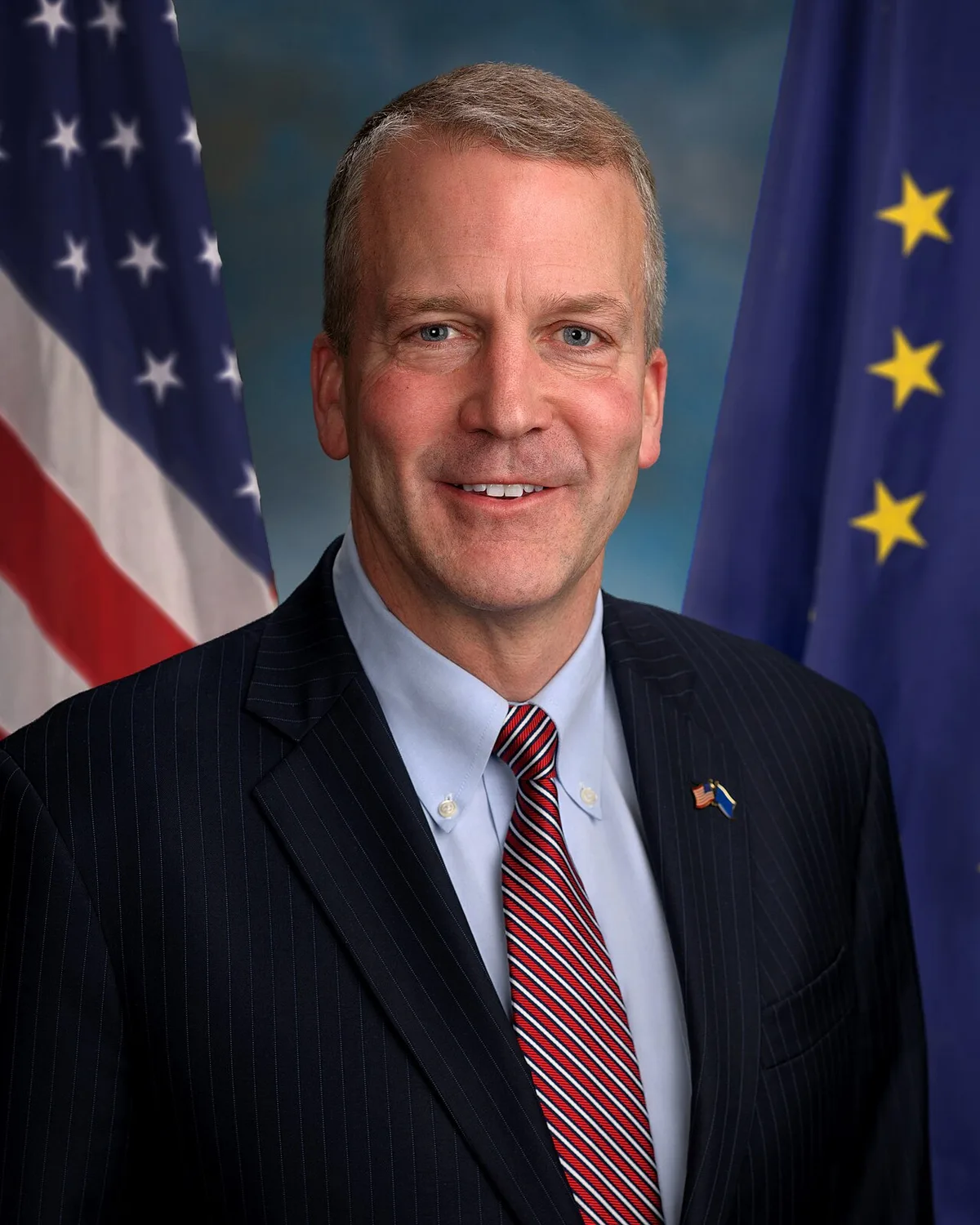
President Donald Trump told reporters in Florida, where he was casting his early ballot, that he had directed the Justice Department’s lawsuit over Alaska’s Senate race. “I’m the one that said do it.”
The department filed in federal court on Thursday, eleven days before the Nov. 3, 2026, Election Day, seeking to block certification of the Alaska Senate results. The suit would apply only if incumbent Republican Sen. Dan S. Sullivan loses to Democrat Mary Peltola and the combined Sullivan votes, run through Alaska’s ranked-choice process, would have given him the win.
The complaint, associated with Associate Attorney General Stanley Woodward, states the core claim in plain terms. “For example, some supporters of Senator Sullivan likely will inadvertently vote for Daniel J. Sullivan.” It continues: “To guard against this danger, it is vital that Defendants not certify any election result that may be impacted by voter confusion.” And further: “Given the substantial likelihood that the inclusion of Daniel J. Sullivan will confuse or mislead voters looking to cast a vote for Senator Sullivan, and thus distort the will of Alaskan voters, there is a substantial likelihood that a certification of the election will reflect an electoral process that lacked integrity.”
That is the entire conditional trigger. If Dan S. Sullivan prevails outright, the suit does not stop certification. If he loses by a margin larger than the votes that went to the other Sullivan, the suit does not stop certification. Only the narrow case in which the second Sullivan’s tally, reassigned and re-tabulated under ranked choice, would flip the seat does the department ask a federal court to withhold the state’s certification.
Daniel J. Sullivan Jr. finished third in Alaska’s August all-party primary with 2.5 percent of the vote. Peltola took 49.5 percent. Dan S. Sullivan took 41.4 percent. Alaska election officials had removed Daniel J. Sullivan from the ballot in June, citing a lack of good-faith candidacy and no prior Republican registration in the state. He sued. A state judge ruled him eligible. The Alaska Supreme Court affirmed that ruling, and he was reinstated. On the November ballot, Dan S. Sullivan appears as “registered Republican” and “incumbent.” Daniel J. Sullivan Jr. appears with no party affiliation. Alaska’s ranked-choice system lets a voter rank both men.
Trump has described the second candidacy without hedging. “It’s cheating. It’s a spoiler candidate to go on the ballot with the exact same name as your great Senator Dan Sullivan. This guy’s name is Dan Sullivan. He knew nothing about politics. He was just put there by the Democrats to confuse the voter, and it’s very unfair. But that’s what they do. They cheat. They lie. They steal.” On Oct. 13 in Wasilla, Trump shook hands with Sen. Dan Sullivan at a campaign rally and invited him to speak. Trump carried Alaska by 13 percentage points in 2024. The state has a population of about 740,000.
Mary Peltola answered the filing on X. “This is the corruption AK is fed up with, and it’s why I’m in this race. Sullivan has enriched himself at our expense for 12 years. Now he’s using his DC allies to try to keep himself in power and put his own interests ahead of Alaskans. We will make sure every Alaskan is heard.” That is her case in her own words: that the lawsuit is an exercise of power to protect an incumbent rather than a defense of the ballot.
Sen. Lisa Murkowski called the Justice Department lawsuit wholly unnecessary, saying Alaska had already distinguished the candidates on the ballot and that Alaskans do not need federal help to vote their preferences. The record does not include further public comment from Sen. Dan S. Sullivan’s office or campaign on the filing itself.
Attorney General Todd Blanche fielded questions about federal involvement in election certification. “It is not DOJ’s intention to, and it’s never our intention to, improperly interfere with elections or the state confirmation process or certification process.” He declined to issue a blanket bar. “To say that there’s no circumstances that we would ever do that. Of course, I’m not going to say that.” He framed any such step as a remote “doomsday scenario.”