




America Plans To Conquer The Moon Again. Here’s What It Will Take To Stay
President Donald Trump's ambition to establish a permanent American presence on the moon faces a costly challenge: figuring out how to keep astronauts alive, powered and supplied hundreds of thousands of miles from Earth.
Francis Kapper · Oct 10, 2026 · 8 min read
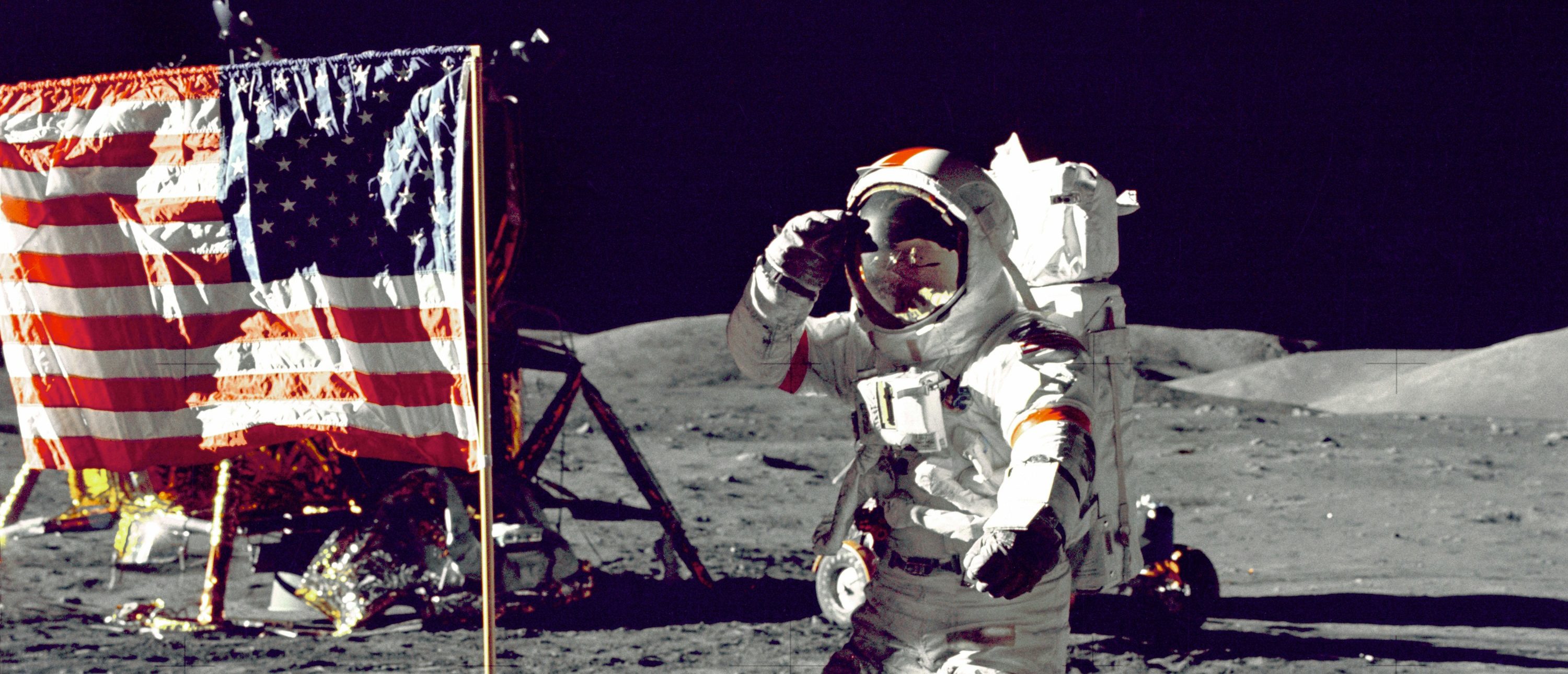

President Donald Trump’s ambition to establish a permanent American presence on the moon faces a costly challenge: figuring out how to keep astronauts alive, powered and supplied hundreds of thousands of miles from Earth.
Building a lunar base will require reliable electricity, radiation-protected shelters, communications networks and systems to deliver food, water and equipment, according to NASA. While the agency aims to return Americans to the lunar surface in 2028, construction of a permanent outpost capable of supporting extended stays is not expected to begin until 2032 or later, according to NASA.
“When I look at what NASA is trying to do now, [it] is really much more complex than the Apollo program, which was designed to put people on the Moon and bring them back safely,” Jeffrey A. Hoffman, a former NASA astronaut and professor of aeronautics and astronautics at the Massachusetts Institute of Technology, told the DCNF. “But they only stayed there three days at the most, and they took everything with them. And now we want to have a permanently staffed science base on the Moon, sort of like we have on the South Pole; that’s a big order, and yet NASA has only a fraction of what they had during the Apollo budget.”
“Returning American astronauts to the lunar surface and establishing a Moon Base requires NASA and its partners to develop and deploy the systems and infrastructure that will enable an enduring presence on the lunar surface,” a NASA spokesperson told the Daily Caller News Foundation. “This includes dependable power, communications and navigation, crew and cargo transportation, habitation and life support, surface mobility, and logistics systems that can operate safely in an environment shaped by radiation, extreme temperatures, abrasive lunar dust, difficult terrain, and long lunar nights. NASA will build these capabilities incrementally through robotic missions, technology demonstrations, cargo deliveries, and increasingly complex crewed missions.”
The announcement reinforces a December 2025 executive order directing NASA to return Americans to the Moon by 2028 and establish the initial elements of a permanent lunar outpost by 2030, according to the White House.
“NASA continues to target 2028 for the Artemis IV mission that will land American astronauts near the Moon’s South Pole. Next year, NASA will launch Artemis III, its most complicated crewed mission to date, that will test the Space Launch System rocket, Orion spacecraft, commercial human landing systems, and other systems needed to land astronauts safely and return them to Earth,” a NASA spokesperson told the DCNF.
“If we could land Americans on the Moon in 1969, we can do it now,” Michelle L.D. Hanlon, executive director of the Center for Air and Space Law at the University of Mississippi School of Law, told the DCNF. “Establishing a permanent presence is a greater undertaking, but we possess capabilities that the Apollo generation could scarcely have imagined. What we need is the passion and shared sense of purpose that President Kennedy helped inspire.”
American ambitions also face international competition. China continues developing rockets, spacecraft and lunar landing equipment as it pursues its goal of placing astronauts on the Moon by 2030, according to the Chinese Ministry of National Defense.
Although the United States and China are competing to establish a presence on the moon, experts disagree on whether the two countries should cooperate or compete for dominance.