




Beijing Allegedly Hid Spy Equipment Aboard Commercial Ships Operating Near US
Chinese state-owned shipping giant COSCO is allegedly using concealed equipment aboard commercial vessels to spy on military communications near the United States and other countries, U.S. officials say.
Francis Kapper · Sep 1, 2026 · 5 min read
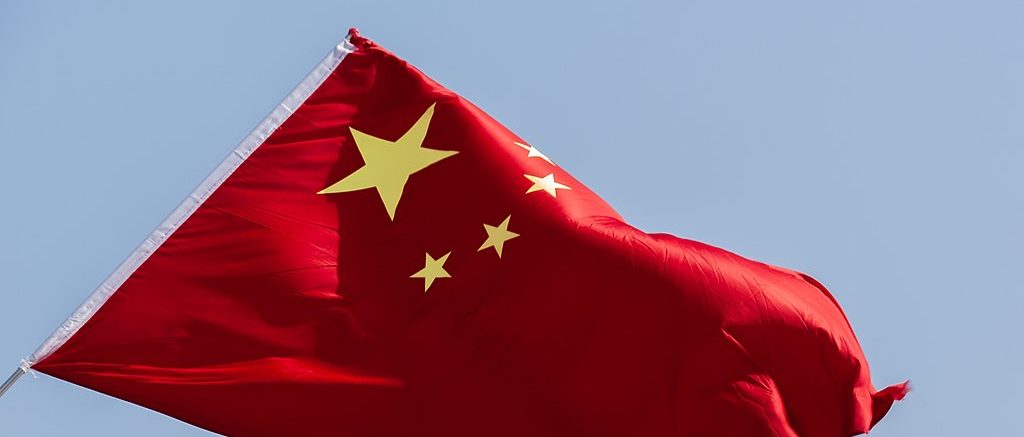

Chinese state-owned shipping giant COSCO is allegedly using concealed equipment aboard commercial vessels to spy on military communications near the United States and other countries, U.S. officials say.
The surveillance operation gives Beijing access to communications and information involving military vessels and aircraft across North America, Europe and Asia, Reuters reported, citing two anonymous senior Trump administration officials. The allegations raise new questions about the security implications of allowing a state-owned Chinese company already linked to Beijing’s military to maintain a major presence in American ports and supply chains.
“This is a very serious accusation and if true should lead legislators in the United States and abroad to put in place safeguards in and around both military facilities and civilian ports,” Zack Cooper, senior fellow at the American Enterprise Institute, told the Daily Caller News Foundation. “I suspect that many in Congress would support a blanket ban on COSCO operations in US waters and perhaps lead to additional pressure on Chinese-operated ports and port infrastructure around the world.”
COSCO has maintained an intelligence collection relationship with Beijing for decades, allowing China to use its commercial shipping network to gather signals from around the world, Reuters reported, citing the officials.
COSCO, the Office of the Director of National Intelligence, the White House and the Pentagon each did not respond to the DCNF’s requests for comment.
One expert warned that these Chinese ships could be carrying offensive munitions as well as surveillance technology.
“I think it’s fair to assume any Chinese platform or any platform containing Chinese components is trying to gather intelligence at all times,” James Holmes, holder of the J. C. Wylie Chair of Maritime Strategy at the U.S. Naval War College, told the DCNF. “It goes beyond surveillance, by the way. Containerized missiles and drones are all the rage now, so any Chinese container ship is a potential armed auxiliary cruiser. Think about Ukraine’s raid against a Russian military airfield from a commercial truck bearing drones. San Diego, Norfolk, et al. need to be on guard.”
The Federal Maritime Commission told the DCNF that it has not yet reviewed whether intelligence collection falls within the scope of “unfavorable shipping conditions” under its jurisdiction.
“The Commission identifies COSCO as a government-controlled carrier of the People’s Republic of China,” Joel Graham, special legal and operations advisor in the Office of the Chairman at the Federal Maritime Commission, told the DCNF. “The Commission has broad authority to investigate the activities of foreign carriers, including government-controlled carriers, to evaluate whether their practices cause unfavorable shipping conditions in US foreign trade … The Commission has not previously addressed whether alleged intelligence collection activities would constitute such a practice.”
The equipment is designed to collect information on military communications technology and advances in encryption while also providing Beijing information about important commercial and military shipping routes, Reuters reported, citing one of the officials. Information gathered by the ships can help China conduct maritime reconnaissance, identify potential foreign military targets and obtain early-warning information, according to the outlet.
The officials did not identify the specific equipment allegedly installed aboard the vessels but described the systems as sophisticated signals intelligence platforms rather than ordinary communications hardware.
“COSCO operates a large fleet of commercial vessels around the world,” Christopher H. Sharman, director of the China Maritime Studies Institute at the U.S. Naval War College, told the DCNF. “That global presence could provide Beijing with access to maritime environments and locations that would otherwise be more difficult to reach using dedicated government or military vessels. The same global reach that makes COSCO commercially valuable also makes its fleet potentially valuable to Beijing for pursuing national-security objectives worldwide.”
Sharman stated that his comments do not represent the views of the U.S. government or Department of War.
Concerns about Beijing using ostensibly civilian vessels for military intelligence collection predate the latest allegations.
China’s maritime militia maintains dedicated reconnaissance units and intelligence personnel that collect and relay information to the People’s Liberation Army (PLA), according to an April 2025 U.S. Naval War College report. PLA researchers have also advocated putting intelligence personnel aboard Chinese-owned or operated merchant vessels overseas, with the report assessing that such activity was likely already occurring.
“One feature of China’s state-owned maritime sector that is particularly relevant is the presence of political commissars aboard PRC oceangoing commercial vessels, including those operated by COSCO,” Sharman told the DCNF. “If the PRC government sought to direct a COSCO vessel to support intelligence-collection activities, the political commissar would provide an established Party presence aboard the ship through which such requirements could be communicated.”
The Pentagon formally designated COSCO a “Chinese military company” operating directly or indirectly in the United States in January 2025, according to the Department of War. The Pentagon said the list is intended to identify and counter China’s Military-Civil Fusion strategy, which Beijing uses to provide the PLA access to technologies and expertise developed by entities that can appear civilian.
COSCO nevertheless remains heavily involved in trade with the United States, calling at American ports and participating in several container-terminal joint ventures, Reuters reported.
The Trump administration previously targeted China’s dominance of the maritime sector with fees on Chinese shipping operators and Chinese-built vessels, according to the Office of the United States Trade Representative. The administration later agreed to suspend those Section 301 maritime measures for one year beginning in November 2025 as part of its trade agreement with Beijing, according to the White House.
China rejected the intelligence allegations, arguing that Beijing would not direct companies to illegally obtain information overseas.
“We oppose vilifying China by peddling the so-called ‘intelligence collection’ narrative, which is totally baseless,” Reuters reported, citing Chinese Embassy spokesperson Liu Chang.
All content created by the Daily Caller News Foundation, an independent and nonpartisan newswire service, is available without charge to any legitimate news publisher that can provide a large audience. All republished articles must include our logo, our reporter’s byline and their DCNF affiliation. For any questions about our guidelines or partnering with us, please contact [email protected].
All content created by the Daily Caller News Foundation, an independent and nonpartisan newswire service, is available without charge to any legitimate news publisher that can provide a large audience. All republished articles must include our logo, our reporter’s byline and their DCNF affiliation. For any questions about our guidelines or partnering with us, please contact [email protected].
Get every new post by email
No spam, no account needed. Unsubscribe anytime.