




Beijing Tightens Grip On South China Sea As Uncle Sam’s Eyes Gaze Toward Middle East
China's ambassador suggested his country could easily overpower the Philippines, a key U.S. treaty ally, reflecting an increasingly aggressive Chinese push to flex authority over the hotly disputed waters of the South China Sea.
Francis Kapper · Oct 20, 2026 · 8 min read
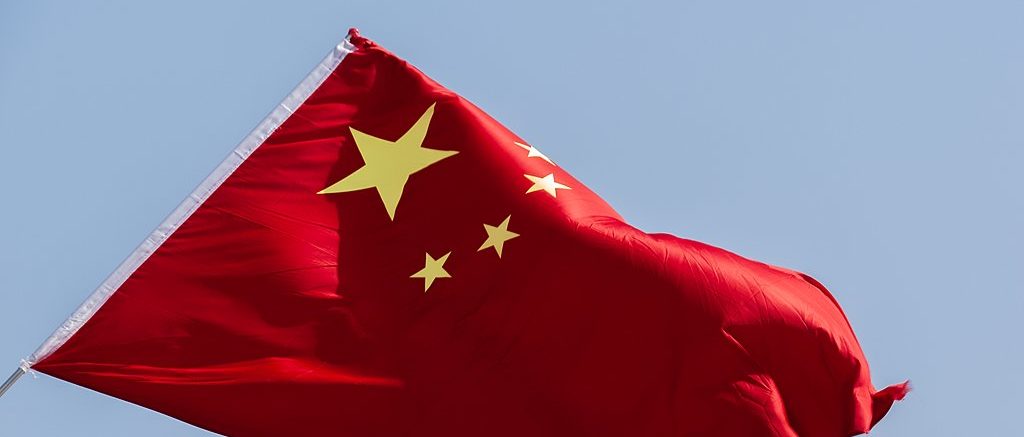

China’s ambassador suggested his country could easily overpower the Philippines, a key U.S. treaty ally, reflecting an increasingly aggressive Chinese push to flex authority over the hotly disputed waters of the South China Sea.
The Philippines summoned Chinese Ambassador Jing Quan on Monday to protest his remarks, amid mounting military tensions throughout the Indo-Pacific, according to local Filipino news agency TV5 News. The confrontation unfolds as the U.S. military diverts warships to the Middle East and burns through critical missile stockpiles fighting Iran, according to USNI News and the Center for Strategic and International Studies (CSIS).
China “may easily win” a confrontation with the Philippines, Jing told reporters Thursday, although he maintained Beijing would not resort to military force because “we love peace,” according to TV5 News.
“I do not believe China is well positioned to capitalize on our distraction in the short term, but it will take years, perhaps decades, to restore our munitions stockpiles, so it has plenty of time,” Eric Heginbotham, a principal research scientist at the Massachusetts Institute of Technology’s Security Studies Program and co-director of its Wargaming Lab, told the Daily Caller News Foundation. “We must recall that, even if we were to restore our stockpiles to where they are now ten years hence, that would not put us on track to where we planned to be ten years from now. It would put us back to today’s inventories.”
China has spent years constructing military outposts and airstrips on disputed South China Sea islands, including a potential runway on Triton Island, the Associated Press reported. Beijing also expanded its military footprint in Southeast Asia by opening a joint airbase at a former CIA-operated airfield in Laos, The New York Times reported.
“The United States-Philippines Mutual Defense Treaty covers armed attacks against Philippine forces anywhere in the Pacific, including in the South China Sea,” a White House official told the DCNF. “The United States will continue to strengthen our alliance with the Philippines and uphold a free and open Indo-Pacific.”
The Chinese Embassy and the Pentagon did not respond to a request for comment.
“The United States stands with our Philippine allies in upholding regional security and reaffirms Article IV of the 1951 U.S.-Philippines Mutual Defense Treaty, which extends to armed attacks on Philippine armed forces, public vessels, or aircraft in the South China Sea and elsewhere in the Pacific,” a State Department spokesperson told the DCNF.
“We appreciate the statements and support from the United States in condemning bad actors of their illegal occupation and activities in Philippine waters as the Philippines continues to assert its sovereign rights and champion our legitimate rights under UNCLOS,” the Philippine Embassy in Washington told the DCNF. “Both countries continue to engage in regular dialogue and coordination on matters of mutual concern, including regional security and the fulfillment of our respective commitments.”