




China’s Supposed Trump-Xi Summit Threat Gets Shot Down By Senior US Official
A new report claims China threatened to cancel President Donald Trump’s upcoming meeting with Chinese President Xi Jinping over U.S. arms sales to Taiwan, but a senior U.S. official disputed the account.
Francis Kapper · Sep 17, 2026 · 7 min read
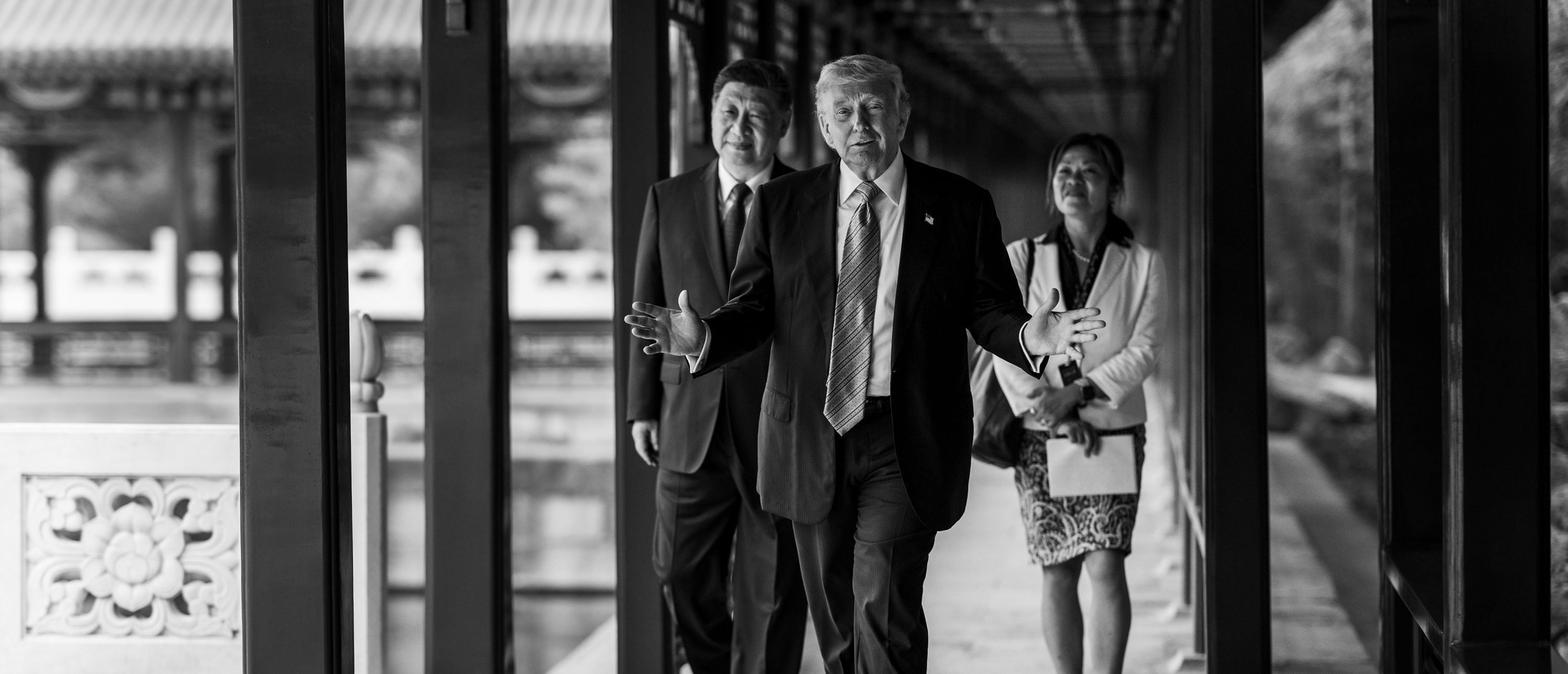

A new report claims China threatened to cancel President Donald Trump’s upcoming meeting with Chinese President Xi Jinping over U.S. arms sales to Taiwan, but a senior U.S. official disputed the account.
Beijing reportedly reiterated to Washington that Taiwan remains a “red line” in relations between the two countries as preparations continue for Xi’s expected Sept. 24 visit to the White House, The Telegraph reported, citing multiple sources who spoke with Japan’s Kyodo News; however, a senior U.S. official close to the Trump administration told the Daily Caller News Foundation that the Telegraph’s reporting is inaccurate.
The dispute centers on roughly $14 billion in U.S. arms sales to Taiwan that Congress previously approved, but that had not yet been formally notified by the administration, according to a bipartisan Senate Foreign Relations Committee letter sent to Trump in May. Trump later said he was holding the weapons sales “in abeyance” and described them as a “very good negotiating chip” during a May 15 Fox News interview.
The pending package would follow roughly $11.1 billion in proposed arms sales to Taiwan approved by the State Department and notified to Congress in December 2025, according to the Defense Security Cooperation Agency.
“If we’re not going to make arms available precisely because of pressure that Xi Jinping himself brought to bear, that’s kind of like asking the wolf if you should lock the chicken pen at night,” Jonathan Fritz, senior fellow for China policy at the Center for American Progress and a former senior State Department official focused on China, told the DCNF. “The wolf’s going to say no. I think it’s probably best that you leave the door unlocked. Thanks so much.”
The State Department and the Chinese Embassy in Washington did not respond to a request for comment.
“This is part of the usual rhetorical chest-thumping over the issue of Taiwan,” Allen Zhang, a research assistant in the Asian Studies Center at The Heritage Foundation, told the DCNF. “The Chinese side almost always issues these kinds of warnings at high-level meetings to remind Washington, and the rest of the world, that Taiwan is ‘the reddest of China’s red lines.’ But unless China follows through, which clearly is not in Beijing’s interest right now, this will likely be another round of tough talk with no bite.”
Chinese Foreign Minister Wang Yi spoke with Secretary of State Marco Rubio on Thursday, with the two discussing preparations for upcoming high-level exchanges between Washington and Beijing, according to the Chinese Foreign Ministry. The call suggests diplomatic preparations are continuing ahead of next week’s expected Trump-Xi meeting.
“Most likely this warning was not an attempt to pressure the U.S. or demand any concessions but rather a straightforward notification that if the U.S. went ahead with the arms sale immediately before the summit, it would be tremendously embarrassing to Xi Jinping,” Jake Werner, director of the East Asia Program at the Quincy Institute for Responsible Statecraft, told the DCNF. “That would make going ahead with the summit untenable for the Chinese side. This sort of clear communication is desirable in a diplomatic relationship.”
The meeting would be Trump and Xi’s third face-to-face encounter in roughly a year, following Trump’s May visit to Beijing, where the two leaders held meetings at the Great Hall of the People and Zhongnanhai, according to the White House.
“Insofar as Beijing believes that Washington, whether under this administration or a future administration, is no longer as committed to preserving the status quo and peace and stability across the Taiwan Strait. That means their risk appetite is going to go up,” Fritz told the DCNF. “Is it going to go up enough to still be willing to roll the dice for a full-scale invasion of the island? That’s a hard question to ask. But I do think the odds go up.”
The reported threat puts a pending American weapons package for Taiwan directly in the middle of the relationship between Washington and Beijing. Trump said after meeting Xi in Beijing in May that he was holding the package in abeyance and called the weapons a “very good negotiating chip,” Reuters reported.
“The primary takeaway for the United States is not to cease defense cooperation with Taiwan, but to pursue it in a low-profile way through smaller arms sales and limited publicity,” Werner told the DCNF. “China has a long history of intense sensitivity to symbolic aspects of the Taiwan question paired with tolerance for the practical measures that support deterrence. We have no indications that this has changed and it should be a central U.S. objective to make sure this balance stays in place.”
A recent dispute in Panama underscored how aggressively Beijing reacts even to symbolic engagement with Taiwan. After a group of Panamanian lawmakers established a “Panama-Taiwan parliamentary exchange group,” China warned that crossing its “red line” on Taiwan would bring “serious consequences” and accused the lawmakers of violating the one-China principle, according to the Chinese Foreign Ministry.
“China firmly opposes any form of official interaction or contact between countries having diplomatic relations with China and the Taiwan authorities,” a Chinese Embassy spokesperson previously told the DCNF. “The establishment of the so-called ‘Panama-Taiwan Inter-Parliamentary Exchange Group’ seriously violates Panama’s longstanding commitment to the one-China principle. Those who cross the line on the Taiwan question will face serious consequences. I have no further information to provide on the specifics.”
“The U.S. is the only country that sells substantial arms to Taiwan, which makes American weapons to the island an instrumental part of Taiwan’s defense,” Zhang told the DCNF. “Delaying arms sales hinders the island’s military readiness, which could, in the worst-case scenario, tempt China to use force.”
Taiwanese officials have been communicating their position to Washington before the summit, while Taiwanese Foreign Minister Lin Chia-lung said Tuesday that he expects Xi to raise the Taiwan question with Trump, Reuters reported, citing Taiwanese officials. Japanese officials have also sought discussions with Trump before the meeting and want Washington to maintain its established language on Taiwan, Reuters reported, citing Japanese government sources.
Japan has a direct security stake in any Taiwan crisis because Taiwan sits just off Japan’s southwestern island chain, with Yonaguni Island roughly 110 kilometers from Taiwan, according to Japan’s Ministry of Defense. Tokyo has repeatedly said peace and stability in the Taiwan Strait are important to Japan’s own security, while Japan also depends heavily on maritime trade routes that run through the broader region, according to the Japanese Foreign Ministry.
Xi told Trump during their May summit that Taiwan was an internal Chinese matter and urged the U.S. to abide by Beijing’s interpretation of the one-China principle and the three U.S.-China joint communiques, according to the Chinese Foreign Ministry.
U.S. law, however, places Taiwan’s defense needs at the center of decisions about weapons transfers. The Taiwan Relations Act states that the U.S. will make available defense articles and services needed for Taiwan to maintain a sufficient self-defense capability and says the president and Congress should determine those needs based on their judgment of Taiwan’s requirements.
“People often say that, ‘Oh, we can just restart the sales in a few months.’ But once the decision to pause arms sales is made, it could send a message that the U.S. can’t be counted on, an impression that is hard to erase,” Zhang told the DCNF. “It could also push Taiwan closer to Beijing. We got a glimpse of that in April, when the leader of Taiwan’s opposition party traveled to Beijing and met with Xi, the first meeting of that kind in nearly a decade.”
Taiwan, however, is also pouring record amounts of its own money into defense as pressure from Beijing grows. Taipei’s 2026 defense spending will reach roughly NT$949.5 billion (New Taiwan Dollars), or about 3.32% of GDP under NATO-style accounting, while the Ministry of National Defense’s core budget rose 25% from the previous year, according to Taiwan’s Ministry of National Defense.
All content created by the Daily Caller News Foundation, an independent and nonpartisan newswire service, is available without charge to any legitimate news publisher that can provide a large audience. All republished articles must include our logo, our reporter’s byline and their DCNF affiliation. For any questions about our guidelines or partnering with us, please contact [email protected].
Get every new post by email
No spam, no account needed. Unsubscribe anytime.


