




China Sends Navy After US Warship As Separate Maritime Standoff Erupts Near Taiwan
Things are continuing to heat up in the Taiwan Strait as naval confrontations become more frequent and aggressive, though the first shot has not yet been fired.
Francis Kapper · Oct 20, 2026 · 6 min read

Things are continuing to heat up in the Taiwan Strait as naval confrontations become more frequent and aggressive, though the first shot has not yet been fired.
China dispatched naval forces to shadow an American warship near a disputed South China Sea shoal Tuesday as Taiwan confronted a Chinese Coast Guard vessel accused of entering restricted waters with its tracking system disabled, according to the Chinese military and Taiwan Coast Guard. The incidents underscore the growing risk of military confrontations in the region, where Chinese forces are increasingly challenging American and allied vessels.
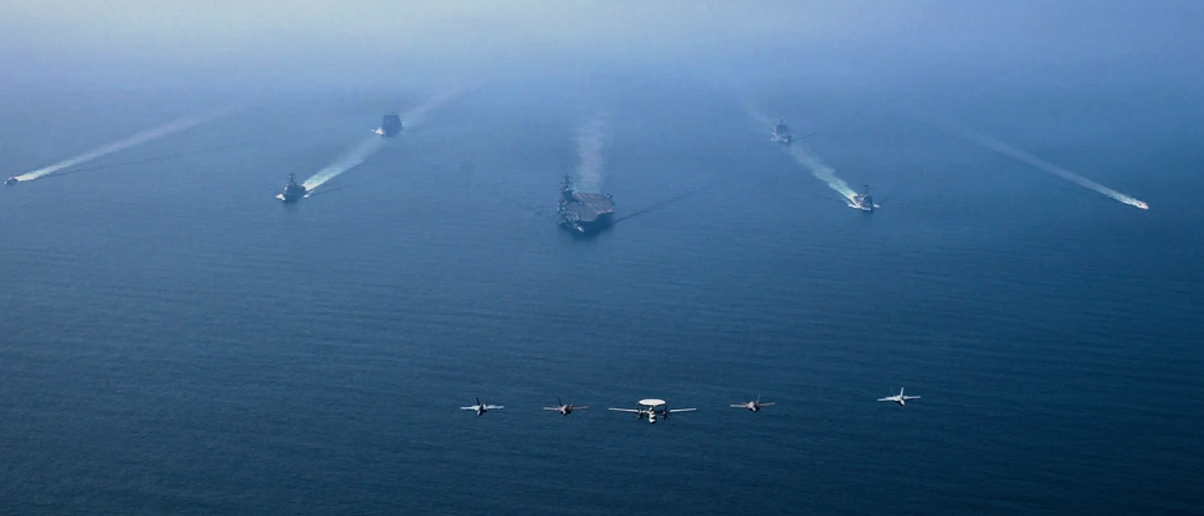
The USS Charleston, an Independence-class littoral combat ship, entered waters near Sabina Shoal in the disputed Spratly Islands early Tuesday, prompting Chinese naval forces to track and monitor the vessel, according to the PLA Southern Theater Command Navy.
“Taiwan has been getting its act together on defense at last, fielding capabilities designed to deny an invasion fleet (or a blockade fleet) access to the island across the Taiwan Strait,” James R. Holmes, the J. C. Wylie Chair of Maritime Strategy at the Naval War College, told the Daily Caller News Foundation. “No access, no Chinese victory, and Taiwan stands. Beijing has been so domineering that it has united the countries along the first island chain against it, including ourselves since we are a resident power in the Western Pacific.”
“Beijing has been sustaining a significant naval presence in the Philippine Sea, including seabed survey ships in recent months and, notably, coast guard cutters,” Brent Sadler, a senior research fellow for naval warfare and advanced technology at the Heritage Foundation, told the DCNF. “China’s military maritime activity around Taiwan also provides ships and their crews with real-world operational experience in waters where they could be directed to operate during a future crisis or conflict. These activities, however, should be viewed in context. They are evolutionary steps in the PLA’s effort to develop the capabilities and operational proficiency Xi Jinping expects of the PLA by his 2027 Centennial Military Building Goal.”
Beijing accused the American vessel of entering Chinese territory without permission and dispatched naval forces to track its movements, according to the Chinese military.
The Chinese Embassy in Washington and the Taipei Economic and Cultural Representative Office in the United States (TECRO), which functions as Taiwan’s de facto embassy in the United States, did not respond to a request for comment.
“Since August 2022, the People’s Liberation Army (PLA) has established a ‘new normal’ of military activity around Taiwan, with multiple warships and military aircraft operating in the vicinity of the island on a daily basis,” Christopher H. Sharman, a professor at the Naval War College, told the DCNF, speaking in his personal capacity and not on behalf of the college or the Department of War. “This campaign of PRC military coercion periodically intensifies through surges in activity under the banner of named exercises. Other surges receive little international media attention. The newest addition to Beijing’s coercive toolkit is the routine deployment of China Coast Guard vessels east of Taiwan. These law enforcement platforms could provide Beijing another means to enforce PRC domestic laws against vessels operating in international waters.”
The latest incidents also follow growing tensions between Beijing and Manila, which have repeatedly clashed over competing territorial claims in the South China Sea.