




Clearing The Roadless Rule: What Comes Next For America’s Burning Forests?
Republican Oregon Rep. Cliff Bentz wants to turn wildfire fuel from federal forests into an energy market as the Trump administration moves to rescind a Clinton-era "roadless rule."
Paris Apodaca · Sep 8, 2026 · 5 min read
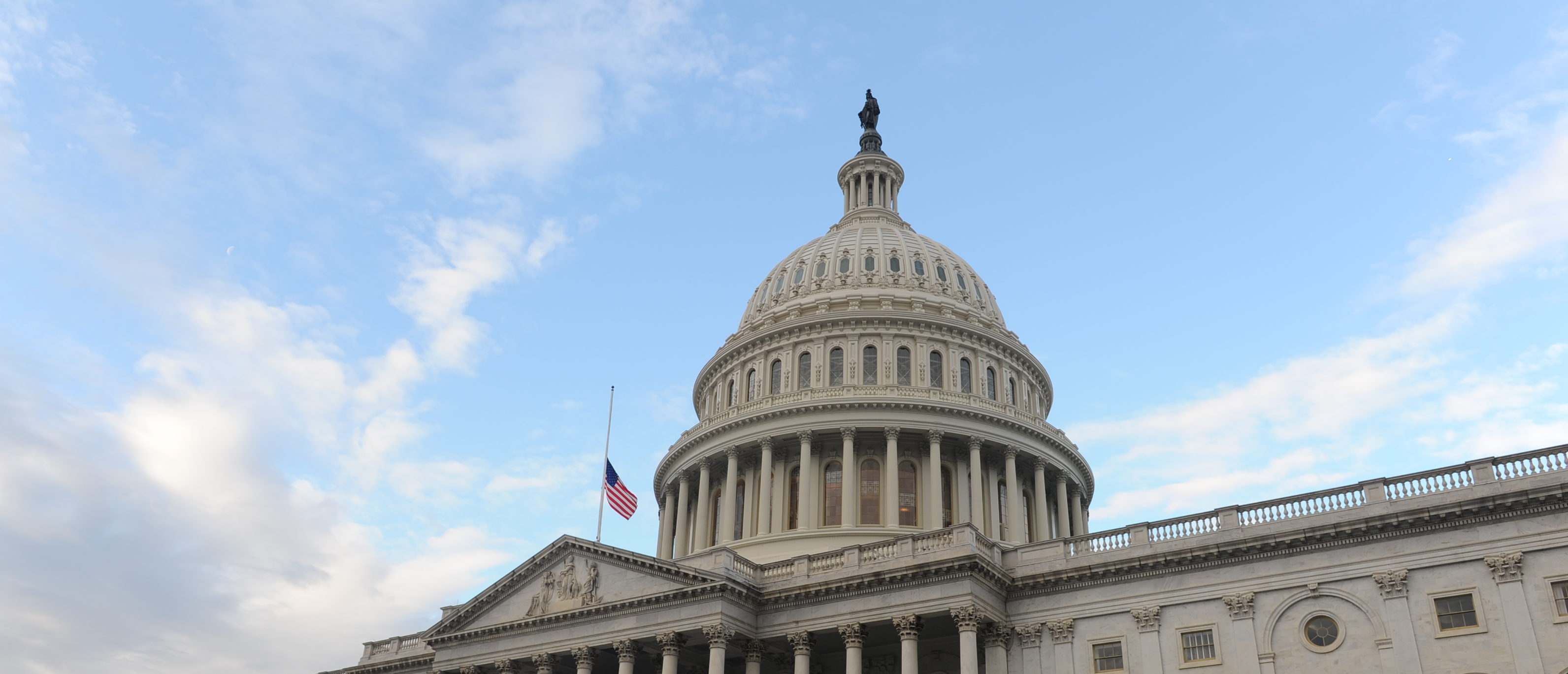

Republican Oregon Rep. Cliff Bentz wants to turn wildfire fuel from federal forests into an energy market as the Trump administration moves to rescind a Clinton-era “roadless rule.”
The lawmaker’s Wildfire Reduction Market Expansion Act would expand what forest material qualifies as renewable biomass, potentially creating buyers for low-value vegetation removed during wildfire prevention and forest restoration. The bipartisan bill has 25 cosponsors including both Republicans and Democrats.
“Does the government have to support this effort? And the answer is yes,” Bentz told the Daily Caller News Foundation, arguing that the cost should be weighed against the billions spent fighting wildfires.
Whether a large enough market exists to make that tradeoff economical, however, remains a central question.
“Absolutely. I don’t have a study yet that shows exactly how great that demand is,” Bentz said when asked whether enough demand currently exists to make the model viable.
Bentz pointed to aviation fuel as one potential market, arguing that demand for “green kerosene for jet fuel is through the roof.”
The Australian government committed A$1.1 billion to its Cleaner Fuels Program to encourage domestic production of low-carbon liquid fuels. The program was part of a broader push to build an Australian biofuels industry, alongside the Green Fuels Accelerator backed by Qantas and Boeing, S&P Global reported.
The federal fuel standard could help support costs, estimating the cellulosic component could ultimately add between half a cent and one cent per gallon at the pump if production reaches millions of gallons, Bentz told the DCNF.
“And then you stack the California subsidy on top of that and perhaps the Oregon subsidy on top of that,” Bentz said. “The true delay is going to be in how in the world we put together a contract, a 30-year, a 40-year contract, guaranteeing the supply of wood to this $300 million investment. Because if you don’t have it, they won’t get built.”
The biomass push comes as the Trump administration is also seeking to rescind the 2001 Roadless Area Conservation Rule, which restricts road construction, reconstruction and timber harvesting across millions of acres of National Forest System land.
Wood pellet production has included logging whole trees despite industry claims that biomass primarily relies on logging waste and residues, according to a June 2024 Natural Resources Defense Council (NRDC) issue brief examining bioenergy sourcing. At least 66 highly imperiled tree species appeared in wood pellet supply chains examined by the organization, according to NRDC’s analysis of biomass industry reports.
Burning woody biomass can emit more carbon dioxide at the smokestack per unit of electricity generated than burning coal because wood contains less energy per unit of carbon, according to an NRDC explainer examining the carbon impacts of biomass energy. The group argues that replacing harvested trees does not immediately offset those emissions because new growth can take years or decades to recapture the released carbon, per the explainer.
“They all focus on making sure that the type of wood being removed is not saw logs, as they are called,” Bentz said.
The Forest Service has argued rescission would give land managers more flexibility to address wildfire risks and improve access for forest management, according to the agency’s analysis of the proposed rule.
Environmental groups dispute that rationale. Wildfires are four times more likely to ignite near roads than in roadless forests, according to an Aug. 18 Wilderness Society statement citing nationwide wildfire research. The research also found that fires farther from roads tended to grow larger, according to The Wilderness Society’s summary of the findings.
“Opening our backcountry forests to more roads and development, and therefore more ignitions, is also not a wildfire solution, and never will be,” Josh Hicks, director of conservation campaigns at The Wilderness Society, said in the group’s Aug. 18 statement responding to the proposed rescission.
The existing Roadless Rule also allows some wildfire mitigation work within roadless areas, according to a May Wilderness Society analysis. The organization said thinning and other treatments designed to reduce excessive fuel loads can occur under the existing rule, citing previous Forest Service fuel-reduction projects.
Other environmental groups argue rescission could facilitate commercial development beyond wildfire mitigation. The Forest Service proposal that rescission would “open up 45 million acres of roadless forest to clear-cutting and other harmful development enabled by roading,” Earthjustice President Abigail Dillen said in an Aug. 18 coalition press release.
The Natural Resources Defense Council raised similar concerns in the same Aug. 18 coalition statement. Repealing the rule would expose intact forest ecosystems to fragmentation from roads and development, according to NRDC forest advocate Gabrielle Berthel’s statement included in the coalition release.
Bentz argues that access is precisely what federal forest managers lack.
“One of the things that’s a huge challenge is access to get firefighters in so they can fight these fires,” Bentz said.
Even if the rule disappears, however, changing federal regulations does not immediately create usable roads.
Bentz said much of the infrastructure would not need to be built from scratch because former logging roads remain underneath decades of forest growth.
“What you would do is you’d go back to those existing roads that have been abandoned and you would cut the trees out of them and presto, you have your road back,” the lawmaker said.
Reopening roads still raises the question of who pays to maintain them.
“The roads for logging purposes were not paid for by the state. They were paid for by the loggers,” Bentz said. “And the same, I think, is going to be true as we move into this new realm.”
The same challenge applies to biomass. Companies would need accessible forests, transportation infrastructure, processing capacity and customers willing to purchase the resulting fuel.
“So the market exists now,” Bentz said. “The issue is, will we have this additional $2.40 to make it actually work?”
Still, the congressman does not expect those changes to produce immediate results across millions of acres of forest.
“I think it’s highly unlikely that you’d see much of any immediate benefit,” Bentz said when asked how quickly the proposal could affect wildfire damage.
All content created by the Daily Caller News Foundation, an independent and nonpartisan newswire service, is available without charge to any legitimate news publisher that can provide a large audience. All republished articles must include our logo, our reporter’s byline and their DCNF affiliation. For any questions about our guidelines or partnering with us, please contact [email protected].
Get every new post by email
No spam, no account needed. Unsubscribe anytime.
Comments
Free account · your comment posts right after signup
