




Congress Wants To Curb Exporting AI Chips to China. Will It Make An Impact?
Congress wants to curb artificial intelligence (AI) chip exports to China as the U.S. ramps up domestic chip production?
Sean Moran · Sep 21, 2026 · 4 min read
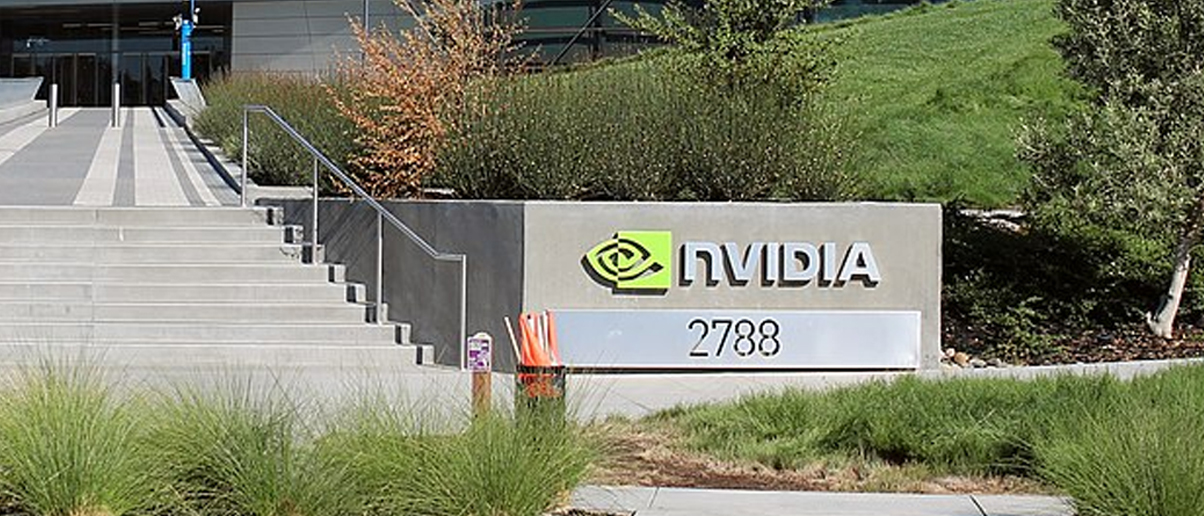

Congress wants to curb artificial intelligence (AI) chip exports to China as the U.S. ramps up domestic chip production?
Nvidia CEO Jensen Huang has had some success in convincing lawmakers to strip back regulations that prevent the company from selling advanced AI chips across the world, especially China, according to Politico. The Senate is poised to pass a must-pass defense bill that would further scrutinize chip exports to foreign adversaries such as China.
However, the restrictions could ring hollow as China could soon become self-sufficient by boosting its domestic AI industry and training its models on hardware made in the communist nation.
The AI chip company said in a recent earnings call that less than one percent of its data center revenue came from high-end chip sales to China, according to Yahoo Finance.
Nvidia and other hardware manufacturers are pressing lawmakers to remove language from this year’s National Defense Authorization Act (NDAA), a must-pass defense bill, that would limit Chinese access to Nvidia’s most advanced AI chips, per Politico. The Senate version of the NDAA contains provisions that would require tracking of exported AI chips and allow Congress to block exports of advanced AI chips to foreign adversaries such as China.
“What Jensen argues is that the threat of China is greater if they have to develop their own chips, and that’s not a frivolous argument,” Senate Commerce Committee Chairman Ted Cruz, a Texas Republican, told Politico.
“He argues we want to see American chips adopted globally. There are two sides to that argument, and I think I and other policymakers are evaluating both sides. I think we need to have meaningful export controls, but where the line should be is a complicated judgment call,” he added.
An Nvidia spokesperson declined to respond to a Daily Caller News Foundation request for comment.
Huang has argued that export controls on AI chips may create a need for countries such as China to increase their own chip production.
“The idea of AI diffusion limiting other countries’ access [to] American technology is a mission expressed exactly wrong,” Huang said in an interview with Stratechery in May. “It should be about accelerating the adoption of American technology everywhere before it’s too late. If the goal is for America to lead, then AI diffusion did exactly the opposite of that.”
However, it appears many lawmakers remain skeptical of Nvidia’s pitch.
One Senate Democratic aide said that Huang’s meetings with congressional aides have “repeatedly been seen as tone deaf, as he’s openly dismissed or downplayed the risks of AI, including denying any likely workforce disruptions from the technology,” per the outlet.
“Jensen makes an argument — I’m not sure I fully buy it — that as long as the world is relying on Nvidia chips, that’s a good thing,” said Senate Intelligence Committee Ranking Member Mark Warner, a Virginia Democrat.
“It is really dangerous to be advocating for exporting the most sophisticated chips and chip-making technology to China. So I haven’t heard from Nvidia or Jensen, but I’m a pretty strong believer in the importance of continuing export controls,” Delaware Democratic Sen. Chris Coons told Politico.
The Trump administration’s slow pace on export controls is putting Senate Republicans “under pressure” to include a provision in the NDAA, a Senate Republican aide said to the outlet.
As Congress considers how to scrutinize exports to China, one Chinese tech executive credited the United States’ current export restrictions for its burgeoning chip industry.
“If the United States hadn’t forced our country, our companies, and our industry, we wouldn’t have done something like this. But we are also grateful to the US for enabling our country’s semiconductor industry chain to truly grow,” Xi Zhijun, Huawei’s current Rotating Chairman said in May, per Yahoo Finance. “Now the momentum is very good, and everyone recognizes and supports it.”
At the same time, Huawei, a Chinese hardware manufacturer, in mid-September unveiled its latest AI architecture that could help “break China’s Nvidia reliance,” according to the South China Morning Post. Huawei executives have worked to develop Chinese-made chips that Chinese AI labs, such as Moonshot AI, could use for their AI models.
DeepSeek founder Liang Wenfenger told investors in September that training DeepSeek AI models is one of its biggest strategic bets, according to The Information.
The Chinese hardware company plans to launch its next generation Ascend 960DT AI chip in the first quarter of 2027 to better compete with Nvidia, according to TechCrunch.
Huawei could likely help China meet half of its domestic AI processing demand by 2028 and achieve self-sufficiency, according to an American Enterprise Institute (AEI) report.
All content created by the Daily Caller News Foundation, an independent and nonpartisan newswire service, is available without charge to any legitimate news publisher that can provide a large audience. All republished articles must include our logo, our reporter’s byline and their DCNF affiliation. For any questions about our guidelines or partnering with us, please contact [email protected].
Get every new post by email
No spam, no account needed. Unsubscribe anytime.


