




Could Landmark Supreme Court Second Amendment Ruling Be At Risk Over 1 Word?
The Supreme Court held that the Second Amendment protected an individual right to keep and bear arms in June 2008, but now some are arguing that a key portion of the ruling includes a misquote.
Harold Hutchison · Nov 23, 2026 · 3 min read
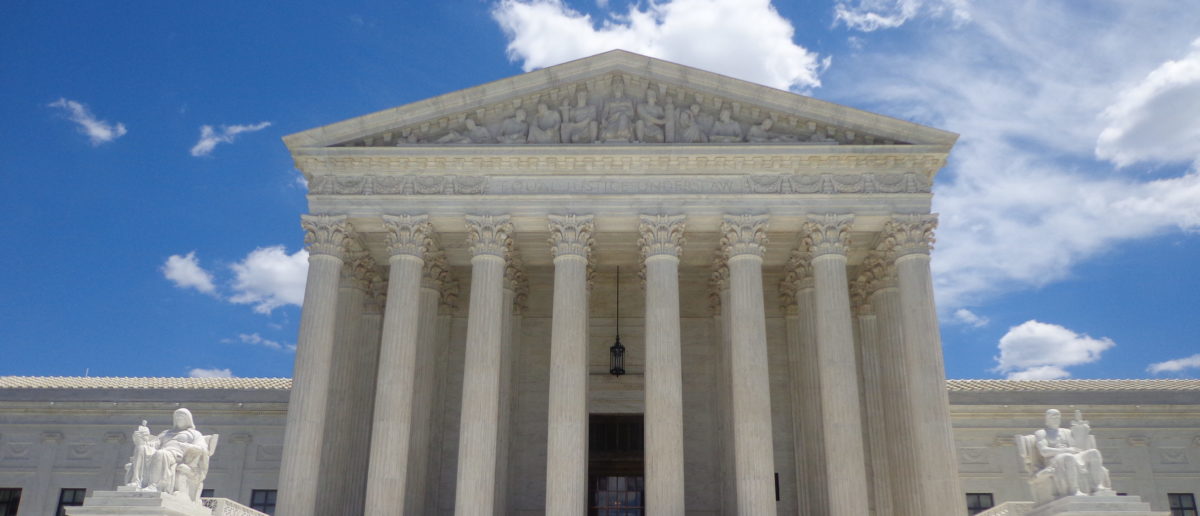

The Supreme Court held that the Second Amendment protected an individual right to keep and bear arms in June 2008, but now some are arguing that a key portion of the ruling includes a misquote.
When writing the opinion in Heller v. District of Columbia, Associate Justice Antonin Scalia stated that unless firearms were “dangerous and unusual,” the Second Amendment prohibited the federal government from banning them. The New York Times reported that some legal scholars claim Scalia misquoted Sir William Blackstone, an English jurist whose treatises were influential among the Founding Fathers.
“The offence of riding or going armed, with dangerous or unusual weapons, is a crime against the public peace, by terrifying the good people of the land; and is particularly prohibited by the statute of Northampton, upon pain of forfeiture of the arms, and imprisonment,” Blackstone wrote in his “Commentaries on the laws of England” in 1769.
The Times said that the United States Court of Appeals for the Second Circuit questioned the misquote when it upheld Connecticut’s ban on modern semiautomatic firearms in an August 2025 opinion in Grant v. Higgins.
“Blackstone did not use the phrase ‘dangerous and unusual’ and instead described prohibitions on the carrying of ‘dangerous or unusual weapons,’” the appeals court panel said. “It would seem a serious subversion of our commitment to history to enshrine a conjunctive test based on the Heller opinion’s possible misquote of Blackstone.”
Dr. Saul Cornell told The New York Times that the phrasing used by Blackstone was “hendiadys,” which the Merriam-Webster dictionary defines as “the expression of an idea by the use of usually two independent words connected by and (such as nice and warm) instead of the usual combination of independent word and its modifier (such as nicely warm).”
John Bash, an appellate attorney who clerked for Scalia when the Supreme Court decided the Heller case, took issue with the claims by the New York Times in a post on LinkedIn.
“Back in October the New York Times reporter reached out to me about this, presumably because I was the law clerk for Justice Scalia on Heller,” Bash posted. “I immediately wrote back with a full on-the-record explanation of why there was no misquote. Yet the article does not refer to my explanation at all and asserts with no qualification that it was a misquote.”
Bash posted the quotes he gave the outlet. The Second Amendment Foundation (SAF), which backed the litigation in Grant v. Higgins, did not immediately respond to a request for comment from the Daily Caller News Foundation.