




Could The Trump Admin’s New Grant Program Disrupt Higher Education?
A federal grant program tailored towards the trades being adopted across the United States may help reshape higher education as millions of Americans go back to school.
Spencer Lombardo · Sep 26, 2026 · 5 min read
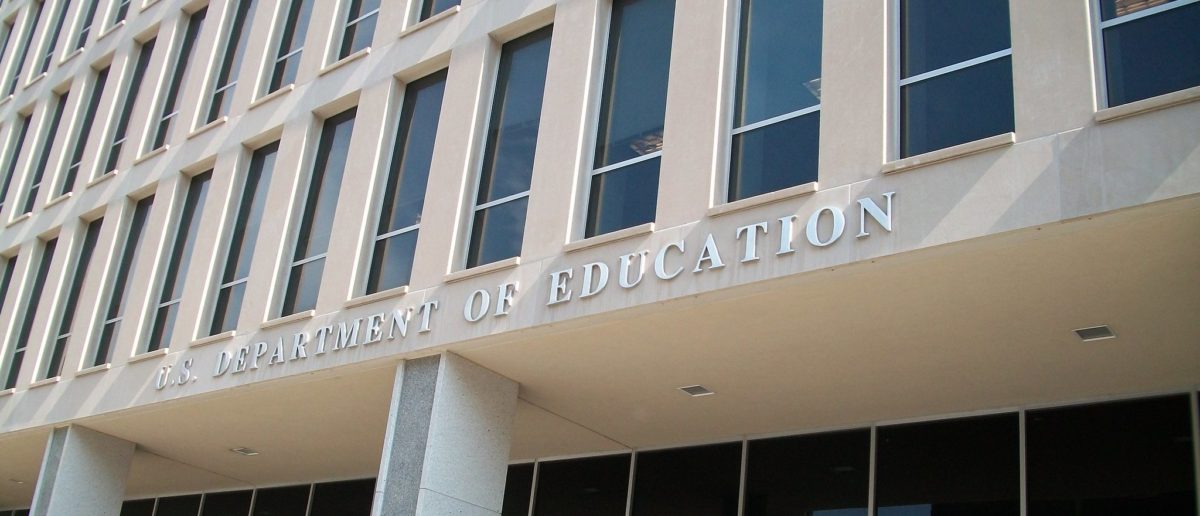

A federal grant program tailored towards the trades being adopted across the United States may help reshape higher education as millions of Americans go back to school.
North Carolina became the fifth state to be approved by the U.S. Department of Education (ED) for Workforce Pell (WFP) grants Friday, paving the way for more Americans to receive federal funds for pursuing career and technical education (CTE), according to a press release.
WFP’s implementation, which began July 1, 2026, under the Working Families Tax Cuts Act signed July 4, 2026, by President Donald Trump, comes after around 60% of American adults aged between 18-28 surveyed by ResumeTemplates.com in October 2025 reported they have considered pivoting towards the trades as opposed to traditional higher education.
“Workforce Pell is finally a reality after decades of debate—opening new doors for students across the nation,” ED spokesperson Ellen Keast told the Daily Caller News Foundation. “This landmark student aid program is designed to move beyond the outdated college‑for‑all model and expand access to in-demand, workforce‑focused credentials that can be completed quickly and at lower cost.”
Thanks to @POTUS‘ @TaxCuts, Workforce Pell is creating new pathways for America’s next generation, because education and training looks different for everyone! pic.twitter.com/b3dyKRiDIP
— U.S. Department of Education (@usedgov) September 15, 2026
Some of the covered CTE programs could help individuals attain employment in as quickly as eight weeks, according to a May press release by ED.
Adam Kissel, a visiting fellow at the Heritage Foundation’s Center for Education Policy, told the DCNF that many students who choose a bachelor’s degree and fail to graduate “would have been better off pursuing a short-term credential.”
“Fast, inexpensive, targeted credentials are much less liable to ideological indoctrination and are far better than spending many years outside of the workforce partying instead of graduating,” Kissel said.
Approximately 4.1 million community college students are enrolled in noncredit offerings, according to a study by the Rutgers-New Brunswick School of Management and Labor Relations published in February 2025. Such programs can “adjust quickly as industry needs change” and also “give current and future workers inexpensive credentials that are useful across these workers’ whole industries,” Kissel wrote in an August 2026 report for the Heritage Foundation.
Kissel also told the DCNF that WFP options will “grow substantially.”
“Many two-year colleges, trade schools, and similar institutions might find that stackable Workforce Pell credentials and industry partnerships (online and in-person) become a large proportion of their business,” Kissel said. “These colleges may often use the qualified education partnership model with partnered program management that some states such as Ohio are now considering. Some four-year colleges and universities might also find a place for such high-impact, high-value options.”
To that end, Jane Timken, an Ohio state senator, proposed a public-private partnership model in June 2026 which would give companies that help colleges design curricula for certificate programs and meet a 70% job placement rate a 20% tax credit on expenses. In addition, the model proposes granting qualifying companies $1,000 for each graduate hired within their respective industry, regardless of whether the company or a competitor onboards them.
Greg Lawson, a senior research fellow at the Ohio-based Buckeye Institute, likewise told the DCNF that WFP gives “greater flexibility to a program that was historically used only for degree-granting programs.”
“By directing funding toward workforce credentialing, Workforce Pell helps expand opportunities for workers at all stages of their careers who need to acquire skills more quickly to improve their marketability,” Lawson said. “Its implementation is a joint effort at the federal and state levels and requires that programs be approved by both the state and federal departments of education. The process may be overly complicated and may need some revisions, but overall, the goal is salutary and aimed at getting institutions of higher learning to collaborate with the private business sector to focus on what employers currently demand.”
Lawson, however, warned that one caveat to public-private partnerships facilitated by WFP is the “risk of funding relatively low-value credentials thathave less labor-market impact.”
“[S]trong data on outcomes will be critical” for preventing that, he added.
Lawson also told the DCNF that the rise of trade schools and WFP grants could “somewhat” signal disillusionment with the state of higher education among Americans.
“There is a growing recognition that four-year degrees, while still relevant for many jobs, are no longer the single golden ticket to success in life. This is especially becoming more pronounced as student debt continues to be a long-term burden on manywhohave attended four-year programs,” he said.
Outstanding student loan debt collectively owed by American students reached a record high of $1.863 trillion, according to a July 2026 report by the Education Data Initiative. (RELATED: It’s Easier Than Ever To Trap Young People In Debt. What Is The White House Doing About It?)
“Further, with the rise of AI, the long-standing shift toward intellectual capital formation over physical labor may be slowing, and the gains from physical labor are once again becoming more important,” Lawson said.
Lawson then predicted to the DCNF that, while major flagship universities willcontinue to succeed, smaller schools will struggle to adapt, noting that many of them are already shutting down underutilized academic programs or even shutting down entirely.
“Workforce Pell will likely push many colleges to change both their priorities and their operations, though the impact will vary by institution type,” Lawson explained. “The most prestigious research universities will feel little pressure, since short-term credentials fall outside their core mission and their brand already secures enrollment. The biggest changes will come at community colleges, technical colleges, and smaller regional institutions, where workforce training is either already central or could become a survival strategy.”
Additionally, such programs will “likely forge closer ties with employers.”
“Programs must prepare students for employment in high-skill, high-wage or in-demand occupations, and governors have considerable leeway in the details of implementation. That means colleges will need to maintain regular contact with local businesses and state workforce boards to demonstrate that their programs align with real job openings,” Kissel continued. “Programs that don’t lead to in-demand jobs may lose eligibility, which pushes schools to let labor-market needs shape what they offer.”
All content created by the Daily Caller News Foundation, an independent and nonpartisan newswire service, is available without charge to any legitimate news publisher that can provide a large audience. All republished articles must include our logo, our reporter’s byline and their DCNF affiliation. For any questions about our guidelines or partnering with us, please contact [email protected].
Get every new post by email
No spam, no account needed. Unsubscribe anytime.


