




Disaster Stuck Just Two Continents. Will We Be Ready When It Comes For Us?
In just eight days, two powerful earthquakes killed approximately 360 people across Colombia and Indonesia — a toll that continues to rise. Thousands more were injured or driven from damaged homes.
Deborah Wilson · Aug 22, 2026 · 4 min read
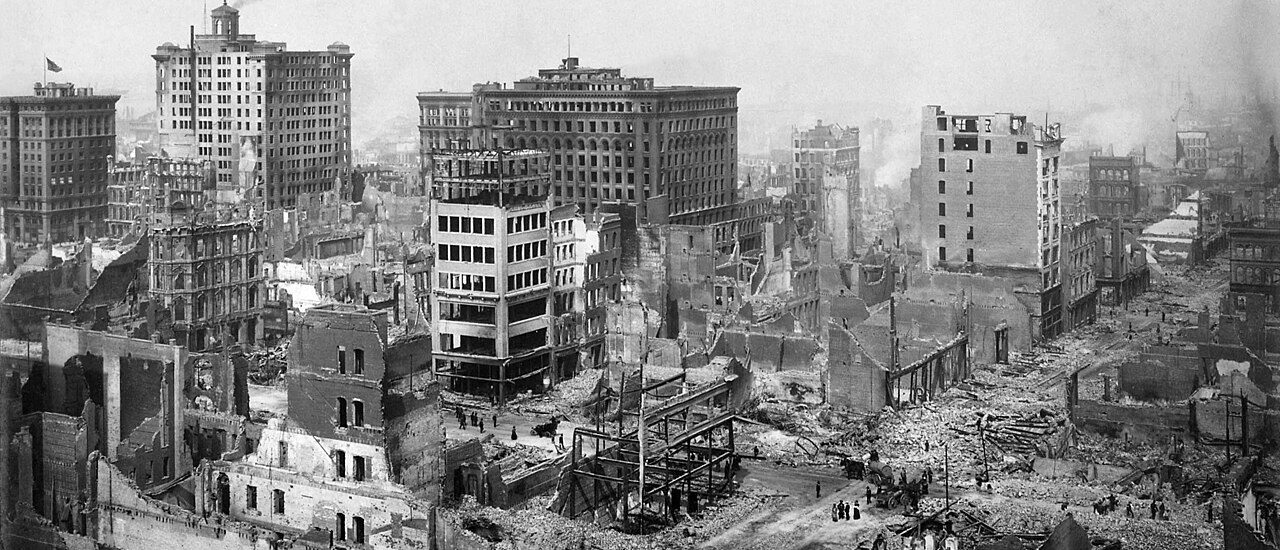

In just eight days, two powerful earthquakes killed approximately 360 people across Colombia and Indonesia — a toll that continues to rise. Thousands more were injured or driven from damaged homes. In Colombia, rescuers searched collapsed buildings while hospitals and schools counted their losses. In Indonesia, landslides blocked roads, aftershocks kept families outdoors and isolated communities waited for food, water and medical care.
Americans should not watch these tragedies as though they occurred in another world. The same forces are gathering beneath our own feet. The question is not whether another destructive earthquake will strike the United States. It is whether we will be ready when it does.
Science has already delivered the warning. The U.S. Geological Survey estimates that nearly 75 percent of the country could experience potentially damaging earthquake shaking within the next century. Thirty-seven states have recorded earthquakes greater than magnitude 5 during the past 200 years.
Unfortunately, the risk is not confined to California. The New Madrid Seismic Zone stretches through the central United States, where the great earthquakes of 1811 and 1812 damaged buildings hundreds of miles away and reportedly caused the Mississippi River to flow backward. Alaska, Washington, Oregon, Utah and parts of the East also face meaningful danger.
California’s warning is especially urgent. New research led by the University of Hawaii concludes that tectonic stress along portions of the San Andreas and San Jacinto fault systems has reached — and in places exceeded — the highest levels reconstructed over the last 1,000 years. Researchers are not predicting the date of “the Big One.” They are telling us that the underlying conditions demand attention.
Yet, knowledge alone has not produced readiness. One recent national survey found that just 5 percent of households reported having a fully stocked emergency supply kit, while one in five had none of the recommended supplies. Both cost and complacency pose real obstacles for many families.
Government suffers from its own version of denial. Building codes are adopted and enforced primarily at the state and local levels, producing a patchwork of standards. A modern code can strengthen new construction, but it does not automatically repair an older apartment building, school, hospital or bridge. Rules on paper also mean little when inspections are inconsistent, enforcement is weak or dangerous buildings remain exempt.
The human consequences of that patchwork are predictable. A child’s safety may depend on whether his or her school district funded a retrofit. A renter may assume an apartment is safe merely because it remains legally occupied. A neighborhood restaurant may carry fire and liability coverage but no earthquake protection, leaving its owner unable to reopen just when the community needs jobs, meals and stability. After a major quake, broken water lines, impassable roads and interrupted supply chains turn structural damage into a broader civic emergency. Preparedness is not only private prudence but it is public infrastructure.
That is the preparedness gap: the distance between what we know and what we have chosen to do. Closing that gap does not require another sprawling federal program. It requires disciplined action at every level.