




House Democrats Retake Majority As Voters Punish GOP For Inflation, Iran War
Democrats reclaimed the House Majority for the first time since the 2020 election Tuesday as voters soured on Republicans' handling of inflation and the Iran war.
Nicole Silverio · Nov 4, 2026 · 5 min read
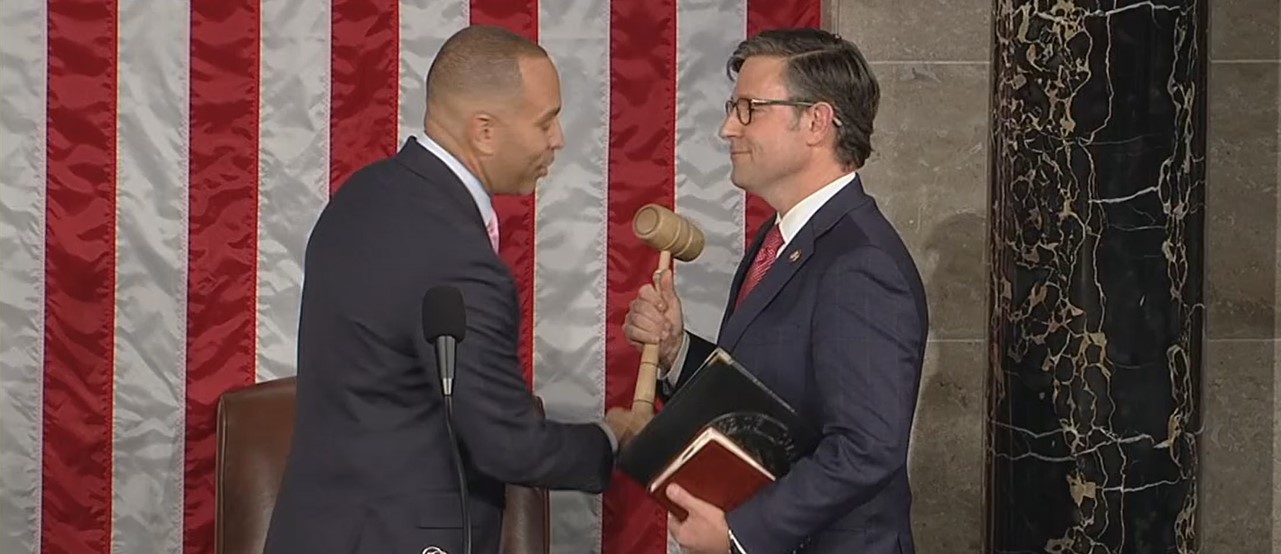

Democrats reclaimed the House Majority for the first time since the 2020 election Tuesday as voters soured on Republicans’ handling of inflation and the Iran war.
Republicans redrew several congressional maps and aggressively campaigned to hold onto their razor-thin majority as voters disapproved of President Donald Trump’s handling of the Iran war, high prices and corruption. Several polls showed voters trusted Democrats over Republicans to address the economy and stop government corruption, the two top issues in the 2026 election cycle.
Around 65% of Americans disapproved of Trump’s handling of the war, while 33% approved, according to a Pew Research Center survey from October. Americans struggled to pay for food and gas as prices remained high since the start of the conflict.
The price of Diesel averaged $6.29 per gallon nationally, while the average price of regular gas cost $4.14 per gallon, according to AAA.
Republicans regained their majority in the House after the 2022 midterm elections and held onto their majority after 2024. The party currently holds 219 seats and Democrats hold 214 seats.
House Republicans barely won the House in 2022 and underwent a leadership shakeup after eight Republicans voted to vacate former House Speaker Kevin McCarthy. Former Republican Georgia Rep. Marjorie Taylor Greene resigned in November 2025 after she criticized Trump’s bombing of Iran and supported a petition that would have forced a vote on releasing the files surrounding Jeffrey Epstein.
Trump successfully orchestrated Republican Kentucky Rep. Thomas Massie’s upcoming exit from Congress over his votes against the One Big, Beautiful Bill (OBBB), his calls to release to release the Epstein files and his criticisms of the Iran war. Massie lost his primary to Trump-backed challenger Ed Gallrein, who won by a nine-point margin.
Speaker Mike Johnson struggled to get some parts of the Republicans’ agenda passed with a razor-thin majority, including a reauthorization of Section 702 of the Foreign Intelligence Surveillance Act (FISA) and several funding bills. House Republicans passed the One Big, Beautiful Bill (OBBB), the Working Families Tax Cuts and the Safeguard American Voter Eligibility (SAVE) America Act despite having such a thin majority.
House Minority Leader Hakeem Jeffries is likely to become the next House speaker. Members of the Democratic Socialists of America (DSA) could potentially oppose him becoming speaker over his positions on Medicare for All and U.S. aid to Israel.