




House To Tackle Fraud When It Returns With Slate Of Bills
Three pieces of legislation aiming to tackle federal and state fraud are set to reach the House floor when members return Monday.
Nicole Silverio · Sep 11, 2026 · 5 min read
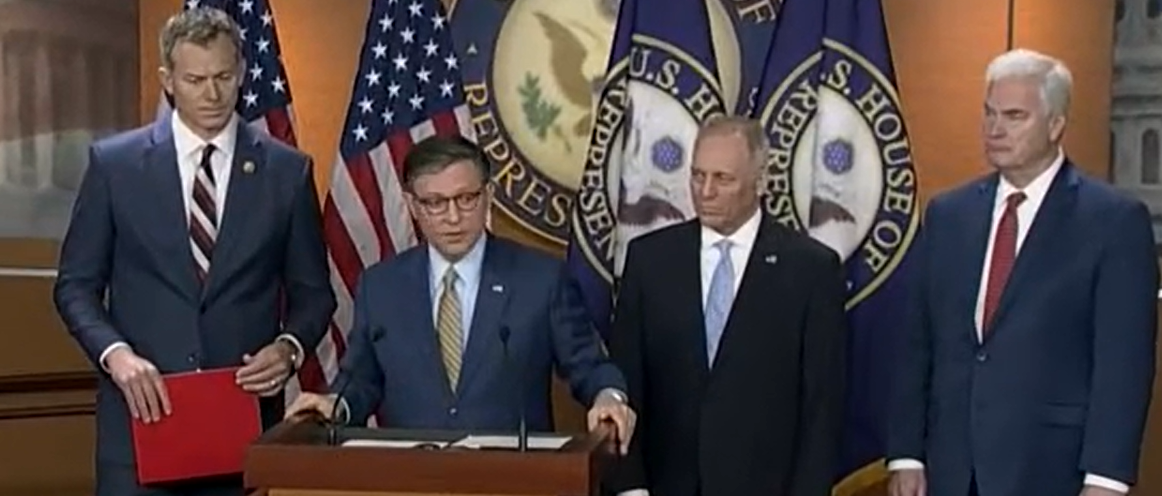

Three pieces of legislation aiming to tackle federal and state fraud are set to reach the House floor when members return Monday.
The bills include enforcing data-sharing between state and local governments, as well as creating an assistant attorney general to lead the Department of Justice’s (DOJ) efforts to investigate and prosecute fraud. Fraudsters across the U.S. stole or misused funds from several government programs, including Supplemental Nutrition Assistance Program (SNAP) benefits and COVID-era programs intended to feed children.
“Fraudsters have stolen billions in taxpayer dollars from programs meant to help Americans in need, while Democrat leaders looked the other way,” House Majority Leader Steve Scalise told the Daily Caller News Foundation. “President Trump and House Republicans are bringing an end to this rampant fraud. With these three bills on the floor this week, the House is answering Vice President [J.D.]Vance’s call for Congress to support the incredible work of the White House Task Force to Eliminate Fraud. Accountability is coming for anyone trying to defraud the American people.”
The National Fraud Enforcement Division Act of 2026 would establish an assistant attorney general to “lead the efforts of the Department of Justice to investigate, prosecute, and remedy fraud affecting the Federal Government, Federally funded programs, and citizens of the United States,” according to the bill’s text. The assistant attorney general would oversee multi-agency and multi-district fraud investigations, provide assistance to attorneys generals’ offices on fraud issues and develop national enforcement priorities related to fraud.
Another bill, titled the “Protecting Taxpayers from Health Care Fraudsters Act,” would provide funds to the Department of Health and Human Services (HHS), the Office of the Inspector General (OIG), the Centers for Medicare and Medicaid Services and the DOJ to prevent fraudulent health payments. It would increase mandatory anti-fraud funding drawn from the Medicare Hospital Insurance Trust Fund and would permit the HHS’s inspector general to use funds to “detect or prosecute health care fraud and abuse” and “communicate with the public about health care fraud.”
The extra funds are concentrated in fiscal years 2027 through 2030.
The Preventing Rip-offs and Obtaining Oversight of Funds (PROOF) Act aims to “enhance information-sharing” between the federal and state governments on detecting and prosecuting fraud. The legislation would require a governor to provide the U.S. attorney general with information needed to investigate fraud in Medicaid, SNAP, the Coronavirus Relief Fund and the Temporary Assistance for Needy Families (TANF) program.
Vance said in August that the federal government needed Congress’ cooperation to take certain actions, including data sharing between federal and state governments.
“There are a few things that we really need to do and that we can’t do in the federal government without the cooperation of Congress,” Vance said. “And the first, I would say the most important of these is data sharing. So, when we’ve looked at the anti-fraud efforts that we’ve taken, one of the weirdest and most difficult parts of this is the black box that exists around certain state programs.”