




Houthi Territory Gains Threaten To Choke Off Saudi Oil, As Trump Refuses Call For Strikes
Iran-backed Houthi fighters now control Yemen's entire Red Sea coast as U.S. officials say projectiles struck pump stations along the Saudi pipeline system that bypasses the Strait of Hormuz.
Simon August · Sep 11, 2026 · 7 min read
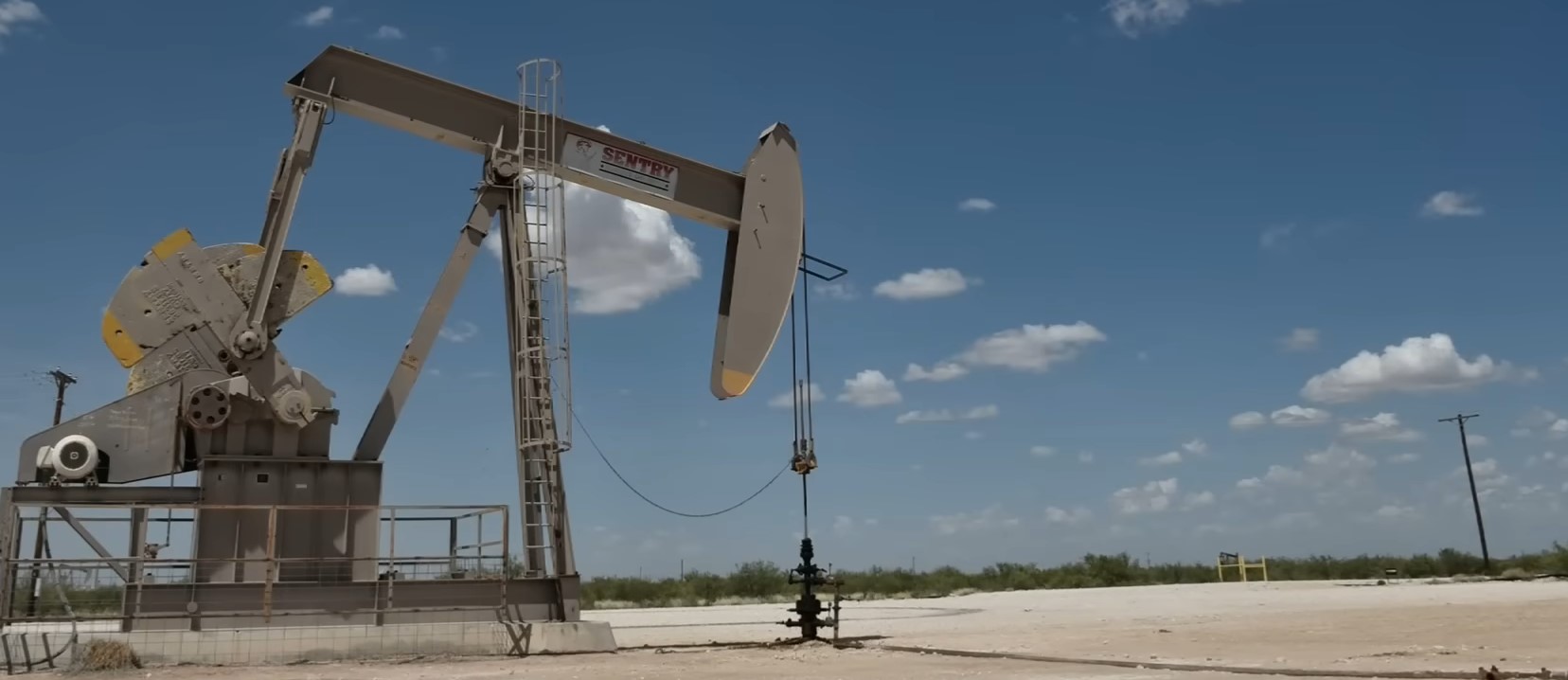

Iran-backed Houthi fighters now control Yemen’s entire Red Sea coast as U.S. officials say projectiles struck pump stations along the Saudi pipeline system that bypasses the Strait of Hormuz.
Houthi boats reached Perim Island — which divides the narrowest point of the Bab el-Mandeb Strait into two shipping lanes — on Friday after Yemeni government forces withdrew, and the group also took the coastal town of Dhubab facing the island, four Yemeni government sources told Reuters. Projectiles struck pump stations along the East-West pipeline, which carries crude from the Persian Gulf coast to the Red Sea port of Yanbu, on Thursday, two U.S. officials told CNN.
One official said drones from Iraq hit the system, and it was not clear who was responsible or whether the pipeline itself was damaged, the outlet reported. Saudi Arabia and Aramco have not confirmed any incident.
Aramco did not immediately respond to the Daily Caller News Foundation’s request for comment.
Saudi Crown Prince Mohammed bin Salman called President Donald Trump at least twice Thursday to request U.S. military help against the Houthis, and Washington told Riyadh it would not take direct military action for now but would share intelligence and targeting, two sources familiar with the matter told Reuters, confirming an earlier Axios report. A senior administration official confirmed to the DCNF that the calls and the intelligence and targeting support took place.
“The United States is focused on protecting our core national security interests — such as ensuring freedom of navigation in the Red Sea—while empowering our regional partners to take the lead in managing and resolving regional security challenges,” the official told the DCNF.
The U.S. may not be able to fight on both fronts, Dan Grazier, director of the national security reform program at the Stimson Center, told the DCNF.
“The depletion of the munitions stockpiles and the trouble the Navy is having keeping ships on station suggests that officials in Washington would rather have the Saudis deal with the Houthis,” Grazier said.
Taking on the Houthis would require pulling ships from other missions, such as moving the USS George Washington from the Pacific, which “creates some strategic risk,” he added
Trump’s approach “is correct,” Brent Sadler, a retired Navy captain and senior research fellow for naval warfare at the Heritage Foundation, told the DCNF in a statement, arguing the focus should stay on “the economic warfare against the Iranian regime that is behind the conflict in the region since Oct 7th 2023.”
Houthi “renewed assaults on shipping will have little new impact, while U.S. efforts to strangle the Iranian regime affords President Trump the luxury of time,” Sadler noted.
U.S. support for the Saudi campaign has tight limits and does not include participating in strikes or refueling Saudi warplanes, sources told CNN.
Roughly 200 U.S. military personnel already in the kingdom are providing support that does not involve combat, a U.S. official said to Axios.
That number could remain in place “for a long time” but may have to grow depending on how involved the U.S. becomes, Grazier told the DCNF.
Taking Perim and the other islands puts the Houthis in a better position to interdict ships if they can move weapons onto them, but the group could already strike vessels transiting the area, Salvatore Mercogliano, a maritime historian who chairs the history department at Campbell University, told the DCNF in a statement
“The Saudis will continue to route their ships through the Suez Canal, as we have seen,” Mercogliano said. “Insurance will react if there are further strikes against shipping.”
He added that the area already requires war risk insurance.
Tanker-tracking data bears that out. Saudi crude transits through Bab el-Mandeb averaged above 3.5 million barrels per day in early July but fell close to zero in August as Yanbu cargoes went north through the Suez Canal and the Sumed pipeline across Egypt instead, Kpler said in an analysis cited by Reuters. The detour adds roughly 40 days to a round trip.
The European Union has been escorting high-value European ships through the region under its Operation Aspides naval mission, and the question is whether it continues and expands that coverage, Mercogliano told the DCNF.
“The U.S. Navy will be stretched to move any destroyers into the BAM [Bab el-Mandeb] or Red Sea due to the requirements in the Strait of Hormuz, Gulf of Oman and Arabian Sea,” he said.
Saudi crude supply fell 2.3 million barrels per day in August to an estimated 6 million, the lowest in more than three decades, partly because of the targeting of ships transiting Bab el-Mandeb by groups linked to the Houthis, the International Energy Agency said Friday in a report cited by Reuters. Rates for very large crude carriers, the biggest oil tankers, hit record highs this week. Brent crude fell 3.3% to $104.21 a barrel Friday but was on track to end the week above $100 for the first time since mid-May, CNBC reported.
Holding Mocha, Dhubab and Perim would not give the Houthis sovereign control of the strait because the western shore lies outside Yemen, but it “would give them a dramatically stronger ability to contest, threaten and potentially deny commercial use of the waterway,” Andreas Krieg, a senior lecturer at King’s College London’s School of Security Studies, told NBC News. “Riyadh still desperately wants to avoid another 2015-style war. But its room for restraint is narrowing,” Krieg said.
Houthi military spokesman Brig. Gen. Yahya Saree said Friday on Telegram that navigation remains safe for all shipping except Saudi vessels, which the group had already banned, Reuters reported.
“We will continue to enforce blockade for blockade and escalation for escalation until the aggression stops,” Saree said.
The advance came with direct guidance from Iran’s Revolutionary Guards, which told the Houthis last week to escalate against Saudi Arabia and promised more money, weapons and senior officers, Yemeni government, Iranian and regional sources told the news agency. Iran publicly denies directing the group and says it is “not a proxy.”
The group captured Mocha and moved on the Hanish islands on Thursday and took Dhubab and the village of Murad on Friday, giving it all of Yemen’s Red Sea coastline in an 18-hour push, according to Euronews. Saudi warplanes bombed the Mocha airport, the Houthi-run Al Masirah channel said.
The East-West pipeline is Saudi Arabia’s only high-volume export route that avoids Hormuz, which Iran has effectively closed to most shipping since the war began Feb. 28, and Aramco restored it to its full stated capacity of about 7 million barrels per day after an attack in April, according to Newsweek.
Satellite imagery verified by Reuters showed black smoke Thursday in the vicinity of the pipeline, and NASA fire data showed heat signatures along the corridor southeast of Medina, the open-source account Clash Report said on X.
At least six of the nine fires detected appeared to be flare pits, where oil and gas are burned off in an emergency, and a satellite image taken Friday appeared to show extensive fire damage at one pump station, CNN reported. Repairing pump stations would be less burdensome than major damage to the line itself, U.S. officials and experts told the outlet.
The Saudi-Houthi confrontation reignited in July after Riyadh blocked an Iranian plane carrying senior Houthi officials from landing in Sanaa, and the crown prince told Trump then that the kingdom could handle the Houthis without U.S. military help, Axios reported.
Houthi missiles and drones struck the Jazan industrial city, Aramco facilities in Najran and Abha and King Khalid Air Base in Khamis Mushait on Tuesday, wounding 73 people, the Saudi-led coalition said, according to The Associated Press.
Iran confirmed Friday that its representatives and those of Iraq and the Gulf Arab states will meet in Oman on Monday to resume discussions on safe commercial shipping routes in Hormuz, Reuters reported.
“The best thing that can happen now is to end the conflict before it escalates or expands further,” Grazier said.
All content created by the Daily Caller News Foundation, an independent and nonpartisan newswire service, is available without charge to any legitimate news publisher that can provide a large audience. All republished articles must include our logo, our reporter’s byline and their DCNF affiliation. For any questions about our guidelines or partnering with us, please contact [email protected].
Get every new post by email
No spam, no account needed. Unsubscribe anytime.
Comments
Free account · your comment posts right after signup
