




Inside The ‘Top Secret’ Plan That Led To Biggest Pro-Second Amendment Ruling In 90 Years
It was after midnight at a small-town Texas gun store. Two men — a state lawmaker and a congressional candidate — were purchasing suppressors in the presence of a congressman and top officials of a pro-Second Amendment organization.
Harold Hutchison · Sep 3, 2026 · 12 min read
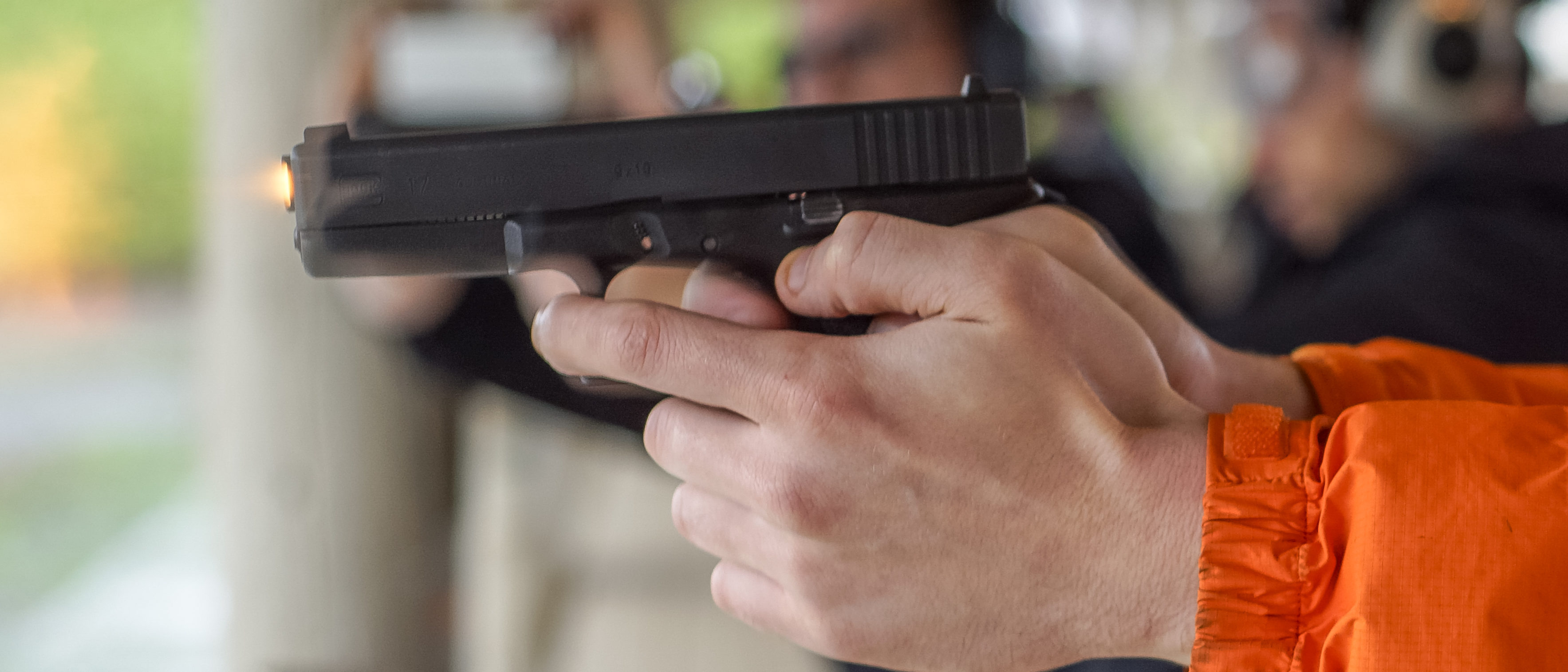

It was after midnight at a small-town Texas gun store. Two men — a state lawmaker and a congressional candidate — were purchasing suppressors in the presence of a congressman and top officials of a pro-Second Amendment organization.
Just hours before, the congressman learned the Trump administration would abide by one of the most consequential Second Amendment rulings in over 90 years. The men proceeded to make history, becoming the first Americans to purchase suppressors without registration since Franklin Delano Roosevelt was president.
The entire story that led to this historic moment hasn’t been told. Until now.
The Daily Caller News Foundation interviewed several key players involved in making this long-sought Second Amendment victory a reality. From the halls of Congress, to the chambers of justice and finally to a Texas gun store, this is the inside account of what led to one of the most significant moments for the Second Amendment community since 1934.
“Top Secret” Plan Hatched
Gun Owners of America (GOA) Federal Affairs Director Aidan Johnston told the DCNF that the origins of the battle happened years before the group launched its “top secret” effort.
“We did a lot of behind the scenes lobbying for about six months… all of this had to be top secret,” Johnston told the DCNF. “We didn’t want the Democrats or the anti-gunners to get any word of what we were planning on the big beautiful bill.”
Covert Classes For Congress
“GOA was locked in and we knew our chance to get something done on guns this Congress was going to have to do with taxes, and there’s only two gun taxes out there: The National Firearms Act, which is a $200 tax on silencers, short-barreled rifles, short-barreled shotguns, [any other weapons [AOWs)], machine guns, and destructive devices, and then there’s like this Pittman Robertson tax on all guns and ammunition at 10% and 11%,” Johnston told the DCNF in an interview. “And so we decided we wanted to target the silencer regulations, the silencer tax, and the short barrel stuff, especially because President [Joe] Biden had weaponized the short barrel rifle statute in order to ban millions of pistol brace weapons.”
Pistol braces were originally popularized among disabled shooters, notably veterans, to better handle AR-15-style pistols in the early 2010s. The Bureau of Alcohol, Tobacco, Firearms, and Explosives (ATF) had no problem with the devices at first, considering them legal – even if someone was firing them from the shoulder — before changing its tune in 2015, according to ConcealedCarry.com.
In June 2020, then-Republican Florida Rep. Matt Gaetz accused the ATF of secretly plotting regulations targeting the devices. Gaetz did not respond to multiple requests for comment from the DCNF.
With a change in presidential administrations came a change in attitude toward the devices. In 2021, the Biden administration began pushing to classify the items as “short-barreled rifles” under the NFA, and issued a final regulation to that effect in January 2023, giving those who owned firearms with those devices 120 days to register them with ATF in an “amnesty” before they would face a potential ten-year prison sentence.
Pro-Second Amendment groups challenged the regulation in court almost immediately, eventually securing court orders blocking it. However, they also began to eye a legislative fix to the issue once President Donald Trump won a second term.
“One thing we could do is we could work with the [second Trump] administration to undo that regulation,” Johnston said. “The other thing we could do is just nullify that statute, try to repeal that statute.”
Despite the straightforward nature of the plan, GOA didn’t want to broadcast their intentions and risk pushback from anti-Second Amendment organizations. Therefore, it didn’t openly discuss any moves pertaining to federal legislation regarding suppressors or other items covered by the National Firearms Act in its national alerts at the start of the 119th Congress.
In the House of Representatives, Republican Georgia Rep. Andrew Clyde, who sponsored the SHORT Act, was pushing for the legislative language for both his legislation and for the Hearing Protection Act introduced by Republican Virginia Rep. Ben Cline. Clyde considered his biggest challenge to be overcoming a lack of knowledge among his GOP colleagues as opposed to opposition from Democrats.
“I think that was probably the biggest challenge, helping folks to understand exactly what the National Firearms Act had been doing literally for 90 years. I mean, the taxes were used punitively. In 1934, a suppressor was like $6, $6.50, okay?” Clyde told the DCNF. “Well, you put a $200 tax on something [that’s] $6.50, it eliminates it. And that’s exactly what happened, you know? So helping people understand exactly what the taxes had done. I mean, even today, short-barreled firearms, like a short-barreled shotgun, all right, $400 with a $200 tax.”
The House of Representatives passed its version of the bill which contained language removing silencers from the purview of the National Firearms Act on May 22, 2025. The legislation then went to the Senate, where before it was taken up, Senate Parliamentarian Elizabeth MacDonough reviewed it to determine if provisions violated the so-called “Byrd rule,” a process called the “Byrd bath.”
Under Section 313 of the Congressional Budget and Impoundment Control Act of 1974, while budget reconciliation bills bypass the Senate’s filibuster, they must not include “extraneous” provisions that do not affect revenue or outlays, according to a Congressional Research Service report. During the “Byrd bath” for the One Big Beautiful Bill, MacDonough found that the silencer provision violated the “Byrd rule,” a decision that stoked controversy. Republican Utah Sen. Mike Lee told the DCNF he was “initially annoyed” about the ruling from MacDonough.
“Excessive deference to the Parliamentarian keeping good legislation down is an old, familiar story in the Senate,” Lee said. The frustration was also tangible when a pro-Second Amendment activist recounted the ruling.
“This is a parliamentarian who was originally hired by [former Senate Majority Leader] Harry Reid,” Johnston told the DCNF. “So why does John Thune have a Harry Reid bureaucrat working for him? I don’t know.”
Clyde worked with Republican senators, including Lee, to get final legislative language that took the tax on suppressors, short-barreled rifles, short-barreled shotguns and devices that fell under the label “any other weapon” down to $0. The provision was placed into the Senate version of the bill, and it passed the Senate on July 1, 2025, in a 51-50 vote (Vice President J.D. Vance broke the tie in his role as president of the Senate).
After the House concurred with the Senate amendment on July 3, 2025, in a 218-214 vote, it presented the legislation to Trump, who signed it into law on July 4, 2025. That same day, GOA filed a lawsuit in the United States District Court for the Northern District of Texas.
Litigation Ends With Shot Heard Round Second Amendment Community
The GOA lawsuit was not the only one. Other pro-Second Amendment organizations, including the Second Amendment Foundation (SAF), Firearms Policy Coalition (FPC), Texas State Rifle Association (TSRA), National Rifle Association (NRA), Jews for the Preservation of Firearms Ownership (JPFO) and the American Suppressor Association filed a trio of lawsuits against the NFA, one in Texas (Jensen v. ATF), one in Missouri (Brown v. ATF) and one in Kentucky (Roberts v. ATF).
“When the One Big Beautiful Bill was signed and the tax requirement for short-barrel rifles, short barrel shotguns, AOWs and suppressors went to zero, that’s what made our legal challenges possible because our legal theory was that, or it is that, remains that, that the NFA itself is a tax provision and that the regulatory requirements associated with that that we challenged in these cases had to do with Congress’s taxing authority,” SAF Senior Director of Legal Operations Bill Sack told the DCNF. “That was the constitutional hook that Congress drew upon in passing the tax.”
“So, when the taxes were reduced to zero, then all of the remaining regulatory registration requirements were no longer constitutional under the Congress’s taxing authority because what Congress had maintained all along from the 1930s onward was that the registration requirements were not about registering the firearms, they were about proving that you had paid your taxes, that they were tax records,” Sack continued.
SAF’s Texas suit was consolidated with GOA’s on June 8. The Justice Department (DOJ), though, was not making it easy for the gun-rights groups.
“They defended the law, and they said that there’s still a tax on manufacturers, so we need the other paperwork in order to enforce; we need individual gun owners to fill out the tax paperwork so we know which dealers have paid their taxes,” GOA’s Johnston told the DCNF. “They said that it was still justified under the Commerce Clause and the necessary and proper clauses of the Constitution. I mean, just really big stretches as far as constitutional legal theories.”
“We answered all their arguments and in the end, the judge didn’t rule on the Second Amendment issues and he didn’t rule on the Commerce Clause issues and he chose to rule on the taxes power and he said on the tax there’s no such thing as a $0 tax and he enjoined the government for enforcing any of the penalties associated with… that $0 tax,” Johnston continued.
United States District Judge James Wesley Hendrix of the Northern District of Texas, a Trump appointee, handed down his ruling striking down the NFA requirements on Aug. 5 on the grounds that the reduction of the transfer tax to $0 rendered the registration and processing requirements of the NFA unconstitutional.
The DOJ, though, had already been making other concessions in separate cases from the United States Court of Appeals for the Fifth Circuit. In multiple legal filings since May 2025, the DOJ not only admitted that the “beneficial use” of suppressors overwhelmed their misuse by criminals, but also conceded that they were protected arms under the Second Amendment.
Despite that concession, the DOJ argued that convictions against individuals for possessing unregistered suppressors should stand since the NFA operated similarly to a “shall issue” permit system, in which an agency is required to allow something to go forward if all requirements are met.
One senior DOJ official told the DCNF that frustration over the decision to defend the NFA provisions in court was misplaced.
“I understand people have policy differences with DOJ’s enforcement of federal laws, but, in my opinion, and I’ve said this to many gun groups, the appropriate place to launch those policy discussions is in Congress, not with us,” Assistant Attorney General for Civil Rights Harmeet Dhillon said during a June interview with the DCNF.
“[It’s] the other team that picks and chooses which laws they’re gonna enforce, so that’s not what we do,” Dhillon added.
However, in April, then-Attorney General Pam Bondi stepped down in the midst of a battle with cancer, with then-Deputy Attorney General Todd Blanche taking over on an acting basis before he was confirmed to the top job on Aug. 8.
Four days after Blanche was confirmed, Clyde posted on X that the Trump administration had confirmed that it would not try to stop Hendrix’s ruling from taking effect. GOA announced plans to transfer suppressors at 12:01 a.m. Central time on Aug. 13.
“The injunction is in effect and the Department of Justice is not allowed to enforce the NFA against GOA members and so there are already gun stores transferring unregistered suppressors right now,” Johnston told the DCNF after the transfers took place. “It’s going to be very, very hard for ATF to ever put the genie back in the bottle. How will they know what suppressors were registered? Like their registry is already messed up. It’s completely inaccurate. How many suppressors were registered to a gun store that are now in civilian hands?”
The Ceremony Seals It
The ceremony held at Silencer’s Shop’s location in Leander, Texas, took mere seconds. Republican Texas congressional nominee Brandon Herrera and Republican Texas state Rep. Wes Virdell received the first suppressors to be transferred without registration and ATF Form 4s since 1934.
“For 92 years, gun owners have had their second amendment rights restricted because of unconstitutional legislation that was passed by misguided politicians,” Virdell told the DCNF. “The ruling marks a historical reversal that should have happened decades ago. Gun owners are grateful for the ruling.”
According to GOA’s post on X at 1:38 a.m. EDT on Aug. 13, Herrera passed a National Instant Check System background check, while Virdell bypassed the check by presenting a valid concealed carry permit from Texas.
“Well, this is a historic restoration of the Second Amendment, of our Second Amendment liberties that was literally legislatively taken from us in 1934,” Clyde told the DCNF after the ceremony. “If you can tax a constitutional right, and the Second Amendment is a constitutional right, as we all know, and governments are here to preserve and protect those rights. And that’s not what happened in 1934. Through taxation, those rights were denied.”
“And so this is a removal of that, so it’s a great day for liberty,” Clyde continued. “It’s a great day for the restoration of the Second Amendment and I’m really excited about it. I’m excited for our entire country.”
ATF Director Robert Cekada was not immediately available for comment, but in a Friday post on X, he spoke out on “misinformation” regarding the ruling and the agency’s intentions.
“ATF respects the Court’s ruling and the rule of law. We are following the order and will not take enforcement action against protected parties inconsistent with that ruling,” Cekada posted. “We are working diligently on clear guidance. Getting it RIGHT matters more than getting it out fast. That means carefully navigating federal and state laws so that manufacturers, FFLs, and law-abiding gun owners aren’t left with legal problems – today or under a future administration.”
“Thank you for your patience as we focus on developing the guidance. It will be posted online as soon as we are done,” Cekada said.
More Cases Percolating Across The Country
Pro-Second Amendment groups were moving forward with Brown v. ATF and Roberts v. ATF in Missouri and Kentucky, respectively.
“We’re incredibly excited for these next two cases to play out. We feel incredibly confident,” NRA spokesperson Justin Davis told the DCNF. “I think anybody who looks at the constitutionality of the NFA without the monetary tax, it’s incredibly clear that it’s unconstitutional.”
Oral arguments in Brown v. ATF, in which the NRA is a named plaintiff, took place Aug.10. The oral arguments for Roberts v. ATF were set to occur on Oct. 20, according to a Monday order.
“If you talked to previous generations or people a few years ago, if they ever thought we’d be in the situation we’re in right now, having the opportunity to dismantle the NFA, I think they wouldn’t believe it,” Davis said. “I think it’s incredibly exciting to see that we are making serious progress for American gun owners.”
All content created by the Daily Caller News Foundation, an independent and nonpartisan newswire service, is available without charge to any legitimate news publisher that can provide a large audience. All republished articles must include our logo, our reporter’s byline and their DCNF affiliation. For any questions about our guidelines or partnering with us, please contact [email protected].
Get every new post by email
No spam, no account needed. Unsubscribe anytime.
Comments
Free account · your comment posts right after signup
