




‘Quicker To Get A College Degree’ Than A Permit: Energy Leaders Say Delays Are Holding Back American Power
Energy policy leaders urged Congress on Thursday to pass a bipartisan permitting deal before the fast approaching midterm elections.
Simon August · Sep 17, 2026 · 4 min read
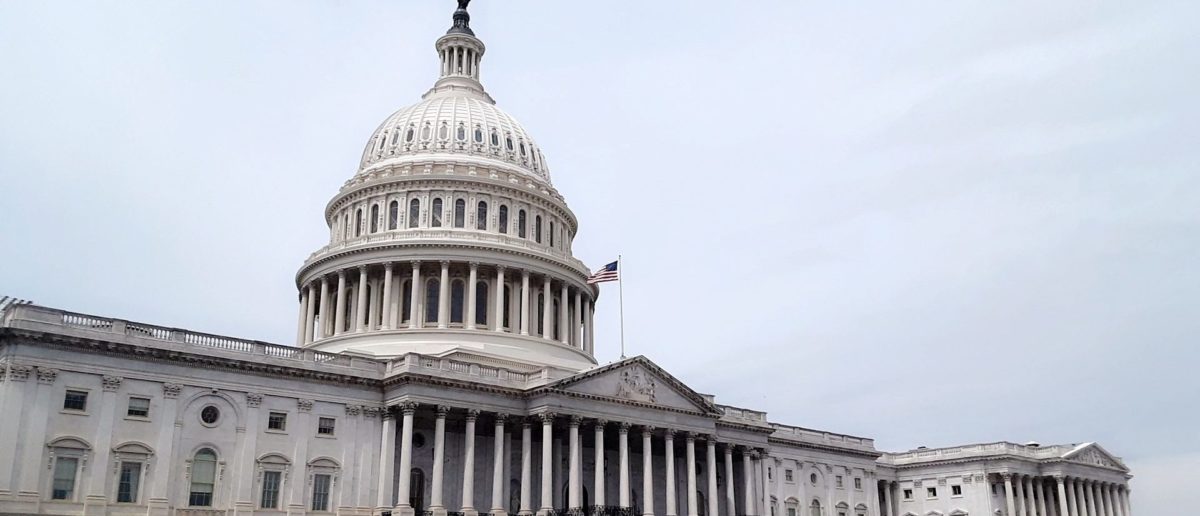

WASHINGTON — Energy policy leaders urged Congress on Thursday to pass a bipartisan permitting deal before the fast approaching midterm elections.
Senate negotiators are close to a package that would speed up federal approvals for energy projects, Jeremy Harrell, CEO of ClearPath and ClearPath Action, said during a Thursday panel discussion co-hosted by the Daily Caller and the Daily Caller News Foundation. The panel was part of “Daily Caller Live: The New Age of American Power,” an event which Harrell’s nonprofit presented.
“It’s quicker to get a college degree in this country than it is to get a permit,” Harrell said. He noted that regulators and developers overanalyze projects during federal environmental reviews to protect themselves from lawsuits.
Any agreement would still need to pass the House and Senate and receive President Donald Trump’s signature to become law.
“I think we’re going to see a package get across the finish line,” Harrell said. “I think there’s political reasons for both parties to want to get this done before the election. It’s possible that we’ll even see a proposal out in the next couple weeks.”
Republican Sens. Shelley Moore Capito of West Virginia and Mike Lee of Utah, who respectively chair the Environment and Energy committees, are negotiating the package with the top Democrats on those panels, Sheldon Whitehouse of Rhode Island and Martin Heinrich of New Mexico, respectively, according to Harrell. Whitehouse said Monday in an address to the New England Council that negotiators were “down to the last strokes.”
Harrell spoke on the panel alongside former Republican Texas state Rep. Jason Isaac, founder and CEO of the American Energy Institute, and Liam Donovan, executive director of America Leads Alliance. Daily Caller senior politics editor Will Upton moderated the discussion.
The panel followed a Wednesday forum on climate lawsuits at the National Press Club, where former Attorney General Bill Barr told the DCNF that those cases could strengthen China and Russia.
“In my 20 years in Washington, I think the parties have never been closer at wanting to do a broader package that provides some regulatory predictability for developers,” Harrell said during the panel. “Permit reform now is the time.”
Lawmakers who have led the effort, including Republican Arkansas Rep. Bruce Westerman, chairman of the House Natural Resources Committee, will leave their committee posts in January, according to the ClearPath CEO.
Isaac, whose American Energy Institute represents energy producers, called for a firm deadline on permit decisions, which Texas adopted while he served in the state legislature. The deadline brought liquefied natural gas export facilities to the state, he said. Isaac also praised Energy Secretary Chris Wright for “trying to undo decades of mad energy and environment policy.”
Harrell also urged Republican governors to “lean in” and “show a more practical path forward” on American energy, pointing to Texas as a state that sets model policy.
The Environmental Law Institute’s (ELI) Climate Judiciary Project has trained more than 2,000 judges on climate issues at more than 55 events since 2018, Isaac said.
“We can’t find out who those judges are,” he said.
Isaac said the institute has partnered with at least three universities in China. State Armor, a national security group, launched a six-figure advertising campaign Tuesday pressing Congress to investigate the institute in part over alleged China ties, the DCNF first reported.
The institute says on its website that the project provides education and does not advise judges on how to rule in any case.
Donovan, whose group opposes climate liability lawsuits, said the Supreme Court offers “a huge opportunity” to set limits on them when it hears Suncor Energy v. County Commissioners of Boulder County on Oct. 5.
“You don’t have to have a JD [law degree] to understand that states cannot and should not be regulating emissions of molecules that can’t possibly stop at state lines,” he told the panel.
Boulder County, the city of Boulder and San Miguel County sued Suncor and ExxonMobil in 2018 to recover the costs of adapting to wildfires and extreme heat. The justices agreed Feb. 23 to review a Colorado Supreme Court ruling that allowed the case to proceed.
“I think upward mobility is at stake,” Jennifer Hernandez, a partner at Holland and Knight, told the DCNF after Wednesday’s forum. “I think the wrong decision could plunge even more families into poverty.”
Donovan said the lawsuits target companies for “fully compliant, fully legal behavior that was serving a market demand.”
Democrats are campaigning on high gas prices, but in state capitals they “will continue to impose policies, vote for laws that make your energy more expensive,” Donovan said in closing remarks. State climate superfund laws, which charge oil and gas companies for past emissions, are intended to raise energy prices, he said. “This is what they say it’s meant to do.”
Isaac said the United States produces energy more responsibly than any other country and that its energy “is the key to ending poverty around the world.”
The Supreme Court is expected to rule in the Boulder case by the end of its term in June 2027, according to SCOTUSblog.
All content created by the Daily Caller News Foundation, an independent and nonpartisan newswire service, is available without charge to any legitimate news publisher that can provide a large audience. All republished articles must include our logo, our reporter’s byline and their DCNF affiliation. For any questions about our guidelines or partnering with us, please contact [email protected].
Get every new post by email
No spam, no account needed. Unsubscribe anytime.


