




Rubio Defends Iran War As Republicans Reel From Crushing Election Losses
Secretary of State Marco Rubio acknowledged Sunday that President Donald Trump's increasingly unpopular war against Iran was politically costly but insisted the conflict was necessary to prevent Tehran from obtaining nuclear weapons.
Francis Kapper · Nov 9, 2026 · 6 min read
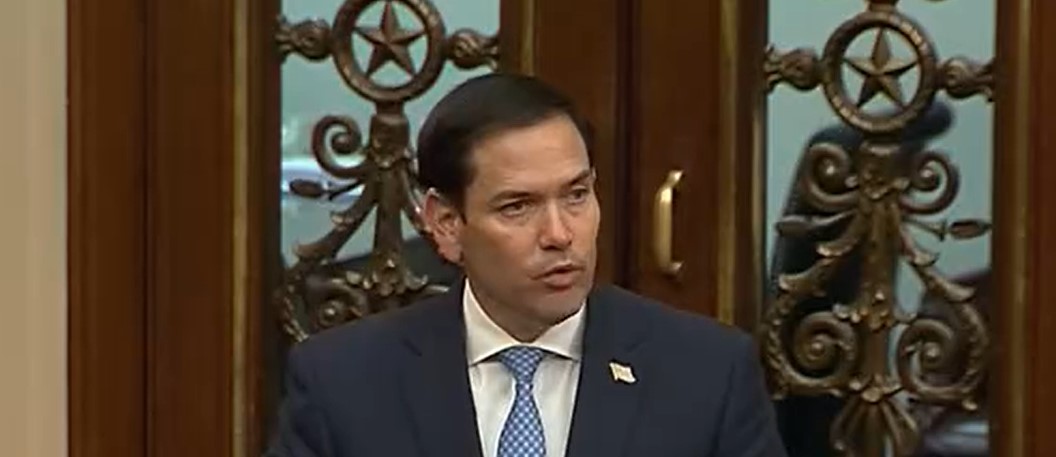

Secretary of State Marco Rubio acknowledged Sunday that President Donald Trump’s increasingly unpopular war against Iran was politically costly but insisted the conflict was necessary to prevent Tehran from obtaining nuclear weapons.
The remarks followed devastating Republican losses in Tuesday’s midterm elections, which handed Democrats control of Congress after more than eight months of fighting in Iran. Rubio’s defense also contrasted with Vice President JD Vance’s assessment that the conflict was responsible for the Republican defeat.
The president confronted a longstanding threat to American national security despite the political consequences because “doing it isn’t necessarily popular but necessary,” Rubio told reporters Sunday before departing for a Group of Seven foreign ministers meeting in Paris, according to the State Department.
However, the administration previously claimed it had already eliminated Iran’s nuclear threat, with Trump declaring the country’s key nuclear enrichment facilities “completely and totally obliterated” following American strikes in June 2025, according to his presidential address.
Rubio himself endorsed that assessment, describing the destruction of Iran’s nuclear infrastructure as “complete and total obliteration” following the strikes on Fordow, Natanz and Isfahan, according to a June 2025 White House statement.
American intelligence officials had also concluded that Iran was not actively constructing a nuclear weapon before those attacks. The intelligence community assessed that Iran was “not building a nuclear weapon” and that its supreme leader had not authorized the resumption of a weapons program suspended in 2003, Director of National Intelligence Tulsi Gabbard told the Senate in March 2025, according to the ODNI.
Even after the latest war began, Gabbard maintained in prepared March 2026 testimony that the 2025 strikes had obliterated Iran’s enrichment program and that Tehran had made no effort to rebuild that capability, according to the ODNI.
Rubio declined to directly discuss the Republican electoral losses, arguing that his position as America’s top diplomat required him to avoid domestic political disputes, according to the State Department.
The war has contributed to rising gasoline prices and broader economic dissatisfaction, particularly as disruptions in the Strait of Hormuz have threatened global energy supplies, the Associated Press reported.