




South Korea Wants To Take Wartime Military Command Away From American General
South Korean President Lee Jae Myung wants his country's military to assume wartime command of South Korean forces, potentially ending decades of U.S. military leadership on the Korean Peninsula.
Francis Kapper · Oct 19, 2026 · 7 min read
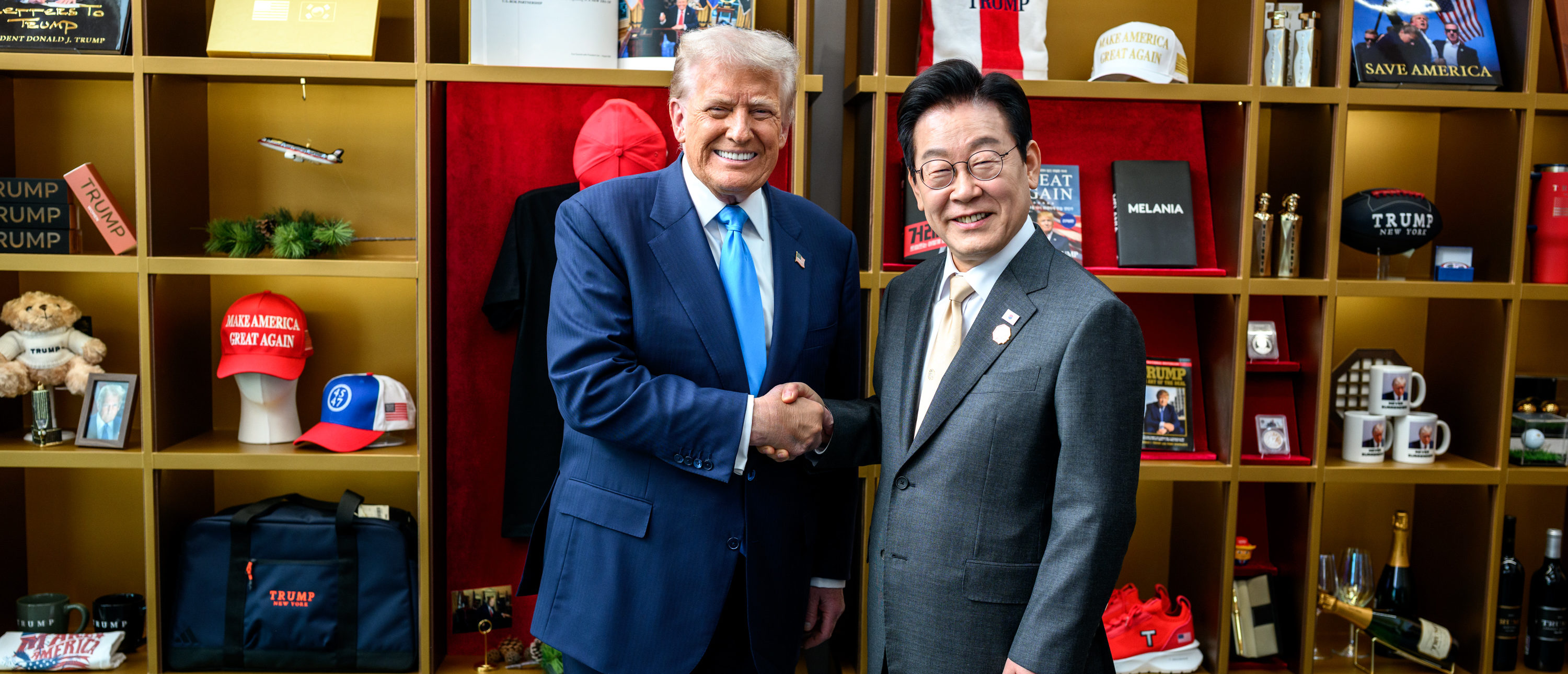

South Korean President Lee Jae Myung wants his country’s military to assume wartime command of South Korean forces, potentially ending decades of U.S. military leadership on the Korean Peninsula.
Lee declared Monday that South Korea is capable of assuming wartime operational control (OPCON) of the Korean military, a responsibility currently held by an American general, Yonhap News reported. The proposed transfer would place a South Korean commander in charge of combined allied military operations during a conflict with North Korea.
“To put it plainly, we should take back wartime operation control at an early time,” Lee told reporters Monday at the Blue House presidential compound, according to Reuters.
President Donald Trump and Lee have previously discussed the transfer of command, a senior administration official told the Daily Caller News Foundation.
“The United States policy on wartime operational control has been consistent for decades,” a White House official told the DCNF. “The United States intends to transfer wartime operational control to South Korea when the agreed conditions have been met, which will ensure the safety and security of the people of South Korea and U.S. forces stationed there.”
U.S. Forces Korea and the South Korean Embassy in Washington did not respond to a request for comment.
“The transition of wartime operational control (OPCON) remains a conditions-based process mutually agreed upon by the United States and the Republic of Korea,” a Department of War official told the DCNF. “Both nations remain committed to ensuring that the necessary conditions are met before any transition occurs. We will not prejudge decisions or outcomes of this bilateral process.”
“The reality is that if there is an outbreak of war on the Korean peninsula, South Korean troops are going to form the bulk of forces defending the country,” Matthew Wallin, chief executive officer of the American Security Project, told the DCNF. “In comparison, the U.S. troop presence is relatively small. Given that the South Korean military is well trained, technologically advanced, and likely effective, it makes sense for their leadership to be in command on their own territory. I have no doubt that South Korea could effectively defend itself against a North Korean attack even without U.S. forces involved.”
“Transferring OPCON would allow South Korea to take greater responsibility for leading the combined defense against North Korea while preserving the US–ROK alliance and the US contribution to deterrence on the Korean Peninsula,” James Park, research associate in the East Asia Program at the Quincy Institute for Responsible Statecraft, told the DCNF. “It would not end US involvement in a conflict or place American forces entirely under South Korean national command.”