




Supreme Court Justices Bash Lawyer Defending Company Undercutting American Jobs With Cheap Migrant Labor
The Supreme Court heard oral arguments Tuesday for Department of Labor vs. Sun Valley Orchards, with the justices taking turns grilling the latter's lawyer.
Pete Peterson · Nov 10, 2026 · 4 min read
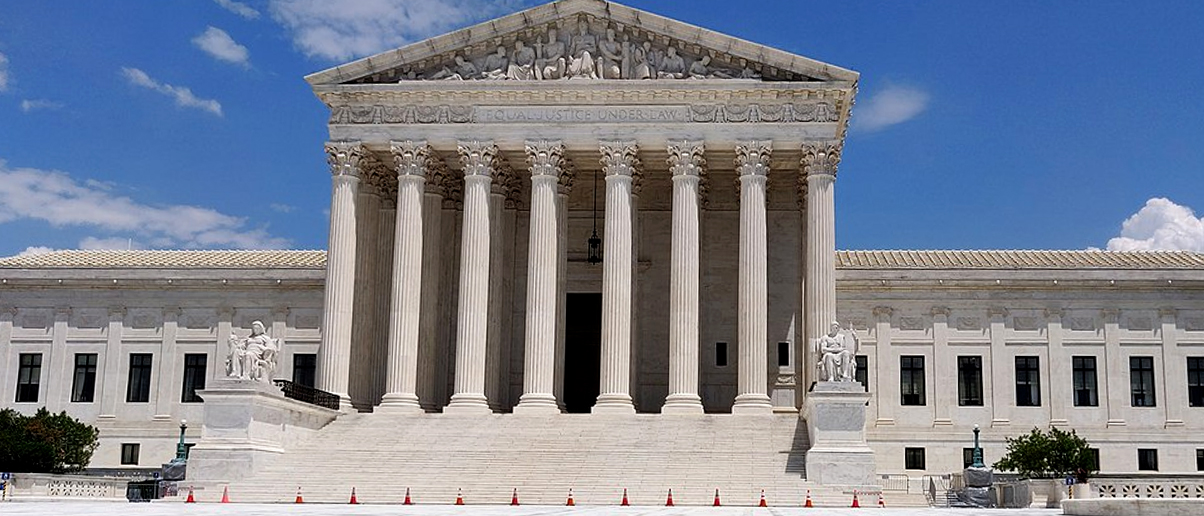

The Supreme Court heard oral arguments Tuesday for Department of Labor vs. Sun Valley Orchards, with the justices taking turns grilling the latter’s lawyer.
Rob Johnson, arguing on behalf of Sun Valley Orchards, contended that imposing penalties over immigration contracts was a power reserved for courts, not the Executive Branch’s internal adjudication. Johnson faced criticism from both the liberal and conservative justices on the Supreme Court with lawyers representing the Department of Labor (DOL) also rebutting Johnson, arguing that Supreme Court precedent established the Executive Branch’s power to levy such penalties in immigration cases.
“I feel at the base of your argument, Mr. Johnson, you’re trying to get us to think that the H2A program is not an immigration program. But it is an immigration program. It’s all about when do we allow the admission of foreign workers, given the fact that we’re concerned that foreign workers will undercut the economic status of domestic workers,” Associate Justice Elena Kagan said.
The DOL fined Sun Valley Orchards $550,000 in 2015 after an inspection revealed that the living conditions on the farm violated H-2A seasonal agricultural worker program rules meant to protect American workers from being undercut by cheaper foreign labor. Sun Valley Orchards appealed on the basis that these civil penalties relate to contract law and thus should be adjudicated in courts rather than internally in the DOL, in accordance with Article Three of the Constitution.
“You’re not arguing in this case, say all that all civil penalties must be [adjudicated through] Article Three?” Associate Justice Brett Kavanaugh asked Johnson.
Johnson agreed.
“So you recognize exceptions, with immigration being one of them?” Kavanaugh continued.
Johnson affirmed.
“But I thought you said earlier that in [the immigration] context all civil penalties should fall under Article Three. Did you say that earlier?” Kavanaugh said.