




Supreme Court Likely To Invoke 5 Major Decisions In Landmark Semi-Auto Gun Ruling
The Supreme Court will hear a case to determine the fate of bans on modern semiautomatic firearms in December with the justices likely having spent the bulk of their time discussing how a handful of cases would be applied to what is expected to be a landmark ruling.
Harold Hutchison · Sep 20, 2026 · 4 min read
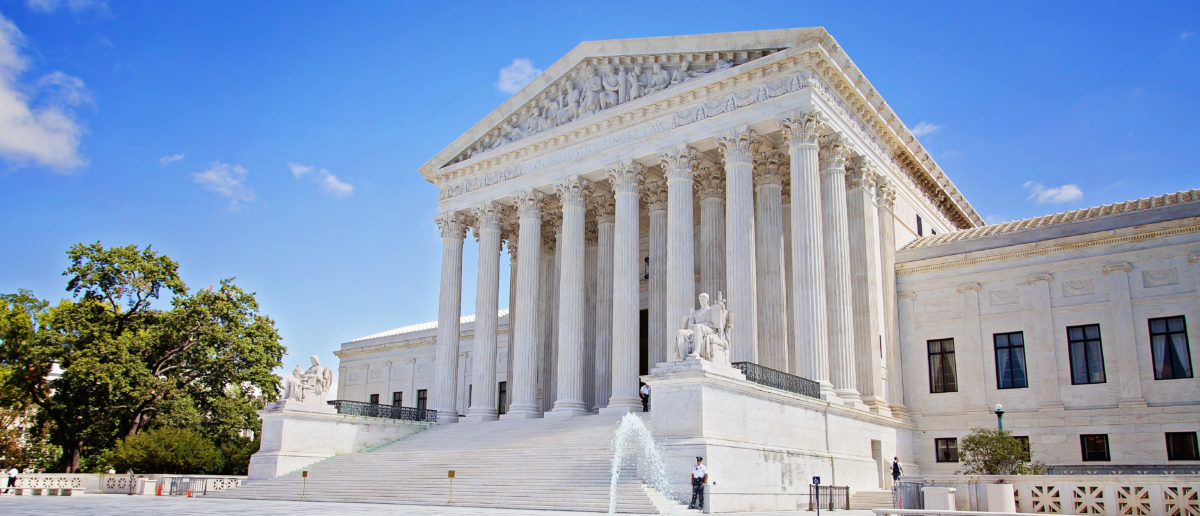

The Supreme Court will hear a case in December to determine the fate of bans on modern semiautomatic firearms with the justices likely spending the bulk of their time discussing how a handful of cases will apply to what is expected to be a landmark ruling.
The high court agreed on June 30 to hear Viramontes v. Cook County, a lawsuit challenging the ban imposed by a Chicago-area county. Which cases will the justices cite when deciding the fate of the bans on modern semi-automatic firearms that have passed in several states? These are the five likely contenders.
District of Columbia v. Heller
The court held that the Second Amendment protects an individual right to keep and bear arms for lawful purposes such as self-defense in the home, not just a collective militia right. It struck down D.C.’s handgun ban and its rule that lawfully owned guns had to be kept unloaded and disassembled or trigger-locked.
The 5–4 majority opinion, written by then-Associate Justice Antonin Scalia, said the Amendment’s “militia” language is prefatory and does not limit the operative right of “the people.” Scalia noted that the right of self-defense was a crucial component of the rights protected by the Second Amendment.
“[T]he Second Amendment conferred an individual right to keep and bear arms,” Scalia wrote.
The dissenters argued the amendment was mainly about military service and left room for broad civilian gun regulation.
McDonald v. City of Chicago
The court held that the Second Amendment right applied to state and local governments through the 14th Amendment. Chicago’s and Oak Park’s handgun bans therefore had to meet the same constitutional standard as the one enacted by the District of Columbia.
Associate Justice Samuel Alito’s controlling opinion relied mainly on due-process incorporation; Associate Justice Clarence Thomas said in a concurring opinion that he would have used the privileges or immunities clause instead. The 5–4 split tracked Heller (Associate Justice Sonia Sotomayor replaced David Souter), with the dissenters warning that incorporation would sweep away a lot of state and city gun laws.
“[T]he Second Amendment right is fully applicable to the States,” Alito wrote.