




The Environmental Case For Thorium Is Real. The Commercial Fleet Isn’t.
America’s nuclear storefront still stocks uranium, while abundant and potentially cleaner thorium remains off the shelf.
Paris Apodaca · Oct 11, 2026 · 5 min read
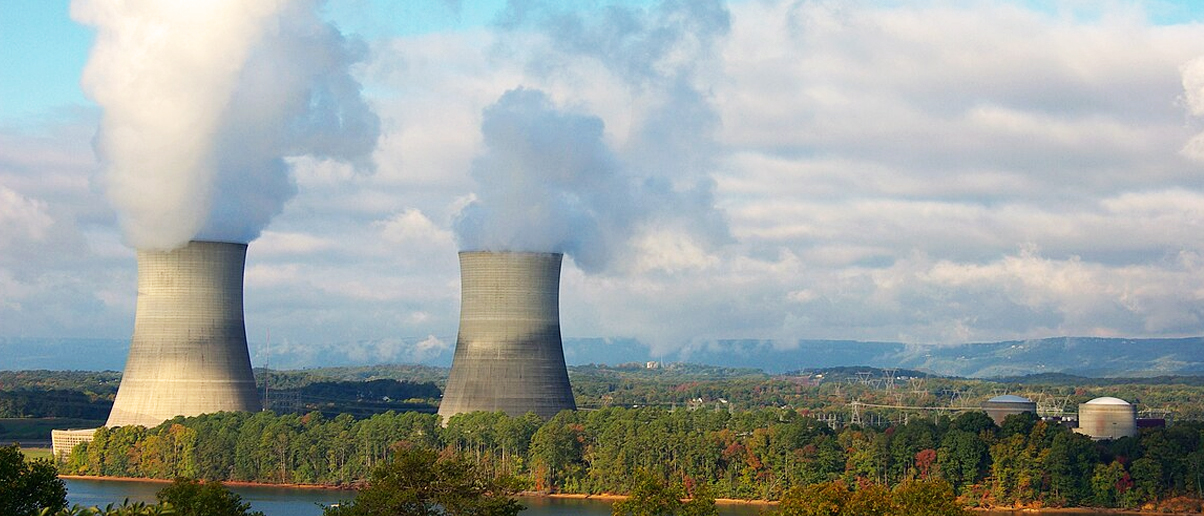

America’s nuclear storefront still stocks uranium, while abundant and potentially cleaner thorium remains off the shelf.
Thorium advocates argue the element could give the U.S. another nuclear fuel option while reducing some of the long-lived radioactive material associated with conventional uranium fuel cycles.
“Thorium is usable as is — there is no enrichment needed,” John Kutsch, executive Director of the Thorium Energy Alliance, told the Daily Caller News Foundation. “We have 2,000 times the usable thorium on Earth than we do [Uranium].”
Meanwhile, China is trying to change that. Researchers in the Gobi Desert achieved thorium-to-uranium fuel conversion in 2025, according to the Chinese Academy of Sciences — decades after researchers at a U.S. lab demonstrated key technologies underlying the concept.
Natural thorium-232 cannot power a nuclear reactor on its own and must first be converted into uranium-233, according to the International Atomic Energy Agency. That means a thorium reactor needs another nuclear fuel to get the reaction started while the thorium is converted into usable uranium-233 fuel, Taek K. Kim, manager for the Nuclear Systems Analysis Group, told the DCNF.
The Environmental Case
“Thorium is a by-product of rare earth and critical materials processing,” Kutsch told the DCNF.
The element is more abundant in the Earth’s crust than uranium and is commonly found in monazite, a phosphate mineral that contains rare earth elements and serves as the world’s primary source of thorium, according to the U.S. Geological Survey. Monazite is primarily valuable for its rare-earth content and contains only small amounts of uranium, making thorium recovery a potential byproduct of mining material already sought for other minerals.
Conventional uranium fuel can produce plutonium and other long-lived radioactive materials as it is used in a reactor, according to Kim. Thorium, by comparison, is primarily converted into uranium-233, producing far smaller amounts of those materials.
“Since plutonium and minor actinides are highly radioactive and radiotoxic with long half-lives, the thorium fuel cycle has much lower long-lived radioactive hazards compared to the uranium fuel cycle,” Kim told the DCNF.