




Things Are Heating Up In The Taiwan Strait
Chinese military aircraft entered air defense zones on two sides of Taiwan while a collection of Chinese naval and government vessels operated around the island, Taiwan’s military said Monday.
Francis Kapper · Sep 14, 2026 · 6 min read
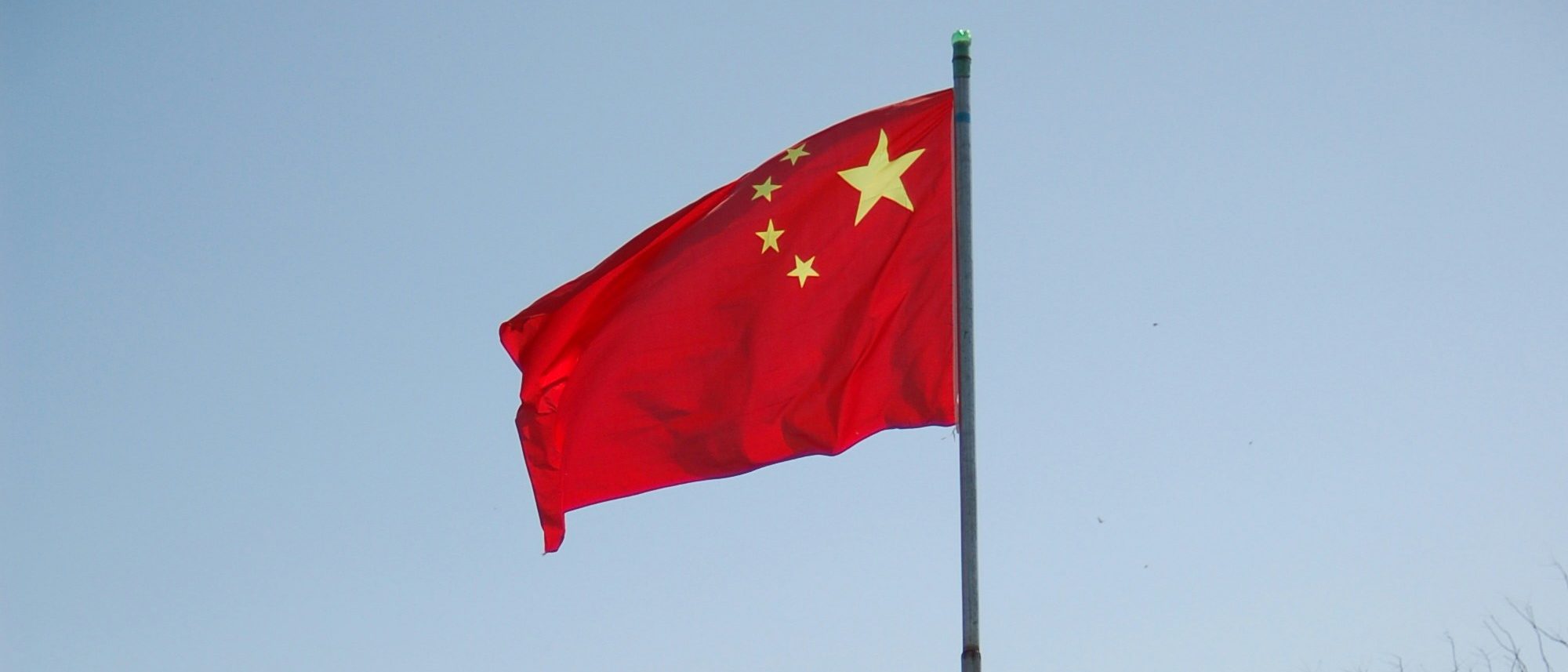

Chinese military aircraft entered air defense zones on two sides of Taiwan while a collection of Chinese naval and government vessels operated around the island, Taiwan’s military said Monday.
Taiwan detected four People’s Liberation Army aircraft, six People’s Liberation Army Navy (PLAN) vessels and two other Chinese “official ships” operating around the island throughout Sunday and Monday, according to Taiwan’s Ministry of National Defense. Two of the four Chinese aircraft entered Taiwan’s southwestern and eastern Air Defense Identification Zones (ADIZ), according to the ministry.
The latest Chinese military activity precedes Chinese President Xi Jinping’s visit to Washington for a high-stakes meeting with President Donald Trump on Sept. 24. Trump announced the date in July, while Beijing has yet to formally confirm the visit, Reuters reported.
Beijing considers Taiwan part of China and has made eventual “reunification” a core national objective, while Taiwan has governed itself separately since 1949. Chinese leaders have not renounced the use of force to bring the island under Beijing’s control, according to China’s State Council Taiwan Affairs Office.
“China is demonstrating an ever-improving military capacity to take Taiwan by force,” Patrick Cronin, chair for Asia-Pacific Security at the Hudson Institute, told the Daily Caller News Foundation. “By increasingly encircling Taiwan with military and nominally civilian ships and aircraft, the PLA is rehearsing the ability to transition rapidly from peacetime coercion or a military exercise to a blockade or full-scale invasion.”
Taiwan, meanwhile, is preparing to spend a record-setting NT$1 trillion (New Taiwanese Dollars), roughly $31 billion, on defense in 2027 for the first time as Taipei accelerates its military buildup in response to pressure from Beijing, President Lai Ching-te said earlier this month, according to Reuters.
Taiwanese forces monitored the Chinese activity and responded with combat air patrol aircraft, naval vessels and coastal missile systems, according to the Republic of China’s Ministry of National Defense.
The Republic of China’s Ministry of National Defense, U.S. Indo-Pacific Command and the Chinese Ministry of National Defense did not respond to a request for comment.
“This is in line with China’s coercive approach to Taiwan, which is itself troubling,” Eric Heginbotham, a principal research scientist at Massachusetts Institute of Technology’s Security Studies Program and co-director of its Wargaming Lab, told the DCNF. “But these recent developments are not a major departure or particularly alarming in themselves. This has become relatively routine. To provide but one example, during Joint Sword-2024A, 62 aircraft and dozens of warships entered Taiwan’s ADIZ.”
The ministry did not identify the four aircraft, six warships or two “official ships” in its initial announcement. It also did not say how close the Chinese forces came to Taiwan itself.
One expert pointed out that Taiwan’s ADIZ is used primarily to monitor potential threats, and that it generally has no bearing on what China can do in the region because it is not recognized under international law, given that it extends far beyond Taiwan’s territorial waters and “contiguous zone,” a maritime area extending up to 24 nautical miles from a country’s baselines where it may exercise limited enforcement authority.
“It [ADIZ] is something that states draw in order to help them manage aircraft that APPROACH (but have not yet necessarily entered) sovereign airspace,” Heginbotham told the DCNF.
The latest activity is part of an increasingly regular Chinese military presence around the self-governing island rather than an isolated deployment.
Taiwan reported seven PLA aircraft, six Chinese naval vessels and two official ships around the island just two days earlier, with five of the aircraft entering Taiwan’s northern and southwestern ADIZ, according to a Sept. 12 update from the Ministry of National Defense.
Chinese aircraft have also recently operated on Taiwan’s eastern, Pacific-facing side. Taiwan detected two PLA aircraft and six Chinese naval vessels on Sept. 5, with both aircraft entering the eastern ADIZ, according to the Ministry of National Defense.
“They [Chinese military operations around Taiwan] generally have two purposes, not necessarily equally served by each exercise,” Heginbotham told the DCNF. “They may serve training and exercise purposes, to ensure that the PLA has the capability to execute missions against Taiwan should the order come. And they may serve as diplomatic/political signals to Taiwan and/or others of displeasure or intent to enforce China’s position wrt Taiwan.”
China dramatically increased its military presence around Taiwan in 2025, establishing a substantially higher baseline of air and maritime activity.
PLA aircraft carried out 3,764 incursions into Taiwan’s de facto ADIZ during 2025, a 22.4% increase from 2024 and a record annual level, according to an analysis published by the Center for Strategic and International Studies’ ChinaPower Project.
Chinese naval activity increased alongside the air campaign. The average number of PLAN vessels reported around Taiwan each month climbed from 156 between August 2022 and April 2024 to 221 after May 2024, according to CSIS.
However, PLA air activity around Taiwan has fallen sharply this year, with aircraft detections down roughly 50% from last year, according to information compiled from Taiwan’s Ministry of National Defense. The decline suggests Beijing is relying less heavily on sheer numbers of aircraft around the island than it did in 2025.
China is instead increasing pressure through other means, particularly with more persistent operations east of Taiwan and a growing presence of Chinese “official ships” (mostly Chinese Coast Guard vessels). An Asia Society Center for China Analysis review of Taiwanese data found that while PLA air activity has declined, Chinese government vessel activity has risen significantly, pointing to a broader shift in how Beijing is maintaining pressure around the island.
“The more immediate purpose is psychological and diplomatic,” Cronin told the DCNF. “These increasingly sophisticated combined-arms demonstrations are designed to sap Taiwan’s morale, intimidate neighbors, normalize persistent Chinese military presence around the island, and convince President Trump that resisting Beijing is ultimately futile.”
The PLA has also repeatedly practiced operating forces around multiple sides of Taiwan during larger military exercises.
Chinese exercises surrounding Taiwan in April 2023 appeared to rehearse elements of an encirclement and possible blockade, with PLA naval forces operating around the island, according to an analysis from CSIS.
China has continued practicing blockade-related operations in the years since. Beijing has conducted multiple military exercises simulating blockades of Taiwan since 2022, according to a 2025 wargaming study from CSIS.
The Chinese military’s sustained operations are not confined to the Taiwan Strait. Beijing has increasingly demonstrated an ability to move naval and air forces into waters east of Taiwan and farther into the western Pacific, complicating Taiwan’s ability to treat its eastern coastline as a protected rear area during a potential conflict.
Taiwan’s military has continued responding to the near-daily Chinese presence with aircraft, ships and shore-based missile systems while publicly documenting PLA operations around the island, according to the Ministry of National Defense.
“When Xi comes to Washington later this month, he will try to persuade President Trump that Washington must eventually accommodate Xi’s vision of national rejuvenation, with Taiwan under CCP control and China restored to a dominant position in the region,” Cronin told the DCNF.
All content created by the Daily Caller News Foundation, an independent and nonpartisan newswire service, is available without charge to any legitimate news publisher that can provide a large audience. All republished articles must include our logo, our reporter’s byline and their DCNF affiliation. For any questions about our guidelines or partnering with us, please contact [email protected].
Get every new post by email
No spam, no account needed. Unsubscribe anytime.
Comments
Free account · your comment posts right after signup


