




Trump Reportedly Called Off Houthi Strikes As Bombs Were Being Loaded Onto U.S. Planes
President Donald Trump reportedly called off planned U.S. airstrikes against Yemen’s Iran-backed Houthis at the last minute Sunday, even as American personnel were loading bombs onto aircraft, The New York Times reported.
Francis Kapper · Sep 21, 2026 · 5 min read
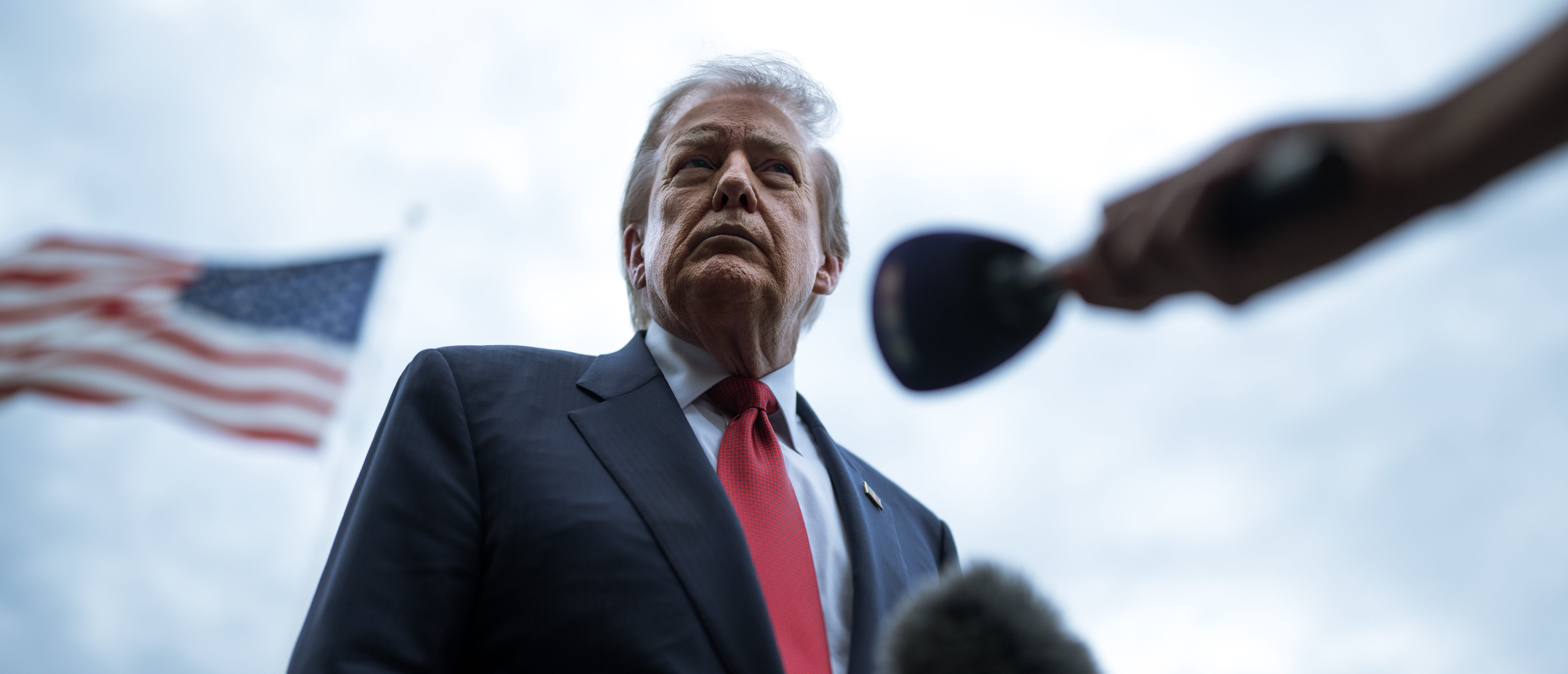

President Donald Trump reportedly called off planned U.S. airstrikes against Yemen’s Iran-backed Houthis at the last minute Sunday, even as American personnel were loading bombs onto aircraft, The New York Times reported.
The Trump administration had prepared to launch the strikes after Saudi Crown Prince Mohammed bin Salman renewed his request for American military assistance against the Houthis, the NYT reported. Trump ultimately decided against joining Saudi Arabia in the strikes, at least for the time being, according to the outlet.
The Pentagon declined to comment. The White House did not respond to a request for comment.
The reported decision followed a rapid Houthi offensive across Yemen and renewed attacks on Saudi Arabia. Washington has so far rejected repeated Saudi requests to enter the fighting directly, Reuters reported.
The Houthis have also kept diplomatic channels with Washington open even as fighting in Yemen has intensified. U.S. officials met with Houthi representatives in Oman earlier this month, where the two sides discussed maintaining their ceasefire and avoiding attacks on American vessels while the group continued its campaign against Saudi interests.
The Houthis claimed responsibility Saturday for attacks targeting Riyadh, while Saudi Arabia said its air defenses intercepted and destroyed a Houthi ballistic missile fired toward the capital, according to the Saudi Press Agency, citing Saudi-led coalition spokesman Maj. Gen. Turki Al-Malki.
Houthi forces are also attempting to capture strategic high ground in the Kahboub Mountains across Taiz and Lahij provinces, which separate the Red Sea coastline from areas controlled by Yemen’s Saudi-backed government, Reuters reported, citing five Yemeni military sources.
Control of those heights could allow the Houthis to secure positions around the Bab el-Mandeb Strait and open additional fronts against Saudi-backed forces, Reuters reported, citing the Yemeni military sources. Saudi Arabia has launched hundreds of strikes against Houthi positions in recent days, but the air campaign has so far failed to halt their advance, Reuters reported, citing the Houthis.
The fighting has also triggered a growing humanitarian crisis. More than 112,000 people had been displaced inside Yemen as of Sept. 18, including more than 100,000 during roughly the previous two weeks, according to the United Nations, citing the International Organization for Migration.
The Houthi advance threatens one of the world’s most important maritime chokepoints. Roughly 8.1 million barrels per day of crude oil and petroleum liquids moved through the Bab el-Mandeb Strait during the second quarter of 2026, according to the U.S. Energy Information Administration.
The Strait has become particularly important as disruptions in the Strait of Hormuz force exporters to rely on alternative routes. Saudi oil exports through Hormuz recently climbed to roughly 2.9 million barrels per day from about 700,000 barrels per day in August, Reuters reported, citing shipping data.
The United States previously conducted an extensive bombing campaign against the Houthis in 2025. American forces struck more than 800 Houthi targets after Operation Rough Rider began March 15, including command facilities, air defenses and weapons manufacturing sites, according to U.S. Central Command.
“Bomb the heck out of the Houthis. Hard and sustained,” Heritage Foundation Visiting Fellow and former Pentagon official Steven Bucci previously told the DCNF
“We knew they [the Houthi rebels] were not 100% out of the game, but [they] are greatly degraded,” Bucci said. “They get all their capability from Iran.”
Trump later halted that campaign after Oman brokered a ceasefire between Washington and the authorities in Sana’a. Under the agreement, neither side would target the other, including American vessels operating in the Red Sea and Bab el-Mandeb Strait, according to the Omani Foreign Ministry.
“In the past, the U.S. supported the Kingdom of Saudi Arabia and the corrupt government in Sanaa in their war against the Houthis,” Steve Hanke, a professor of applied economics at Johns Hopkins University, previously told the Daily Caller News Foundation. “The U.S. supplied everything but boots on the ground. That support turned out to be a clear-cut disaster. Now, it looks like the Trump administration is trying to cut its losses and disengage from the long-running regional conflict between Saudi Arabia and the Houthis. As long as that remains the case, talks between the Houthis and the U.S. will probably be, as they say, constructive.”
“American military might has not been able to do much more than put a dent in the Houthis, who control the Bab el-Mandeb Strait,” Hanke said. “For context, 10% of the U.S. Navy’s total commissioned fleet participated in combat operations against the Houthis. And what did that accomplish? It shut down the Bab el-Mandeb Strait. That is not very smart.”
U.S. officials nevertheless met Houthi representatives in Oman earlier in September as fighting with Saudi Arabia intensified, Reuters reported, citing five sources familiar with the meeting. The Houthi delegation said the group intended to continue honoring its ceasefire with Washington while maintaining its campaign against Saudi shipping, according to the sources cited by Reuters.
“The aspect most reporting is missing, the really big story, is that the U.S.-Iran war is becoming a much wider, regional conflict. The key implication of this is that countries like the U.A.E, Saudi Arabia, and Kuwait, will be drawn in to engage more forcefully, going beyond trying to shoot down incoming drones and missiles, but striking back against the aggressor — Iran,” J.D. Foster, a former senior fellow on the economics of fiscal policy at The Heritage Foundation, previously told the DCNF.
All content created by the Daily Caller News Foundation, an independent and nonpartisan newswire service, is available without charge to any legitimate news publisher that can provide a large audience. All republished articles must include our logo, our reporter’s byline and their DCNF affiliation. For any questions about our guidelines or partnering with us, please contact [email protected].
Get every new post by email
No spam, no account needed. Unsubscribe anytime.


