




US Closes Iraq Chapter After Thousands Dead And Trillions Spent
The United States is set to end Operation Inherent Resolve in Iraq by Wednesday, ending a U.S. military presence that has existed on and off for over two decades.
Francis Kapper · Sep 29, 2026 · 6 min read
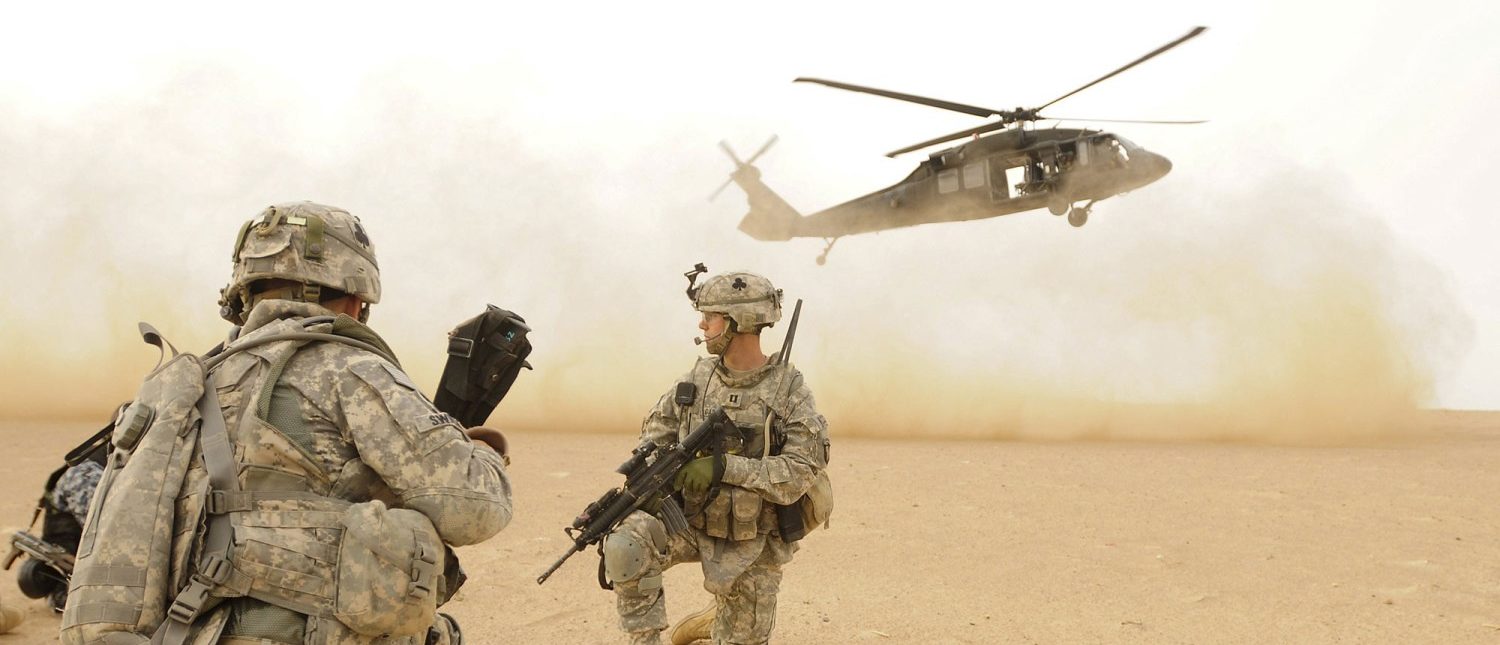

The United States is set to end Operation Inherent Resolve in Iraq by Wednesday, ending a U.S. military presence that has existed on and off for over two decades.
The withdrawal will shift primary responsibility for security inside Iraq to Iraqi forces while Washington and Baghdad transition toward a bilateral defense relationship, according to a Department of War press release from July. It will also remove a longstanding U.S. military presence from a country where Iran-backed armed groups remain powerful and where Iraqi and Kurdish officials have warned ISIS could exploit new security gaps, Reuters reported Tuesday, citing Iraqi security officials.
American forces first invaded Iraq in March 2003 and remained there through years of insurgency and sectarian violence before the U.S. combat mission ended and the final troops operating under Operation New Dawn withdrew in December 2011, according to the Defense Casualty Analysis System.
U.S. forces returned in 2014 after ISIS captured large portions of Iraq and Syria, beginning the campaign that became Operation Inherent Resolve. The mission later shifted from major combat operations toward advising and enabling Iraqi forces after ISIS lost control of its territorial caliphate, according to the Congressional Research Service.
Iraqi officials now argue their forces can handle the remaining terrorist threat without the coalition’s military presence. Iraq’s armed forces possess the manpower and competence to secure the country, with Baghdad’s remaining needs centered on advanced weapons and technology, a spokesman for Iraq’s commander-in-chief told the Iraqi News Agency in July.
The United States and Iraq are not severing their defense relationship. Baghdad has ordered the creation of a joint technical security committee to reshape the relationship around military technology, cybersecurity and other bilateral cooperation after the coalition mission ends, according to the Iraqi News Agency.
The withdrawal nevertheless leaves powerful Iran-aligned factions operating inside Iraq.
The terrorist group Kata’ib Hizballah receives training, weapons, funding, intelligence and logistical support from Iran’s Islamic Revolutionary Guard Corps-Qods Force and is the most influential faction inside Iraq’s Popular Mobilization Forces, the Treasury Department said in a September press release.
Kata’ib Hizballah and other Iran-aligned Iraqi militias have launched hundreds of attacks against American and coalition forces since February, including drone and rocket attacks on U.S. facilities, according to the Treasury Department.
Iraqi security analyst Jasim al-Bahadli said Tehran could benefit from the withdrawal because the U.S. presence had acted as a counterweight to Iranian influence, Reuters reported Monday. Abu Mojtaba al-Yasiri, a commander in the Iran-backed Islamic Resistance in Iraq, separately portrayed the American departure as a victory for the country’s armed factions, the outlet found.
ISIS remains another concern. Kurdish commander Sirwan Barzani warned that losing U.S. intelligence, drones and logistical support could give ISIS an opportunity to regroup, while Iraqi security officials said authorities recently uncovered a suspected cell preparing suicide attacks around the withdrawal, according to Reuters.
The dangers facing American troops in Iraq have also persisted through the final months of the mission. Army Sgt. Michael Emmanuel Swinton was killed July 19 during the controlled detonation of a downed one-way attack drone at Erbil Air Base, the U.S. Army announced in July.
The Cost Of Iraq
The American commitment to Iraq also accumulated a financial and human cost spanning more than two decades, although there is no single government figure that captures every dollar associated with the war. Different estimates count direct combat spending, reconstruction, subsequent counter-ISIS operations, veterans’ benefits, interest on war-related debt and increases to the Pentagon’s underlying budget differently, according to Brown University’s Costs of War project.
The price tag began climbing almost immediately after the invasion. The Bush administration requested roughly $62.6 billion for the Pentagon in its first 2003 emergency supplemental, covering military operations in Iraq, deployments, equipment, munitions and an occupation force for the remainder of that fiscal year, according to the Congressional Research Service.
That initial infusion became only a fraction of the eventual direct military bill. A Pentagon Cost of War report later calculated that the U.S. had incurred roughly $757.1 billion in obligations through fiscal year 2018 for Operation Iraqi Freedom, Operation New Dawn and Operation Inherent Resolve, operations conducted primarily in Iraq but, in OIR’s case, also encompassing the campaign in Syria, according to the Congressional Research Service.
Rebuilding the country added another major stream of spending. The United States provided about $60.64 billion for Iraqi relief and reconstruction from 2003 through 2012, with at least $53.26 billion actually spent by September 2012, according to the final report of the Special Inspector General for Iraq Reconstruction cited by GovInfo.
Those funds went toward projects ranging from electrical and water infrastructure to Iraqi police and military forces. Congress made roughly $60 billion available for reconstruction and stabilization overall, while more than $20 billion was directed through the Iraq Security Forces Fund alone, according to the Special Inspector General for Iraq Reconstruction.
The spending continued after American combat forces left in 2011 because Washington returned to Iraq to fight ISIS three years later. The Department of War budgeted $5.4 billion for Operation Inherent Resolve in fiscal year 2025 and $4.5 billion for fiscal year 2026, although those totals cover the broader counter-ISIS mission in Iraq, Syria and Lebanon rather than Iraq alone, according to the Department of War’s fiscal year 2026 budget overview.
The Pentagon’s direct war spending also does not capture the entire long-term burden on the federal government. Brown University’s Costs of War project estimated that the Iraq and Syria war zone had generated roughly $1.79 trillion in U.S. costs through 2023 when direct Pentagon and State Department spending, estimated increases in the Pentagon base budget, interest and veterans’ medical and disability costs were included, according to Brown University.
That estimate rises to roughly $2.89 trillion when Brown includes projected medical and disability obligations for veterans through 2050. The university’s calculation is broader than the Pentagon’s direct war-cost accounting and includes military operations in both Iraq and Syria, according to Brown University.
The human toll was similarly steep. Operation Iraqi Freedom alone resulted in 4,418 U.S. military deaths, including 3,481 classified as hostile deaths, and 31,994 service members wounded in action, according to the Defense Casualty Analysis System.
Another 74 American service members died during Operation New Dawn, the follow-on Iraq mission that ran until the December 2011 withdrawal, according to research based on Defense Department records published through the National Library of Medicine. American casualties continued after troops returned for Operation Inherent Resolve, which has recorded additional deaths and wounded personnel across the broader Iraq-Syria campaign, according to the Defense Department’s casualty records.
The Sept. 30 withdrawal therefore closes a military mission whose costs will not end when the last troops depart. Veterans’ health care and disability obligations tied to the post-2003 wars will continue for decades after the American military presence in Iraq itself is gone.
All content created by the Daily Caller News Foundation, an independent and nonpartisan newswire service, is available without charge to any legitimate news publisher that can provide a large audience. All republished articles must include our logo, our reporter’s byline and their DCNF affiliation. For any questions about our guidelines or partnering with us, please contact [email protected].
Get every new post by email
No spam, no account needed. Unsubscribe anytime.


