




US-Iran War Roars Back As Tankers Burn, Missiles Fly And Oil Tops $100
The U.S.-Iran war has erupted into another major round of fighting after weeks of relative calm, with American forces destroying Iranian oil tankers as Tehran launches ballistic missiles at U.S. forces and attacks commercial shipping across the Persian Gulf.
Francis Kapper · Sep 9, 2026 · 4 min read
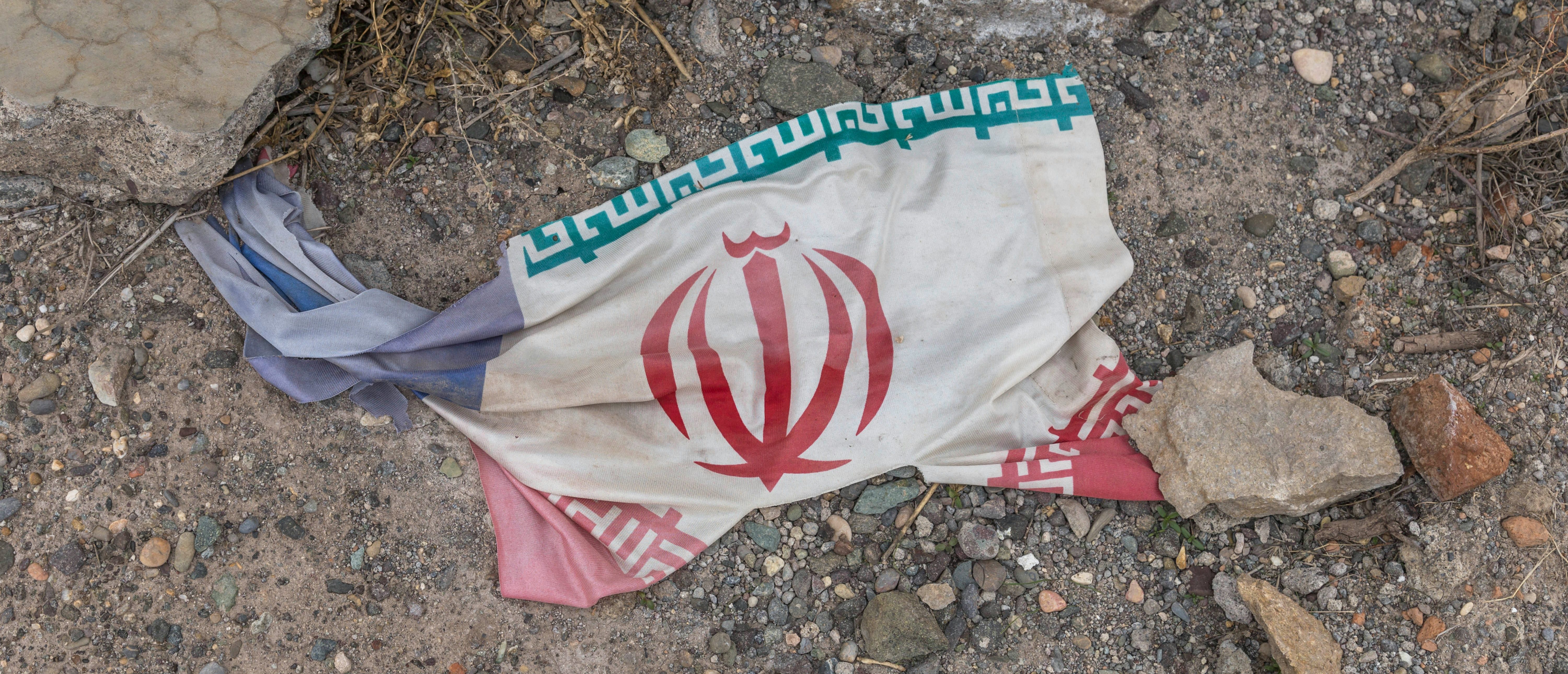

The U.S.-Iran war has erupted into another major round of fighting after weeks of relative calm, with American forces destroying Iranian oil tankers as Tehran launches ballistic missiles at U.S. forces and attacks commercial shipping across the Persian Gulf.
The latest exchange represents the largest declared wave of attacks on shipping by Iran and the U.S. since the war began roughly six months ago. The renewed fighting has already pushed Brent crude above $100 per barrel and again threatened shipping through the Strait of Hormuz.
“Iran continues to try to hit U.S. naval ships, and for every time they do that or try to do that, they’re going to lose tankers,” a White House official told the Daily Caller News Foundation, citing Secretary of State Marco Rubio.
“The [USS] George Washington is loaded to the gills,” President Donald Trump said during a Sept. 1 phone interview with Fox News correspondent Trey Yingst. “We’re loaded up.”
U.S. Central Command forces destroyed five Iranian crude oil carriers Tuesday after the Islamic Revolutionary Guard Corps (IRGC) targeted a U.S. Navy warship with ballistic missiles twice over two days, according to U.S. Central Command (CENTCOM).
The American warship evaded the attempted strikes and continued operating in regional waters, while no U.S. personnel were injured, according to CENTCOM.
“President Trump remains committed to unleashing American energy dominance, cutting costs, and putting more money back in the pockets of hardworking American families,” White House spokeswoman Taylor Rogers told the DCNF. “Last week the President met with nearly a dozen refiners to discuss ways to expand our refining capacity, which will lower prices at the pump. As the U.S. continues to maintain full control of the Strait of Hormuz, oil and gas prices will fall back to pre-conflict levels.”
The Pentagon referred to CENTCOM, which cited its most recent press release.
American forces subsequently destroyed the Iranian oil tankers Kaviz, Charminar, Horizon 1 and Riesco in the Gulf of Oman, along with the Derya near Iran’s Kharg Island, according to CENTCOM. U.S. forces ordered the crews to abandon the vessels before striking them, CENTCOM said.
The strikes followed another round of retaliation on Sept. 5, when U.S. forces disabled three Iranian crude carriers after the IRGC launched ballistic missiles toward an American aircraft carrier and guided-missile destroyer, according to CENTCOM.
“If you shoot at two of our ships, we will impose an even higher economic cost,” CENTCOM commander Adm. Brad Cooper said following those strikes, according to CENTCOM.
Iran responded to the latest American strikes by claiming attacks on 10 ships, including two U.S. vessels and eight oil tankers, Reuters reported, citing the IRGC.
The fighting also spread back to Jordan, where Iran fired 20 ballistic missiles toward Jordanian territory Wednesday, according to the Jordanian Armed Forces. Jordanian air defenses destroyed 18 missiles while the remaining two landed in unpopulated areas, with no casualties reported, according to the military.
The IRGC said the missiles targeted a base near Al Azraq used by American forces, while a U.S. official said the attack was ineffective and all American troops were accounted for, Reuters reported.
Commercial vessels have also been caught in the renewed fighting. One crew member aboard the oil-products tanker Hercules Star was killed and another was missing after the vessel was struck near Dubai, Reuters reported, citing the vessel’s charterer Peninsula.
The New Andros, carrying roughly 2 million barrels of fuel oil, also caught fire after being struck by a drone in Iraqi waters, Reuters reported, citing two Iraqi port officials.
The escalation has again squeezed one of the world’s most important energy arteries, with just six commodity vessels passing through the Strait of Hormuz on Tuesday compared with roughly 125 commercial vessels per day before the war, Reuters reported, citing preliminary Kpler data.
All content created by the Daily Caller News Foundation, an independent and nonpartisan newswire service, is available without charge to any legitimate news publisher that can provide a large audience. All republished articles must include our logo, our reporter’s byline and their DCNF affiliation. For any questions about our guidelines or partnering with us, please contact [email protected].
Get every new post by email
No spam, no account needed. Unsubscribe anytime.
Comments
Free account · your comment posts right after signup
