




Why Europe Losing Saudi Oil Could Become America’s Problem
European refiners are turning to American crude and diesel just as the United States holds its lowest level of emergency oil reserves in more than 40 years.
Simon August · Sep 20, 2026 · 11 min read
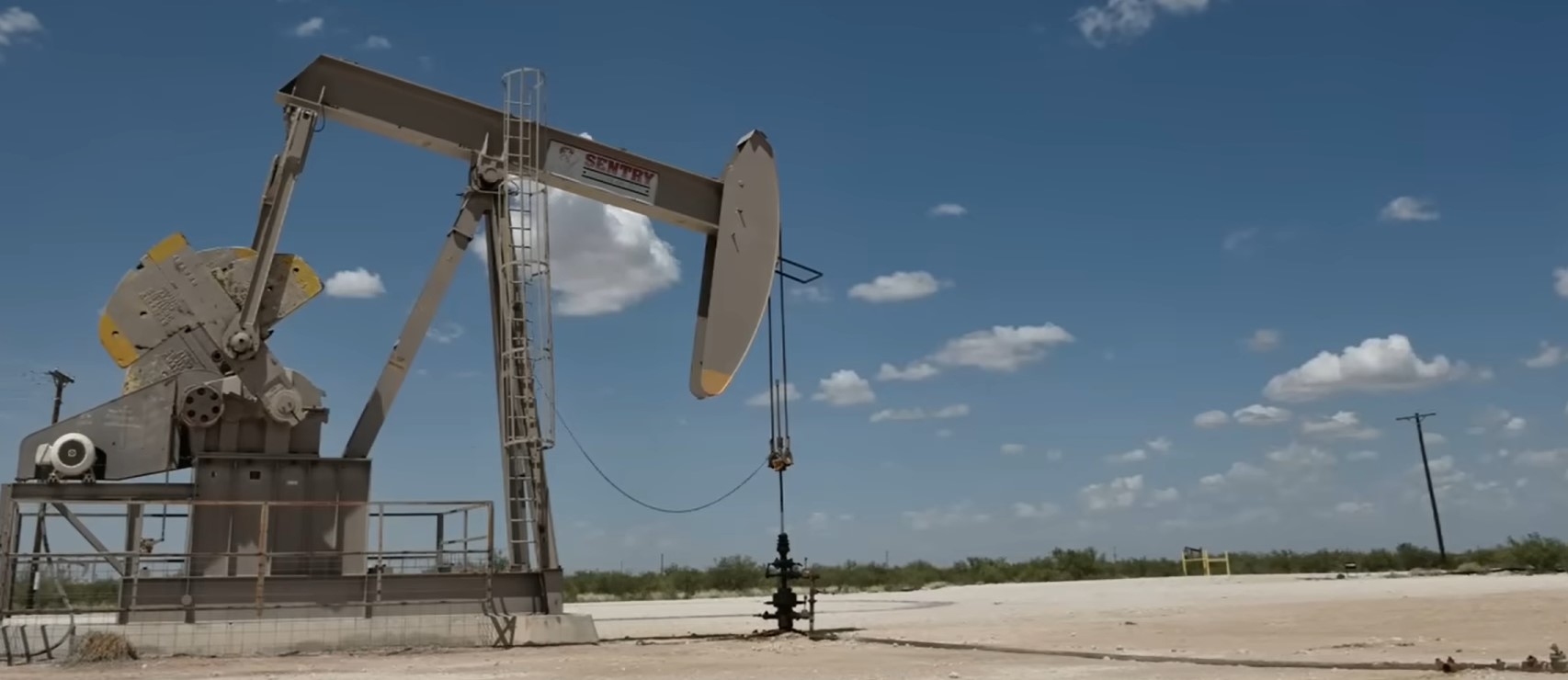

European refiners are turning to American crude and diesel just as the United States holds its lowest level of emergency oil reserves in more than 40 years.
Saudi Aramco told at least two European refiners on Friday that they will receive no crude in October under long-term contracts, Bloomberg reported, citing people informed of the decision. The decision applies to all European buyers, the anonymous sources said.
Aramco has not publicly confirmed the report and declined to comment to the Daily Caller News Foundation. European refiners will turn to American crude to replace part of those barrels, six energy analysts told the DCNF — and at least one expects them to bid for American diesel and gasoline as well.
The Strategic Petroleum Reserve held 285 million barrels in the week ending Sept. 11, its lowest level since 1982, according to the Energy Information Administration’s weekly report. The reserve has fallen about 130 million barrels since the week before the Iran war began, the DCNF reported Sept. 3, citing EIA data. American refineries ran at 96.8% of capacity in the week ending Sept. 11, and distillate stocks, which include diesel, stood 13% below the five-year average, the agency said.
The emergency release from the reserve that began in March has ended, so European demand for American crude “will also push crude oil prices higher,” Ellen Wald, a nonresident senior fellow at the Atlantic Council’s Global Energy Center and author of Saudi, Inc., told the DCNF.
European refiners will look to replace September and October supplies with other crude or with gasoline and diesel, and the easiest sources are the United States or Africa, Wald added.
“U.S. products markets are already very tight, so any additional demand for U.S. gasoline or diesel will put upward pressure on prices,” she said.
American prices move with the world market either way, Andrew Lipow, president of Lipow Oil Associates, told the DCNF in a Friday interview. They are “set by the global benchmarks, whether it’s WTI or Brent,” he said, and the pipeline closure “is limiting the availability of oil to the market around the world,” so “whether people are buying oil from the United States or oil from South America, it’s still going to impact price.”
American drivers should not see much change so long as exports are matched by new production, Caleb Jasso, a senior policy adviser at the Institute for Energy Research, told the DCNF. “Since oil prices are tied to global production, not just domestic production, a country can’t fully isolate itself from price fluctuations.”
The United States is producing at record levels and will likely raise daily output again in 2027, which would let American producers “help cushion any supply shortfalls Europe may face,” he added.
Selling more American barrels abroad will not raise prices at home, Stuart Turley, president and CEO of Sandstone Group and host of the Energy News Beat podcast, told the DCNF in a Friday interview. “Energy security starts at home, but your energy dominance is displayed through your exports.”
Cutting off exports “will mean absolutely nothing to the U.S. consumers” because the country’s fuel supply is divided into regional districts that do not depend on the barrels leaving the Gulf Coast, he noted.
Orlen, Poland’s state-controlled refiner and Aramco’s largest European customer, did not immediately respond to the DCNF’s request for comment.
American crude cannot replace the lost Saudi barrels one-for-one, David Blackmon, an energy analyst and writer, told the DCNF. Most American exports are light, sweet crude from shale fields, meaning oil that is thin and low in sulfur, while Saudi Arabia ships heavier grades that European refineries are built to run.
“Unfortunately, for Europe, that grade of crude is not a match for Saudi oil, which is made up of heavier grades,” he said. “Europe’s refiners may be able to offset some of their Saudi losses with U.S. imports, but they will need to find other sources to fill their total needs.”
Europe can get the barrels at a higher price, Lipow said.
“We continue to export three to four million barrels a day of crude oil, and Europe would just be competing for those exports with refineries elsewhere in the world, namely Asia. So there are barrels available, they may get more expensive,” he told the DCNF.
Some crude from the Gulf of Mexico is sour — or high in sulfur — and could stand in for Saudi grades. Additionally, every European refinery can run some of the light American crude known as WTI Midland, but it’s just a matter of “how much” of its crude intake each plant can replace, which depends on its equipment, Lipow said.
American crude exports averaged 4.8 million barrels a day in the week ending Sept. 11, up from 3.4 million the week before, but the reporting period ended one day after the attack and the figures “do not establish an export response to the reported disruption,” EIA media relations told the DCNF in an email. The agency’s next weekly release on Sept. 23 will be the first to cover the period after the attack, it said.
The loss of Saudi cargoes is “another opportunity for American producers,” Jason Hayes, a senior research fellow in the Heritage Foundation’s Center for Energy, Climate and Environment, told the DCNF in a statement. American crude exports hit a record 5.6 million barrels a day in May, Hayes said, citing UPI, and light, sweet WTI Midland is “an ideal match for European refineries.”
U.S. exports “can realistically cover a meaningful share of the European gap, and they can do it faster and more reliably than most alternatives,” he said.
Europe “will pay more and wait longer” for those barrels, Hayes said, with tankers taking two to three weeks from the Gulf Coast against about a week from Yanbu to Mediterranean ports.
European buyers “can be sure that those tankers will arrive, unmolested by Iranian-backed Houthi terror attacks,” he added.
The outage is “significantly impairing” Aramco’s ability to supply Europe, Wald said. The pipeline let Aramco load tankers on the Red Sea for the Suez Canal or Egypt’s SUMED pipeline to the Mediterranean, which Wald said was “especially important for European supplies” since Europe cut its purchases of Russian crude.
At least one pumping station appears to have been destroyed and others were damaged, Wald said, and while initial repairs might restore “perhaps 1 or 2 million” barrels a day, returning the line to full capacity would take “6 weeks or more,” she noted.
Energy Secretary Chris Wright told CNBC on Sept. 15 that the outage would be brief. “It’s still a detailed assessment, but I think it will be measured in days,” Wright said on the sidelines of a G20 energy meeting in Houston, adding that Saudi Arabia was moving more oil out through the Strait of Hormuz with help from the U.S. military. The pipeline remained offline on Friday, Reuters reported.
Three pumping stations were damaged and repairing a station takes one to two months, Lipow told the DCNF, but Saudi Arabia can route oil around the damaged stations.
“If Saudi Arabia is able to bypass that station, they could get the pipeline back in service much quicker, but at a reduced capacity,” he said. Reports that the kingdom aims to restart at about half capacity within days reflect a bypass rather than a repair, Lipow pointing out, comparing it to an interstate with three of five lanes closed for roadwork.
Data platform Kpler said on Sept. 14 that a bypass around the damaged pumping station was serving as a temporary fix and that full restoration could take up to six weeks, according to Euronews.
Two regional officials told The Associated Press on Sept. 14 that repairs to a major pumping facility could take three to five weeks and that the line might run partially in the meantime, the AP reported.
A person familiar with the matter told Bloomberg on Wednesday the line would partially restart within days and return to full operation within six weeks, Reuters reported.
Saudi Arabia has meanwhile increased sales from the Gulf side of the country. It has sold about 60 million barrels from its Gulf port of Ras Tanura for loading by ship-to-ship transfer at the Omani port of Sohar this month and next, lifting exports from inside the Gulf to 1 million to 1.5 million barrels a day, trade sources told Reuters on Friday. Chinese and South Korean refiners are the top buyers, with some volumes going to India and Japan, the outlet reported. The cost of chartering a supertanker from Fujairah to Asia for early October hit a record on the Worldscale index this week, according to a shipbroker cited by the outlet.
Europe is competing with Asia for the same replacement barrels, Turley, the Sandstone Group executive, told the DCNF. India is the swing buyer at the moment and Chinese refiners are buying again after losing discounted Iranian and Venezuelan crude, he said.
The 1,200-kilometer pipeline, also called Petroline, can carry up to 7 million barrels a day from Saudi Arabia’s eastern oil fields to the Red Sea port of Yanbu, letting the kingdom export without passing through the Strait of Hormuz, which Iran has largely blocked since the war began in February, according to the AP.
The line had been moving 2.6 million to 4 million barrels a day since late August, according to a Rystad Energy analysis cited by the AP. Saudi Arabia blamed drones from Iranian-backed militias in Iraq for the Sept. 10 attack and shut the entire line on Sept. 11 as a precaution, the outlet reported.
Damage to three pumping stations was more extensive than first estimated, and a prolonged shutdown could affect up to 4% of global oil supply, Reuters reported on Sept. 15, citing three sources. No Saudi crude has left Yanbu since Sept. 11, according to Vortexa data cited by Argus, and Kpler assessed the port’s stocks at about three days of loadings if no more crude arrives, according to Euronews.
Countries in the Organisation for Economic Co-operation and Development’s European group imported 577,000 barrels a day of Saudi crude in June, according to the International Energy Agency’s (IEA) monthly Oil Market Report. Aramco had already canceled or delayed late September cargoes to at least three European refiners, some until November, according to market sources cited by Argus. Poland’s Gdansk received about 160,000 barrels a day this year and Lithuania’s Butinge 63,000, the same Reuters report said, citing Kpler data. Together, the two ports took about 59% of Europe’s Saudi imports, the outlet reported, and at least four September tanker bookings from Egypt’s Sidi Kerir terminal to Gdansk fell through, shipping data reviewed by Reuters showed.
Orlen, which has bought about 40% of its crude from Aramco since 2022, has issued more than 10 tenders since Sept. 11 and sought WTI Midland and Kazakh CPC Blend alongside North Sea grades, Reuters reported. The company said on X on Sept. 16, according to TVP World, that it had signed 16 additional deliveries from Norway, Britain, Algeria, Kazakhstan, Azerbaijan and “both Americas,” that an August contract with Norway’s Equinor covers 25% of its needs and that its refineries are running at full capacity. “They’re covering what they need,” Lipow said.
Cargo prices in Europe’s physical market topped $120 a barrel on Sept. 15 as the cancellations spread, Reuters reported. Brent futures settled at $108.75 and WTI at $105.83 that day, their highest closes since May 19, according to CNBC. Brent fell 2.7% to $105.83 on Wednesday after reports of a partial restart, the network reported, and futures fell more than $1 a barrel again on Friday on the restart reports and the Sohar sales, according to Reuters.
American refineries have little room to run harder. They ran at 96.8% of capacity in the week ending Sept. 11, down from 97.8% the week before, and processed 17.3 million barrels a day, according to the EIA report. ExxonMobil’s 275,000-barrel-a-day Joliet refinery outside Chicago lost power on Sept. 13 and processing resumed within hours after power returned, Blackmon wrote on X on Friday.
The White House is weighing how to use the Defense Production Act to expand refining capacity, the DCNF reported Sept. 11. Expanding that capacity “is a top priority for the President and his energy team, who are evaluating concrete options to increase our refining capacity through regulatory reform, faster permitting, and additional investment,” White House spokeswoman Taylor Rogers told the DCNF in a statement at the time.
Turley said fast-tracking expansion of existing refineries under that law is the quickest relief available to the administration, since only lower demand or more refining capacity brings down the price at the pump, and Jasso said the episode argues for investment in more American refineries.
Hayes said the case for American supply holds only if Washington keeps exports open, and that talk of an export ban in Congress “could lead global markets to view American producers as unreliable.”
“America has the oil,” he said. “The challenge is whether we choose to produce it and move it to friends and allies or to hand the competitive advantage back to our strategic competitors.”
The Houthis reached Perim Island at the mouth of the Bab el-Mandeb strait earlier this month, the route Saudi tankers take south from Yanbu, the DCNF reported Sept. 11. The IEA put Saudi supply at six million barrels a day in August, down 2.3 million on the month and the lowest in more than three decades.
Saudi Arabia said on Sept. 16 that it expects to restore about half of the pipeline’s capacity in the coming days, according to Euronews, and Aramco has not publicly confirmed the October halt.
All content created by the Daily Caller News Foundation, an independent and nonpartisan newswire service, is available without charge to any legitimate news publisher that can provide a large audience. All republished articles must include our logo, our reporter’s byline and their DCNF affiliation. For any questions about our guidelines or partnering with us, please contact [email protected].
Get every new post by email
No spam, no account needed. Unsubscribe anytime.


