




Amazing Grace: The Slave Trader Who Turned
The captain of slave ships became a pastor, wrote the world's best-loved hymn, and lived to see Britain vote his old trade out of existence.
FaithTap · Sep 30, 2026 · 10 min read
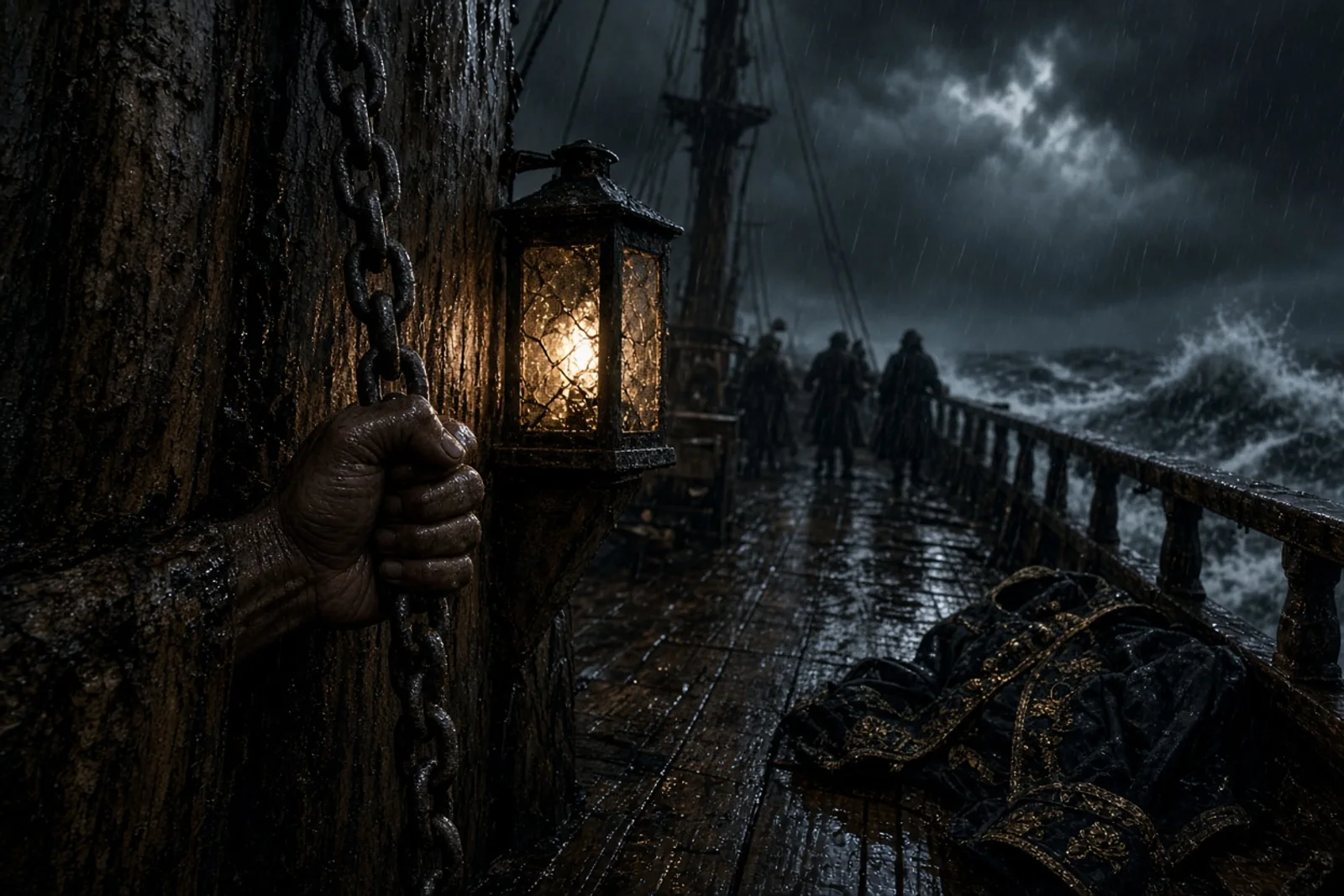
The candles gutter every time the door opens, and it opens all through that first morning of the year, cold air pushing in with each new pair of clogs on the flagstones. I am wedged between the lace-frame women on the bench nearest the stove, the one that never throws enough heat to matter. Outside, Olney is white with frost, the Ouse frozen at its edges, the lace bobbins silent for once because it is a feast day and nobody works. Inside, we wait for Mr. Newton to climb into the pulpit, and I know, the way you know a storm is coming by the smell of the air, that he means to say something he has been carrying a long time.
I had heard him tell pieces of it before, in dribs, over the nine years he had been our curate. He was not like the vicars who stood a mile above you and preached of sin as though it belonged to someone else. He told us his own. He would stand up there in that plain black gown and say he had been a blasphemer worse than any man in this room had ever heard, and half of us laughed nervously because we believed him, and the other half went quiet because we could hear that he meant it.
He was born in Wapping, by the London docks, in 1725, the son of a ship's captain who was gone two or three years at a stretch and a mother who taught him his letters and his catechism before she died of the wasting sickness when he was six. After that there was a stepmother who kept her distance and a boarding school where the masters used the strap freely, and then, at eleven, the sea itself, apprenticed to his own father, learning to be a sailor the way other boys learn a trade, by having it beaten into the hands.
He told us how he had lost his faith on purpose, egged on by a shipmate and a book by a lord named Shaftesbury, and how he came to take a kind of pride in being the foulest-mouthed man aboard any vessel he sailed in — not merely swearing as sailors do, he said, but inventing oaths past what the language already had, until even hardened captains flinched to hear him. He said it the way another man might confess to murder.
The navy took him against his will, pressed off the street the way they pressed so many, and he answered that indignity the way he answered most things at that age — badly. He overstayed his leave to see a girl named Mary Catlett, whom everyone at Olney simply called Polly, the family friend from Kent he had loved since he was a boy of seventeen, and when they caught him for it they flogged him before the ship's company and stripped him of his rank. Not long after, in humiliation, he was traded off like cargo himself, to the crew of a slave ship.
That was where the story turned dark even by his own telling. He said he had mocked the captain of that vessel with filthy songs he composed himself, verses so cutting that the whole crew learned them and sang them behind the man's back, and that his own recklessness cost him — starved near to death, clapped in irons at sea like the men chained below the deck he served on. In Sierra Leone he fell into the hands of a Sherbro trader's mistress on a river plantation, and for months he was treated little better than the human property he had come there to buy and sell, until his own father, reached at last by letter, arranged for a passing ship to find him and bring him off.
Even then, he said, he did not want rescue. He had grown almost used to Sierra Leone. It was Polly, and Polly alone, that drew him back toward England, back toward a life he had not yet earned.
The ship that carried him home was called the Greyhound, and it was aboard her, in March of 1748, in the black water of the North Atlantic, that everything he had been ran up against everything he might become. A storm hit that tore the sea to pieces. A man standing at the very spot where Newton had stood minutes before was swept overboard and lost. For hours the crew bailed water they were sure would sink them regardless, and Newton lashed himself to the ship's pump alongside another sailor, working until his hands would not close, and at some point, turning to the captain in the howling dark, he said the words he would carry the rest of his life: if this will not do, then Lord have mercy upon us.
He told us that when the words left his mouth he was startled by them, that a man who had spent years perfecting blasphemy had just prayed, without deciding to. He rested only a little before going back up to steer the broken ship for eleven straight hours, and in that darkness, hand on the wheel, he began turning over what he had said, whether a man like him had any right to ask mercy of anyone at all.