




Jim Elliot and Friends Killed in Ecuador
Missionaries reach unreached Waorani
FaithTap · Oct 10, 2026 · 10 min read
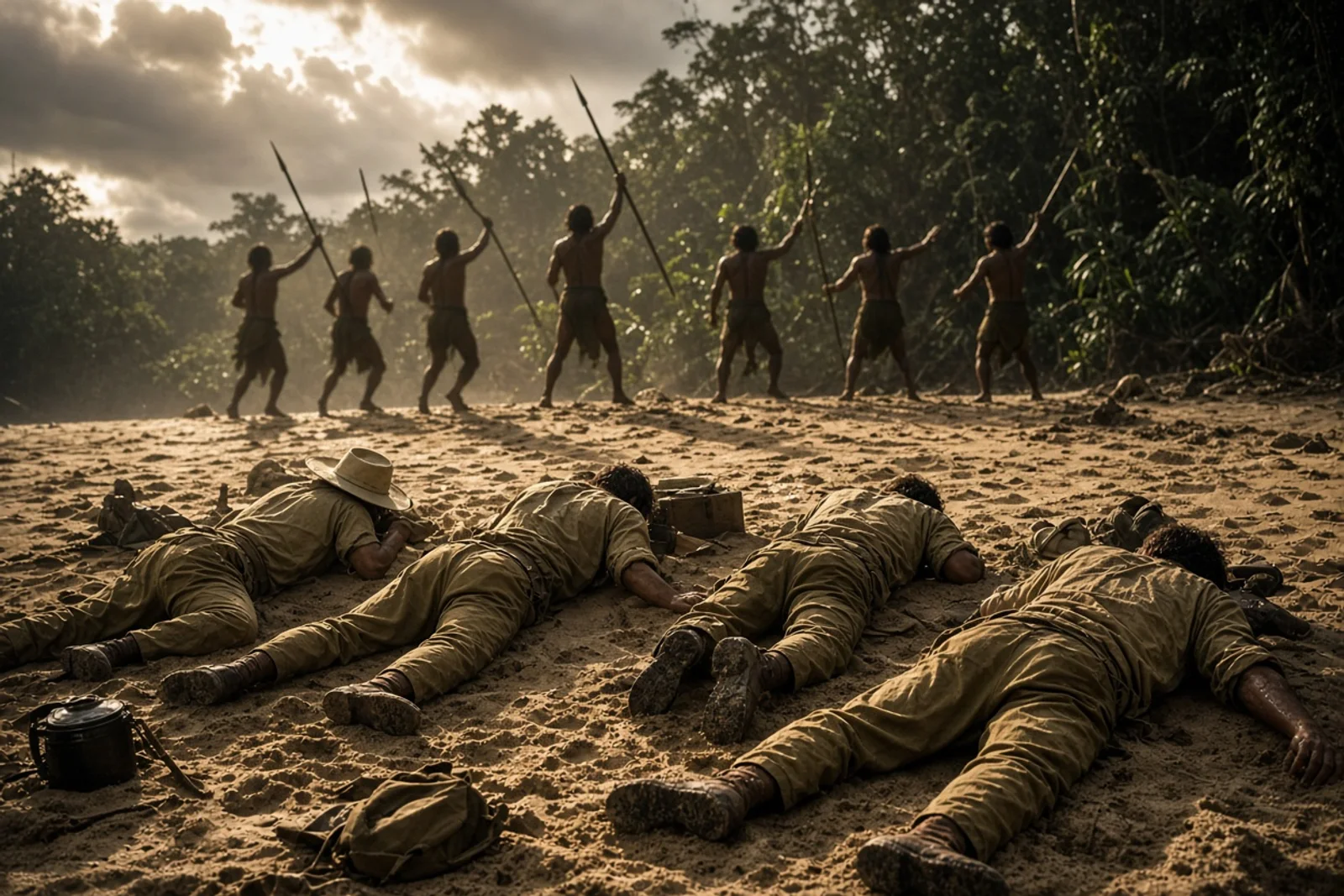
The river pulled hard at my legs as I waded toward the far bank, the current dragging leaves and broken branches against my knees. We had canoed and walked since before dawn, twenty-five miles of mud and thorns, and now the Curaray ran brown and fast under the afternoon light. Ahead of me the Ecuadorian soldiers spread out along the sand, their rifles held high, while the other Quichua men from Arajuno called softly to one another. One of them pointed downstream where something pale floated against a log.
We reached the first body before the rain started. The khaki pants and white shirt were the same ones Ed McCully had worn the last time he stopped at our clearing for plantains. His face was already gone to the water, but the size of the man and the watch still strapped to the wrist left no doubt. We lifted what we could reach and set the watch on the sand with his shoe. The soldiers wrote notes on wet paper and looked away.
By the time the others were found the sky opened. Water poured through the leaves in sheets that turned the ground to soup. Four bodies lay in the shallows, spears still driven through cloth and skin. Roger Youderian’s boots were missing. Peter Fleming’s notebook had come apart, pages scattered like white petals. Nate Saint’s plane sat overturned a quarter mile upstream, its yellow wings stripped of fabric. Jim Elliot’s body had drifted farthest, caught on roots where the river bent.
We dug four graves just inside the tree line while the downpour hammered the shovels. The ground took the bodies slowly. One of the soldiers tried to pull the spears free and gave up when the shafts broke. We left them as they were and heaped the wet earth by hand. No one spoke the names again until the work was finished.
The day before the search began, the wives had waited at Shell Mera beside the radio. Marj Saint kept the schedule Nate had set, listening for the click of the transmitter each evening. When the call finally came from Johnny Keenan in the other Piper, she stood without moving while the message passed. Three other women leaned close enough to hear the engine noise through the speaker.
The missionaries had begun the flights in October. Nate Saint took the plane low over the Waorani clearings and lowered pots, buttons, shirts, and machetes on long strings. The people on the ground picked the gifts up and laughed. They sent back a headband and a smoked monkey tail. By December the exchanges had grown steady enough that the five men decided to land.
They cleared a strip on the sandbar they named Palm Beach and built a platform in the trees. From there they called through the loudspeaker in the few Waorani phrases they knew. On the sixth of January three visitors stepped out of the forest: a man they called George, a young woman, and her aunt who stayed after dark to talk. The men fed them and showed them the model plane Nate carried. George rode in the real plane that afternoon and waved at his own people when they flew over the clearing.
The next morning the camp felt quiet again. The visitors had gone back into the trees. The missionaries read and swam and waited through another night. On the eighth, ten Waorani men appeared at the edge of the sand. The missionaries walked forward to meet them.
We heard the story later from the Waorani who came to the stations after the killing. They told how the visitors had seemed friendly at first, then turned. The spears came fast. The plane never left the river again.