




Malcolm Muggeridge Discovers Christ
British journalist interviews Mother Teresa and converts.
FaithTap · Sep 24, 2026 · 11 min read
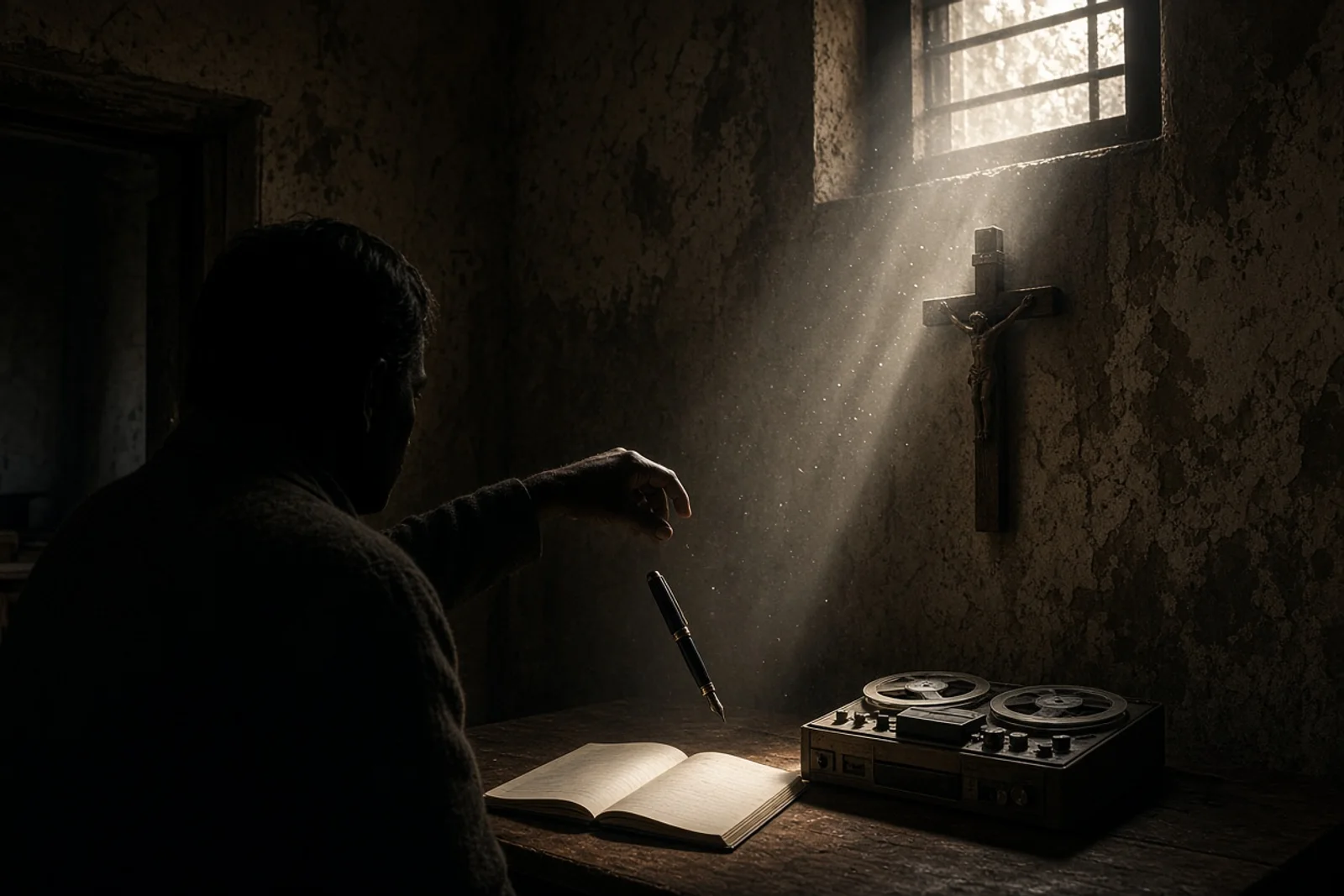
The keys on the old Remington kept jamming as Muggeridge leaned over the desk in the Esquire office that afternoon. I stood by the window with a cup of cooling tea, watching him cross out another line and start again. Outside, London traffic muttered along the street, but inside the room the only sound was the scrape of his pen and the occasional sigh when a sentence refused to settle.
He had come in early, carrying the folded sheets from the night before. The piece was meant to run in June, and the editors wanted it finished. Muggeridge read a paragraph aloud, then stopped. “It still sounds like the old voice,” he said. He meant the voice that had mocked everything for thirty years. He folded the paper once more and set it aside.
I had known him since the Manchester Guardian days. We had both filed from Moscow in the early thirties, though I stayed only a few months before they sent me elsewhere. He and Kitty had stayed longer. One night in a freezing hotel room he had shown me the notes he planned to smuggle out about the villages in Ukraine. The paper was thin and the handwriting cramped to fit more words. He said the censors would never let it through the normal channels. Later I heard he used diplomatic pouches. The articles that reached London were cut to ribbons, and he left the paper soon after.
Back in England the attacks came quickly. Editors stopped returning his calls. For a while it looked as though the career might end there. He took whatever work appeared. Punch offered a chair eventually, and he accepted it, but the old certainty about systems and progress had already begun to crack.
Years later I ran into him again in a BBC canteen. He was preparing a television piece about a group of surgeons. The doctors spoke with complete assurance about the body and nothing else. Muggeridge came out of the studio looking tired. He told me he had never felt so sharply the difference between what can be measured and what cannot. That was one of the first times he used the word “pilgrim” about himself.
By 1969 the change showed in small habits. He carried a small notebook with lines from Pascal and Kierkegaard copied in the margins. He quoted Tolstoy more often than he once had. When the invitation came to serve as rector at Edinburgh he accepted, then resigned after the university began handing out contraceptives to students. The Roman Catholic chaplain wrote him a sharp letter. The Calvinist circles in Scotland suddenly found him interesting for a season. Muggeridge laughed about that when we met for lunch near Fleet Street. He said agreement with any crowd still made him uneasy.
The Esquire assignment forced the story into the open. He had been asked to write about rediscovering Jesus, and he kept returning to the Moscow winter as the place where the first doubt about earthly paradises took hold. He described the empty villages and the trains carrying people whose hands were bound. He did not claim a single blinding moment. The sentences stayed cautious. He wrote that he saw only fitfully and believed no creed wholly.
One evening after the piece was posted he invited a few of us to the house. Kitty poured tea while he read a section about the Heavenly Hound. The phrase came from his own memory of turning away. He stopped and looked at the fire. No one spoke for a while. Outside, rain began on the roof.
After the article appeared the letters arrived in bundles. Some praised him. Others accused him of late sentiment. An evangelical bookshop in London stocked the book that grew out of the same reflections, then removed it from the window when questions about orthodoxy arose. Muggeridge heard the story and smiled. He said it proved he still belonged to no party.