




Nixon's Hatchet Man Finds Grace
Watergate's 'hatchet man' wept in a friend's driveway over a chapter of C.S. Lewis — then went to prison, and came out to serve prisoners for life.
FaithTap · Oct 2, 2026 · 10 min read
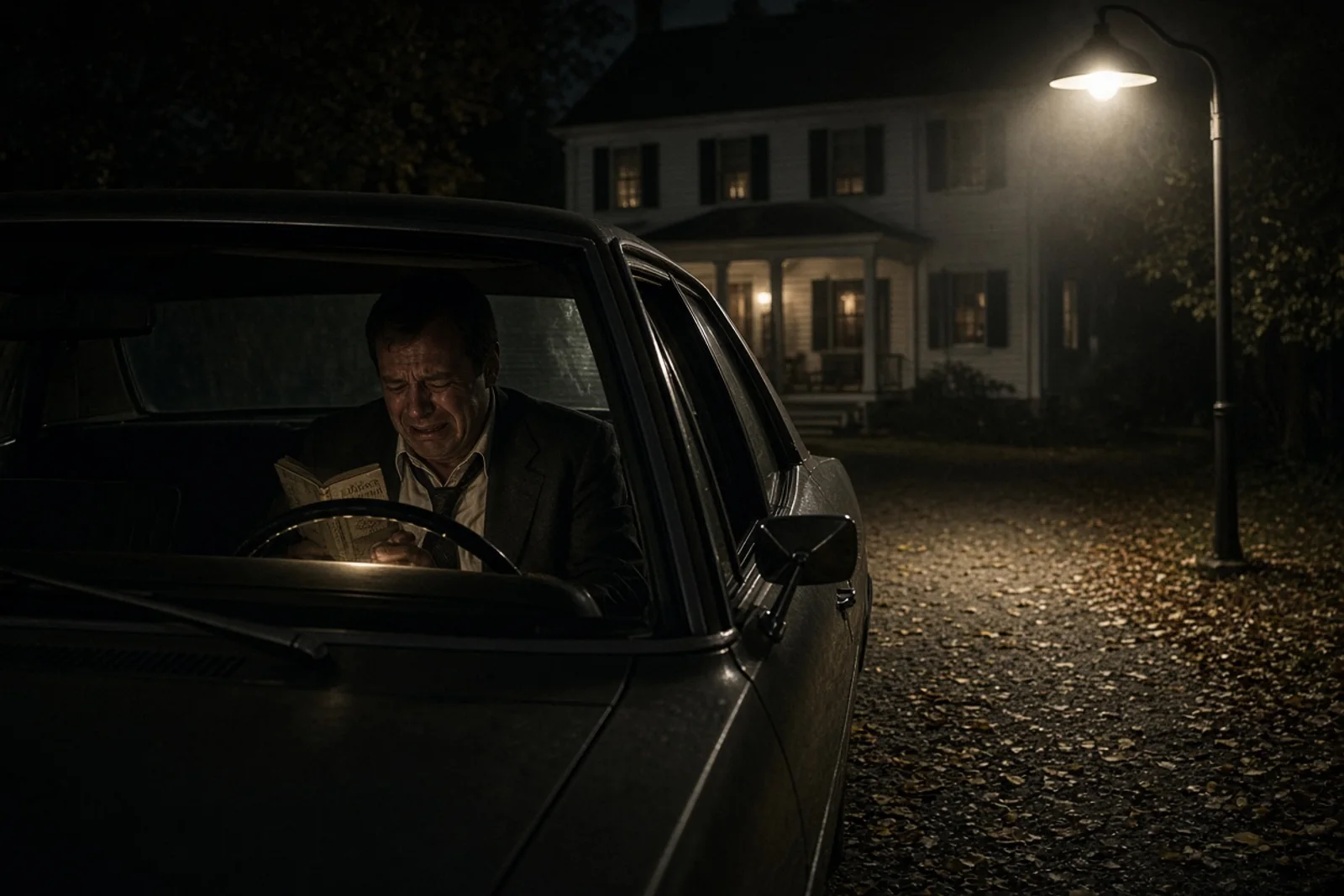
The sprinkler was still going when the car pulled up, ticking back and forth across Tom's front lawn like it didn't know it was almost nine o'clock and getting dark. I was out on my own porch two houses down, doing nothing in particular, the way you do on a warm August night in Massachusetts when the day has finally let go of its heat. I noticed the sedan because it wasn't a car from our street. It idled at the curb a long moment before the engine cut, and then nothing happened. No door opened. Just a man sitting behind the wheel, still as a photograph, while the sprinkler kept ticking.
I didn't know yet that the man in that car had spent the better part of five years standing at the right hand of the President of the United States, closer to the throne than almost anyone, feared inside those White House walls the way you fear a loaded gun left on a table. I didn't know he had an office next to Nixon's own, in the Executive Office Building, where the two of them traded grievances like men swapping keys to the same bitterness. I didn't know he'd once said, or as good as said, that he'd run over his own grandmother if it would help his President win.
He called himself, back then, a flag-waving, anti-press, anti-liberal Nixon fanatic, and he wore it like a medal. Bob Haldeman warned him once, plainly, that Nixon used people and discarded them when they'd served their purpose. This man believed, the way loyal men always believe, that he was the exception. He wasn't chasing power for himself so much as burning it for someone else, feeding it into a fire that was never Nixon's alone. There's a story about a room where the President sat turning a wineglass slowly on its stem, talking about enemies, about getting them down on the ground and stepping on them, grinding a heel in, and how Kissinger smiled and nodded and Haldeman just sat there with an eager, hungry look, and only one man in the room turned his face to the ceiling instead. That wasn't the man in the car. The man in the car was one of the ones who'd nodded along, who'd agreed eagerly, who'd sowed, in his own words later, the seeds of his own wreckage.
He'd earned a name for it. Head hatchet man. Chief character assassin. The man behind the dirty tricks that made reporters and senators alike lower their voices when his name came up. He'd sent an operative to a hospital bed to squeeze a dying woman's memo out of her hands. He'd been accused of scheming to dose a columnist's steering wheel with something that would leave him babbling, or worse, dead in a ditch, so that no one would believe another word the man printed. He denied giving that order outright, allowed only that he couldn't rule out having said something like it in jest. That was the temperature of the man. Everything was possible, once you'd convinced yourself the cause required it.
By the time of the 1972 landslide, that man should have been standing on top of the world. He'd been the chief architect of the campaign, and the campaign had delivered history, a re-election so total it looked less like politics than coronation. He was leaving the White House to go back to private law, back to a income that would have made most men weep from gratitude alone. And instead he told people, later, that he stood at his office window in the weeks after the victory and felt nothing but a flat, dead question rising in him: so what.
He went back to counsel an old client, a man he'd worked for before the White House years, and found him changed almost past recognizing. Not older, not richer. Different in the eyes. When he asked what had happened, the man said he'd accepted Jesus Christ and committed his life to Him, said it plainly, the way you'd mention the weather, and the hatchet man — a New Englander, not given to that kind of talk — stared back at him with the particular discomfort of a man hearing a language he doesn't yet know he's about to speak.
Four months went by. I imagine those months the way you imagine weather building somewhere over the ocean before it ever reaches shore — nothing visible yet, just pressure changing. Then one August evening he picked up the phone and called that old client and said he wanted to come by. And that's how he ended up parked outside Tom's house that night, sitting on the porch with him for hours while the light went from gold to gray to nothing, listening to Tom read aloud from a paperback with a plain cover, a little book called Mere Christianity, written by a Belfast-born professor most people knew, if they knew him at all, from stories about a wardrobe and a lion.
The chapter was about pride. I have heard it said, since, that it fit him like a coat cut to his own measurements — a portrait, not an argument. A man who has spent years believing his cleverness and his loyalty made him useful, necessary, exempt, reads a page about the sin that convinces a man he needs no one, not even God, and something in him that had been welded shut for a long time comes loose.
He got up off that porch and walked to his car in the dark. And that's the part I actually saw, or saw enough of: the door didn't open again once he was inside it. I remember the shape of him behind the glass, unmoving, and thinking, uncharitably, that the man must be waiting for something, or drunk, or simply tired past the point of driving. I went back inside eventually. I did not know I was watching a man who had built his whole career on never showing weakness, a former Marine captain who had made a discipline out of dry eyes, sitting alone in a driveway crying so hard he could not make his hands work the wheel.