




The Man Who Led Pearl Harbor Finds Peace
'Tora! Tora! Tora!' was his signal. Eight years later, the commander of the Pearl Harbor attack was handing out gospel tracts in Japan.
FaithTap · Sep 25, 2026 · 10 min read
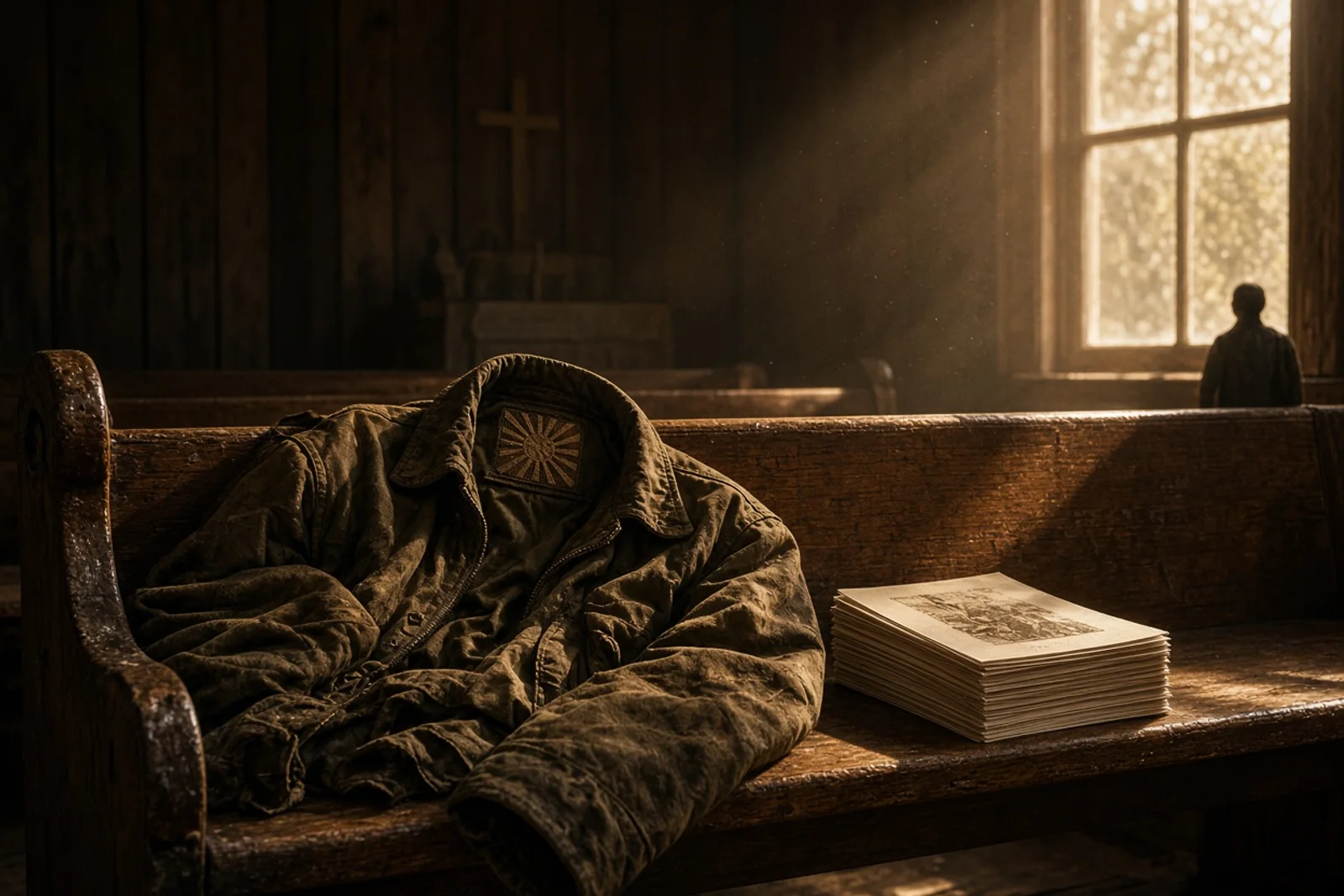
The ships came in low and gray against the Uraga breakwater that spring, engines groaning, decks crowded with men who had been gone so long that their own families barely knew their faces. I worked the landing that season with a relief team, handing out rice balls and blankets, writing down names for the lists that would go to families waiting in Tokyo and Osaka and villages nobody in the government had visited in years. The wind off the harbor still carried a chill in April. I remember thinking that these men did not look like the fierce sailors of the newsreels. They looked like men who had simply been waiting a very long time to be forgiven for surviving.
It was into this crowd that Mitsuo Fuchida came, not as a returning prisoner but as a visitor, moving among the repatriated men with a hard, searching look on his face. I knew who he was before anyone told me. Everyone in Japan by then knew the name, even those of us who had spent the war years far from any cockpit. He had been the one who gave the order over Oahu six years before, the one whose coded signal — tora, tora, tora — had gone out to the fleet to say the surprise had worked. He had circled above the burning harbor long after the rest of his squadron turned home, sketching what he saw, refusing to leave until he had it right. Some said he had personally put a bomb into the battleship Maryland. Afterward he had lived through Midway with his legs broken by a blast that threw him into the sea, through six separate crashes into open water, through an appendectomy performed on a heaving deck days before the greatest defeat of his life. Men who flew beside him did not survive the war. He did, again and again, in ways that even hardened sailors called uncanny.
By 1947 he was retired from the Navy and angry. The occupation authorities had called him to testify at the war crimes tribunals, and it had left him bitter, convinced the trials were nothing but the victors writing history to suit themselves. He had come to Uraga that day looking for proof of the opposite story — proof that American captors had treated Japanese prisoners with the same cruelty Japan stood accused of. He moved along the lines of returning men with a notebook, asking questions, waiting for someone to tell him what he wanted to hear.
I watched him stop dead in front of one man. The man's name was Kazuo Kanegasaki, and he had flown as Fuchida's own engineer years before. Everyone, Fuchida included, had believed Kanegasaki dead since Midway. For a moment neither of them spoke. Then Fuchida gripped him by the shoulders the way you grip something to be sure it is real.
He asked Kanegasaki what the Americans had done to him. Whether they had beaten him. Starved him. Whether they had treated their prisoners the way the tribunals said Japan had treated its own. I stood close enough to hear the answer, and I watched Fuchida's face change as he heard it. Kanegasaki told him no. He told him of decent treatment, of camp life that, while hard, held none of the horror Fuchida had come to document. And then, almost as an aside, he told him about a young woman who had served the prisoners' meals with a gentleness none of them had expected — a woman whose own parents, Christian missionaries, had been killed by Japanese soldiers on the island of Panay in the Philippines.
Fuchida did not write that down. He simply stood there. In the code he had been raised on, a man whose parents were murdered owed those murderers a debt of vengeance that could never lawfully be set aside. That a daughter of the dead could pour rice for the countrymen of her parents' killers, and do it with what Kanegasaki called love, was not a detail Fuchida could file away as helpful or unhelpful to his case. It sat wrong in him, like a bone that would not set.
I did not see him again for the better part of two years. Tokyo in those years was a city stitching itself back together block by block, the great avenues still scarred, the crowds around Shibuya Station thick with men selling whatever they had left to sell. It was there, near the little bronze statue of the dog Hachiko, that I next caught sight of him, in the fall of 1948, a folded pamphlet in his hand that someone had pressed on him in the crowd. He read it standing still while the trains came and went behind him.
The pamphlet told the story of an American named Jacob DeShazer, a bombardier who had flown with the Doolittle raiders, whose plane had run out of fuel over occupied China and who had been taken prisoner by the very army Fuchida had served. DeShazer wrote of torture in that captivity, of despair, and then of a change that came over him reading a borrowed Bible in his cell — a change he called being born again. Fuchida read of an American who had suffered at Japanese hands and had answered it not with hatred but with faith, and it must have struck him with the same unwelcome familiarity as Kanegasaki's story. Two testimonies now, from opposite sides of the same war, describing forgiveness he did not have a word for.
He wanted a Bible after that, and in the Japan of 1948 that was no small thing to find. Paper was scarce, presses were slow, and whatever stock of Scripture had existed before the war had mostly burned with everything else. Months passed. I heard, secondhand, that he had asked at bookstalls and been turned away. It was the following spring, in 1949, back at that same statue of Hachiko where he had first taken the pamphlet, that he finally found a man selling Bibles from a stack at his feet, and bought one.