




How to change a flat tire
For any driver facing a flat who needs a calm ground-up sequence that leaves the car stable and you rolling on the spare.
IJR · Sep 26, 2026 · 3 min read
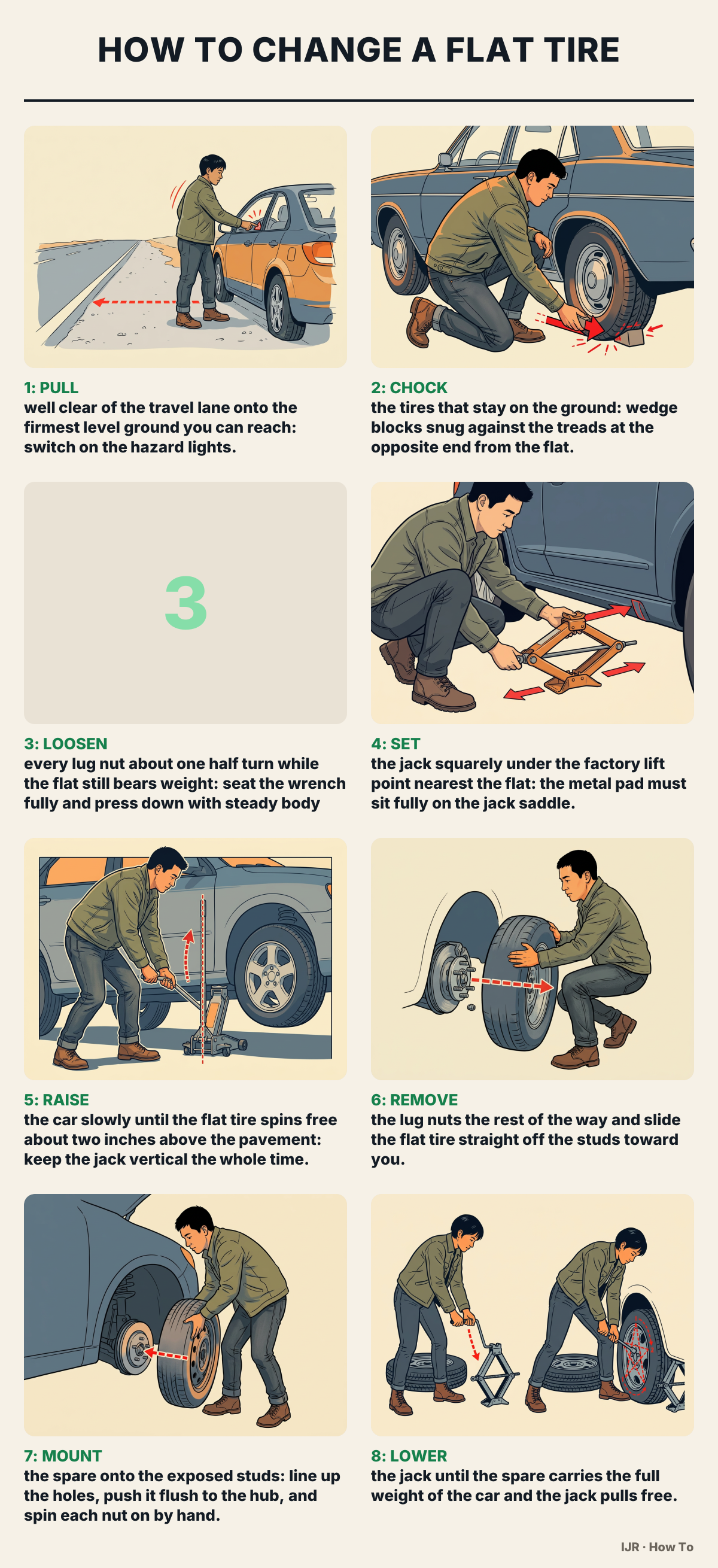
Every step keeps the car from rolling or dropping while a wheel is off. That locked-in stability is what lets you finish without injury or damage.
Have ready a usable spare, the car jack, a lug wrench that fits, and wheel chocks or sturdy blocks. Check your owner's manual for the exact lift points—they vary by vehicle. Say the cue as you go: chock, crack, lift, swap, lower, snug.
Shift into park or first gear and set the parking brake fully. Leave several car-lengths of buffer from traffic when the shoulder allows it. You are set when the car sits still with lights flashing and the brake holding.
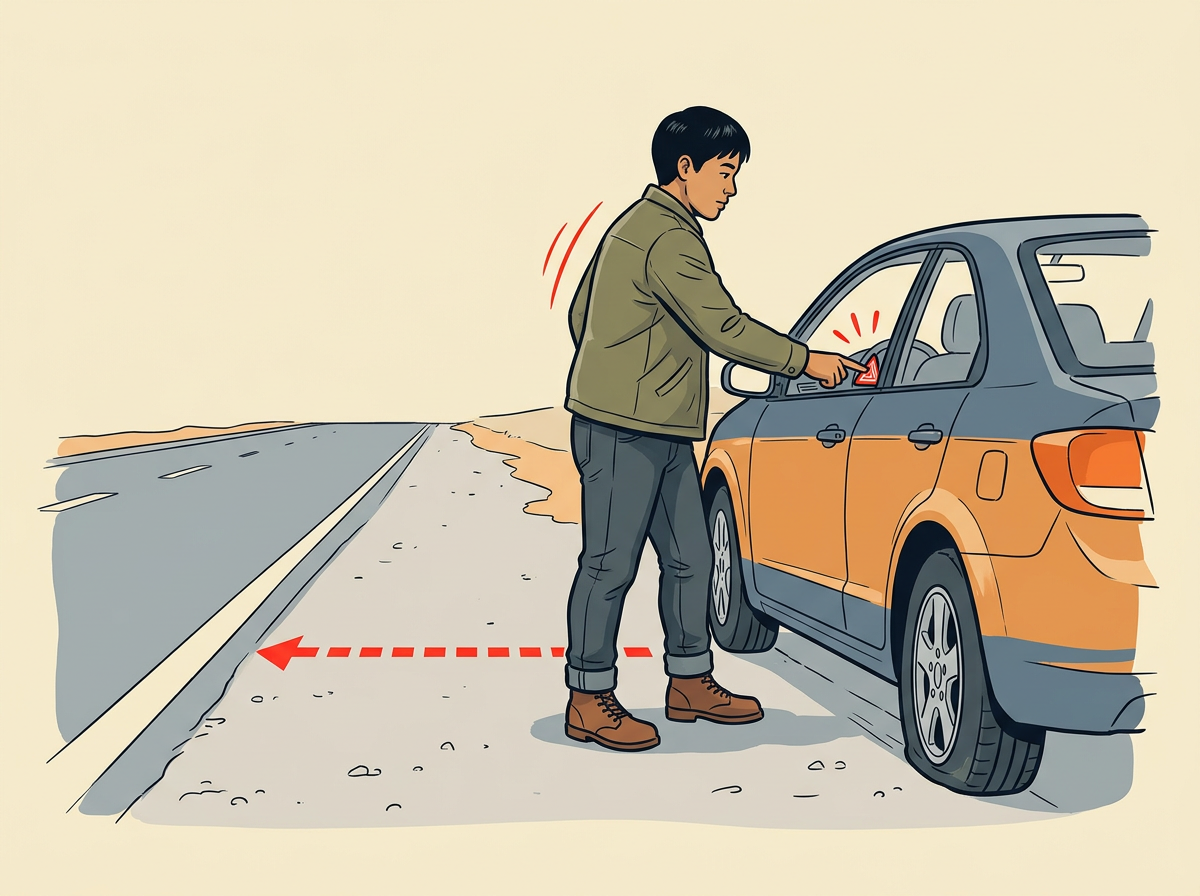
A front flat gets rear chocks; a rear flat gets front chocks. Shove each block until it will not slide under a firm push. The car should not rock when you lean on a fender.
Work in a star pattern—always the nut opposite the one you just moved, never consecutive nuts around the rim. Leave the nuts on the studs. A stuck nut often yields to a longer bar or firm foot pressure on the handle while both feet stay planted.
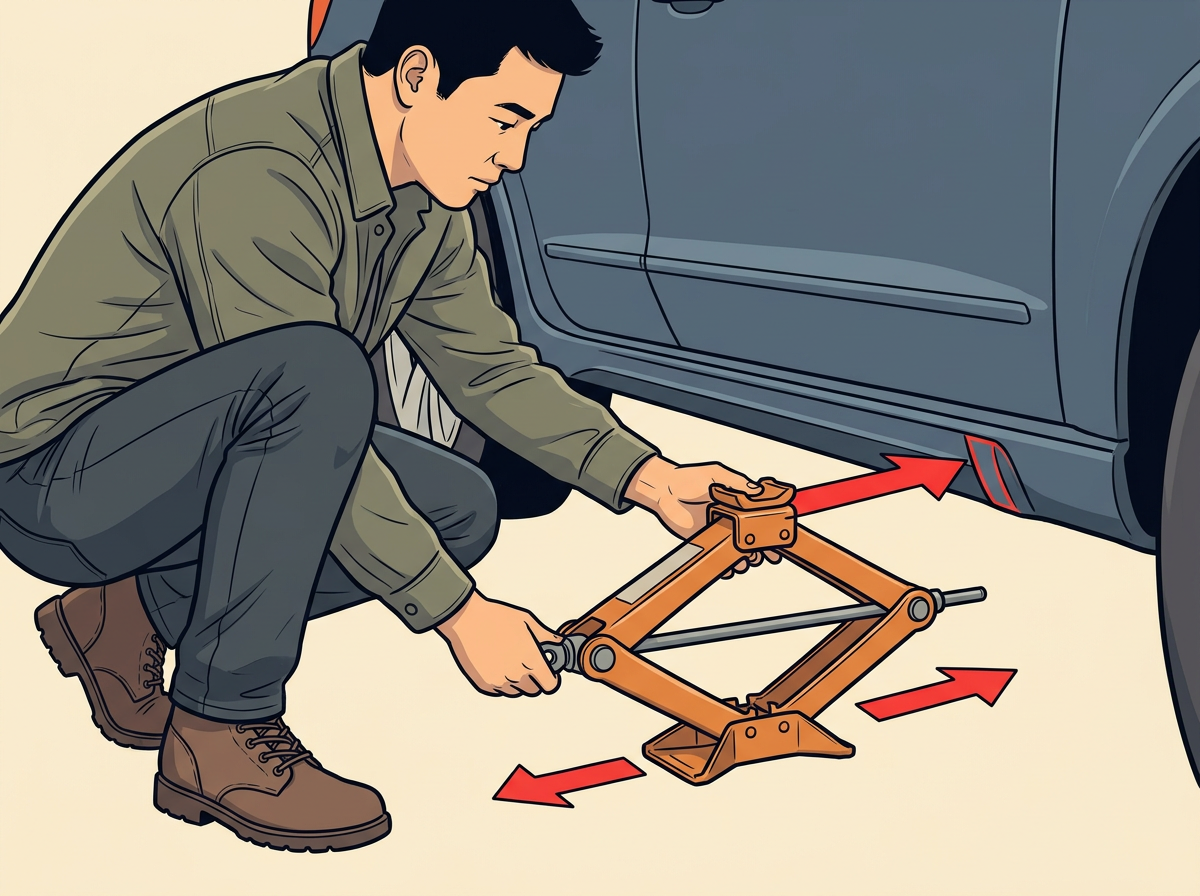
Lift points are the reinforced spots shown in your manual—locations vary. Raise the jack by hand until it just kisses the metal and stands straight. Wrong placement can bend sheet metal or let the car slip later.
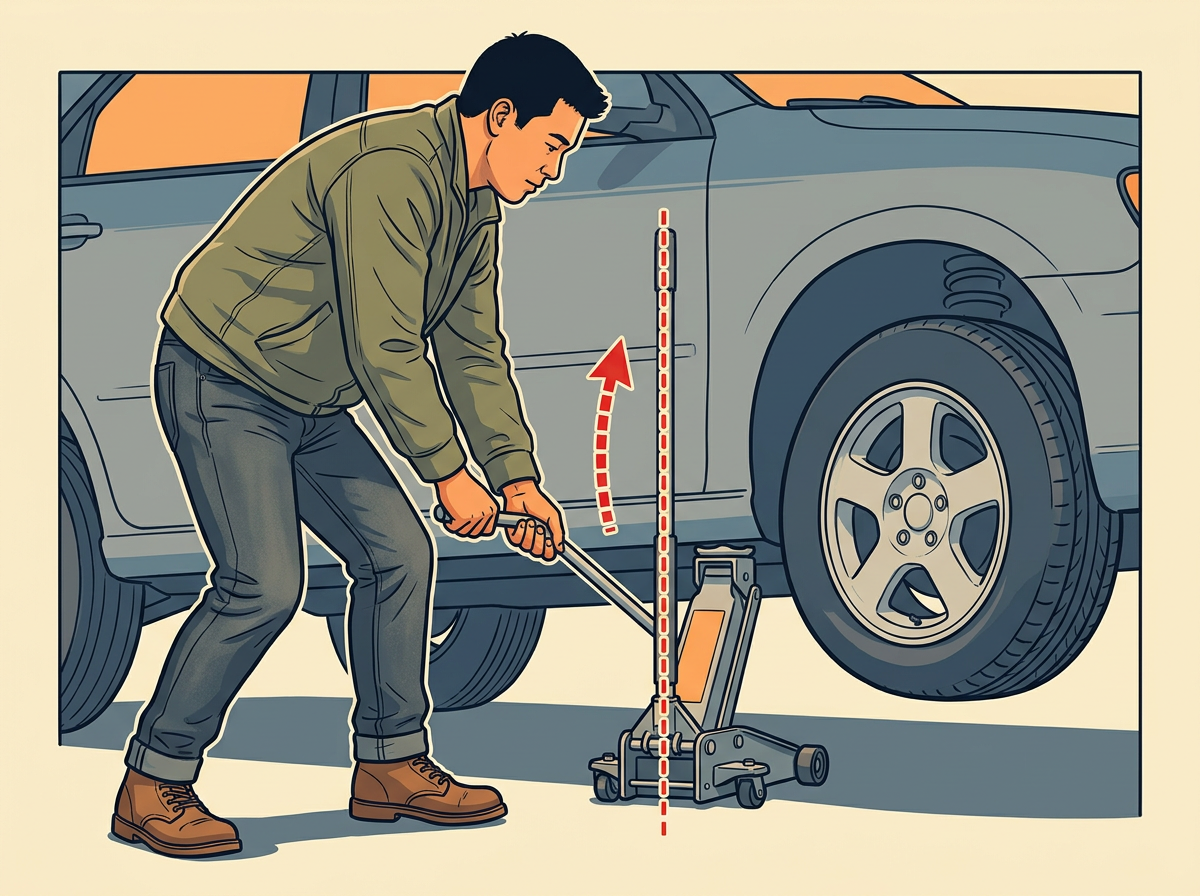
Keep head and hands out from under the vehicle. Stop the moment the tire turns freely. If the jack tilts or the car shifts, lower fully and reposition before raising again.
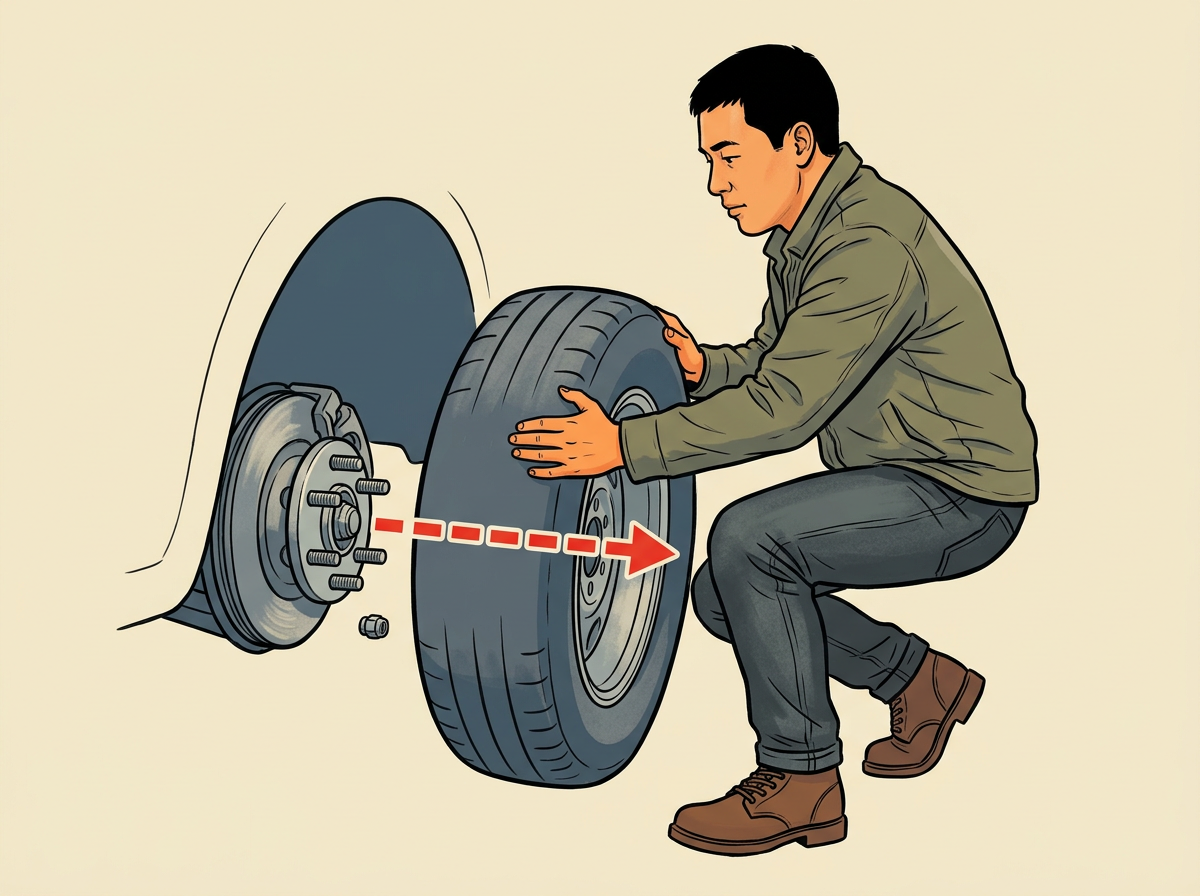
Keep the nuts together in a pocket or lid so none roll away. A stuck wheel usually frees with a gentle side-to-side wiggle. Set the flat on its face so it cannot roll.
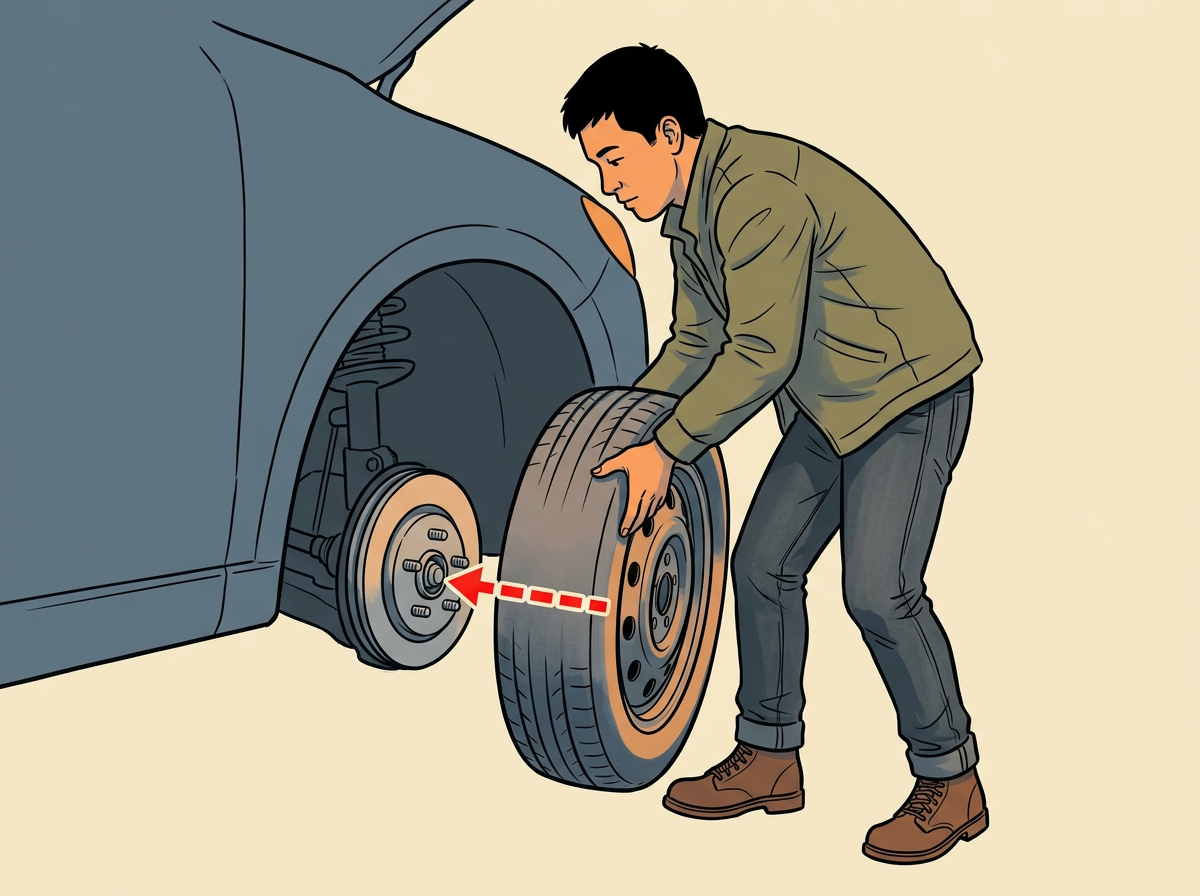
Valve stem faces outward. Hand-tight means every nut turns until the wheel cannot rattle. The seat is right when the rim lies flat against the hub with no visible gap.
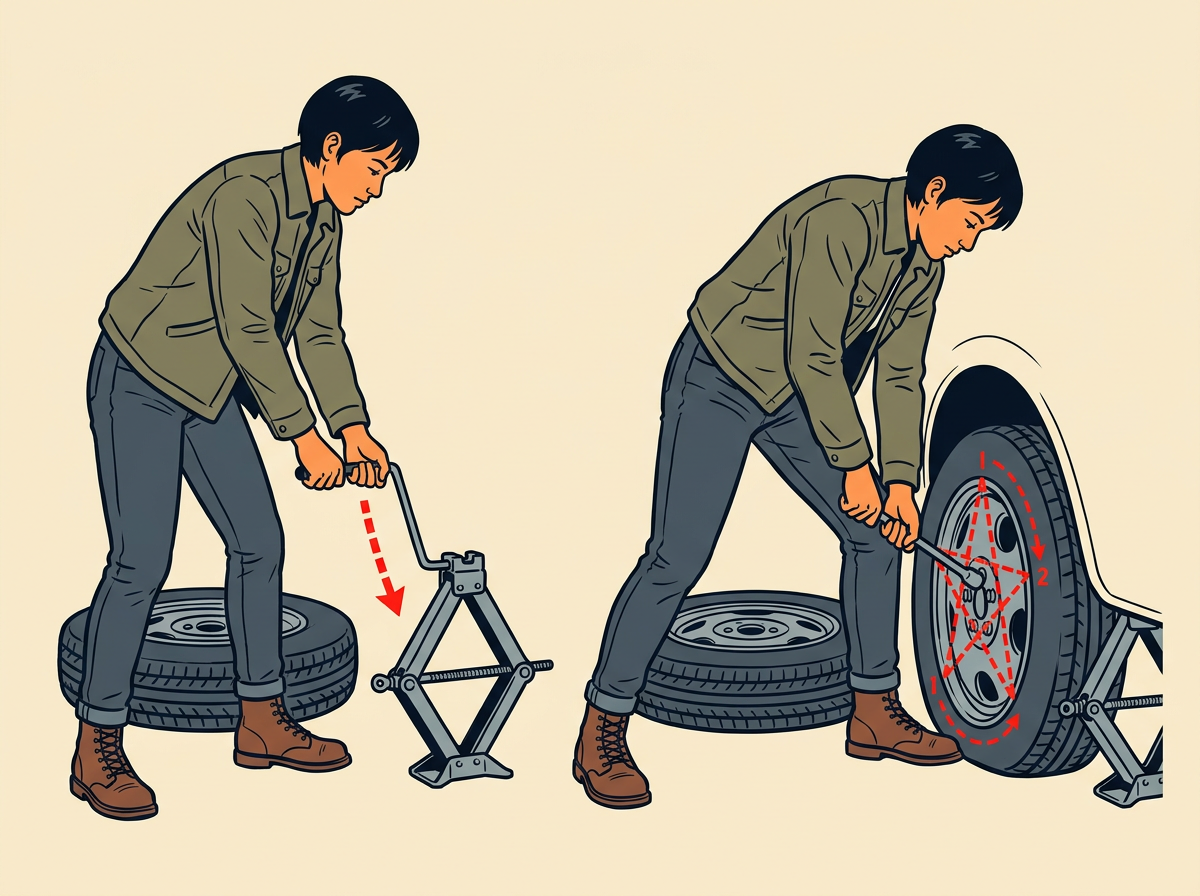
Tighten the nuts hard in the same star pattern—full body weight on the wrench until each stops turning. You're done when the spare sits centered and load-bearing, all nuts feel equally solid, tools and flat are stowed, and nothing rattles when you shake the wheel.
The most common mistake
Most people spin the lug nuts all the way off before the car is jacked, so the wheel can drop or the car can shift. Crack each nut only a half turn on the ground; finish removal only after the tire is clear of the pavement.