




How to paint a room
For first-time painters who want even walls without drips, bare patches, or peeling later.
IJR · Sep 26, 2026 · 2 min read
Thin, even coats beat one thick coat every time. That keeps the finish smooth and stops sagging or roller marks.
Have ready interior wall paint, a roller with cover, an angled sash brush, painter's tape, a drop cloth, a paint tray, and a stepladder.
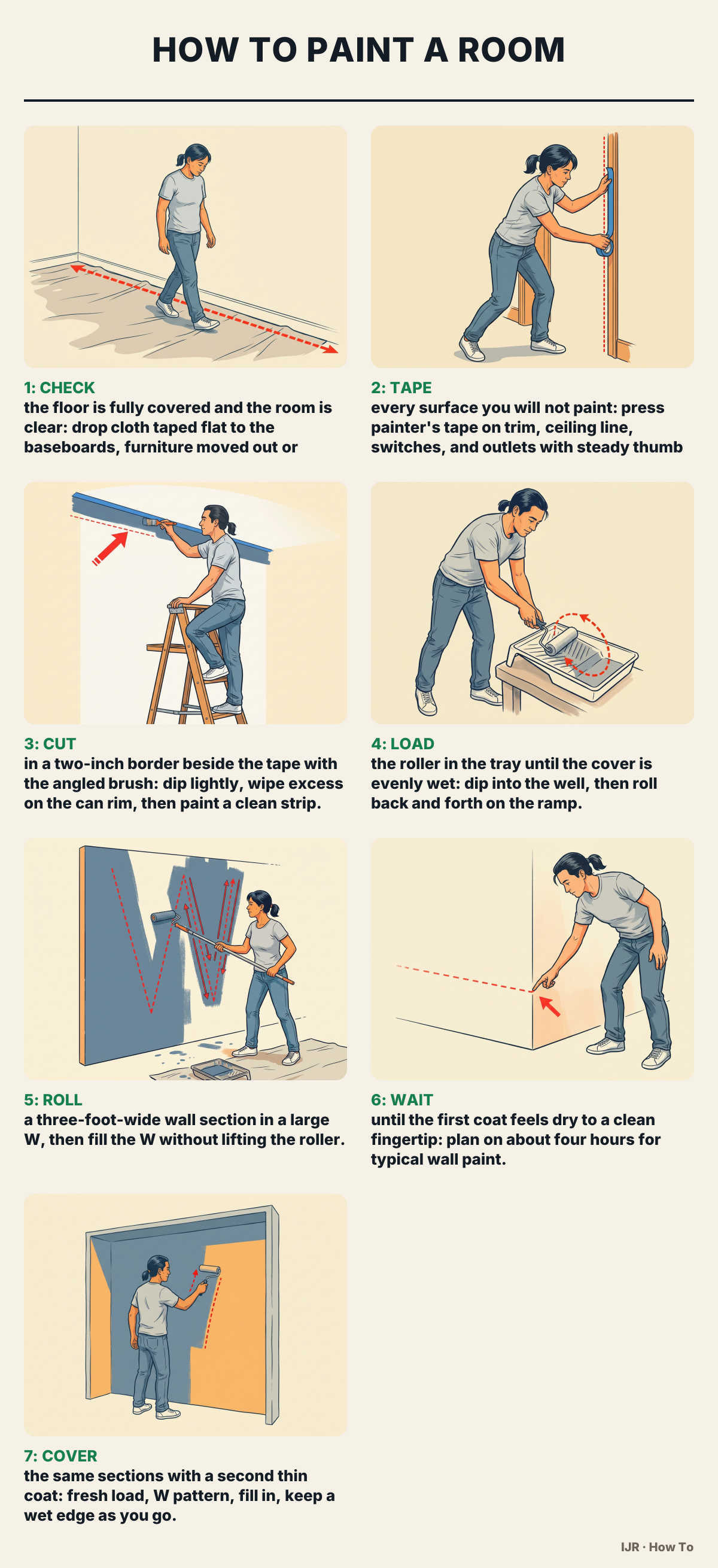
Walk the full perimeter once before you open any paint. A bare floor strip or loose cloth edge means fix that spot first.
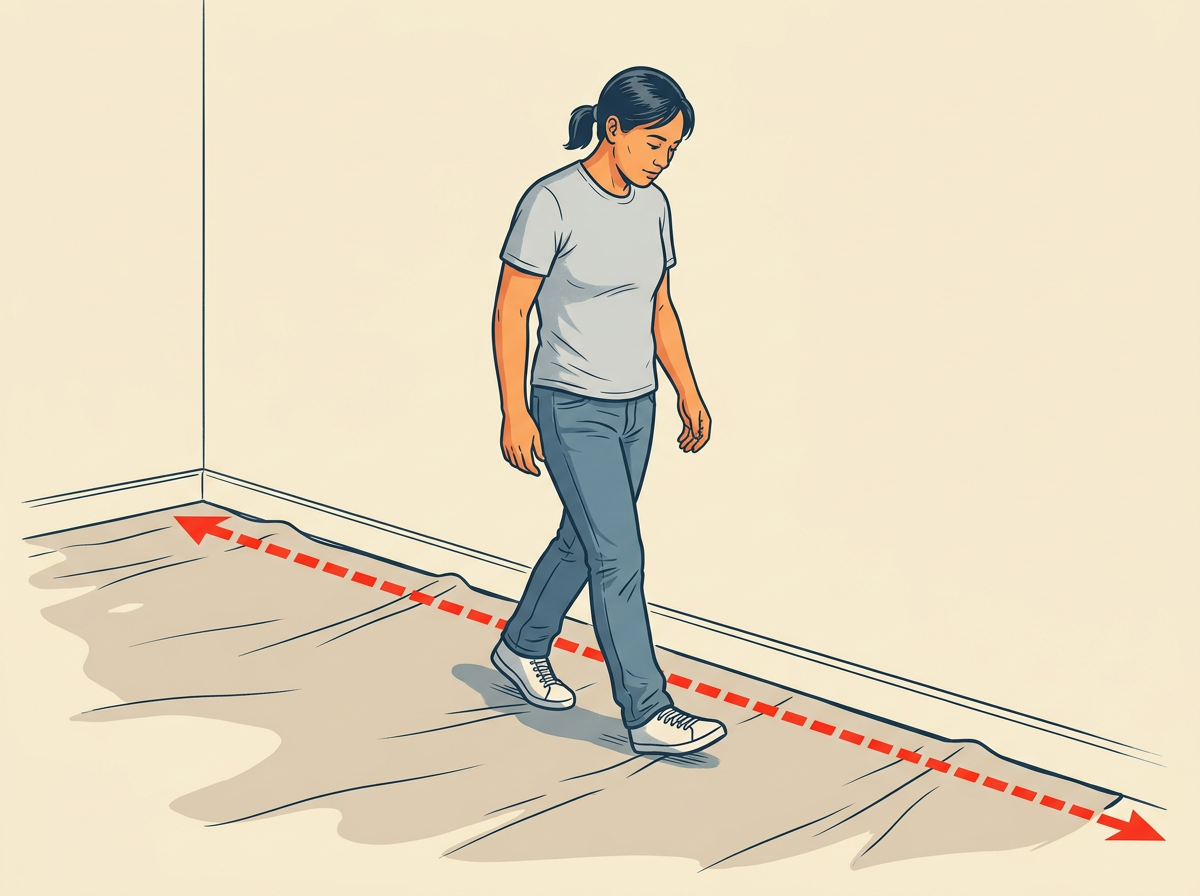
Seal the outer tape edge with a fingernail so paint cannot creep under. Lifted corners get pressed flat again before any brushwork.
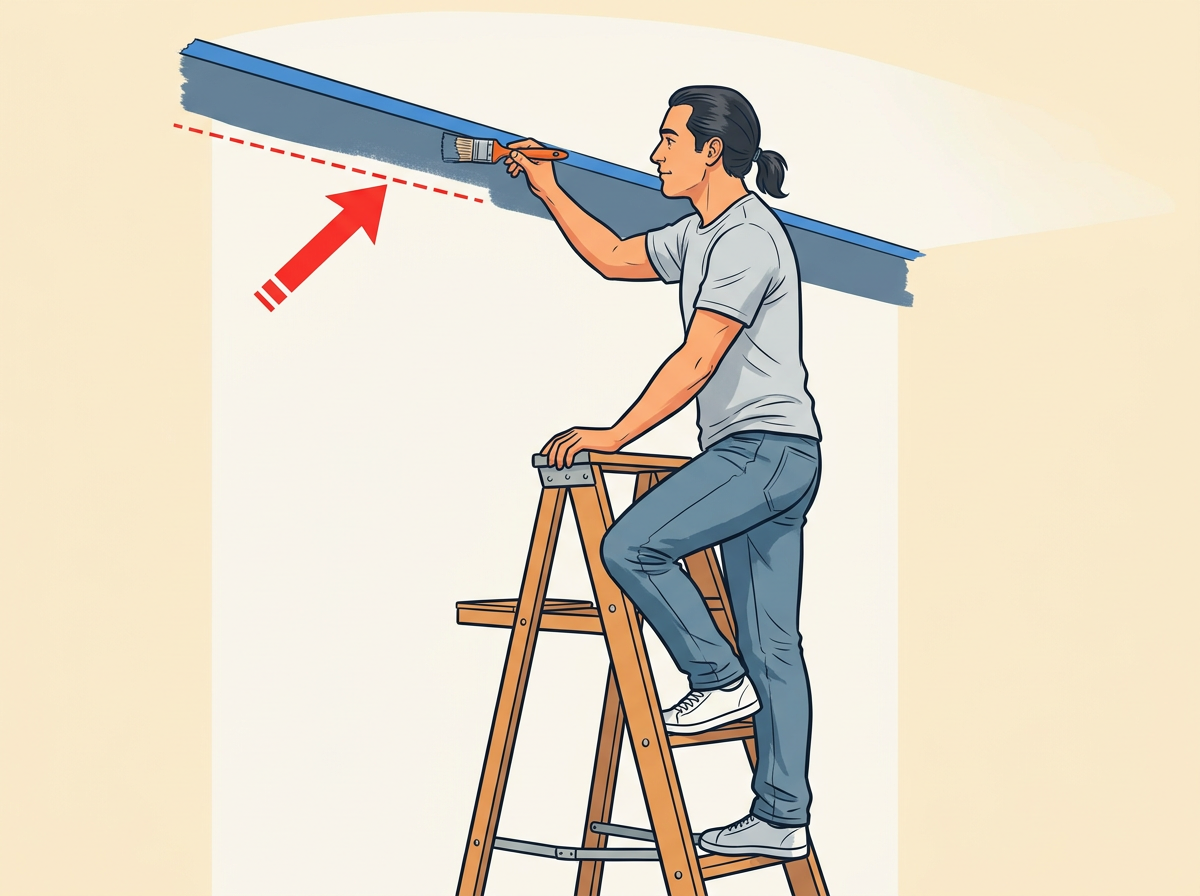
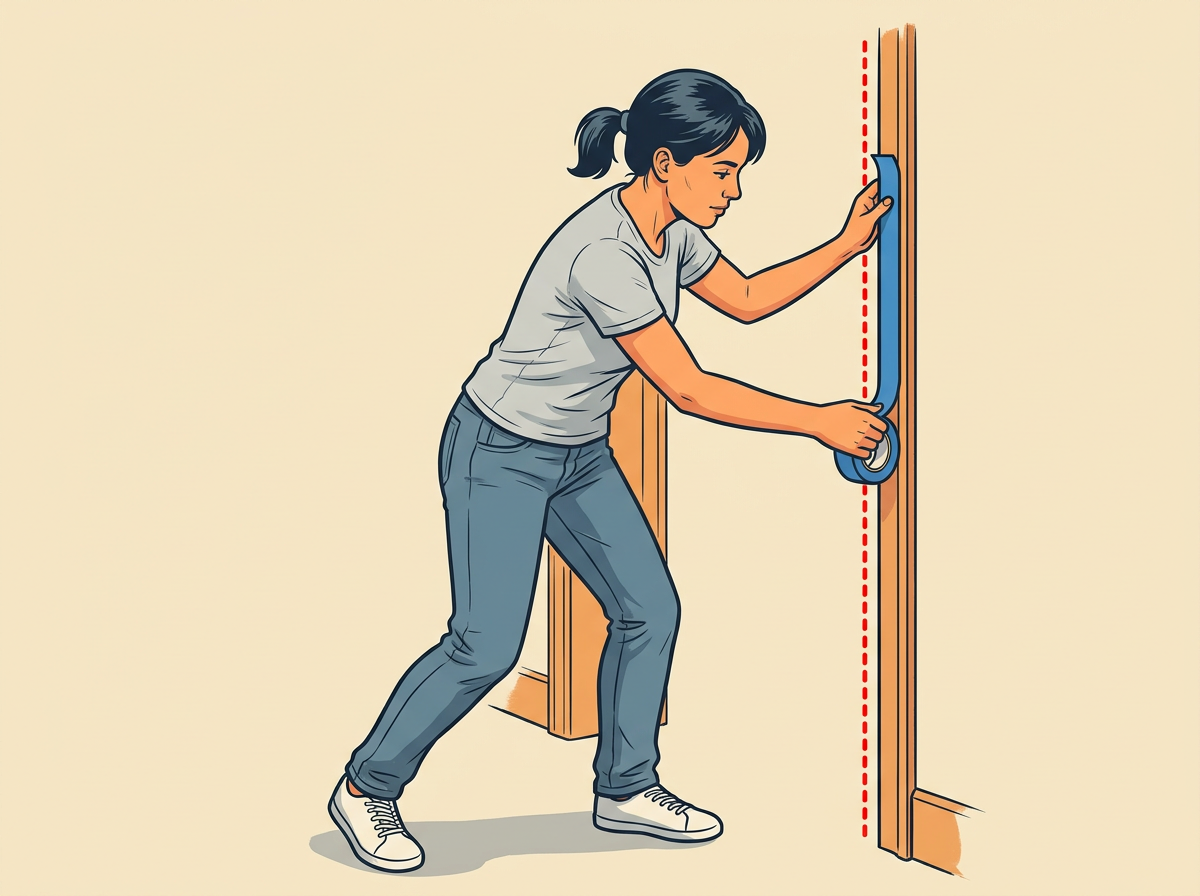
Set the stepladder on level floor and keep three points of contact when you reach high edges. A wet even band with no blobs means the load was right.
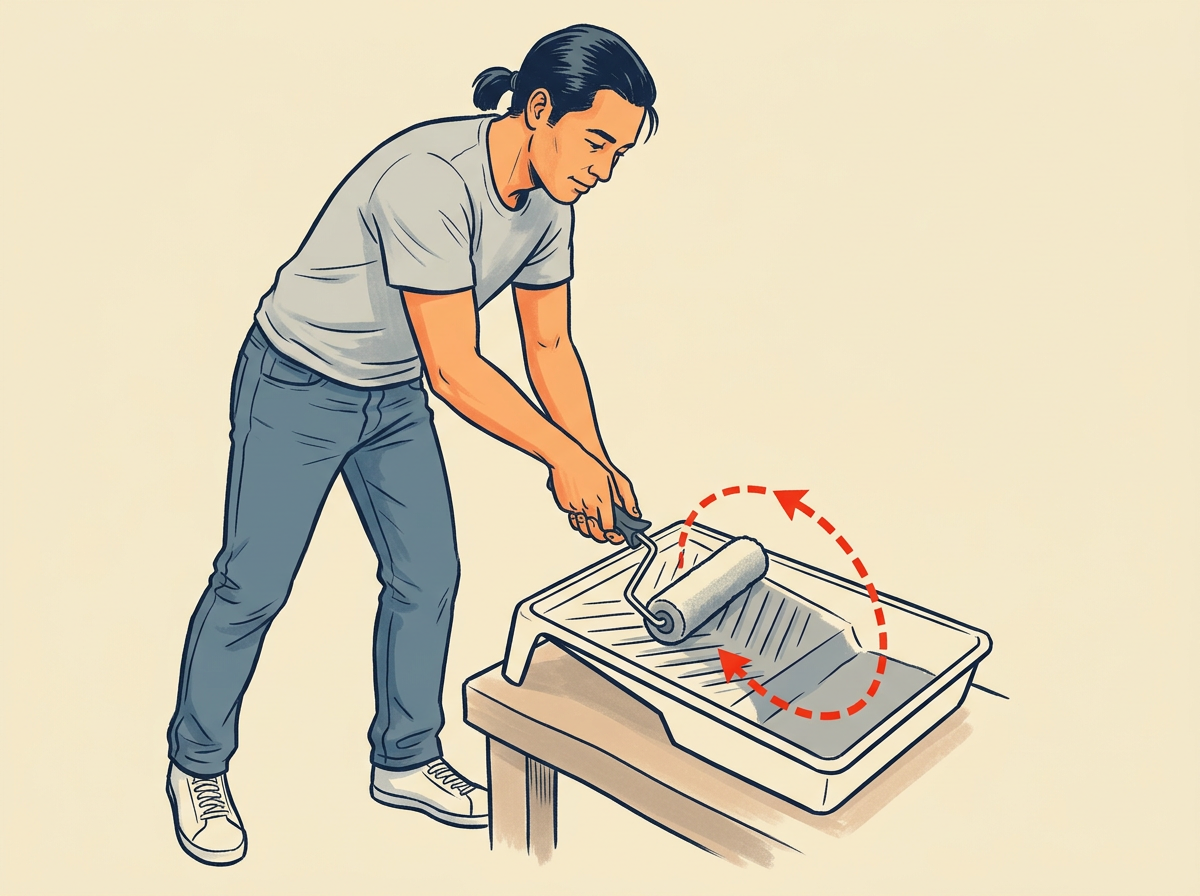
Do three full passes on the ramp. Paint dripping off the ends means too much—keep rolling until the drips stop.
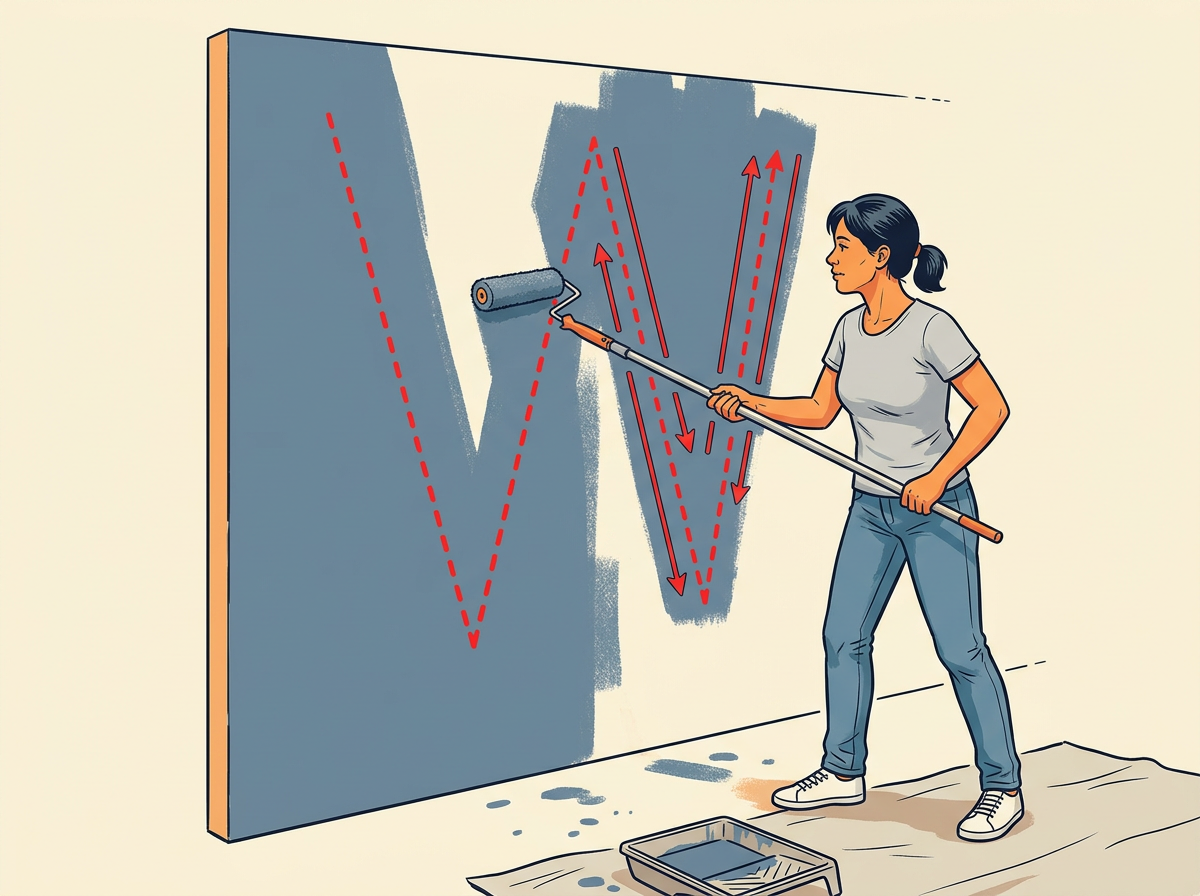
Start about three feet from a corner and work low to high. Overlap each pass a few inches while the paint stays wet so side light shows no bare stripes.
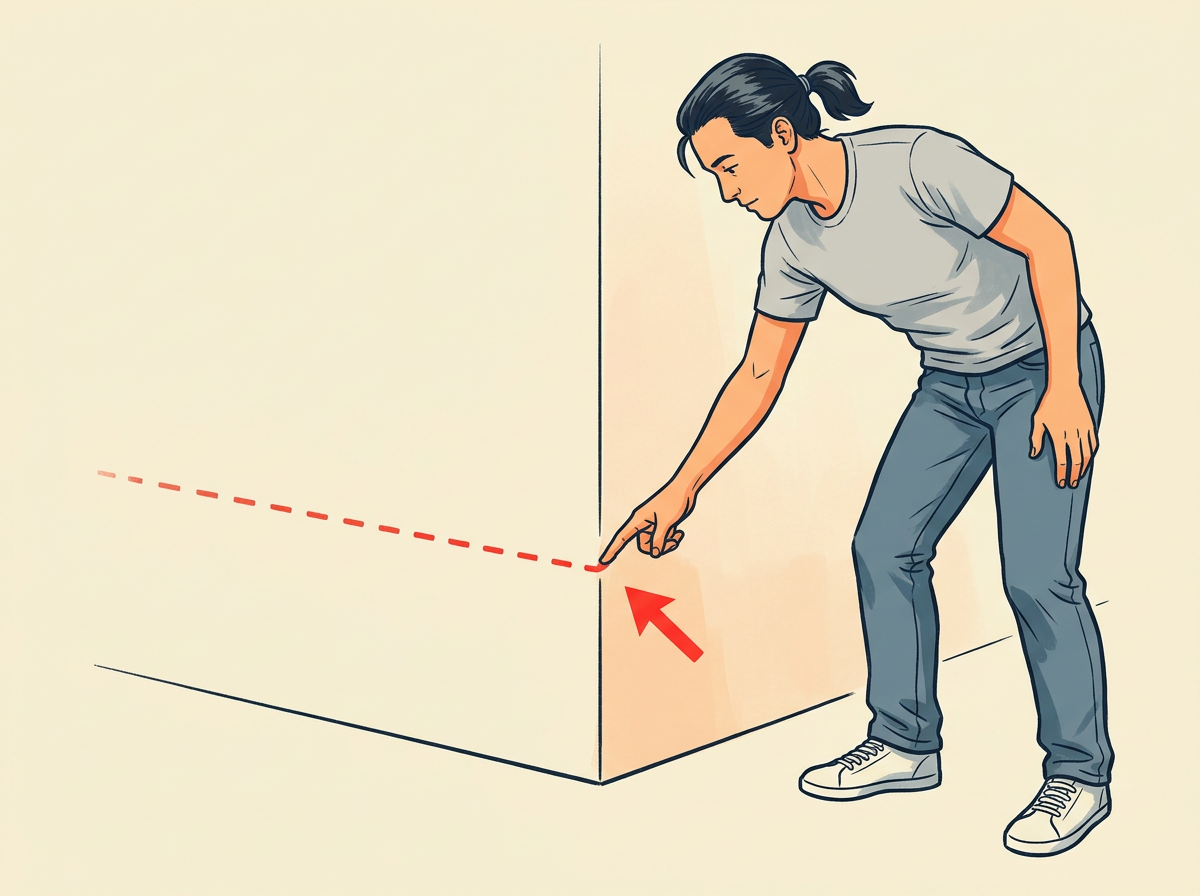
Test a low corner away from traffic. A smudge means give it more time; a clean fingertip means you can start the next coat.
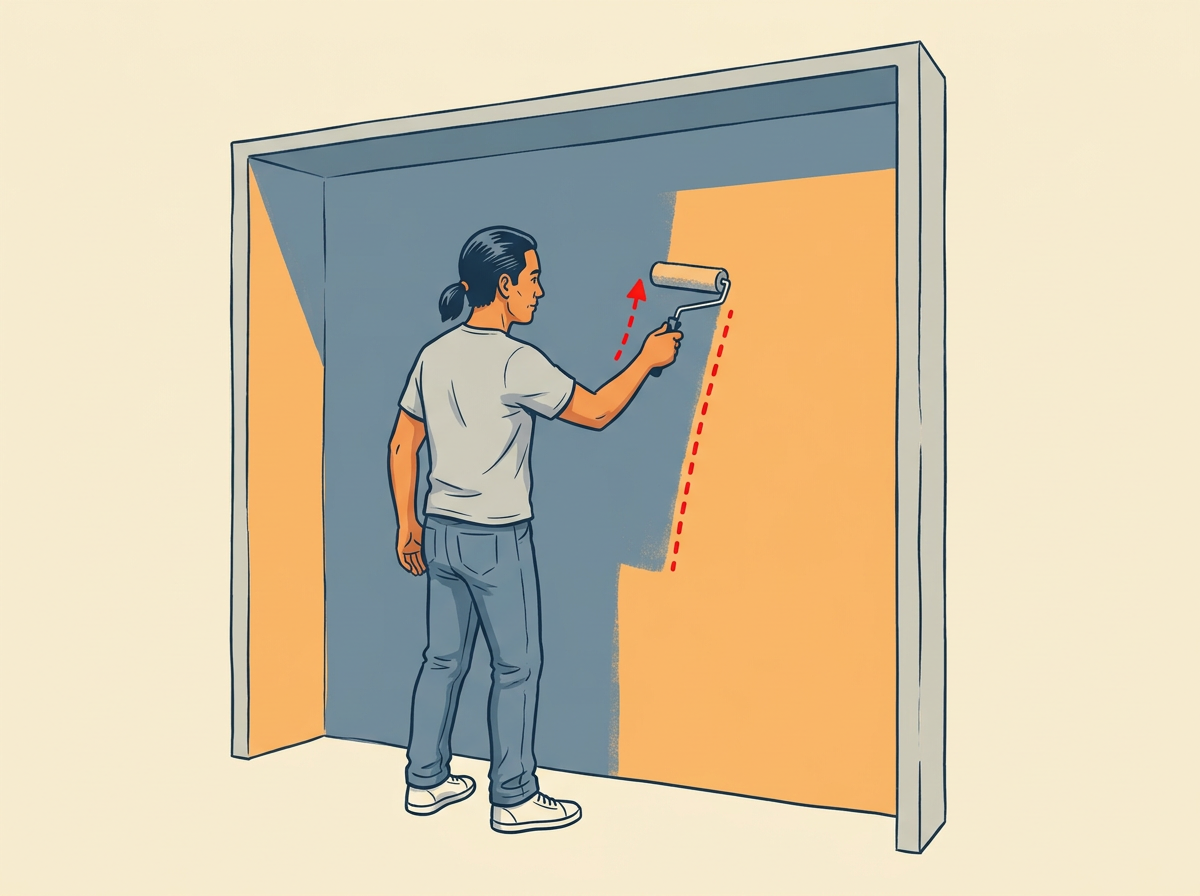
Two thin coats hide old color better than one heavy coat. Scan corners and taped edges once more before you wash the tools.
The most common mistake
A roller loaded until it drips leaves runs and thick ridges. Roll it on the tray ramp until the cover is wet but not dripping.