




How to dice an onion
For home cooks who want even pieces that cook at the same pace, using a root-last sequence you can say out loud.
IJR · Sep 26, 2026 · 2 min read
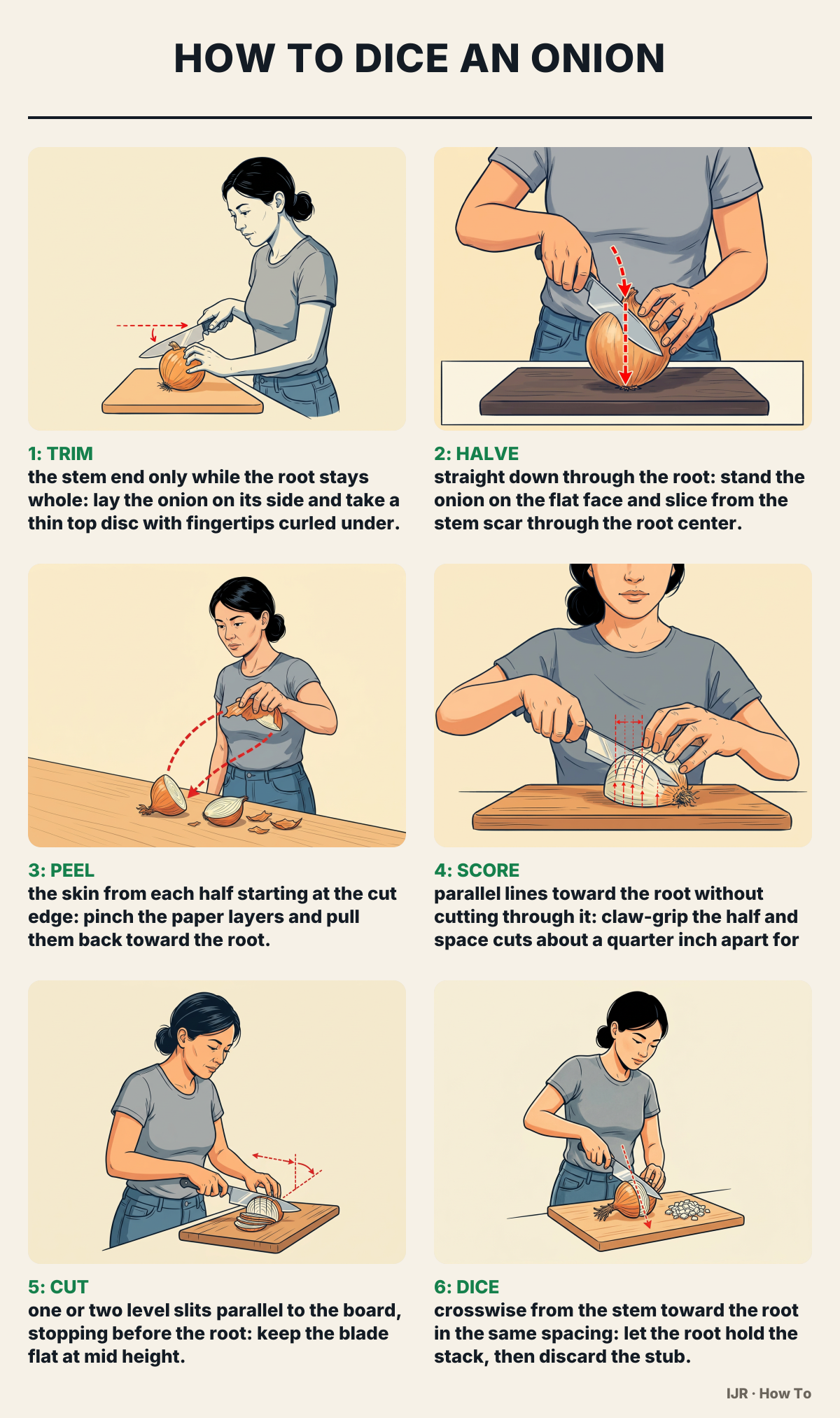
Keep the root end intact until the final cuts. That hinge holds every layer so the pieces stay uniform.
Before you start: a sharp chef's knife, a cutting board set on a damp cloth so it cannot slip, and one firm onion.
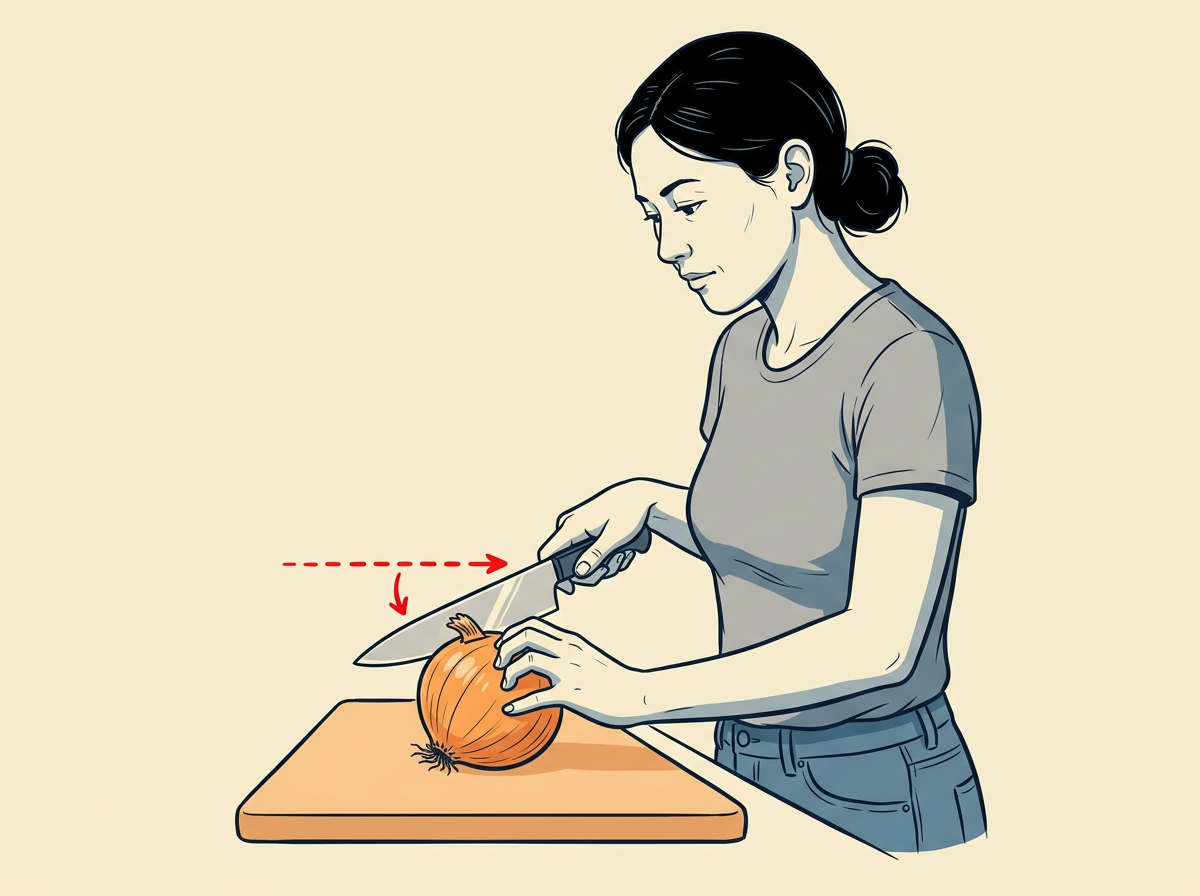
The new face should sit flat with no rock. If it tips, shave one more thin slice until the board contact is steady.
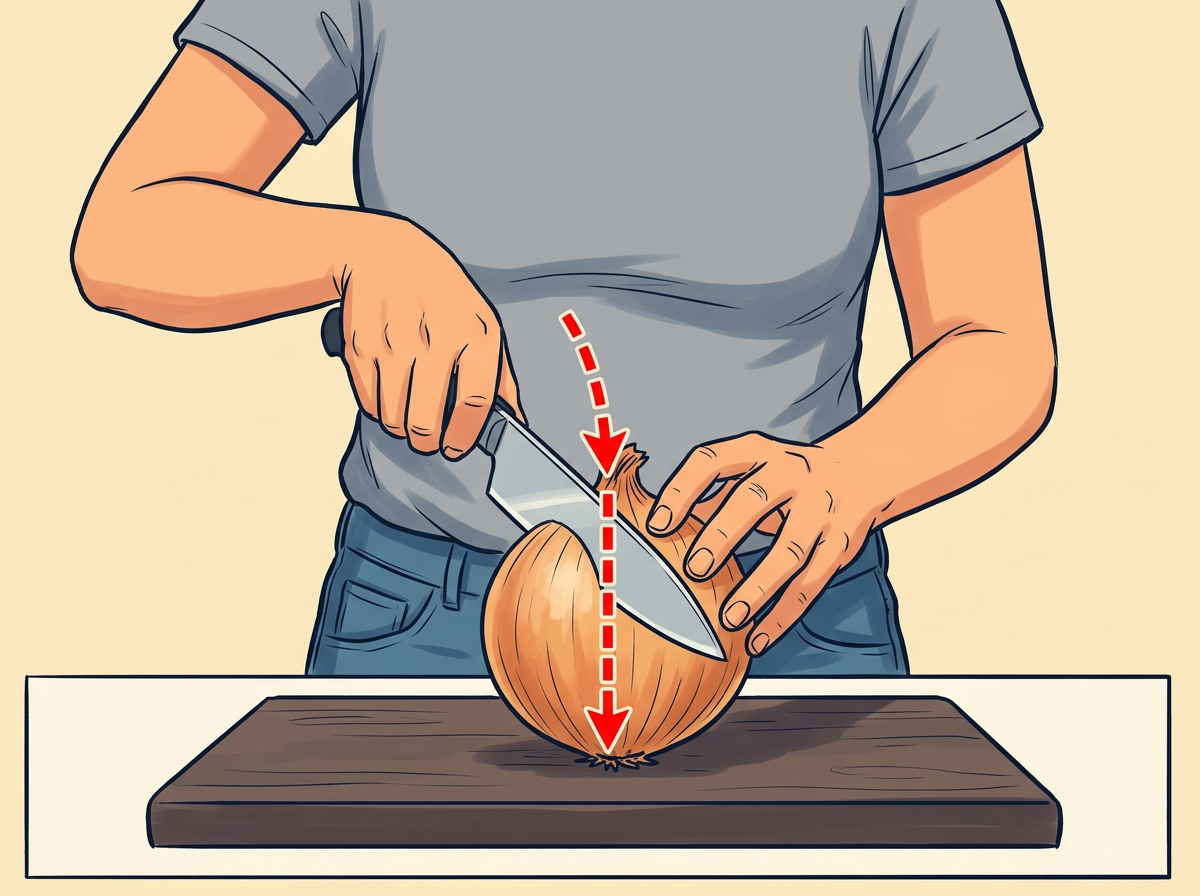
Both halves should show matching layer depth. A thick side means the blade drifted—recenter and finish the line.
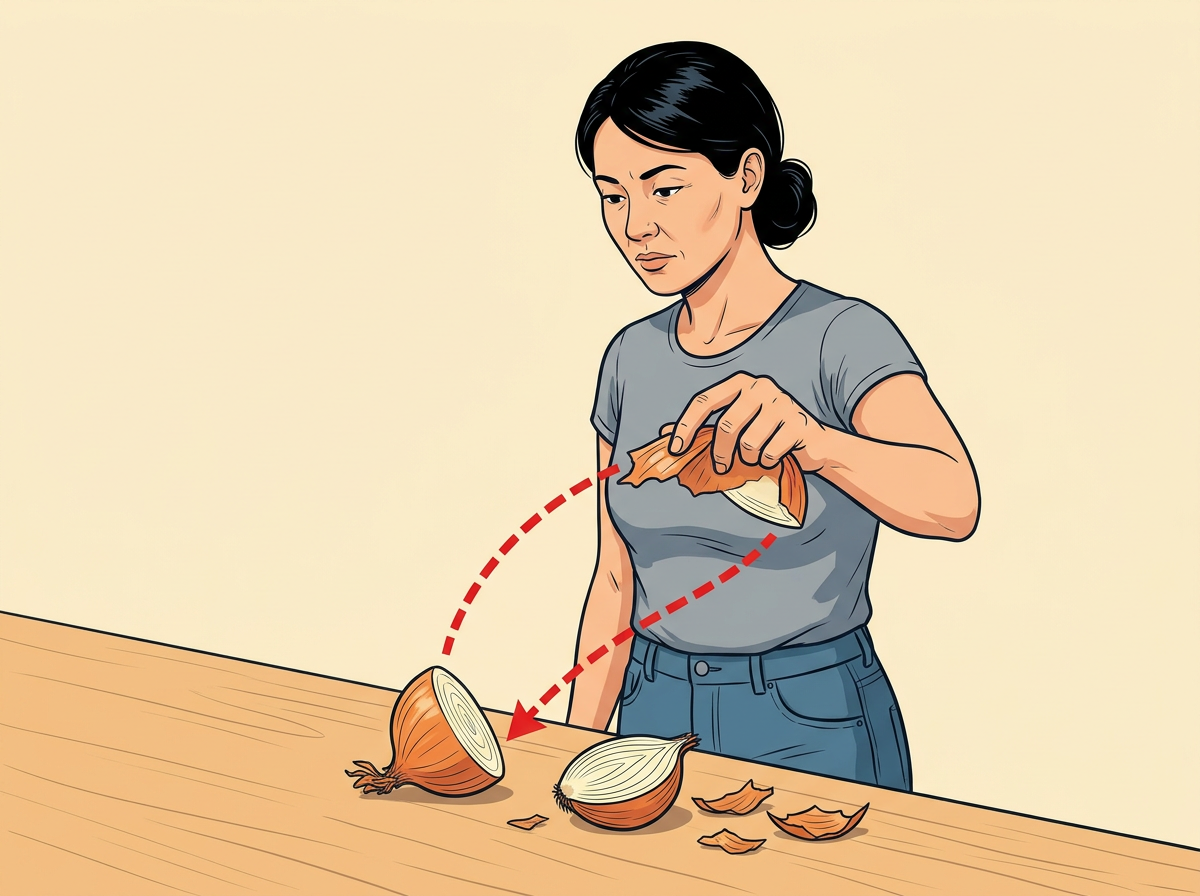
The flesh should look clean with no dry film left. Skin that clings needs a deeper lift from the stem edge.
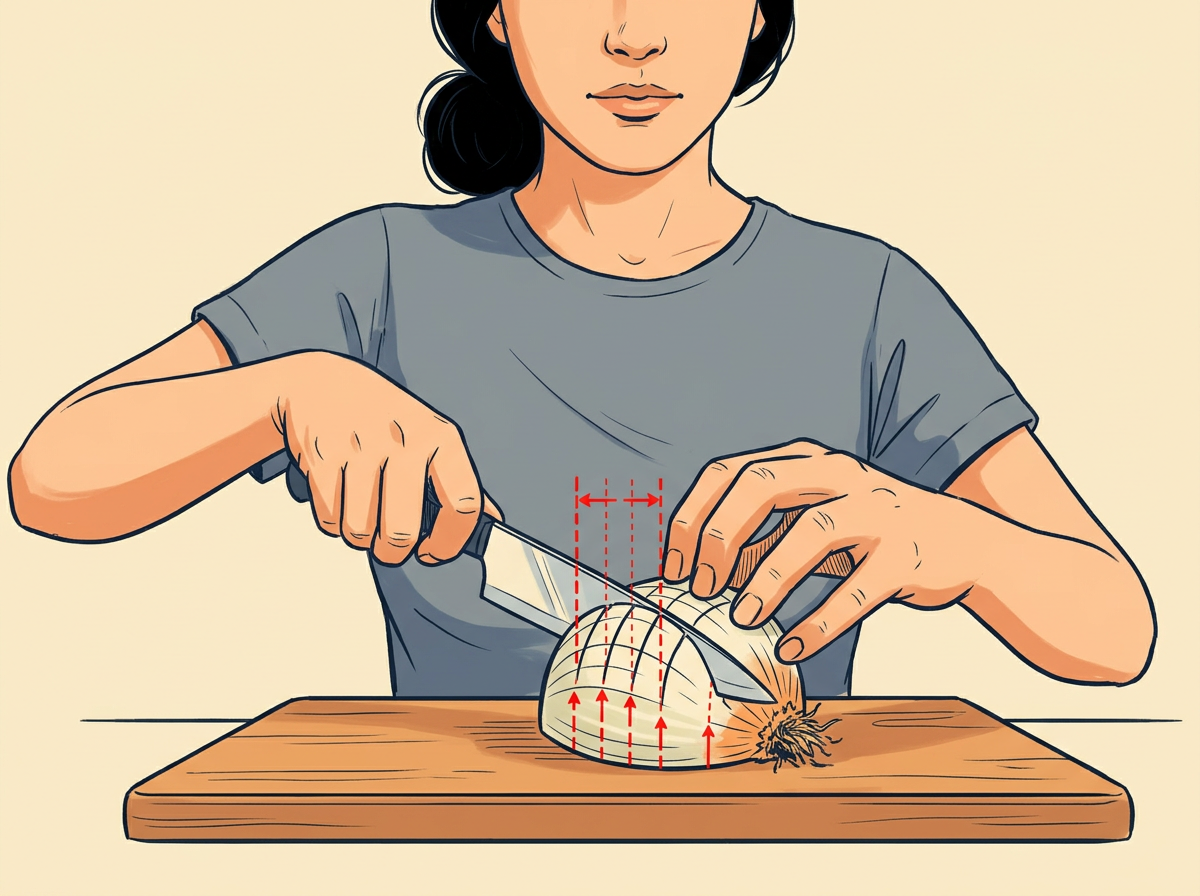
Grooves should stop short and leave the root band solid. Layers that flop free mean the blade went too far—leave a thicker uncut heel.
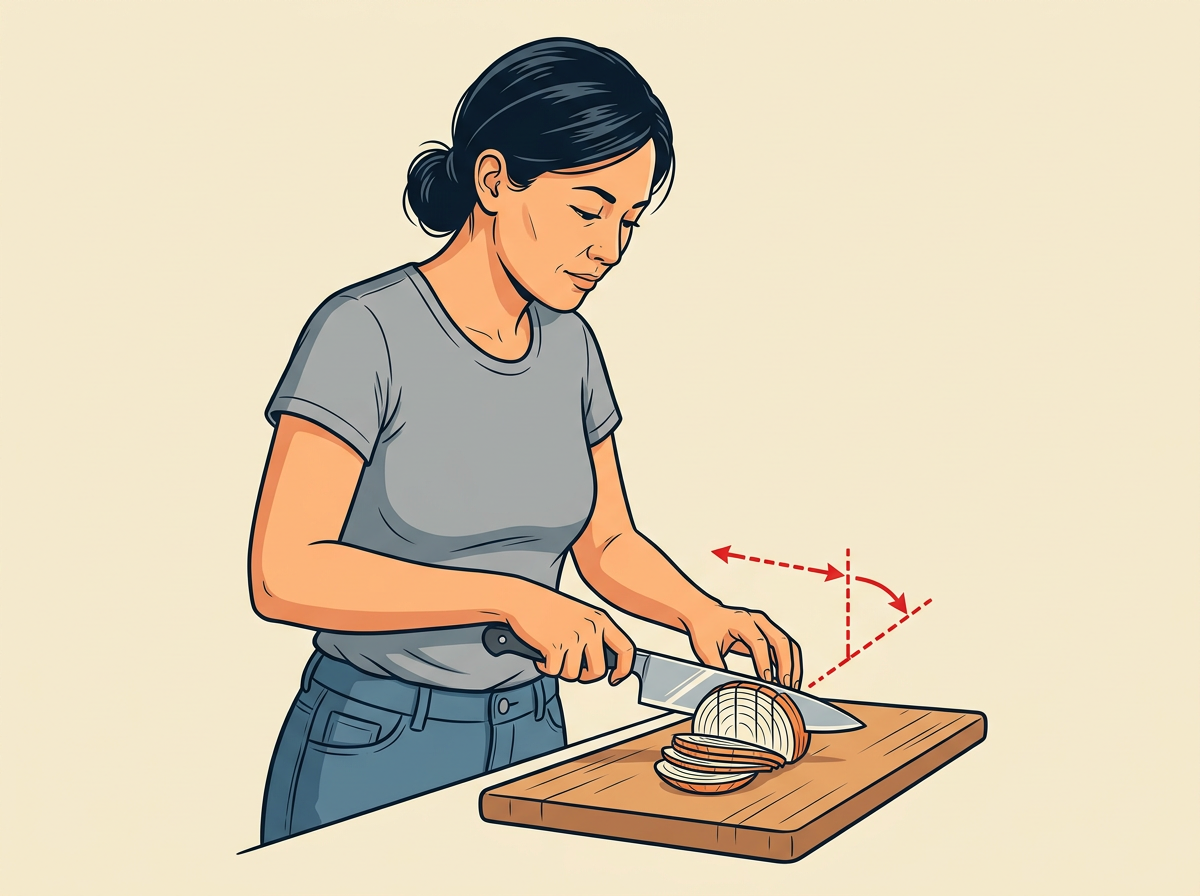
The upper section should shift yet stay hinged at the root. If it drops free, ease off depth on the next pass.
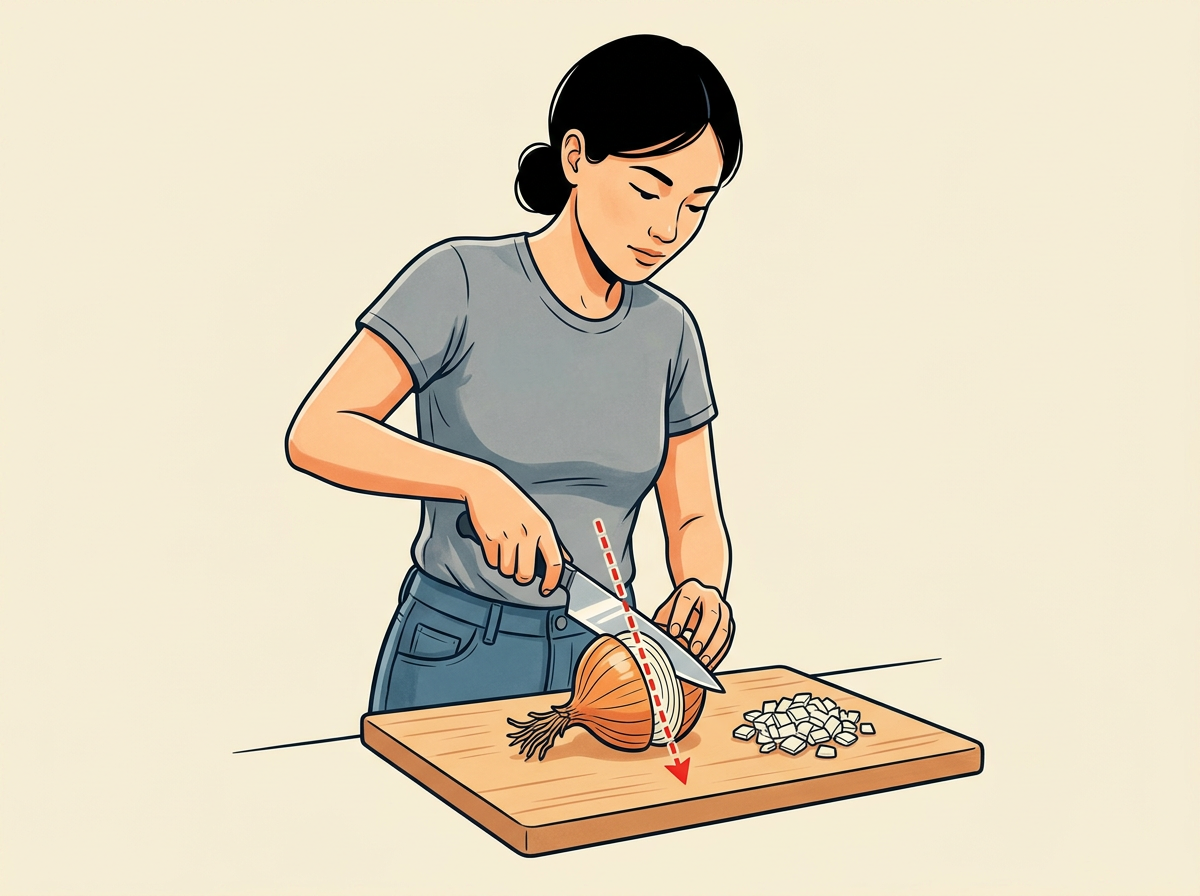
Pieces should read as even cubes on all sides. Long shards mean earlier gaps were uneven—match the quarter-inch rhythm next time.
The most common mistake
Slicing the root off first lets the layers collapse into uneven slabs. Leave the root whole until the last crosscuts so the stack stays put.