




How to unclog a kitchen sink
For anyone with a backed-up kitchen sink, so you can restore flow using tools already in the house.
IJR · Sep 26, 2026 · 2 min read
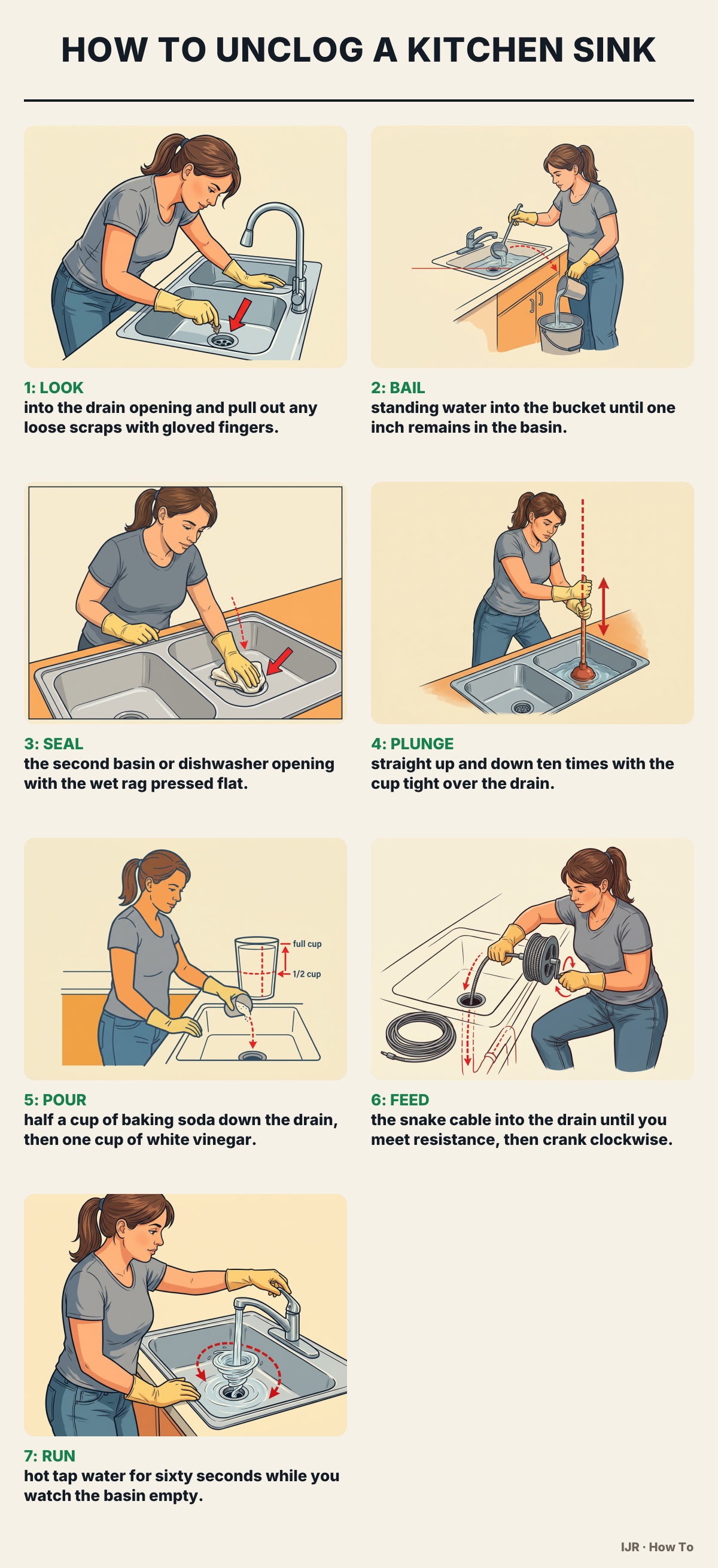
Most kitchen clogs sit in the curved P-trap under the sink where grease and scraps collect. Working that spot free restores the drain without extra cost.
Have ready rubber gloves, a cup, a bucket, a sink plunger, a wet rag, half a cup of baking soda, one cup of white vinegar, and a hand-crank drain snake.
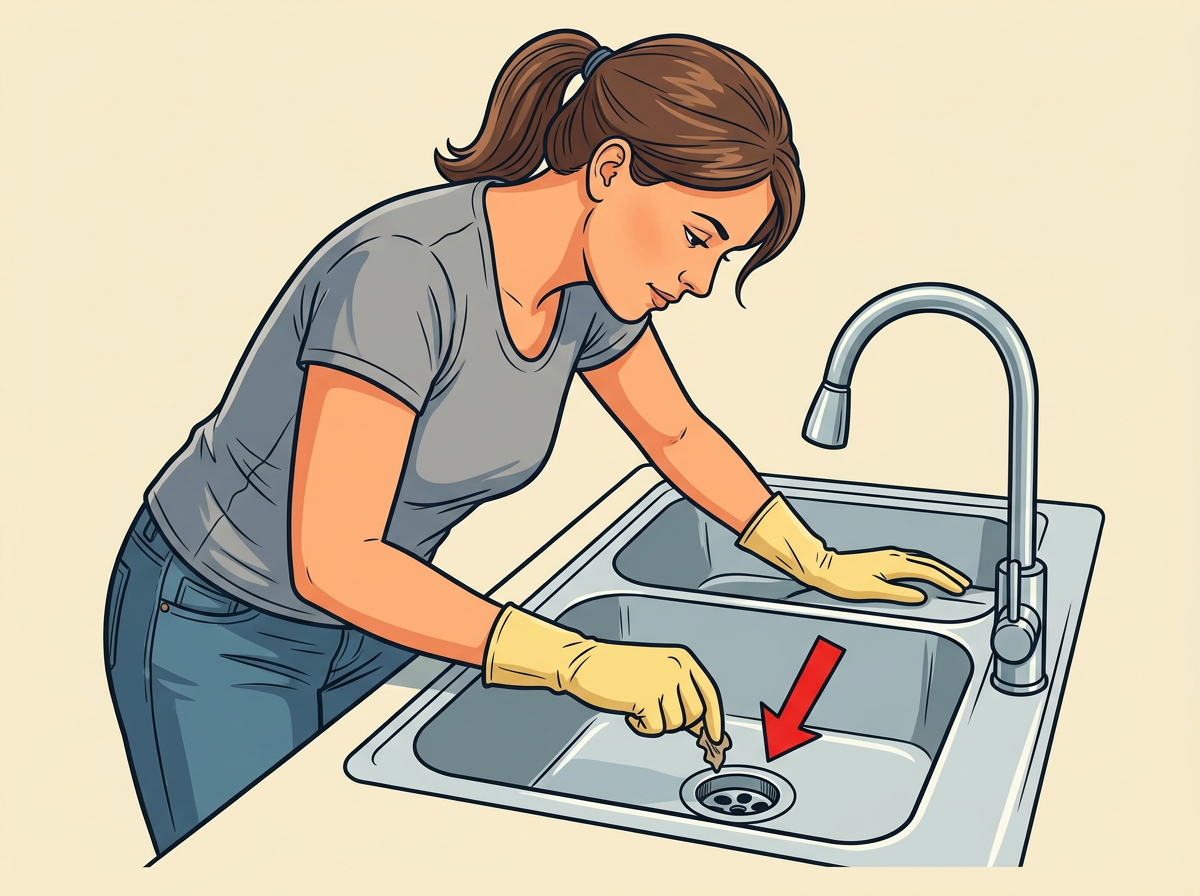
Drop the scraps straight in the trash. A clear opening lets the plunger and snake reach the real clog. If the pipe wall feels smooth and empty, move on.
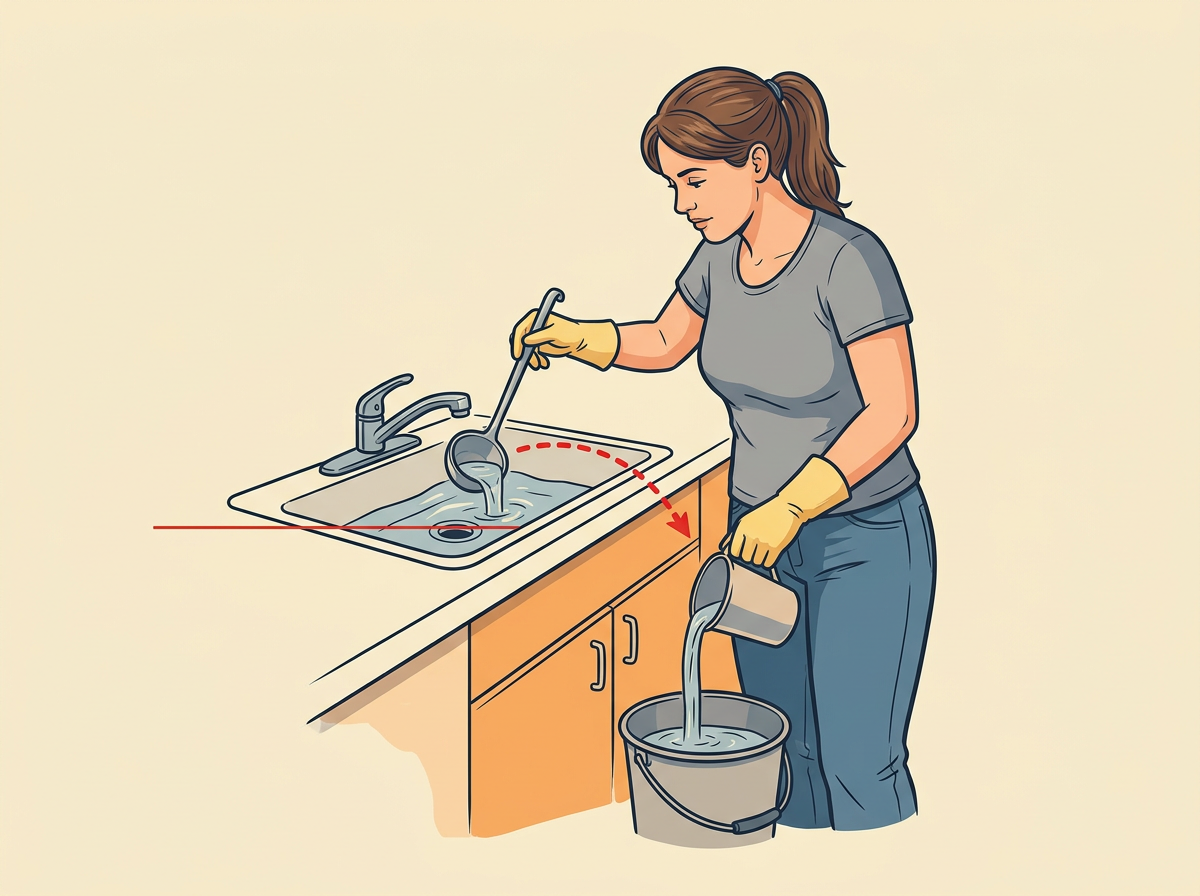
Scoop with the cup in steady lifts. The thin layer left gives the plunger a wet seal. Glance at the bucket so it does not spill on the floor.
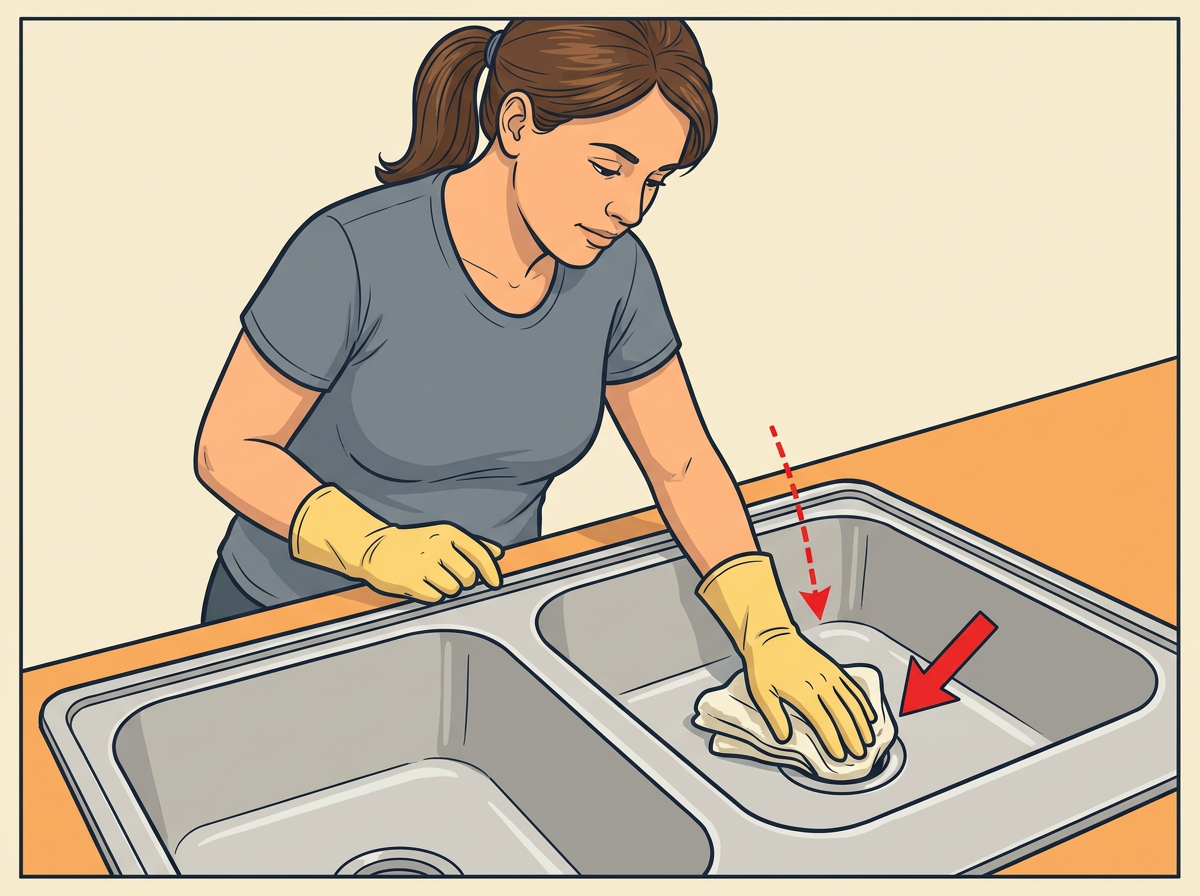
Air leaking sideways kills plunge pressure. Hold the rag with a mug if you need both hands free. A light test push should feel firm, not spongy.
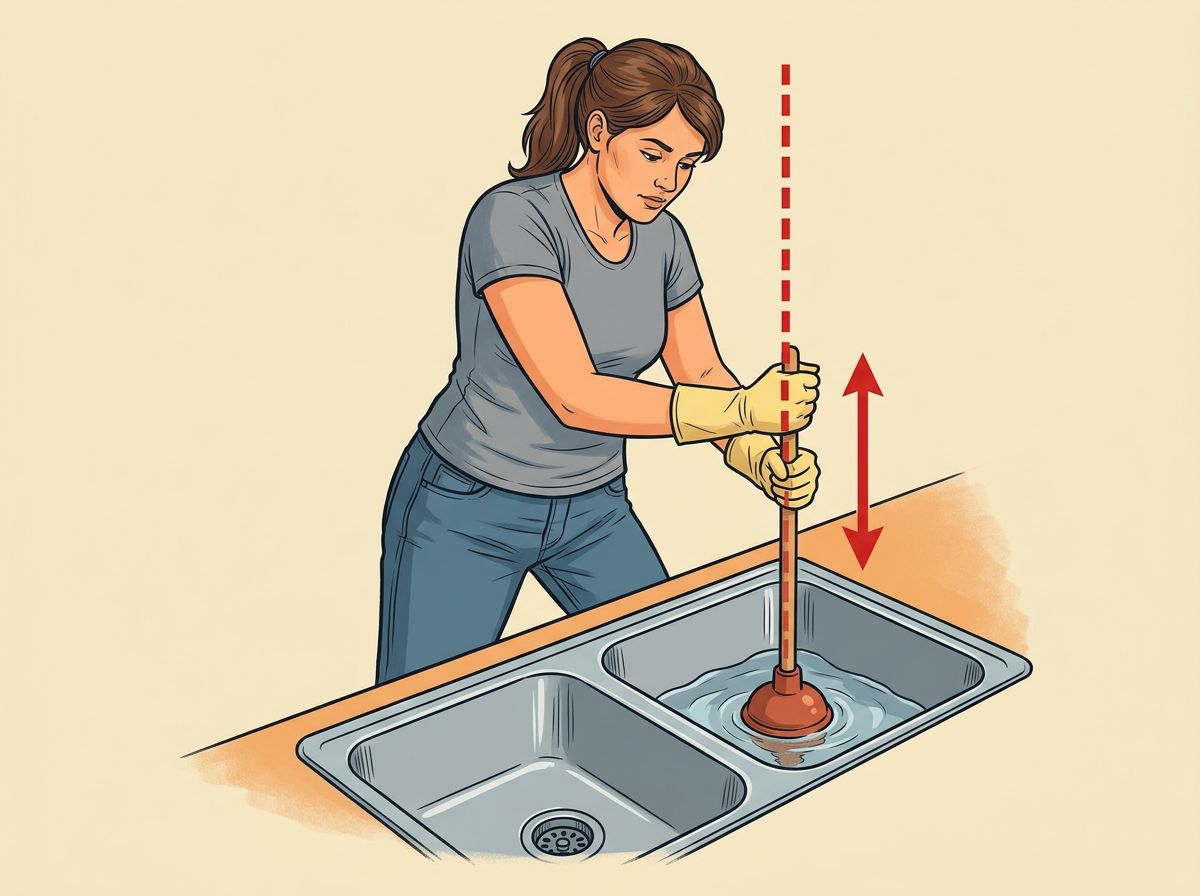
Feet shoulder-width, handle vertical, rubber flush to the porcelain. After the tenth stroke lift the plunger and watch the water. A falling level means the clog has shifted.
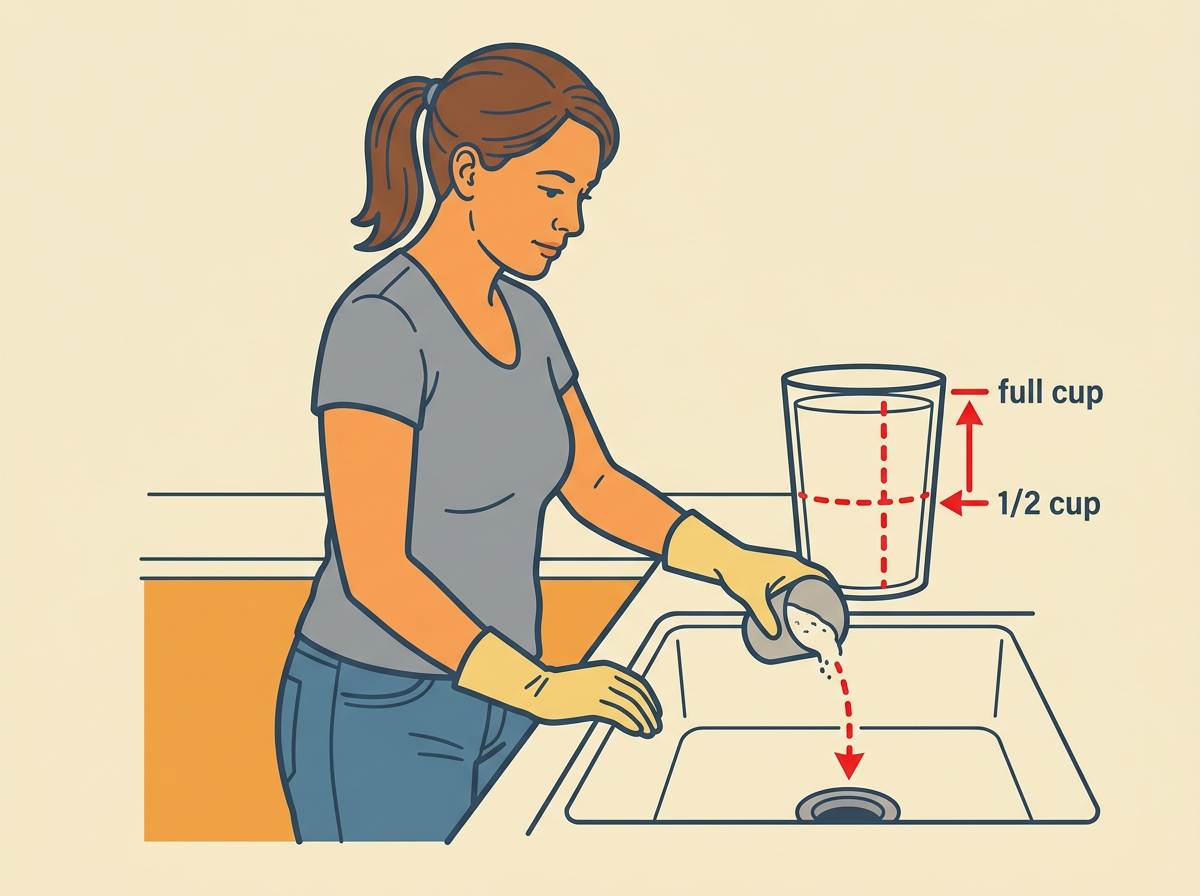
Cover with the rag and wait five minutes while it foams. The fizz loosens grease in the trap. When the bubbling quiets you are ready to flush.
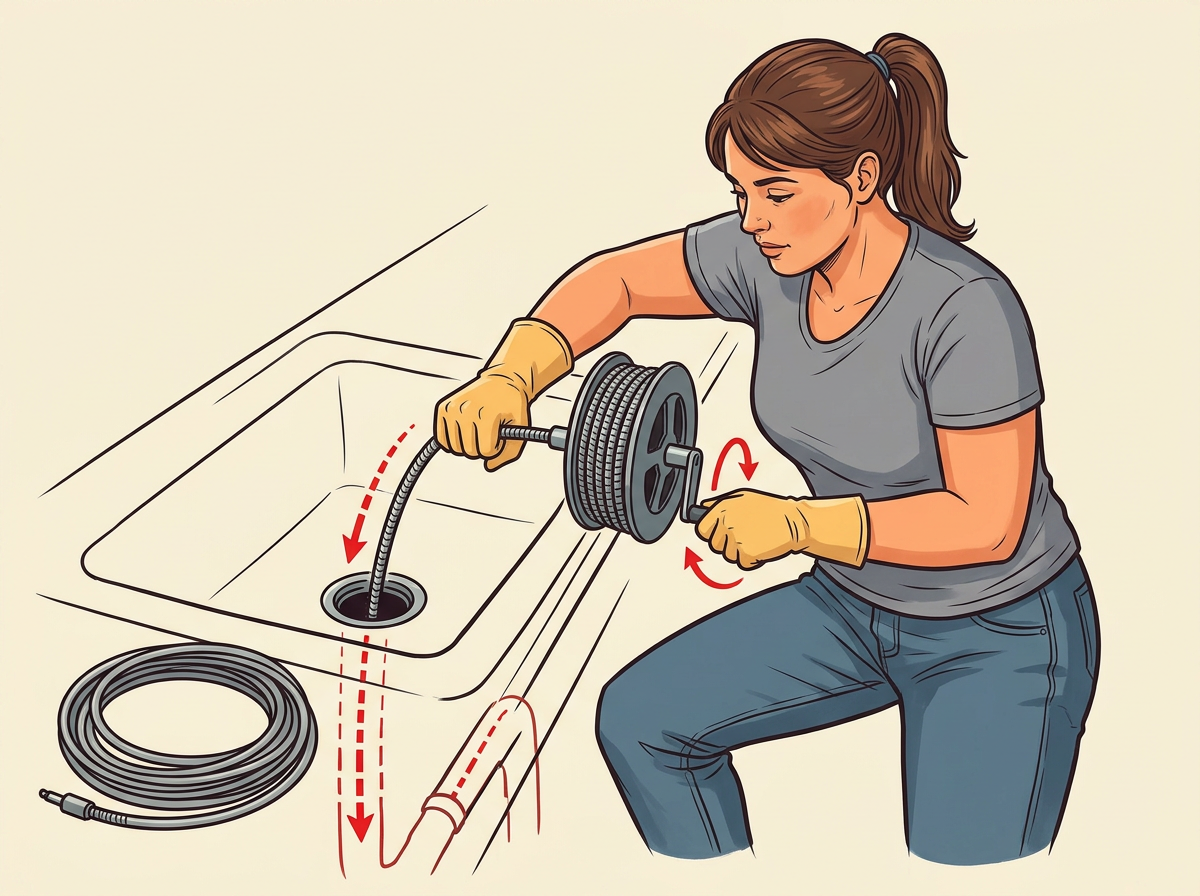
Turn the handle three full rotations against the stop. Pull the cable out slowly and wipe gunk into the bucket. Stop if you hit hard metal so you do not crack the pipe.
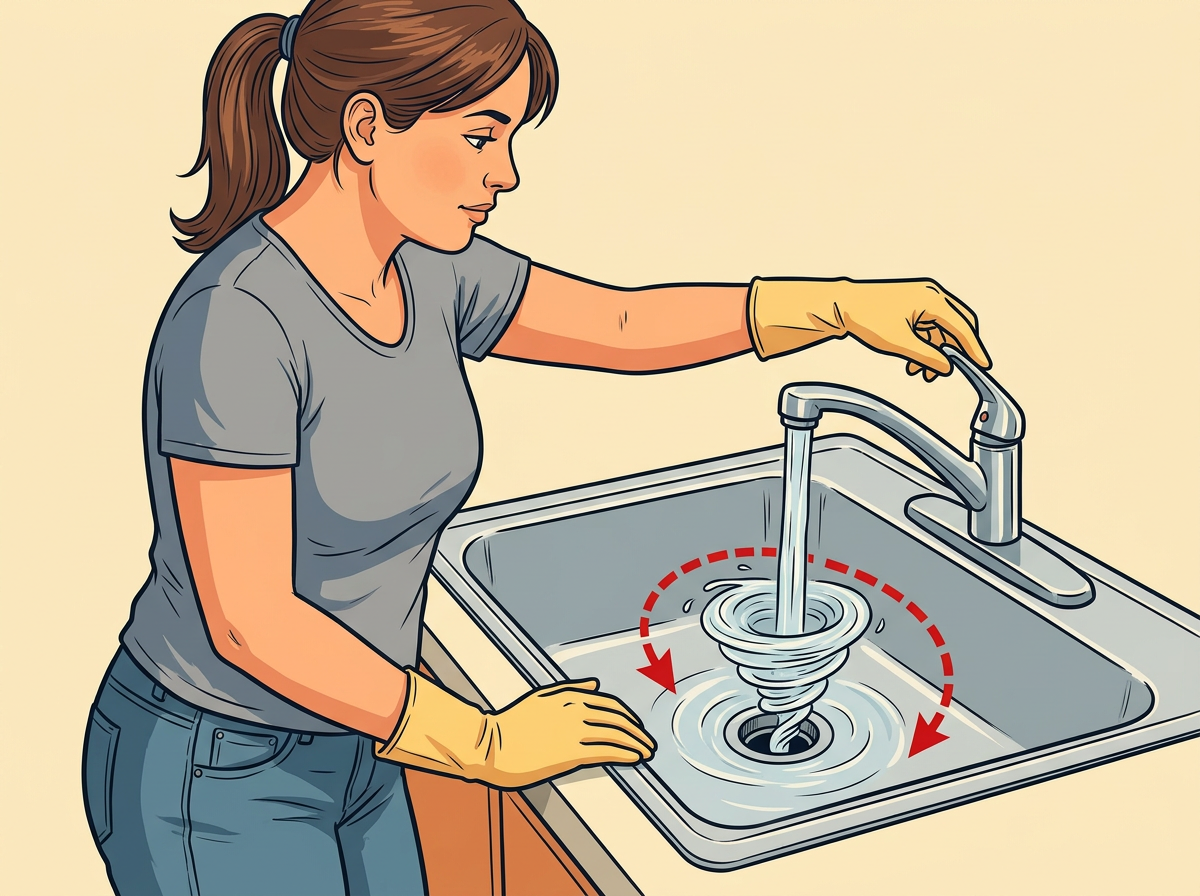
Open the tap halfway on hot. A steady gurgle and falling level mean the pipe is clear. Fill and drain one more time to confirm it stays clear.
The most common mistake
Plunging with the second opening open lets air escape. Press a wet rag over every other hole before the first stroke.