




How to sit with good desk posture
For anyone who sits at a desk all day and wants a posture that stays comfortable through long work blocks.
IJR · Sep 26, 2026 · 2 min read
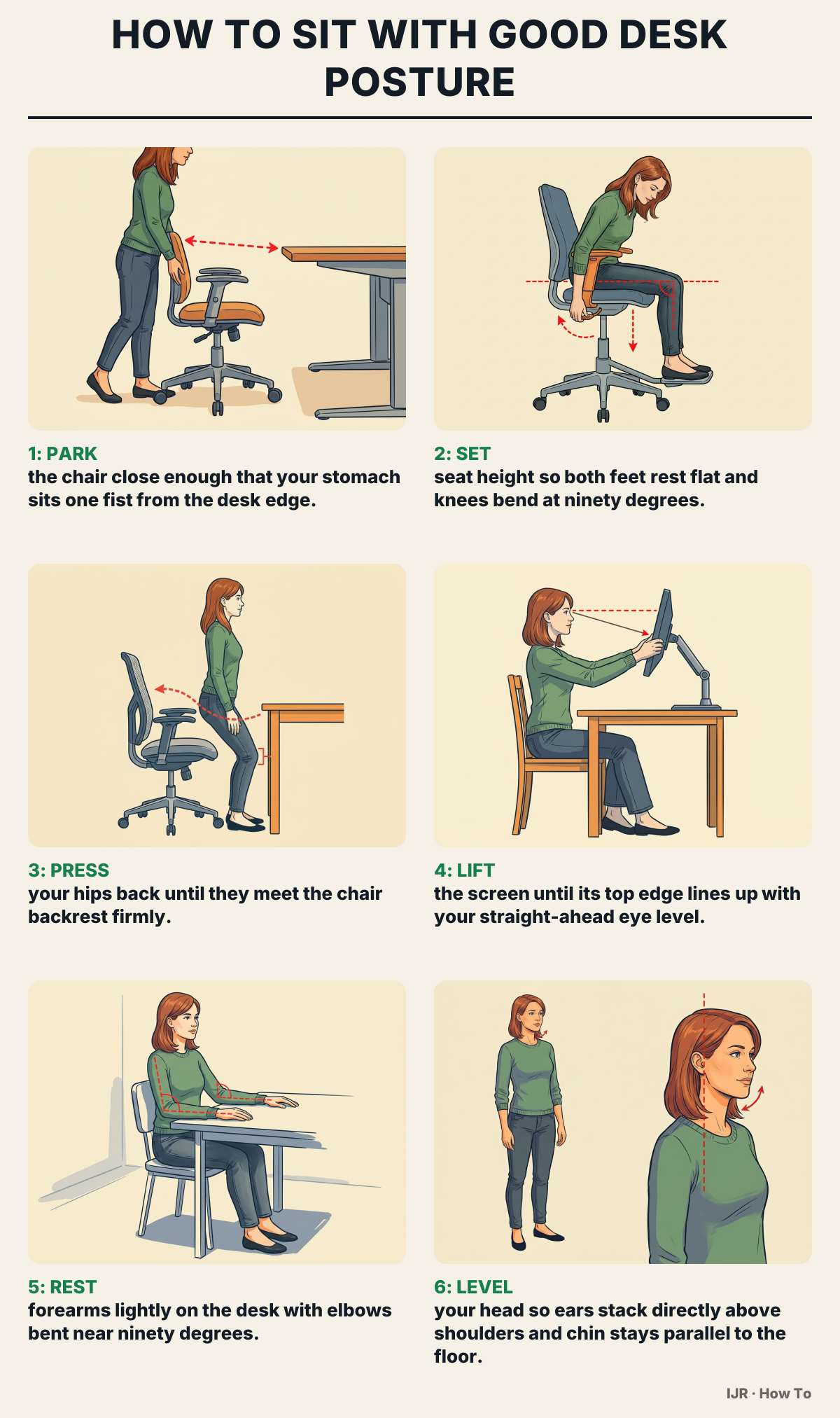
Stack your joints in open angles so your bones carry the load and your muscles stay quiet.
You'll need a height-adjustable chair, a clear desk, and a way to lift your screen to eye level if it sits low.
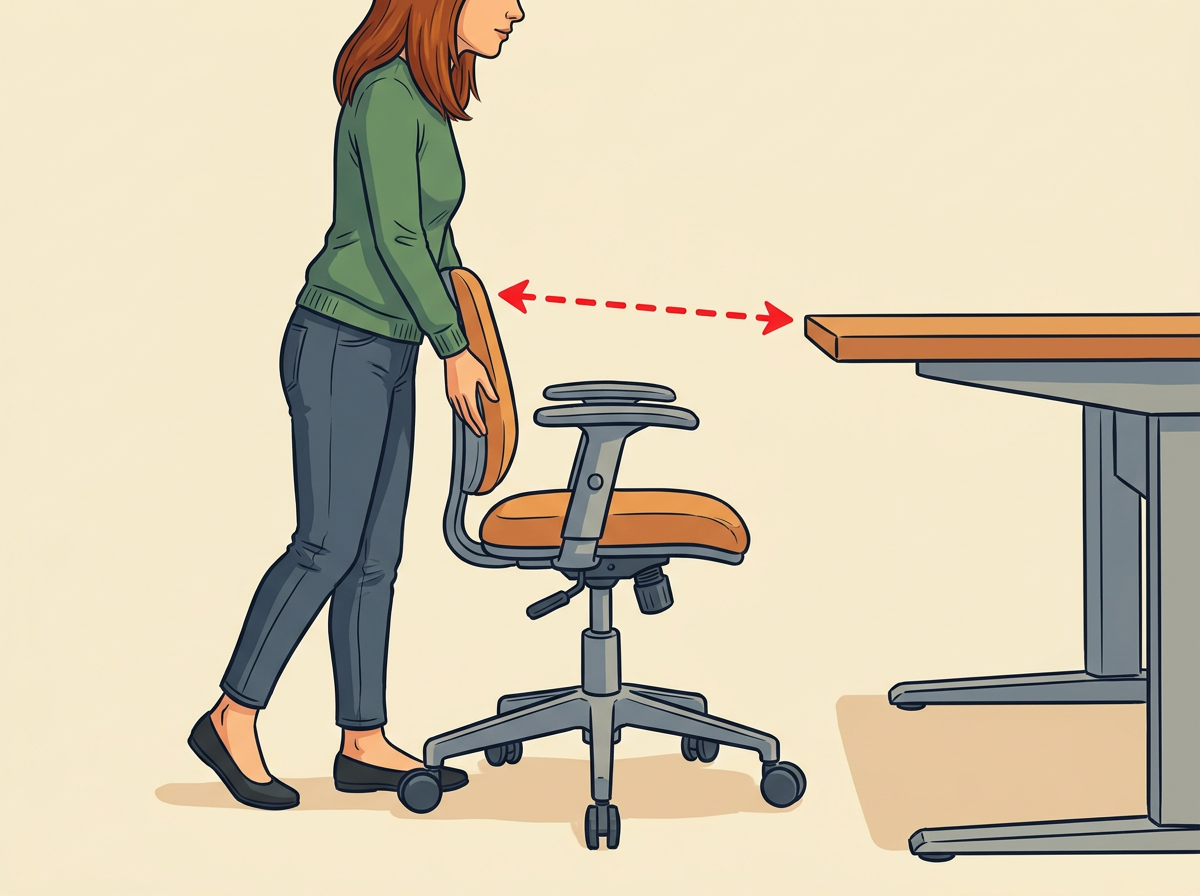
A fist of space lets you breathe without leaning. If you sit farther, scoot in; if you press the desk, ease back. You feel the chair settle when the gap matches your closed fist.
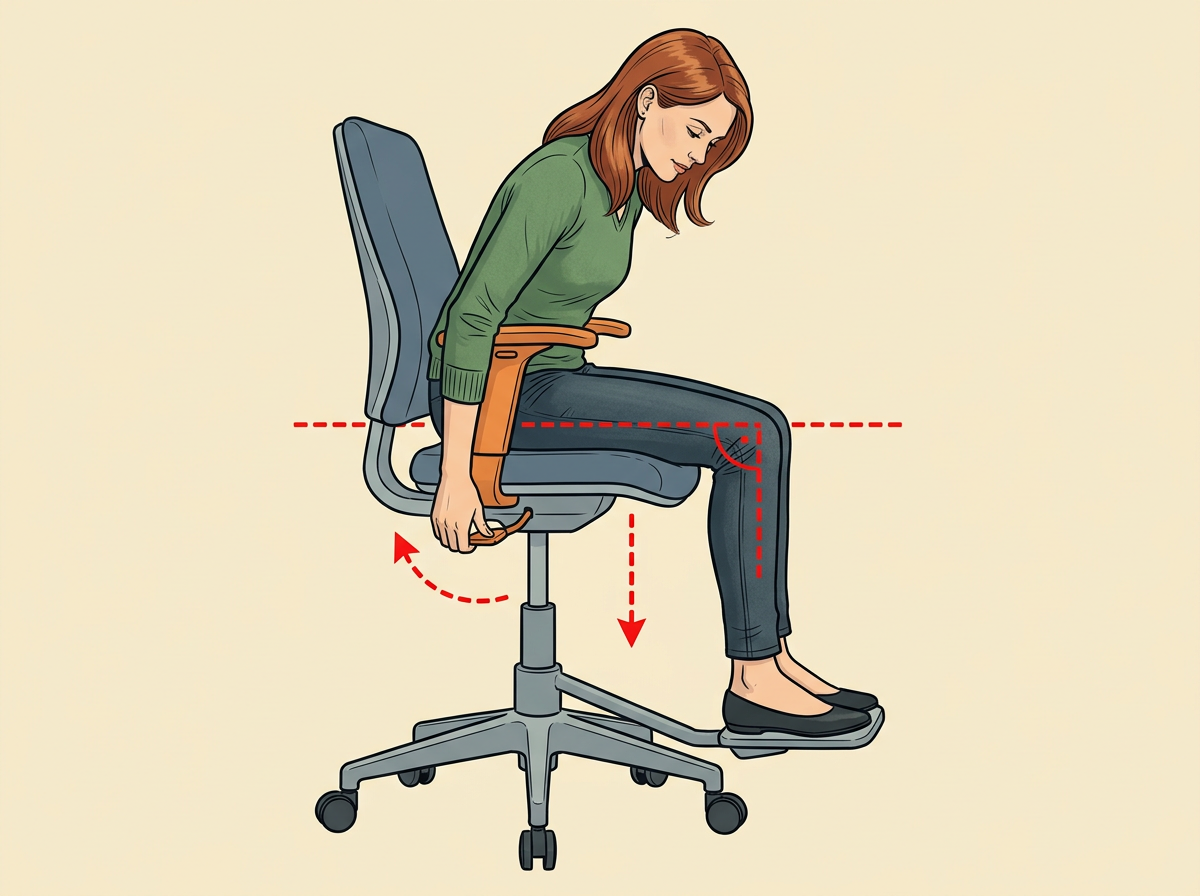
Thighs run parallel to the floor. Lower the chair if heels rise; raise it if knees sit higher than hips. You see the full sole of each shoe on the floor when height is right.
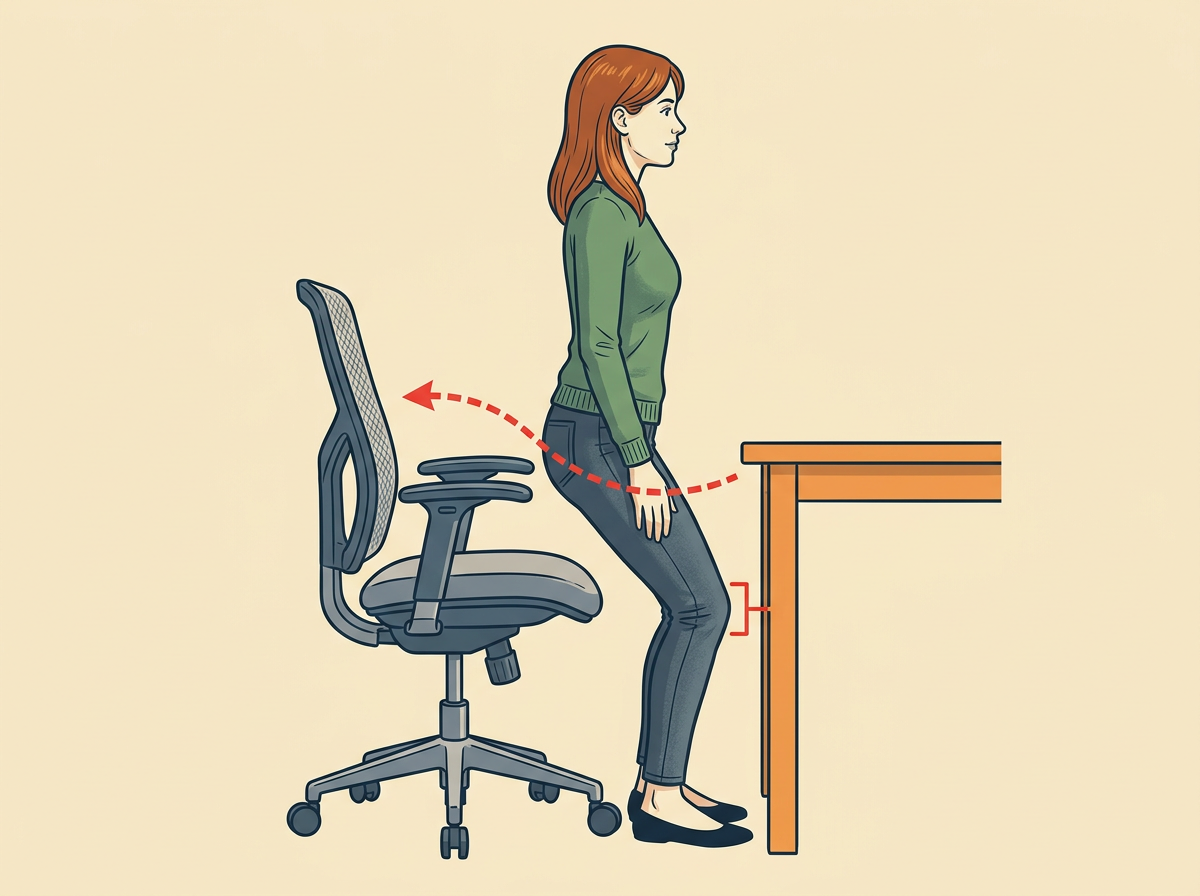
Leave two finger-widths between the seat front and the backs of your knees. You hear a soft thud as your lower back meets the lumbar support when you land all the way back.
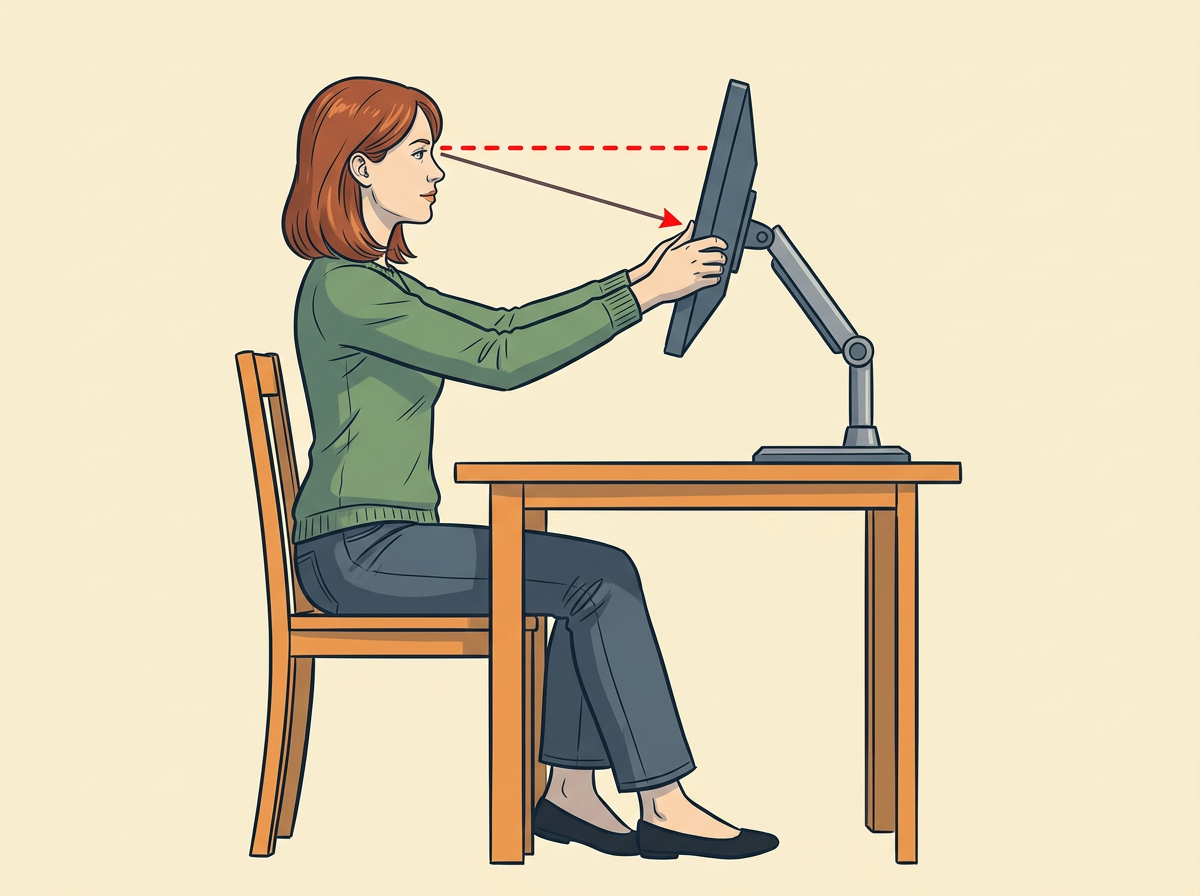
Place it an arm's length away, twenty-five inches. Prop it up if the top falls below your eyes; lower it if the top rises above. You feel no pinch at the base of your skull when your gaze hits the top without tipping.
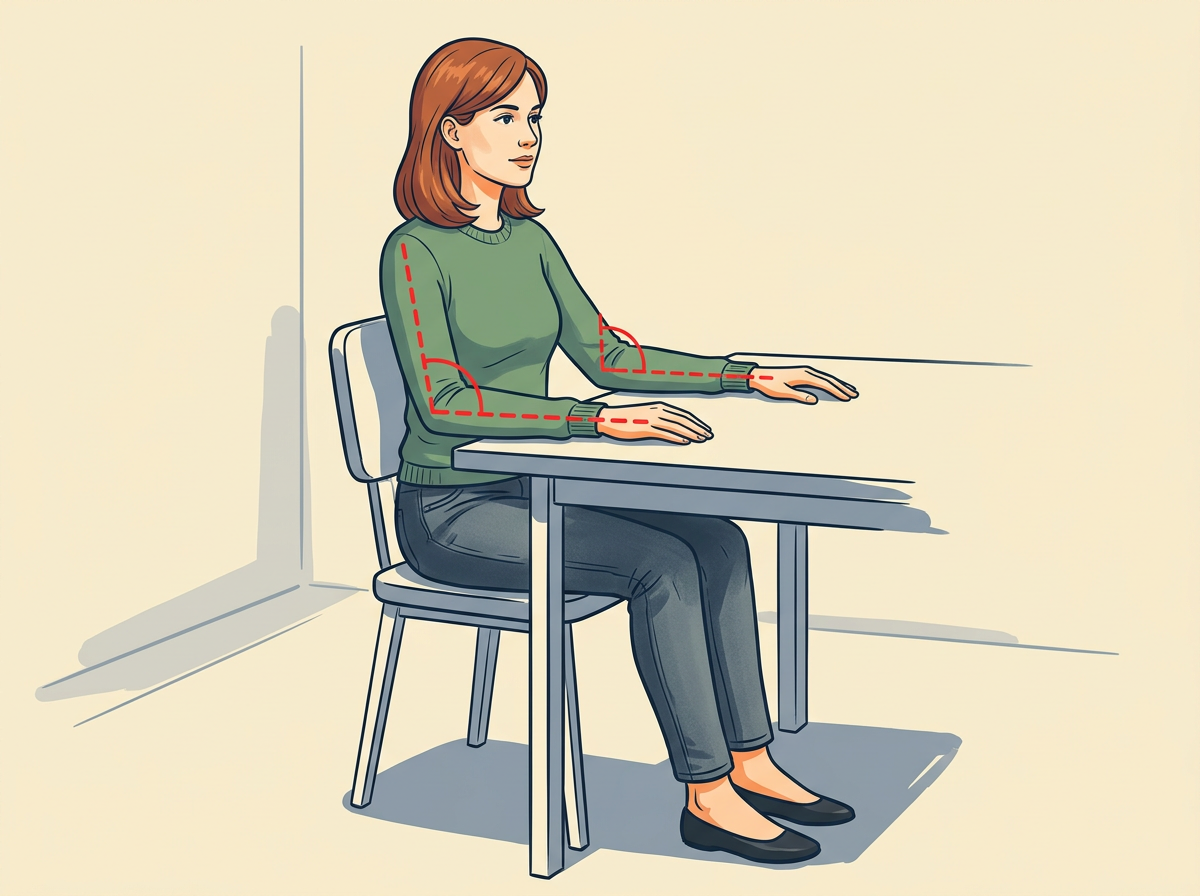
Keep wrists straight and shoulders dropped. If the bend closes under ninety degrees, raise the seat; if it opens past one hundred, roll closer. You see your wrists form a straight line with your forearms when the angle settles.
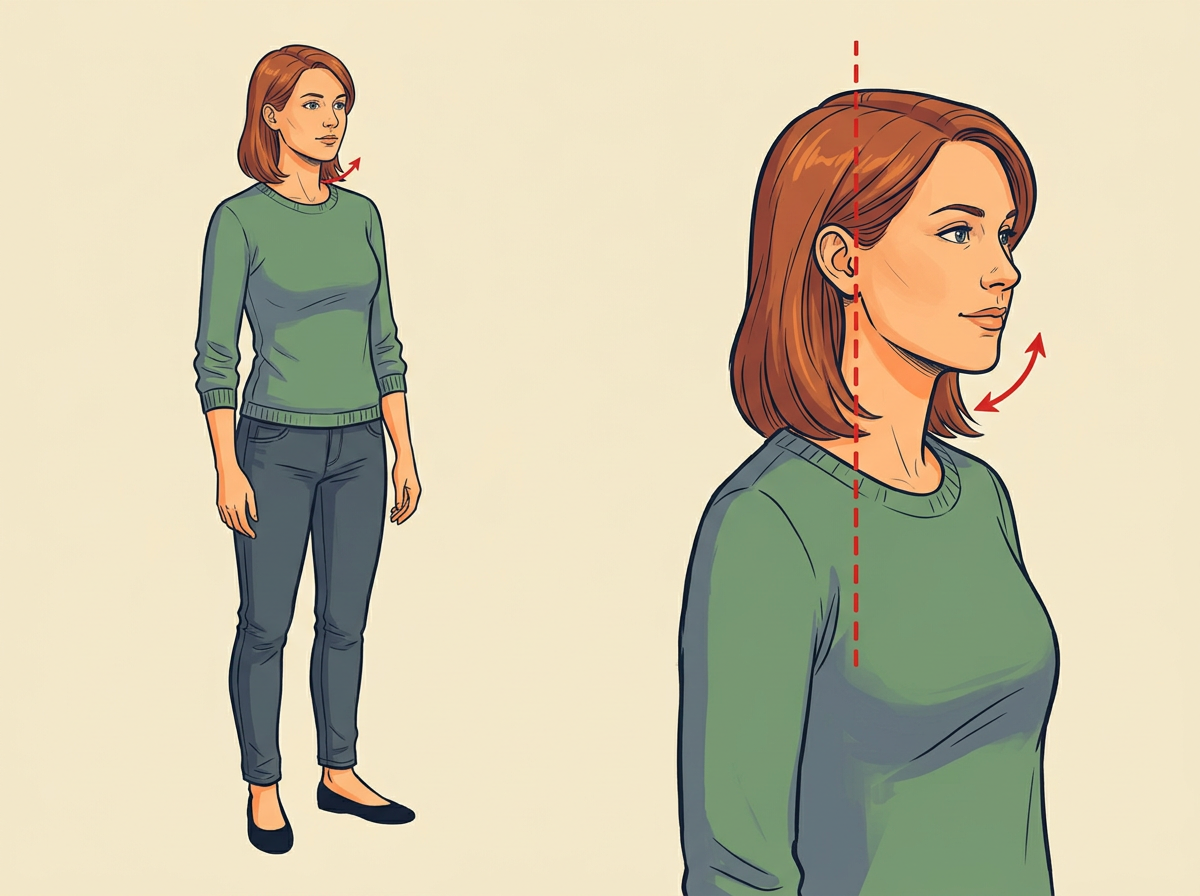
Imagine a string pulling the crown upward. If the chin pokes forward, draw it back until the neck lengthens. You hear your breath move freely when the airway stays open in this stacked position.
The most common mistake
Hips slide forward and the lower back loses the chair's support. Press them back until the backrest fits your lumbar curve.